




Smokeless nicotine explained: safer, discreet alternatives
Not all nicotine products carry the same risk. That idea might surprise you, but the science is catching up fast. The FDA authorised ZYN nicotine pouches after an extensive review, confirming that products without combustion or inhalation expose users to substantially fewer harmful chemicals than cigarettes. For adult smokers, vapers, or anyone curious about what modern smokeless options actually involve, this guide cuts through the noise. You will find clear definitions, honest comparisons, practical safety tips, and answers to the questions most people are too busy to research themselves.
Table of Contents
- What is smokeless nicotine?
- How does smokeless nicotine work in the body?
- Comparing smokeless nicotine, cigarettes, and vaping
- Benefits and limitations of smokeless options
- Key considerations and safe use tips
- Explore top smokeless nicotine choices
- Frequently asked questions
Key Takeaways
| Point | Details |
|---|---|
| What defines smokeless nicotine | It is a tobacco-free alternative delivering nicotine without inhaling smoke or vapour. |
| Lower risk than smoking | These products offer reduced cancer and toxicity risk compared with cigarettes. |
| Discreet and convenient use | Nicotine pouches are odourless and portable, making them suitable for adults seeking privacy. |
| Addiction potential exists | All nicotine products carry a risk of dependence, so responsible use is important. |
| Practical guidance is key | Choosing the right product and following best practices can improve safety and satisfaction for adult users. |
What is smokeless nicotine?
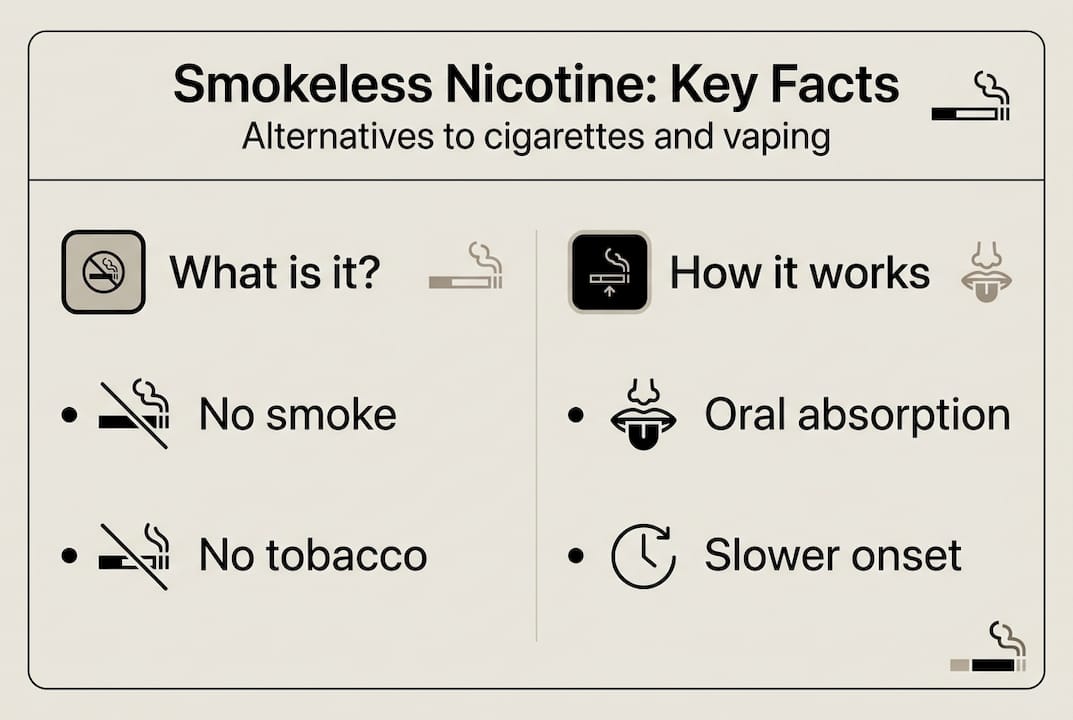
Smokeless nicotine refers to any product that delivers nicotine to the body without burning tobacco or producing smoke or vapour. It is a broad category, but the most relevant options for adults today include nicotine pouches, nicotine gums, and lozenges. Of these, pouches have grown fastest in popularity because they are tobacco-free, odourless, and require no spitting.
Nicotine pouches are small, white sachets placed between the upper lip and gum. Nicotine absorbs through the mouth lining, providing delivery without any smoke or vapour involved. That means no lighter, no device, no cloud, and no smell clinging to your clothes. You can use one at your desk, on a train, or in a meeting without anyone noticing.
Here is what makes smokeless nicotine appealing to different types of adult users:
- Smokers transitioning away from cigarettes value the familiar nicotine hit without the combustion
- Vapers appreciate having a device-free option for situations where vaping is restricted
- Experienced pouch users enjoy the wide range of flavours and strengths available
- Newcomers find the format simple, clean, and easy to manage
If you want a broader overview, smokeless nicotine alternatives are covered in detail across our resource library.
How does smokeless nicotine work in the body?
Once a pouch is placed under the lip, nicotine passes through the oral mucosa, which is the soft tissue lining the inside of your mouth. This is called buccal absorption. It bypasses the lungs entirely, which is a significant distinction from both smoking and vaping.

Nicotine absorbed via the oral mucosa reaches the bloodstream more slowly than inhaled nicotine, but still achieves substantial plasma levels. The onset is gentler, and the experience tends to feel steadier rather than the sharp spike you get from a cigarette.
| Delivery method | Onset time | Peak nicotine level | Duration |
|---|---|---|---|
| Cigarette | 5 to 8 minutes | Very high, rapid spike | 20 to 30 minutes |
| Nicotine pouch | 20 to 65 minutes | Moderate, gradual rise | 45 to 60 minutes |
| Nicotine gum | 20 to 30 minutes | Moderate | 30 to 45 minutes |
The slower absorption profile is actually useful for people managing cravings throughout the day. You get sustained relief rather than a quick hit followed by a crash.
Pro Tip: If you are new to pouches and find the effect too mild at first, resist the urge to double up. Give the pouch a full 20 minutes before judging its strength. Patience pays off here. For a solid grounding in responsible use, check out nicotine safety basics before you start.
Comparing smokeless nicotine, cigarettes, and vaping
This is where the real differences become clear. Let us put the three main options side by side.
| Feature | Nicotine pouches | Cigarettes | Vaping |
|---|---|---|---|
| Combustion | None | Yes | None |
| Tobacco leaf | None | Yes | None |
| Inhalation required | No | Yes | Yes |
| Odour | None | Strong | Moderate |
| Harmful constituents | Very low | Very high | Low to moderate |
| Discreet use | Yes | No | Partial |
The FDA’s 2025 authorisation of select ZYN products confirmed that smokeless pouches drastically lower hazardous constituents and present reduced cancer risks relative to cigarettes. That is a meaningful regulatory milestone, not just marketing language.
Vaping sits somewhere in the middle. It removes combustion and tobacco leaf, but still requires inhalation, which carries its own set of concerns. Pouches remove inhalation from the equation entirely. UK adult use of oral nicotine alternatives was estimated at 1.6% in 2026, reflecting steady growth as more people discover the format.
Key differences worth remembering:
- Pouches produce no second-hand exposure to others nearby
- Vapes can trigger restrictions in public spaces; pouches rarely do
- Cigarettes remain the highest-risk option across every measurable category
- All three products contain nicotine and carry addiction potential
For a deeper look at how pouches stack up against vaping specifically, the nicotine pouches vs vaping comparison is worth reading. You can also explore the evidence on nicotine pouches and safety if you want the full picture.
Benefits and limitations of smokeless options
Smokeless nicotine is not perfect. Being honest about both sides helps you make a genuinely informed choice.
The real advantages:
- No smoke means no damage to your lungs from combustion byproducts
- No odour means no social stigma or lingering smell on clothes or breath
- Discreet enough to use in offices, on flights, and in most public spaces
- No device to charge, refill, or maintain
- Wide range of flavours and strengths to suit different preferences
The honest limitations:
- High-strength pouches can exceed cigarette nicotine delivery, so strength selection matters
- Oral irritation, gum soreness, and hiccups are common when starting out
- Flavourings and pH levels alter absorption, meaning the experience varies by product
- Nicotine addiction remains a real concern regardless of the format
“Short-term studies confirm good tolerability for most users, but oral irritation and addiction potential are consistent findings across the research.” — PMC, Pharmacokinetics and safety of nicotine pouches
Pro Tip: Start with a lower strength than you think you need. A 3mg or 6mg pouch is a sensible entry point for most adults switching from cigarettes. You can always move up, but starting too high often leads to discomfort that puts people off entirely.
For a fuller breakdown of what pouches actually offer, the nicotine pouch benefits guide covers the evidence clearly. And if you have heard claims that sound too good or too alarming, nicotine pouch myths separates fact from fiction.
Key considerations and safe use tips
Knowing the theory is useful. Knowing how to actually use these products well is what makes the difference day to day.
- Choose the right strength. Match your pouch strength to your current nicotine intake. Heavy smokers may need 9mg or above; light smokers or those transitioning from gum often do well at 3mg to 6mg.
- Rotate placement. Do not keep the pouch in the same spot every time. Moving it around reduces the chance of localised gum irritation.
- Limit daily use. Abuse liability is lower than cigarettes and comparable to nicotine replacement therapy gum, but that does not mean unlimited use is harmless. Set a daily limit and stick to it.
- Stop if irritation persists. Mild soreness when starting is normal. Persistent pain, ulcers, or significant discomfort are signals to stop and speak to a healthcare professional.
- Do not use while eating or drinking. Swallowing nicotine-infused saliva in larger amounts can cause nausea. Keep the pouch in place and avoid food and drink while using it.
Pro Tip: If you are using pouches to move away from cigarettes, track your cigarette count weekly. Many people find they naturally reduce without forcing it, simply because the craving is being managed more consistently.
For guidance on how often to use pouches without overdoing it, usage frequency for safe habits is a practical resource. If you are weighing pouches against patches or gum, pouches vs patches and gum explains why many smokers find pouches easier to stick with.
Explore top smokeless nicotine choices
You now have a solid understanding of how smokeless nicotine works, how it compares to cigarettes and vaping, and how to use it responsibly. The next step is finding products you can actually trust.
At Hitsnus, we stock a wide nicotine pouch range from leading brands including ZYN, Velo, and FUMI, with options across every strength and flavour profile. Whether you are just starting out or looking to switch things up, our catalogue is built for adult users who want quality and variety without the guesswork. We offer fast UK delivery and regularly updated stock, so you are never stuck waiting. If you want to try something new without committing to full-price packs, our nicotine pouch clearance sale is a great place to explore at reduced prices.
Frequently asked questions
Are smokeless nicotine pouches addictive?
Yes, nicotine pouches are addictive. Their abuse liability is comparable to NRT gum and lower than cigarettes, but dependence remains a genuine risk for regular users.
Can using smokeless nicotine help me quit smoking?
Switching fully to pouches may reduce your health risks compared to smoking. The FDA’s authorisation confirms harm reduction potential, but pouches are not a guaranteed quit tool and work best alongside a structured plan.
What are the side effects of smokeless nicotine products?
The most common side effects are gum soreness, mouth irritation, nausea, and hiccups. These oral and digestive discomforts are most likely when you are new to pouches or using a strength that is too high.
Is there a risk of cancer from smokeless nicotine alternatives?
Nicotine pouches carry a substantially lower cancer risk than cigarettes. The FDA authorised select pouches as reduced-risk products, though long-term population studies are still ongoing.
How quickly does smokeless nicotine work compared to cigarettes?
Pouches are slower. Nicotine peaks in 20 to 65 minutes with a pouch, compared to just 5 to 8 minutes with a cigarette, making the experience steadier but less immediate.