













Nicotine safety explained: use pouches safely in 2026
Many people mistakenly believe nicotine causes cancer and heart disease. In reality, combustion creates the deadly toxins in cigarettes, not nicotine itself. Nicotine pouches deliver nicotine without burning tobacco, offering a discreet alternative for adults seeking to reduce smoking harms. This guide explains how to use nicotine pouches safely, what side effects to watch for, and how moderate usage minimises risks whilst maintaining nicotine intake. You’ll learn evidence-based practices for 2026 that prioritise both safety and effectiveness.
Table of Contents
- How Nicotine Pouches Deliver Nicotine Safely
- Health Impacts And Harm Reduction With Nicotine Pouches
- Common Side Effects And Safety Precautions For Users
- How To Use Nicotine Pouches Safely And Effectively
- Find Your Ideal Nicotine Pouch With Hitsnus
- FAQ
Key takeaways
| Point | Details |
|---|---|
| Safer delivery method | Nicotine pouches deliver nicotine through oral mucosa without combustion, avoiding thousands of toxic chemicals found in cigarette smoke. |
| Moderate usage guidelines | Safe daily use typically involves 8 to 12 pouches of low to mid strength, with one pouch per hour maximum to prevent overuse. |
| Oral health improvements | Switching from smoking to pouches reduces gum inflammation and improves oral health markers within 24 weeks. |
| Potential side effects | Common issues include gum irritation and dry mouth, whilst cardiovascular effects and oral lesions occur less frequently but require monitoring. |
| Best safety practices | Start with low strength, rotate placement, limit frequency, and avoid use if pregnant or underage to minimise risks. |
How nicotine pouches deliver nicotine safely
Nicotine pouches sit discreetly under your upper lip, releasing nicotine that absorbs through the oral mucosa in a process called buccal absorption. Unlike cigarettes, there’s no tobacco leaf and absolutely no combustion. This matters enormously because burning tobacco creates over 7,000 chemicals, with at least 70 known carcinogens. Pouches eliminate this exposure entirely.
Pharmacological studies reveal fascinating differences in how your body processes nicotine from pouches versus cigarettes. 4mg pouches provide similar total nicotine exposure to cigarettes but with lower peak concentration and slower absorption. Your bloodstream receives nicotine gradually over 30 to 60 minutes rather than the sharp spike cigarettes create within minutes. This steadier delivery reduces cardiovascular stress and creates a more manageable experience.
For moderate users, safe daily consumption typically ranges from 8 to 12 pouches. Spacing them throughout the day prevents overwhelming your system. The golden rule? One pouch per hour maximum. This pacing allows your body to process nicotine efficiently whilst minimising side effects. Many users find this rhythm maintains satisfaction without overuse.
Understanding nicotine delivery systems explained helps you appreciate why pouches offer advantages over traditional smoking. The absence of tar, carbon monoxide, and particulate matter removes the primary drivers of lung disease and cardiovascular damage. You’re getting nicotine, the addictive component, without the lethal cocktail that makes smoking deadly.
Pro Tip: Rotate pouch placement between different spots along your upper lip. This simple habit distributes contact across your gum tissue, reducing irritation risk and enhancing comfort during extended use.
Here’s how nicotine absorption compares across delivery methods:
| Method | Peak nicotine (ng/mL) | Time to peak | Total exposure |
|---|---|---|---|
| Cigarette | 15 to 20 | 5 to 10 minutes | High |
| 4mg pouch | 8 to 12 | 30 to 60 minutes | Moderate |
| 2mg gum | 4 to 6 | 20 to 30 minutes | Low |
Key advantages of pouch delivery include:
- No smoke inhalation eliminates respiratory irritation and lung damage
- Tobacco-free formulation removes carcinogenic tobacco-specific nitrosamines
- Discreet use allows nicotine intake in smoke-free environments
- Controlled dosing enables gradual reduction for those cutting back
Health impacts and harm reduction with nicotine pouches
The harm reduction case for nicotine pouches rests on compelling evidence. Nicotine itself is addictive but doesn’t cause the cancers, emphysema, or heart attacks that kill smokers. Combustion products do. When you eliminate burning tobacco, you remove approximately 95% of smoking’s health risks according to public health estimates. That’s a dramatic reduction worth understanding.

Oral health improvements surprise many switchers. Switching to nicotine pouches improves oral health, showing reduced gingival index over 24 weeks versus continuing smokers. Your gums experience less inflammation, bleeding decreases, and overall periodontal health stabilises. Smoking constricts blood vessels and damages gum tissue, whilst pouches avoid these mechanisms entirely.
Research into are nicotine pouches safer than cigarettes consistently demonstrates substantial risk reduction. The ASH evidence brief on nicotine clarifies that nicotine carries minimal harm compared to smoking’s deadly toxins. For adults unable or unwilling to quit nicotine entirely, pouches represent a pragmatic middle ground.
As a cessation tool, pouches show modest promise. Studies indicate slight increases in short-term abstinence compared to no intervention, though results remain less impressive than e-cigarettes or prescription therapies. The real value lies in harm reduction for smokers who continue using nicotine. If you’re going to consume nicotine anyway, pouches dramatically reduce your exposure to life-threatening chemicals.
Important caveats exist. Long-term safety data remains limited because pouches are relatively new products. We lack 20-year studies tracking health outcomes. Experts emphasise viewing pouches as harm reduction, not risk elimination. They’re safer than smoking, not safe in absolute terms. Understanding the benefits of nicotine pouches requires balancing genuine advantages against remaining uncertainties.
Nicotine pouches offer smokers a significant reduction in harmful toxin exposure whilst maintaining nicotine intake.
Key health considerations include:
- Cardiovascular effects remain possible since nicotine elevates heart rate and blood pressure temporarily
- Addiction potential persists because nicotine is inherently addictive regardless of delivery method
- Oral tissue changes may occur with prolonged use, requiring dental monitoring
- Youth and pregnant individuals face amplified risks from any nicotine exposure
Common side effects and safety precautions for users
Most pouch users experience mild, manageable side effects. Gum irritation tops the list, affecting many beginners as oral tissues adjust to nicotine contact. You might notice tingling, slight burning, or tenderness where the pouch rests. Dry mouth occurs frequently because nicotine reduces saliva production. Nausea hits some users, particularly when starting or using high-strength pouches on an empty stomach.
More concerning but less common issues require attention. Side effects include gum irritation, nausea, dry mouth, possible oral lesions (40 to 60%), and acute cardiovascular effects like increased heart rate. Oral lesions develop in a significant minority of regular users, appearing as white patches or sores. These typically resolve when you reduce usage or switch placement, but persistent lesions warrant dental evaluation.
Cardiovascular responses deserve special consideration. Nicotine temporarily raises blood pressure and accelerates heart rate. For healthy adults, these changes remain manageable. However, people with existing heart conditions, hypertension, or cardiovascular disease should consult healthcare providers before using pouches. The risk profile differs dramatically from smoking but isn’t zero.
Vulnerable populations face amplified dangers. Youth exposure interferes with brain development, which continues into the mid-20s. Pregnant individuals risk harming foetal cardiovascular and neurological development. These groups should avoid nicotine pouches entirely. The harm reduction argument applies to adult smokers, not nicotine-naive individuals or developing bodies.
Follow these safety practices to minimise risks:
- Start with low-strength pouches (2mg to 4mg) to assess tolerance before increasing
- Limit use to one pouch per hour maximum, preventing nicotine overload
- Rotate pouch placement regularly to distribute gum contact and reduce irritation
- Monitor for persistent side effects like lesions, severe irritation, or cardiovascular symptoms
- Avoid use entirely if pregnant, breastfeeding, underage, or managing heart conditions
Pro Tip: Proper pouch disposal reduces fire and environmental risks. Never flush pouches, as they don’t biodegrade quickly. Check out nicotine pouch disposal tips 2026 for responsible disposal methods that cut fire risks by 80%.
Some research indicates temporary weight gain and blood pressure increases after stopping pouch use, similar to smoking cessation effects. Your body adjusts to regular nicotine intake, and withdrawal creates metabolic changes. Monitoring these responses helps you manage the transition safely. Understanding nicotine pouch usage frequency and is nicotine pouch safe uk provides deeper insight into managing your consumption responsibly.
How to use nicotine pouches safely and effectively
Safe, effective pouch use follows straightforward principles that maximise benefits whilst minimising risks. Start by selecting low-strength pouches, typically 2mg to 4mg nicotine content. This conservative approach lets you gauge tolerance without overwhelming your system. Many users find 4mg provides satisfying nicotine delivery comparable to a cigarette but with gentler onset.
Placement technique matters more than you might expect. Position the pouch under your upper lip, slightly off-centre. The pouch should rest comfortably against your gum without causing pressure or discomfort. Leave it there for 20 to 60 minutes, depending on desired nicotine intake and pouch strength. Some users prefer shorter durations with higher-strength pouches, whilst others use lower strengths for extended periods.
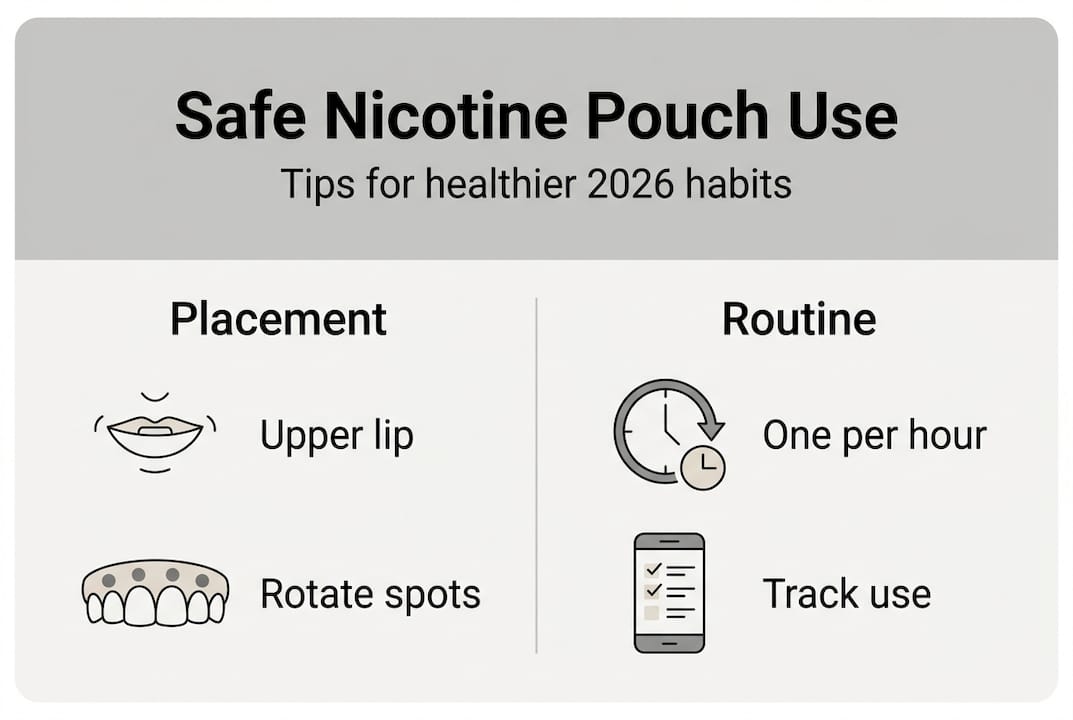
Recommended usage is one pouch per hour max, with starting strengths low and gradual increase to moderate doses around 6 to 10mg. This pacing prevents nicotine overload whilst maintaining steady intake throughout your day. Most moderate users settle into a rhythm of 8 to 12 pouches daily, spacing them to match their previous smoking pattern or nicotine needs.
Rotate pouch placement between different spots along your upper gum line. This distribution prevents concentrated irritation in one area. If you notice tenderness developing, switch sides or move the pouch to a fresh location. Your oral tissues need recovery time between exposures.
Integrating pouches into smoking reduction plans requires realistic expectations. They work best as a complete replacement for cigarettes rather than a temporary aid. Evidence supporting long-term cessation efficacy remains limited, but pouches excel at harm reduction. If you’re committed to quitting nicotine entirely, consider combining pouches with behavioural support, counselling, or prescription cessation aids for better outcomes. Learn more about how to reduce smoking with nicotine pouches for practical reduction strategies.
Pro Tip: Track your daily pouch consumption for two weeks. Consistent habit monitoring reveals usage patterns, helping you identify triggers for overuse and adjust accordingly. This awareness prevents addiction escalation whilst maintaining effective nicotine management.
Here’s how nicotine pouches compare to other delivery methods:
| Method | Nicotine speed | Harm level | Discretion | Convenience |
|---|---|---|---|---|
| Cigarettes | Very fast (5 min) | Very high | Low | Moderate |
| Nicotine pouches | Moderate (30 min) | Low | Very high | Very high |
| Nicotine gum | Slow (20 min) | Very low | Moderate | Moderate |
| E-cigarettes | Fast (10 min) | Low | Moderate | High |
Follow these steps for optimal usage:
- Select appropriate strength based on previous smoking habits (light smokers start at 2mg, heavy smokers at 4mg to 6mg)
- Place pouch under upper lip, positioning it comfortably against gum tissue
- Rotate placement every few pouches to distribute contact across different gum areas
- Limit to one pouch per hour maximum, spacing usage throughout the day
- Cap daily consumption at 8 to 12 pouches for moderate, sustainable intake
- Monitor for side effects and adjust strength or frequency if irritation develops
Disposal practices complete responsible usage. Pouches contain nicotine residue and synthetic materials that don’t belong in waterways or landfills. Use designated disposal containers or wrap used pouches in tissue before binning them. Proper disposal protects the environment and reduces fire hazards associated with concentrated nicotine products.
Find your ideal nicotine pouch with hitSnus
Navigating the nicotine pouch market becomes simpler when you work with specialists who understand your needs. HitSnus offers tobacco-free nicotine pouches delivered quickly across the UK, featuring trusted brands like ZYN, Velo, and FUMI. Whether you’re transitioning from smoking or optimising your current pouch routine, you’ll find strengths from 2mg to 20mg and flavours ranging from mint to fruit.

Budget-conscious switchers appreciate clearance nicotine pouches that let you experiment with different brands and strengths without major investment. Finding your ideal pouch often requires trying several options, and clearance pricing makes this exploration affordable. Fast UK delivery means you receive products within days, maintaining your supply without interruption.
Beyond products, HitSnus provides educational resources that support safe, informed usage. Guides covering everything from dosage optimisation to disposal best practices help you maximise benefits whilst minimising risks. This combination of quality products and practical support creates a complete solution for adults seeking discreet, safer nicotine alternatives in 2026.
FAQ
Are nicotine pouches safe to use every day?
Daily nicotine pouch use is generally safe for healthy adults when following recommended guidelines. Limit use to one pouch per hour and 8 to 12 pouches daily to minimise side effects and addiction. Monitor for gum irritation, dry mouth, or cardiovascular symptoms. Overuse increases risks of oral lesions and nicotine dependence. Understanding nicotine pouch usage frequency helps you maintain safe consumption patterns whilst meeting your nicotine needs effectively.
Can nicotine pouches help me quit smoking completely?
Nicotine pouches may support some smokers in quitting but aren’t approved cessation tools. Limited evidence shows nicotine pouches slightly improve short-term abstinence over no intervention but are less effective than e-cigarettes. Combining pouches with behavioural support, counselling, or prescription aids improves success rates. They work best for harm reduction rather than complete nicotine cessation. Explore strategies for reducing smoking with nicotine pouches to maximise your chances of successfully cutting back or quitting.
Are nicotine pouches safe during pregnancy or for young people?
Nicotine pouches should never be used by pregnant individuals or anyone under 18. Nicotine poses cardiovascular and brain development risks to youth and harm during pregnancy; use is not safe in these groups. Foetal exposure affects cardiovascular and neurological development, whilst adolescent use interferes with ongoing brain maturation. These populations face amplified risks without the harm reduction benefits that apply to adult smokers. Nicotine in any form remains inappropriate for developing bodies.
What strength nicotine pouch should I start with?
Begin with 2mg to 4mg pouches regardless of previous smoking habits. Light smokers (fewer than 10 cigarettes daily) typically find 2mg sufficient, whilst moderate to heavy smokers may need 4mg to 6mg for adequate satisfaction. Starting low lets you assess tolerance and adjust upward if needed. Higher strengths (8mg to 20mg) suit experienced users with established tolerance but increase side effect risks. Gradual strength increases prevent nicotine overload whilst helping you find your optimal dose for comfortable, effective use.
How long should I keep a nicotine pouch in my mouth?
Most users keep pouches in place for 20 to 60 minutes depending on strength and personal preference. Lower-strength pouches (2mg to 4mg) work well for 45 to 60 minutes, delivering nicotine gradually. Higher-strength options (6mg plus) often provide sufficient nicotine in 20 to 30 minutes. Remove the pouch when tingling subsides or you’ve achieved desired effects. Leaving pouches in beyond 60 minutes rarely increases nicotine absorption but may increase irritation risk. Experiment to find your ideal duration for balanced satisfaction and comfort.