











Nicotine delivery systems explained: best smokeless option
Nicotine delivery systems explained: best smokeless option
Many smokers believe nicotine causes cancer and heart disease. Wrong. Nicotine is addictive but non-toxic relative to carcinogens and tar from smoke. The real harm comes from combustion, not nicotine itself. This guide clarifies how smokeless nicotine delivery systems work, from clinical therapies to modern nicotine pouches, helping you choose the safest, most effective alternative for your lifestyle. You’ll understand delivery speeds, safety profiles, and practical usage considerations to make confident decisions about discreet nicotine consumption.
Table of Contents
- Introduction To Nicotine Delivery Systems
- Understanding Nicotine Replacement Therapies (NRTs)
- Nicotine Pouches: Mechanism And User Experience
- Comparison To Combustible Cigarettes And Vaping
- Common Misconceptions About Nicotine And Smoking
- Practical Considerations And Side Effects
- Conclusion And Next Steps
- Explore Nicotine Pouches From Hitsnus
- FAQ
Key takeaways
| Point | Details |
|---|---|
| Delivery speed varies dramatically | Cigarettes and vaping deliver nicotine in 5 minutes; nicotine pouches take 15-30 minutes, affecting satisfaction and craving control. |
| Nicotine pouches offer discreet use | Tobacco-free pouches provide smoke-free nicotine delivery suitable for public spaces and workplaces. |
| NRTs double quit success rates | Clinically proven therapies like patches and gum safely support smoking cessation with controlled nicotine dosing. |
| Combustion causes harm, not nicotine | Toxic chemicals from burning tobacco create health risks; smokeless alternatives eliminate combustion hazards. |
| Understanding delivery informs choice | Matching nicotine speed, strength, and format to your needs maximises effectiveness and comfort. |
Introduction to nicotine delivery systems
Nicotine is a stimulant alkaloid that triggers dopamine release, creating the addictive cycle smokers experience. Understanding how different systems deliver nicotine helps you choose safer alternatives without sacrificing satisfaction. The primary delivery methods include combustible cigarettes, electronic vaping devices, nicotine replacement therapies, and modern nicotine pouches.
Combustible cigarettes remain the deadliest option. Burning tobacco produces over 7,000 chemicals, including 70 known carcinogens. The rapid nicotine hit (within 5 minutes) reinforces addiction whilst simultaneously exposing users to tar, carbon monoxide, and toxic particulates.
Smokeless alternatives eliminate combustion entirely. Vaping heats liquid nicotine without burning, reducing toxic exposure but introducing aerosol chemicals still under long-term study. Clinical NRTs like patches, gum, and lozenges provide medically supervised nicotine delivery proven to aid cessation. Nicotine pouches offer a tobacco-free, discreet option with moderate delivery speeds.
Key differences between delivery systems include:
- Delivery speed: Cigarettes and vaping provide rapid nicotine absorption (5 minutes), whilst pouches and patches offer slower, sustained release (15-60 minutes).
- Harm profile: Combustion creates carcinogens; smokeless options eliminate smoke-related toxins.
- Discreetness: Pouches and NRTs produce no vapour or odour, enabling use in smoke-free environments.
- Regulatory status: NRTs are medicines; pouches are consumer products; vaping occupies middle ground.
Choosing the right system depends on your nicotine dependency level, lifestyle needs, and harm reduction goals. Understanding each method’s mechanism helps you transition effectively from smoking to safer alternatives.
Understanding nicotine replacement therapies (NRTs)
Nicotine replacement therapies provide pharmaceutical-grade nicotine without tobacco or combustion toxins. NRTs double chances of quitting smoking when combined properly. These medically approved products come in multiple formats designed for different usage patterns and craving intensities.
NRT types include:
- Patches: Deliver steady nicotine through skin absorption over 16 or 24 hours, maintaining baseline levels to prevent cravings.
- Gum: Provides faster nicotine release through oral mucosa when chewed correctly, managing acute cravings within 20-30 minutes.
- Lozenges: Dissolve slowly in the mouth, offering controlled nicotine delivery similar to gum without chewing.
- Inhalators: Mimic hand-to-mouth smoking behaviour whilst delivering nicotine through mouth and throat absorption.
- Nasal and mouth sprays: Offer rapid nicotine delivery (10-15 minutes) for intense cravings, closest to cigarette speed.
Effective NRT usage typically involves combination therapy. Combination NRT increases quit rates by approximately 25% compared to single NRT. The strategy pairs slow-release patches with fast-acting products like gum or sprays. Patches maintain steady nicotine levels throughout the day, preventing baseline cravings. Fast-acting NRTs tackle breakthrough cravings triggered by stress or habit.
NRTs provide steady nicotine via patches and faster release via gum or lozenges, allowing personalised craving management. Patches typically start at 21mg for heavy smokers, tapering to 14mg and 7mg over 8-12 weeks. Fast-acting products come in 2mg and 4mg doses for mild and strong cravings respectively.
Safety profile remains excellent. NRTs are safe with no drug interactions and can be used in pregnancy with dose adjustments. Side effects include mild skin irritation from patches, mouth soreness from gum, and throat irritation from sprays. These typically resolve as your body adjusts.
For smokers seeking structured cessation support, NRTs offer evidence-based solutions. Nicotine replacement therapies provide clinically validated pathways to quitting. Understanding what are nicotine pouches helps compare modern alternatives to traditional NRTs. Comprehensive tobacco dependency management guidelines support healthcare professionals in prescribing appropriate regimens.
Pro tip: Combining a 16-hour patch with 4mg gum optimises craving control. Use the patch for baseline nicotine, then deploy gum for situational triggers like coffee breaks or stressful moments.
Nicotine pouches: mechanism and user experience
Nicotine pouches represent a modern smokeless alternative gaining popularity for discreet nicotine delivery. These small white pouches contain pharmaceutical-grade nicotine, plant fibres, flavourings, and pH adjusters. Unlike traditional snus, they contain zero tobacco leaf.

Nicotine pouches deliver nicotine through the oral mucosa in about 15-30 minutes, enabling discreet, smoke-free use. You place a pouch between your upper lip and gum. Saliva activates nicotine release, which absorbs directly through the mucous membrane into your bloodstream. The gradual absorption creates a smoother experience compared to cigarette spikes.
Typical usage timeline unfolds as follows:
- Minutes 0-5: Initial tingling sensation as nicotine begins releasing; mild flavour intensity peaks.
- Minutes 5-15: Nicotine absorption accelerates; satisfying sensation builds gradually.
- Minutes 15-30: Peak nicotine delivery achieved; craving satisfaction maximised.
- Minutes 30-60: Sustained nicotine presence; pouch can remain in place or be removed based on preference.
Typical use lasts 5-60 minutes; side effects may include mouth irritation or hiccups. New users often experience tingling, slight burning, or increased salivation initially. These sensations diminish as your mouth adjusts. Swallowing excessive saliva can trigger nausea or hiccups; discretely spitting helps manage this.
Nicotine pouches come in various flavours and strengths from 3 to 6 mg per pouch. Popular flavours include mint, citrus, berry, coffee, and unflavoured options. Strength selection matters significantly. Light users (under 10 cigarettes daily) typically start with 3-4mg pouches. Moderate smokers (10-20 daily) prefer 4-5mg. Heavy smokers (20+ daily) may require 5-6mg or higher.
Practical usage tips optimise your experience:
- Position pouches in your upper lip for maximum comfort and discretion.
- Avoid chewing or moving the pouch excessively, which can cause irritation.
- Start with lower strengths to gauge your tolerance before escalating.
- Store pouches in a cool, dry place to maintain freshness and potency.
- Dispose of used pouches responsibly in provided compartments or general waste.
Understanding what are nicotine pouches provides deeper insight into composition and safety. Selecting appropriate strength using a nicotine pouch strength guide prevents overconsumption. Following proper nicotine pouch usage guide maximises satisfaction whilst minimising side effects.
Comparing nicotine pouches over gum reveals pouches offer superior discretion and no chewing requirement. Exploring nicotine pouch flavour selection helps you discover preferred taste profiles. Detailed nicotine delivery methods overview contextualises pouches within the broader landscape. Official nicotine pouch user guide from NHS partners confirms safe usage protocols.
Pro tip: Gentle chewing or tongue pressure against the pouch briefly enhances initial nicotine release if you need faster satisfaction. However, avoid continuous manipulation to prevent gum irritation.
Comparison to combustible cigarettes and vaping
Understanding delivery speed differences clarifies each system’s strengths and limitations. Nicotine reaches bloodstream within 5 minutes via cigarettes and vaping, but 15-30 minutes via nicotine pouches. This timing difference fundamentally affects user experience and satisfaction patterns.
Combustible cigarettes deliver the fastest nicotine hit. Inhaling smoke deposits nicotine directly into lung tissue with massive surface area, enabling rapid bloodstream entry. This speed creates powerful addiction reinforcement but exposes users to carcinogens, tar, carbon monoxide, and thousands of toxic compounds from combustion.
Vaping delivers nicotine without combustion, reducing some toxic chemicals but long-term effects remain under study. E-cigarettes heat nicotine liquid into aerosol, delivering nicotine almost as quickly as smoking (5-10 minutes). Public Health England estimates vaping is 95% less harmful than smoking, though concerns exist about unknown long-term aerosol exposure and youth uptake.
Nicotine pouches offer the slowest delivery amongst popular alternatives. The 15-30 minute absorption window suits users prioritising discretion over speed. Pouches eliminate both combustion toxins and aerosol concerns, providing the cleanest smokeless delivery profile.
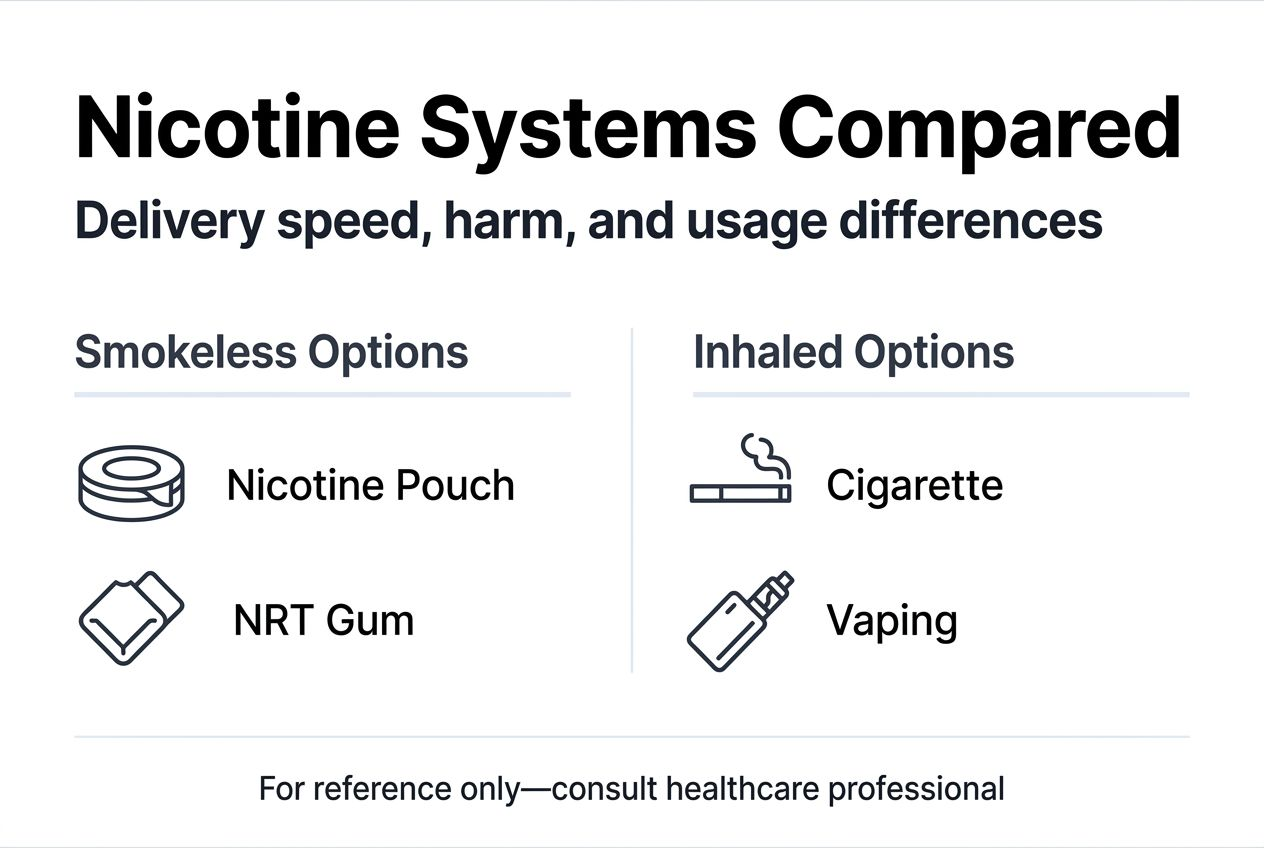
Comparison summary:
| System | Delivery Speed | Harm Profile | Discreetness | Best For |
|---|---|---|---|---|
| Cigarettes | 5 minutes | Extremely high (combustion carcinogens) | Low (smoke, odour) | No one (highest harm) |
| Vaping | 5-10 minutes | Moderate (aerosol chemicals) | Medium (visible vapour) | Smokers wanting rapid delivery with harm reduction |
| Nicotine Pouches | 15-30 minutes | Very low (no combustion or aerosol) | Excellent (invisible, odourless) | Discreet users in smoke-free zones |
| NRT Patches | 30-60 minutes | Very low (pharmaceutical grade) | Excellent (under clothing) | All-day baseline nicotine maintenance |
| NRT Gum/Spray | 10-20 minutes | Very low (pharmaceutical grade) | Good (minimal visibility) | Acute craving management |
Social acceptability increasingly favours smokeless options. Smoking bans cover virtually all indoor public spaces across the UK. Vaping faces growing restrictions in workplaces, public transport, and venues. Nicotine pouches generate zero vapour or smoke, enabling use anywhere without disturbing others.
Switching from smoking to pouches requires adjusting expectations around delivery speed. Heavy smokers accustomed to cigarette rapidity may initially find pouches too slow. Starting with higher-strength pouches (5-6mg) and allowing the full 15-30 minute absorption window helps manage this transition.
Comprehensive nicotine delivery speed comparison data supports informed decision-making. NHS guidance on using e-cigarettes clarifies vaping’s role in harm reduction strategies.
Common misconceptions about nicotine and smoking
Misunderstanding nicotine’s role perpetuates confusion about smoking harms and alternative safety. Correcting these myths enables evidence-based choices.
Myth 1: Nicotine causes cancer and heart disease.
Harm from smoking primarily comes from toxic chemicals produced by combustion, not nicotine. Tar, carbon monoxide, formaldehyde, and benzene from burning tobacco create cancer risks. Nicotine itself is addictive but minimally toxic at therapeutic doses. Studies on long-term NRT users show no increased cardiovascular or cancer risks.
Myth 2: NRTs are just as addictive and dangerous as cigarettes.
NRTs deliver controlled, pharmaceutical-grade nicotine without combustion toxins. They’re designed for gradual dose reduction, supporting cessation rather than perpetuating addiction. Clinical evidence shows NRTs dramatically improve quit success without introducing new health risks.
Myth 3: Nicotine pouches deliver nicotine as fast as cigarettes.
Pouches require 15-30 minutes for peak nicotine absorption, substantially slower than cigarettes’ 5-minute delivery. This slower timeline reduces addiction reinforcement whilst still satisfying cravings. Users expecting cigarette-like speed often mistakenly consume multiple pouches, leading to overconsumption.
Myth 4: Smokeless alternatives are gateways to smoking.
Evidence suggests smokeless products primarily attract current smokers seeking harm reduction, not never-smokers. Gateway theory lacks robust support in adult populations. Most nicotine pouch users are former smokers or dual users reducing cigarette consumption.
“Nicotine replacement products are safe and effective cessation aids. The real danger lies in smoke inhalation, not nicotine delivery through medically supervised or smokeless routes.”
Understanding these distinctions prevents fear-based decisions and supports genuine harm reduction. Nicotine itself warrants respect as an addictive substance, but conflating it with smoking’s deadly combustion byproducts misleads consumers.
Exploring benefits of nicotine pouches reveals evidence-based advantages over combustible options. NICE guidelines on nicotine misconceptions clarify clinical perspectives.
Practical considerations and side effects
Managing side effects and optimising product selection maximises satisfaction whilst minimising discomfort. Most adverse effects are mild and manageable through simple adjustments.
Common side effects by product type:
- Nicotine pouches: Mouth irritation, gum tingling, hiccups, nausea from swallowed saliva, increased salivation.
- NRT patches: Skin redness or itching at application site, sleep disturbances if worn overnight, vivid dreams.
- NRT gum: Jaw soreness from chewing, mouth ulcers, indigestion if nicotine is swallowed, throat irritation.
- NRT sprays: Throat and nose irritation, watery eyes, coughing, hiccups.
Side effects of nicotine pouches and other NRT products are generally mild and manageable by adjusting dosage or usage. Severe reactions are rare but warrant discontinuation and medical consultation.
Management strategies:
- Mouth irritation from pouches: Rotate placement between upper left and right lip; reduce session duration; switch to lower-strength pouches; ensure adequate hydration.
- Nausea or hiccups: Avoid swallowing saliva excessively; discretely spit if needed; use lower strengths; take breaks between pouches.
- Patch skin irritation: Rotate application sites daily; apply to different body areas (arm, chest, hip); use hypoallergenic patches; moisturise surrounding skin.
- Gum jaw soreness: Chew slowly and intermittently; park gum between cheek and gum; switch to lozenges if chewing causes pain.
Selecting appropriate strength prevents overconsumption and underdosing. Assess your current cigarette consumption:
- Light smokers (under 10 daily): Start with 3-4mg pouches or 2mg NRT gum.
- Moderate smokers (10-20 daily): Begin with 4-5mg pouches or 14mg patches plus 2mg fast-acting NRT.
- Heavy smokers (20+ daily): Use 5-6mg pouches or 21mg patches plus 4mg fast-acting NRT.
Duration recommendations vary. Nicotine pouches can be used as long as they prevent smoking relapse. Clinical NRTs typically follow 8-12 week tapering protocols. Indefinite use of smokeless nicotine products remains vastly safer than returning to combustible cigarettes.
Practical usage tips:
- Monitor your body’s reactions during the first week of any new product.
- Keep a usage log tracking pouches consumed, timing, and side effects to identify patterns.
- Avoid eating or drinking 15 minutes before and during pouch use for optimal absorption.
- Don’t exceed recommended daily limits (typically 15-20 pouches or equivalent NRT dosing).
Understanding nicotine pouch strength advice prevents common dosing mistakes. Comprehensive guidance on managing nicotine side effects supports comfortable product use.
Pro tip: Monitor your reactions closely during the first week. If side effects persist beyond 5-7 days, switch products rather than discontinuing nicotine replacement entirely, which risks smoking relapse.
Conclusion and next steps
Nicotine delivery systems differ dramatically in speed, harm profile, and user experience. Cigarettes deliver nicotine fastest but cause immense harm through combustion toxins. Vaping reduces some risks whilst maintaining rapid delivery. NRTs provide clinically validated cessation support with pharmaceutical-grade nicotine. Nicotine pouches offer the most discreet, tobacco-free alternative with moderate absorption speeds.
Choosing the right system depends on your priorities. Speed-focused users may prefer vaping. Those seeking medical supervision benefit from NRT programmes. Users prioritising discretion and simplicity thrive with nicotine pouches. All smokeless alternatives vastly outperform continued smoking.
Successful transitions require realistic expectations. Adjust to slower delivery speeds when switching from cigarettes. Start with appropriate strengths to avoid under or overconsumption. Monitor side effects and adjust products accordingly. Follow usage instructions precisely for optimal results.
Explore detailed guidance on switching from smoking to pouches for structured transition strategies. Remember, any smokeless alternative represents a massive harm reduction victory compared to combustible tobacco.
Explore nicotine pouches from HitSnus
Ready to experience discreet, tobacco-free nicotine delivery? HitSnus stocks an extensive range of premium nicotine pouches from trusted brands like ZYN, Velo, and FUMI. Every product offers pharmaceutical-grade nicotine in carefully calibrated strengths from 3mg to 6mg, with flavours spanning fresh mint, zesty citrus, rich coffee, and more.
Budget-conscious buyers benefit from limited-time clearance nicotine pouches offering exceptional value without compromising quality. Our detailed buying guides help you select ideal strengths and flavours based on your smoking history and taste preferences. Whether you’re transitioning from cigarettes or seeking a discreet alternative to vaping, HitSnus provides expert guidance and fast UK delivery. Explore our collection today and discover smokeless nicotine satisfaction tailored to your lifestyle.
FAQ
How quickly do nicotine pouches deliver nicotine compared to cigarettes and vaping?
Nicotine pouches release nicotine gradually over 15-30 minutes through oral mucosa absorption, significantly slower than cigarettes and vaping, which deliver nicotine within 5 minutes via lung or throat absorption. This slower delivery provides sustained satisfaction and reduces addiction reinforcement associated with rapid nicotine spikes. Pouches suit users prioritising discretion and controlled intake over immediate gratification.
Are nicotine replacement therapies safe to use during pregnancy?
NRTs can be used safely during pregnancy with appropriate dose adjustments to minimise fetal nicotine exposure whilst supporting smoking cessation. Nicotine patches are typically recommended for controlled, steady dosing rather than fast-acting products that create blood nicotine spikes. Pregnant women should consult healthcare providers to optimise NRT selection and dosing. The harm from continued smoking far exceeds any theoretical risks from pharmaceutical nicotine.
What are common side effects of nicotine pouches and how can I manage them?
Common side effects include mouth irritation, tingling sensations, hiccups, and mild nausea from swallowing saliva. Managing these involves rotating pouch placement to prevent localised irritation, using lower strengths if discomfort persists, avoiding excessive saliva swallowing, and ensuring adequate hydration. Most side effects diminish within 5-7 days as your mouth adjusts to pouch use. Persistent severe reactions warrant product discontinuation and medical consultation.
How can I choose the right nicotine product for discreet use in smoke-free areas?
Nicotine pouches excel in smoke-free environments because they produce zero smoke or vapour, require no inhalation or exhalation, and generate no odour detectable to others. Select strength based on your current cigarette consumption: 3-4mg for light smokers, 4-5mg for moderate smokers, and 5-6mg for heavy smokers. Consider flavour preferences and be prepared for the 15-30 minute absorption timeline, which is slower than cigarettes but ensures complete discretion in any setting.
Can nicotine pouches help me quit smoking completely?
Nicotine pouches can support smoking cessation by providing tobacco-free nicotine delivery that satisfies cravings without combustion harm. However, they’re not clinically approved cessation aids like NRTs. Many users successfully transition from cigarettes to pouches as a harm reduction strategy, then gradually reduce pouch strength and frequency over time. For structured cessation support, combining pouches with behavioural therapy or clinical NRT programmes optimises quit success rates. Any sustained switch from cigarettes to pouches represents significant health improvement.