












Nicotine Delivery Methods Explained: 40% Less Smoking
Many assume nicotine pouches eliminate all health risks, but they still deliver addictive nicotine and can cause minor oral irritation. Understanding the variety of nicotine delivery methods, from smoking to vaping to tobacco-free pouches, empowers you to make safer, more informed choices. This guide explains how each method works, their health implications, and why discreet smokeless options are gaining traction among adult users seeking harm reduction.
Table of Contents
- How Nicotine Pouches Work: Mechanisms and Benefits
- Comparative Framework: Nicotine Delivery Methods
- Health Implications of Different Nicotine Delivery Systems
- Common Misconceptions About Nicotine Delivery
- Application and Transition Strategies for Users
- Conclusion: Making Informed Nicotine Choices
- Frequently Asked Questions
Key Takeaways
| Point | Details |
|---|---|
| Nicotine delivery methods vary widely | Smoking, vaping, pouches, gum, lozenges, and inhalers each use different absorption routes and speeds. |
| Absorption speed impacts satisfaction | Vaping peaks at 5 minutes; pouches and gum take 15 to 30 minutes to reach maximum blood nicotine levels. |
| Nicotine pouches offer discreet use | They produce no vapor or smoke, enabling use indoors where smoking and vaping are banned. |
| Health risks differ by method | Combustion products pose the highest danger; tobacco-free alternatives reduce but don’t eliminate risks. |
| Proper use reduces smoking by 40% | With correct dosing and transition strategies, cigarette consumption drops significantly over 12 weeks. |
Introduction to Nicotine Delivery Methods
Adult nicotine users today face more options than ever. Smoking remains the most familiar method, but vaping, snus, nicotine pouches, gum, lozenges, and inhalers now provide alternatives tailored to different lifestyles and health goals.
The core difference lies in how nicotine enters your bloodstream. Combustible methods burn tobacco, releasing nicotine through smoke inhalation. Vaping heats liquid nicotine into vapor you inhale. Oral products like pouches, gum, and lozenges deliver nicotine through the mucous membranes in your mouth, bypassing your lungs entirely.
Demand for smokeless, discreet nicotine products is rising in the United States and United Kingdom as users prioritize convenience and reduced health risks. If discretion matters, speed of delivery affects your satisfaction, or health concerns drive your choice, matching the right method to your needs becomes critical.
Key considerations when choosing a nicotine delivery method:
- Absorption route: lungs, oral mucosa, or skin
- Speed to peak nicotine levels: ranges from 5 to 30 minutes
- Discreetness: ability to use undetected in public or restricted spaces
- Health risk profile: presence of combustion toxins or tobacco leaf
- Convenience: portability, ease of use, and odor production
How Nicotine Pouches Work: Mechanisms and Benefits
Nicotine pouches stand out because they contain no tobacco leaf. Instead, they deliver nicotine via oral mucosa without tobacco leaf and produce no vapor or smoke, making them highly discreet. You place a small pouch between your gum and upper lip, where nicotine absorbs directly into your bloodstream through the mucous membrane.
Dosage flexibility is a major advantage. Pouches typically range from 3mg to 12mg of nicotine per pouch, allowing you to match your tolerance and preferences. New users often start with lower doses to minimize irritation and gauge their response.
Flavor variety enhances the experience. Mint, citrus, berry, and coffee flavors mask the bitter taste of nicotine, increasing satisfaction. Many users find flavored nicotine pouches more enjoyable than unflavored alternatives, which supports consistent use during smoking reduction efforts.
Because pouches produce no visible vapor or lingering odor, you can use them indoors at work, in restaurants, or on flights where smoking and vaping are prohibited. This discretion makes them ideal for busy professionals and travelers.
Pro Tip: Start with one pouch every 2 to 3 hours rather than chain-using them. This pacing minimizes gum irritation and helps you assess how much nicotine you actually need. Refer to a detailed nicotine pouch usage workflow for step-by-step guidance.
Key benefits of nicotine pouches:
- No combustion or inhalation of harmful smoke
- Completely tobacco-free formulation
- Wide range of nicotine strengths for personalized dosing
- Diverse flavors increase user satisfaction
- Usable in smoke-free and vape-free zones without detection
Comparative Framework: Nicotine Delivery Methods
Understanding how different methods compare on critical parameters helps you choose wisely. The table below classifies major nicotine delivery systems by absorption route, speed to peak nicotine, tobacco content, and discreetness.
| Method | Absorption Route | Time to Peak | Contains Tobacco | Discreetness | Health Risk Level |
|---|---|---|---|---|---|
| Cigarettes | Lungs (smoke) | ~5 minutes | Yes | Low (odor, smoke) | Very High (combustion toxins) |
| Vaping | Lungs (vapor) | ~5 minutes | No | Medium (vapor visible) | Moderate (fewer toxins than smoking) |
| Snus | Oral mucosa | 15-30 minutes | Yes | High (no vapor/smoke) | Moderate (tobacco leaf present) |
| Nicotine Pouches | Oral mucosa | 15-30 minutes | No | Very High (no vapor/smoke) | Lower (no tobacco, no combustion) |
| Nicotine Gum | Oral mucosa | 15-30 minutes | No | High | Lower (no combustion) |
| Nicotine Lozenges | Oral mucosa | 15-30 minutes | No | High | Lower (no combustion) |
Nicotine peak plasma times vary: cigarettes and vaping peak around 5 minutes, while nicotine pouches and gum take 15 to 30 minutes. This difference affects how quickly you feel satisfied and can influence addiction potential. Faster delivery often leads to stronger cravings between doses.
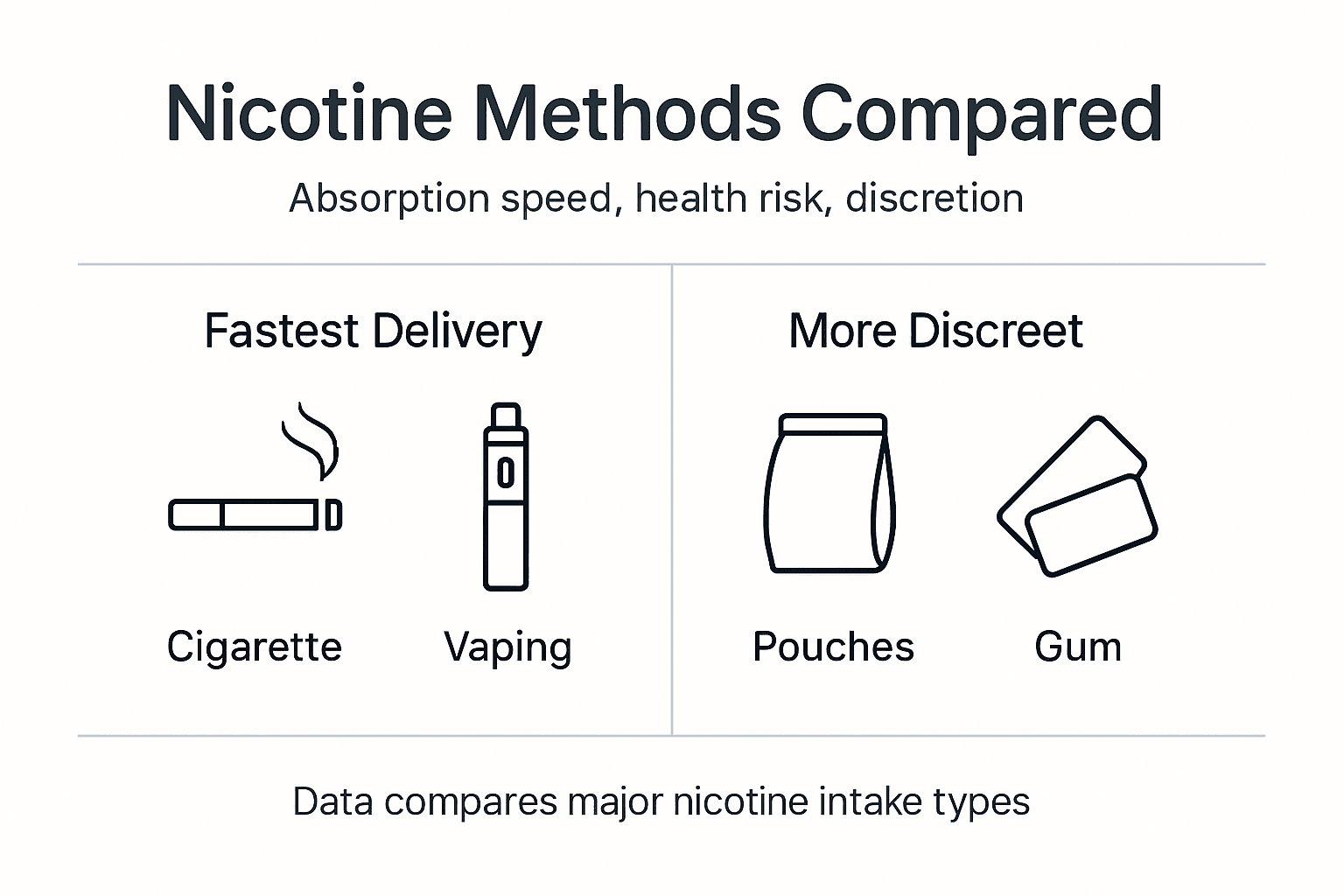
Health implications tie directly to combustion and tobacco leaf presence. Smoking exposes you to thousands of toxins from burning tobacco. Vaping reduces but doesn’t eliminate risks because heated chemicals can still harm lung tissue. Tobacco-free oral products like pouches avoid combustion entirely, though nicotine itself remains addictive and can irritate oral tissues.
If you need rapid craving relief, cigarettes or vaping deliver fastest. But if you value discretion and want to avoid respiratory exposure, switching to pouches offers a compelling alternative.
Pro Tip: Match your method to your environment and goals. For office settings or travel, prioritize discreet oral products. If you’re reducing smoking gradually, start with moderate-strength pouches that satisfy cravings without overwhelming your system.
Key takeaways from the comparison:
- Fastest nicotine delivery comes from inhalation methods (smoking, vaping)
- Oral mucosa absorption takes longer but avoids lung exposure
- Tobacco-free options reduce health risks compared to cigarettes
- Discreetness varies widely, with pouches offering the highest level
Health Implications of Different Nicotine Delivery Systems
Combustion creates the most dangerous health profile. Burning tobacco releases tar, carbon monoxide, and over 70 carcinogens that damage your lungs, heart, and blood vessels. Long-term smoking causes lung cancer, chronic obstructive pulmonary disease, and cardiovascular disease.

Tobacco-free alternatives reduce exposure to these toxins but don’t eliminate all risks. Combustion toxins cause the highest health risks; tobacco-free alternatives reduce but do not eliminate risks including oral irritation and addiction. Nicotine itself raises blood pressure temporarily and remains highly addictive regardless of delivery method.
Nicotine pouches can cause oral mucosa irritation in about 15% of users, especially with high-strength products or overuse. Symptoms include gum tenderness, mouth sores, or a burning sensation. Most irritation resolves by lowering dosage or reducing usage frequency.
Regulatory differences shape how products are marketed and perceived. In many regions, tobacco-free nicotine pouches face less stringent regulation than tobacco-containing snus, influencing product availability and public health messaging.
To minimize oral side effects and maximize nicotine pouch benefits, follow these safer practices:
- Start with lower nicotine strengths (3mg to 6mg) and increase only if needed
- Rotate pouch placement between upper and lower gums to prevent localized irritation
- Limit usage to one pouch every 2 to 3 hours rather than continuous use
- Stay hydrated to keep oral tissues healthy
- Discontinue use immediately if severe irritation or mouth sores develop
Common Misconceptions About Nicotine Delivery
Many users mistakenly believe nicotine pouches are completely risk-free because they contain no tobacco leaf. However, nicotine itself is addictive and can cause minor oral irritation. While pouches avoid combustion toxins, they don’t eliminate health considerations entirely.
Another confusion involves absorption speed. Some assume all non-smoking methods deliver nicotine at similar rates. In reality, vaping delivers nicotine in about 5 minutes, while oral products like pouches take 15 to 30 minutes. This difference affects how satisfied you feel and how often you reach for another dose.
People often conflate nicotine pouches with snus, but they differ fundamentally. Snus contains ground tobacco leaf, which introduces tobacco-specific nitrosamines linked to oral cancer risk. Pouches use pharmaceutical-grade nicotine without tobacco, reducing this exposure. This distinction matters for both health outcomes and regulatory classification.
The speed of nicotine absorption directly relates to craving relief and addiction risk. Faster delivery reinforces use patterns more strongly, which is why cigarettes and vaping can be harder to quit than slower oral products.
Finally, users sometimes think tobacco content and product safety are the same issue. While tobacco-free products generally pose lower risks, nicotine addiction and potential oral irritation remain concerns. Understanding these nuances helps you set realistic expectations and make informed choices.
Key misconceptions clarified:
- Nicotine pouches are not risk-free; addiction and oral irritation risks persist
- Absorption speed varies significantly between methods, affecting satisfaction
- Nicotine pouches differ from snus because they contain no tobacco leaf
- Faster nicotine delivery increases addiction potential
- Tobacco-free does not mean completely safe
For more detailed clarification, explore industry terminology and nicotine pouch facts.
Application and Transition Strategies for Users
Transitioning from smoking to nicotine pouches requires a structured approach. Follow these steps for effective adoption:
- Choose your starting nicotine dose based on current cigarette consumption. Heavy smokers (20+ cigarettes daily) may start with 6mg pouches; moderate smokers (10 to 20 daily) with 4mg pouches.
- Begin with moderate usage by replacing half your cigarettes with pouches for the first week. Monitor how you feel and adjust frequency as needed.
- Track your effects by noting cravings, irritation, and satisfaction levels. This feedback helps you fine-tune dosage and timing.
- Increase pouch use gradually while reducing cigarettes over weeks 2 to 4, aiming for complete replacement by week 6.
- Monitor progress monthly and adjust your nicotine strength downward if you feel ready to taper dependence.
Behavioral strategies enhance success. Use pouches discreetly indoors at work or social settings where smoking is impossible. This builds positive associations and reinforces the habit shift. Avoid overuse by setting a maximum of 10 to 12 pouches per day to prevent oral irritation.
Case study evidence shows promise. Users who adopt nicotine pouches with proper usage reduce cigarette consumption by 40% over 12 weeks. This reduction lowers exposure to combustion toxins and improves respiratory symptoms.
Pro Tip: Gradually reduce your dosing frequency over time to manage nicotine dependence. Once you’ve replaced cigarettes, try extending the interval between pouches from every 2 hours to every 3 hours, then longer. This tapering helps you regain control.
For comprehensive guidance, consult resources on switching from smoking to nicotine pouches, nicotine pouch dosing frequency, and a detailed pouch usage workflow.
Conclusion: Making Informed Nicotine Choices
Nicotine delivery methods vary widely by mechanism, absorption speed, and health impact. Smoking exposes you to the most toxins, while vaping reduces some risks but still affects your lungs. Tobacco-free oral products like nicotine pouches offer discreet, smokeless alternatives that avoid combustion entirely.
Understanding these differences empowers you to tailor your choices to your lifestyle, safety goals, and craving patterns. If you prioritize discretion and want to minimize respiratory exposure, pouches provide a viable path. If rapid relief matters most, faster methods may suit you better, though they carry higher addiction potential.
Informed usage and structured transition strategies can reduce smoking harm significantly. Evidence shows a 40% reduction in cigarette consumption over 12 weeks with proper pouch adoption. This improvement translates to fewer toxins, better respiratory health, and greater control over your nicotine use.
Use the knowledge you’ve gained here to improve your quality of life. Whether you’re seeking harm reduction, discretion, or a gradual path away from cigarettes, understanding how nicotine delivery works puts you in the driver’s seat.
Explore Quality Nicotine Pouches at HitSnus
Ready to experience discreet, tobacco-free nicotine? HitSnus offers a wide selection of nicotine pouches in various flavors and strengths, from brands like ZYN, Velo, and FUMI. Whether you’re transitioning from smoking or seeking a convenient alternative, you’ll find products tailored to your needs.
Access expert guides to optimize your usage and maximize satisfaction. Learn about the benefits of nicotine pouches and follow the step-by-step usage workflow guide for smooth transition and effective dosing.
Pro Tip: Start with a variety pack to discover which flavors and strengths work best for you. This approach prevents committing to a single product before knowing your preferences.
Buy with confidence from a trusted source dedicated to smokeless nicotine alternatives. Shop nicotine pouches online today and take control of your nicotine journey.
Frequently Asked Questions
Is using nicotine pouches completely safe compared to smoking?
Nicotine pouches eliminate combustion toxins found in cigarette smoke, significantly reducing lung and cardiovascular risks. However, they still deliver addictive nicotine and can cause oral irritation in about 15% of users. They are safer than smoking but not risk-free.
How quickly do nicotine pouches deliver nicotine compared to vaping?
Vaping delivers nicotine fastest, reaching peak blood levels within about 5 minutes. Nicotine pouches take 15 to 30 minutes for peak absorption because they rely on oral mucosa rather than lung inhalation. This slower delivery may reduce addiction intensity but delays craving relief.
Can I use nicotine pouches anywhere smoking or vaping is banned?
Yes, nicotine pouches are highly discreet and produce no vapor or odor, enabling use indoors where smoking and vaping are prohibited. Over 90% of nicotine pouch users report using them indoors or in restricted places without detection. This makes them ideal for offices, flights, and public venues.
What nicotine strength should I start with if I’m a heavy smoker?
Heavy smokers consuming 20 or more cigarettes daily should start with 6mg nicotine pouches to match their tolerance. Monitor your cravings and irritation levels for the first week, then adjust strength up or down as needed. Gradual titration prevents under-dosing or excessive nicotine intake.
How long does it take to reduce cigarette consumption using nicotine pouches?
With proper dosing and transition strategies, users typically reduce cigarette consumption by 40% over 12 weeks. Start by replacing half your cigarettes with pouches in week one, then gradually increase pouch use while tapering smoking over the following weeks. Monthly progress tracking helps you stay on course.