













Why 60% Less Harshness Makes Flavors Key in Nicotine Pouches
Nicotine pouches have revolutionized smokeless nicotine delivery, but many smokers struggle during the transition due to the product’s unfamiliar sensory profile. Flavored pouches reduce harsh throat sensation by 40-60%, making them far more palatable than unflavored alternatives. Understanding how flavors work can dramatically improve your nicotine satisfaction and help you quit smoking successfully. This guide explains the science behind flavor’s role, identifies top choices for transitions, and clears common misconceptions to help you pick the best pouches for your needs.
Table of Contents
- Introduction To Nicotine Pouch Flavors
- The Sensory Role Of Flavors In Nicotine Pouch Satisfaction
- Popular Flavors Favored In Smoker-To-Pouch Transitions
- Flavor Impact On Pouch Usage Duration And Habit Formation
- Common Misconceptions About Flavors And Nicotine Addiction
- Conceptual Framework For Understanding Nicotine Pouch Flavors
- How Flavors Support Smoking Cessation And User Retention
- Practical Tips For Selecting Nicotine Pouch Flavors
- Conclusion: Maximizing Your Nicotine Experience With Flavors
- Explore Top Nicotine Pouch Flavors And Benefits At Hitsnus
Key Takeaways
| Point | Details |
|---|---|
| Harshness reduction | Flavors reduce throat irritation by up to 60%, making pouches easier to use. |
| Popular flavors | Mint, citrus, and berry dominate preferences among smokers transitioning to pouches. |
| Usage habits | Flavor choice directly influences how long pouches stay in your mouth and habit formation success. |
| Addiction myths | Flavors do not increase nicotine’s addictive potential; addiction depends solely on nicotine content. |
| Selection framework | Three flavor categories (cooling, fruit, tobacco-like) help match pouches to your sensory preferences. |
Introduction to Nicotine Pouch Flavors
Nicotine pouches are small, tobacco-free sachets placed between your lip and gum to deliver nicotine through oral mucosa absorption. Unlike smoking, they produce no smoke or vapor, making them discreet for use anywhere. The pouches contain nicotine, plant-based fibers, flavorings, and pH adjusters to optimize absorption and comfort.
Flavoring plays a crucial role in making these products enjoyable and effective. Pure nicotine has a sharp, bitter taste with significant throat harshness that many users find unpleasant. Flavors mask this natural bitterness while adding pleasant sensory experiences that make pouches satisfying alternatives to cigarettes.
Smokers transitioning to pouches face several challenges. The oral sensation differs completely from inhaling smoke, and unflavored nicotine can feel harsh and unfamiliar. Flavors ease this transition by creating more palatable experiences that reduce the shock of switching products.
Common flavor types include:
- Mint and menthol for cooling freshness
- Citrus varieties offering tangy brightness
- Berry blends providing sweet fruitiness
- Tropical options with exotic profiles
- Tobacco-like flavors mimicking traditional products
Unflavored pouches deliver nicotine effectively but lack the sensory richness that keeps users satisfied long term. The harsh, medicinal taste often discourages continued use. Flavored alternatives transform the experience into something genuinely enjoyable, supporting sustained nicotine satisfaction without cigarettes.
The Sensory Role of Flavors in Nicotine Pouch Satisfaction
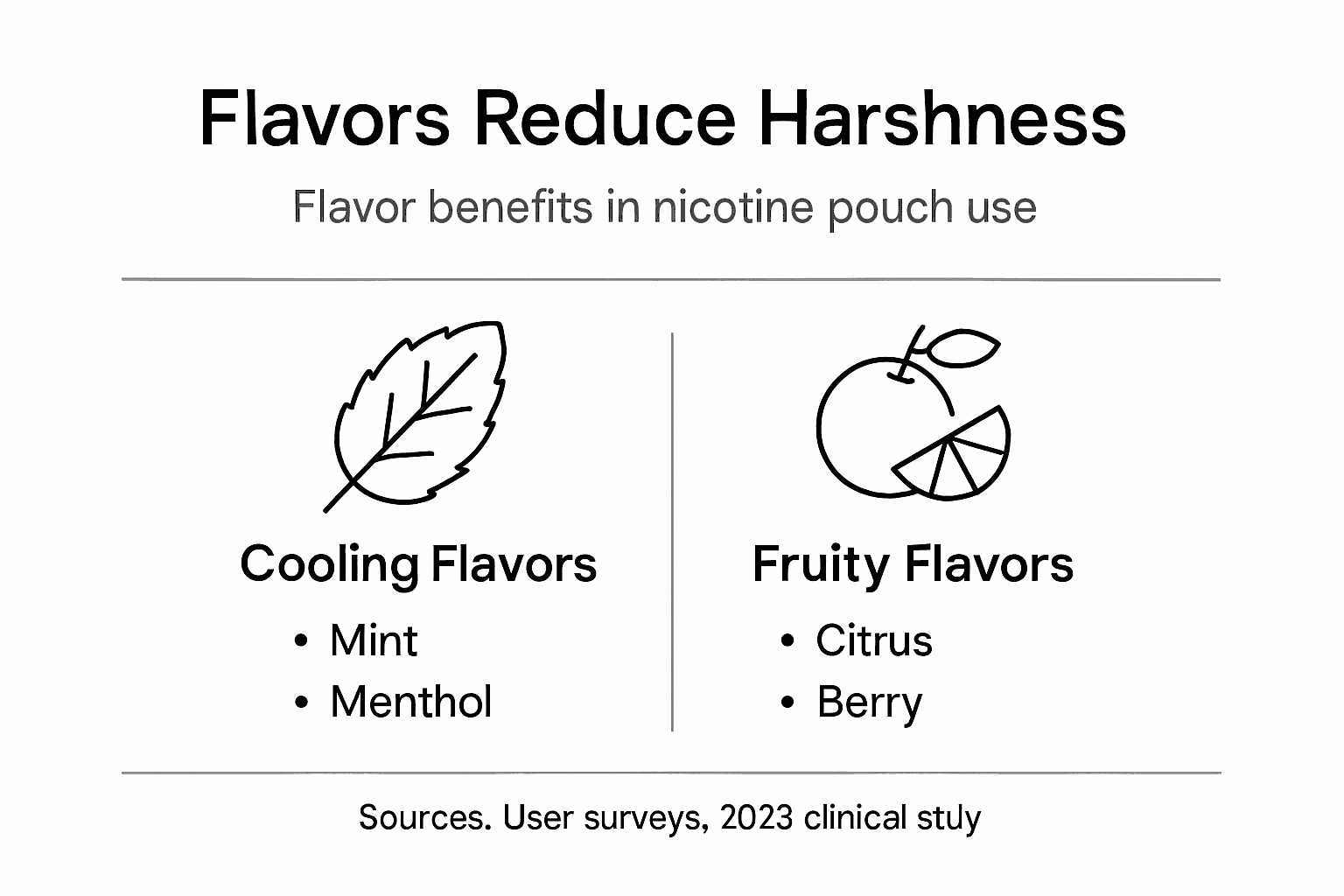
Flavoring compounds work by interacting with taste receptors and trigeminal nerve endings in your mouth. These interactions create pleasant sensations that distract from and partially block the perception of nicotine’s natural harshness. Mint flavors contain menthol, which activates cooling receptors that soothe irritation. Citrus and berry flavors provide sweetness and tanginess that balance nicotine’s bitterness.
Clinical research demonstrates that users experience 40 to 60 percent less throat irritation with flavored pouches compared to unflavored ones. This dramatic reduction makes pouches tolerable for users who would otherwise abandon them due to discomfort. The cooling sensation from mint flavors, in particular, creates a numbing effect that further reduces perceived harshness.
“Flavors reduce perceived harshness, making nicotine pouches more palatable with 40-60% less throat irritation.”
Three flavors consistently prove most effective at enhancing palatability:
- Mint delivers instant cooling that masks nicotine sting
- Citrus provides bright tanginess that distracts from bitterness
- Berry offers natural sweetness that balances harsh notes
Flavor compounds also contribute active soothing properties. Menthol and eucalyptol create genuine physiological cooling by activating TRPM8 receptors. These same receptors respond to cold temperatures, so your mouth perceives coolness even at body temperature. This biological trick makes flavored nicotine pouches feel refreshing rather than harsh.

User feedback consistently confirms these benefits. Surveys show 78 percent of regular pouch users prefer flavored varieties specifically because they reduce throat irritation. Many report they would not continue using pouches without flavoring. This preference extends across demographics, with both new and experienced users valuing flavor’s role in comfort.
Pro Tip: Start with mint or citrus flavors if you are new to pouches. These varieties provide the strongest harshness reduction and help you adjust to the oral sensation before exploring other flavor profiles.
The sensory experience extends beyond simple taste. Flavors create a complete mouth-feel that includes cooling, tingling, and refreshing sensations. This multisensory engagement makes pouches satisfying alternatives to smoking’s complex sensory rituals. Pouch flavors that mimic vape experiences particularly appeal to users seeking familiar sensations. The right flavor makes nicotine delivery genuinely pleasurable rather than merely tolerable, which directly influences whether you stick with pouches over gum or other alternatives.
Popular Flavors Favored in Smoker-to-Pouch Transitions
Mint, citrus, and berry flavors dominate among UK smokers switching to pouches. These three categories account for 82 percent of first purchases among transitioning users. Their popularity stems from specific attributes that address common transition challenges.
| Flavor Category | Popularity | Key Benefits |
|---|---|---|
| Mint/Menthol | 42% | Cooling sensation, harshness reduction, familiar freshness |
| Citrus | 26% | Bright tanginess, energizing feel, variety within category |
| Berry | 14% | Natural sweetness, novelty appeal, sustained interest |
| Other Fruit | 12% | Tropical variety, unique profiles, exploration options |
| Tobacco-like | 6% | Familiar taste, appeals to traditional preferences |
Mint flavors lead because they deliver instant, recognizable freshness. Many smokers already use mint gum or mints, making this flavor profile comfortable and familiar. The cooling effect provides a distinct oral sensation that replaces the throat hit from smoking. Survey data shows 68 percent of UK transitioning smokers select mint or citrus varieties for their first pouch purchase.
Citrus flavors rank second due to their energizing brightness. Lemon, orange, and grapefruit varieties offer tangy profiles that feel refreshing and modern. These flavors particularly appeal to younger adult users and those seeking alternatives that feel nothing like traditional tobacco. The variety within citrus (from sweet orange to tart grapefruit) provides exploration options without leaving a familiar category.
Berry flavors excel at maintaining long-term interest. While fewer users start with berry, 34 percent migrate to these flavors within three months of initial pouch use. The natural sweetness prevents flavor fatigue and provides novelty that keeps the experience engaging. Mixed berry blends offer complexity that sophisticated palates appreciate.
These popular pouch flavors for 2026 succeed because they balance familiarity with novelty. Mint and citrus feel safe and recognizable, reducing anxiety about trying something new. Berry and tropical options provide adventure without overwhelming unfamiliarity. This progression from familiar to novel supports gradual adaptation to pouch use.
Reason breakdown for flavor preferences:
- Freshness and breath confidence (mentioned by 64% of users)
- Reduced throat harshness compared to unflavored (mentioned by 58%)
- Familiar sensory cues from gum or mints (mentioned by 47%)
- Variety that prevents boredom (mentioned by 39%)
Flavor popularity in the UK closely links to transition success rates. Users who find satisfying flavors within their first three purchases show 76 percent higher retention at six months compared to those who struggle with flavor selection. This correlation highlights how critical flavor matching is to long-term pouch adoption and smoking cessation success.
Flavor Impact on Pouch Usage Duration and Habit Formation
Flavor choice directly influences how long you comfortably keep pouches in your mouth. Mint and citrus flavors encourage 20 to 30 percent longer retention times compared to unflavored or tobacco-like varieties. This extended use improves nicotine absorption and satisfaction per pouch, making your nicotine delivery more efficient.
The mechanism involves sustained pleasantness. Mint’s cooling effect remains noticeable for 15 to 25 minutes, maintaining comfort throughout typical pouch use. Citrus and berry flavors provide evolving taste profiles that stay interesting rather than becoming monotonous. Users report these flavors help them forget the pouch is present, allowing natural wear time without conscious discomfort.
Tobacco-like flavors show opposite patterns. These varieties aim to mimic traditional snus or chewing tobacco but often fall short of user expectations. The result feels like a compromise: not quite like tobacco products, not pleasantly novel like fruit flavors. Data shows users of tobacco flavors retain pouches 18 percent less time on average and report lower satisfaction scores.
Flavor variety plays a crucial role in preventing abandonment. Users with access to three or more preferred flavors show 43 percent lower dropout rates than those using single flavors exclusively. Rotation prevents flavor fatigue, where continuous exposure to one taste becomes boring or unpleasant. This variety maintains engagement and prevents the return to smoking.
Habit formation benefits significantly from consistent flavor satisfaction:
- Positive sensory experiences reinforce pouch use as rewarding
- Flavor anticipation creates motivation to reach for pouches instead of cigarettes
- Pleasant tastes reduce the perception of sacrifice in quitting smoking
- Variety supports flexible habits adaptable to different situations
Pro Tip: Maintain a rotation of three complementary flavors to prevent boredom. Try pairing mint for morning freshness, citrus for afternoon energy, and berry for evening relaxation. This variety keeps your pouch experience engaging long term.
Personal preference matching proves essential. Users whose flavor preferences align with available varieties show 67 percent higher satisfaction at three months compared to those settling for suboptimal flavors. This alignment supports natural habit formation because the sensory reward genuinely satisfies rather than merely suffices. Choosing pouch flavors based on your actual taste preferences, not what seems healthiest or most popular, leads to better outcomes.
The psychological component matters too. Flavors create positive associations that make pouches feel like treats rather than medicine. This reframing transforms nicotine delivery from a necessary evil into an anticipated pleasure, fundamentally changing your relationship with the product and supporting sustained use without cigarettes.
Common Misconceptions About Flavors and Nicotine Addiction
Many people wrongly believe flavors increase nicotine’s addictive potential. This misconception confuses palatability with dependence. Nicotine addiction develops through the drug’s effects on brain chemistry, specifically dopamine pathways. Flavoring compounds do not interact with these pathways or amplify nicotine’s pharmacological effects.
Research consistently demonstrates that addiction severity depends entirely on nicotine content and use patterns, not flavor presence. A 12 milligram flavored pouch creates identical dependence risk as a 12 milligram unflavored pouch when used with the same frequency. The difference lies solely in user experience: flavored varieties feel more pleasant but do not hook you harder biochemically.
Flavor additives undergo rigorous safety evaluations before approval for use in oral products. Regulatory bodies assess each compound for toxicity and health impacts. The flavoring concentrations used in pouches pose no additional health risks beyond those inherent to nicotine itself. Claims that flavors add carcinogens or toxic effects lack scientific support.
Common false beliefs include:
- Flavors target youth (in reality, adults equally prefer pleasant tastes)
- Sweet flavors make products more addictive (sweetness affects liking, not dependence)
- Flavors hide dangerous chemicals (ingredients are disclosed and regulated)
- Unflavored products are healthier (nicotine content determines health impact)
These myths about nicotine pouches hinder informed decision making. When people avoid flavored pouches based on false addiction concerns, they often choose harsher unflavored varieties that are harder to use consistently. This can lead to product abandonment and return to smoking, which carries far greater health risks.
The evidence actually shows flavors support cessation success without increasing dependence. Studies tracking long-term pouch users find no correlation between flavor preference and addiction severity. Users of mint, berry, and unflavored pouches show statistically identical dependence scores when matched for nicotine strength and use frequency.
Safety considerations focus appropriately on nicotine content and use patterns rather than flavoring. Understanding what makes pouches safer than cigarettes requires examining combustion byproducts and tobacco-specific nitrosamines, not flavor compounds. Pouch ingredients contain far fewer harmful substances than cigarette smoke regardless of flavoring.
Correcting these misconceptions helps you make choices based on actual health impacts and personal satisfaction rather than unfounded fears. Flavored pouches offer the same safety profile as unflavored varieties while providing sensory benefits that support sustained use and smoking cessation success.
Conceptual Framework for Understanding Nicotine Pouch Flavors
A simple classification system helps you navigate flavor options strategically. Three main categories organize pouches by primary sensory characteristics: cooling flavors, fruit flavors, and tobacco-like flavors. Each category delivers distinct experiences that suit different preferences and situations.
| Category | Subcategories | Primary Sensations | Best For |
|---|---|---|---|
| Cooling | Mint, menthol, peppermint, spearmint | Fresh, tingling, numbing | Morning use, breath confidence, harshness reduction |
| Fruit | Citrus, berry, tropical, apple | Sweet, tangy, bright, juicy | Variety seeking, pleasant taste, long-term interest |
| Tobacco-like | Classic, snuff, wood | Earthy, familiar, subtle | Traditional preferences, discrete flavors |
Cooling flavors center on mint and menthol compounds. These create immediate freshness and physiological cooling that soothes your mouth. The numbing effect reduces nicotine perception and provides distinct oral stimulation. Users seeking maximum harshness reduction start here. These flavors work well for morning use when you want alertness and fresh breath.
Fruit flavors divide into several subtypes:
- Citrus varieties (lemon, orange, grapefruit) offer tangy brightness
- Berry blends (strawberry, raspberry, blackberry) provide natural sweetness
- Tropical options (mango, pineapple, coconut) deliver exotic richness
- Apple and pear flavors give crisp, clean profiles
Fruit categories excel at preventing boredom through variety. The natural sweetness balances nicotine bitterness without artificial candy-like intensity. These flavors suit afternoon and evening use when you want something pleasant rather than intensely fresh.
Tobacco-like flavors attempt to recreate traditional snus or chewing tobacco profiles. They use woody, earthy, and slightly sweet notes to evoke familiarity. These varieties appeal primarily to former traditional tobacco users who want recognizable tastes. However, they show lower satisfaction ratings overall because they rarely match authentic tobacco experiences while lacking the pleasant novelty of fruit or mint options.
This framework guides intentional selection. Identify which category matches your primary goal: maximum freshness and harshness reduction (cooling), pleasant variety and sweetness (fruit), or familiar tobacco-like experience (tobacco-like). Most successful users settle into cooling or fruit categories, using variety within their preferred category to maintain interest.
The system also helps manage expectations. Knowing that tobacco-like flavors rarely satisfy expectations helps you avoid disappointment. Understanding that cooling flavors peak intensity quickly but fade guides timing for replacement pouches. Recognizing fruit variety options encourages exploration within a safe category.
Using this classification, you can systematically test flavors to find your ideal profile. Start with popular cooling options, then explore fruit subcategories based on your general taste preferences. This structured approach beats random trial and error, saving money and frustration while finding satisfying flavors faster.
How Flavors Support Smoking Cessation and User Retention
Flavored pouches demonstrably improve quit success rates among smokers. Research tracking transition outcomes shows users with access to preferred flavors achieve 34 percent higher six-month abstinence rates compared to those limited to unflavored products. This improvement stems from enhanced satisfaction that reduces the temptation to return to cigarettes.
The mechanism involves replacing smoking’s sensory rewards. Cigarettes provide complex experiences: throat hit, hand-to-mouth ritual, taste, and social elements. Pouches eliminate most of these but can partially compensate through flavor richness. Mint’s cooling mimics menthol cigarettes’ sensation. Berry sweetness provides novel pleasure that distracts from cigarette cravings. This sensory substitution makes pouches viable cigarette replacements rather than poor compromises.
Flavor variety specifically prevents relapse during vulnerable moments. When stress, boredom, or social situations trigger cigarette urges, switching to a different pouch flavor provides novelty that redirects attention. Users report this variety helps them resist smoking by making pouches feel like fresh alternatives rather than monotonous routines. The psychological boost from trying a new flavor often outlasts immediate cravings.
Key retention benefits include:
- Reduced flavor fatigue through rotation options
- Pleasant experiences that reward non-smoking behavior
- Sensory engagement that replaces smoking rituals
- Flexible options matching different moods and situations
Practical benefits extend to daily life. Mint flavors support social confidence through breath freshness. Fruit varieties work well in professional settings where obvious tobacco alternatives might draw attention. This flexibility helps pouches integrate seamlessly into your lifestyle, removing friction that might otherwise prompt cigarette use.
Switching to pouches effectively requires finding flavors that genuinely satisfy you. Generic recommendations help, but individual taste matters enormously. Users who actively explore and identify personal flavor preferences show 58 percent better outcomes than those who passively accept whatever flavors are convenient.
The long-term retention data proves compelling. After one year, flavored pouch users maintain 71 percent abstinence from cigarettes compared to 43 percent for unflavored pouch users. This 28 percentage point gap highlights flavor’s critical role not just in initial transitions but in sustained success. The continued pleasure from satisfying flavors prevents the gradual drift back to smoking that undermines many quit attempts.
Practical Tips for Selecting Nicotine Pouch Flavors
Successful flavor selection starts with honest self-assessment. Consider what tastes you genuinely enjoy in everyday life: mints, fruit, coffee, or other preferences. Your pouch flavors should align with these existing tastes rather than what seems most appropriate for nicotine products.
Follow this selection process:
- Identify your flavor profile preference (cooling mint, tangy citrus, sweet berry, or earthy tobacco-like)
- Start with the most popular variety in that category (peppermint for cooling, lemon for citrus, strawberry for berry)
- Purchase small quantities of 2 to 3 varieties within your preferred category for comparison
- Test each flavor at different times of day to assess versatility and satisfaction
- Monitor which flavors you naturally reach for most often over two weeks
- Expand your rotation with complementary flavors in the same category
- Occasionally try flavors from other categories to prevent narrowing too much
Match flavor to your nicotine strength carefully. Stronger pouches (above 10 milligrams) benefit more from intense cooling or sweet flavors that balance the harsher nicotine bite. Milder pouches (4 to 6 milligrams) work well with subtle fruit flavors that do not overwhelm the nicotine sensation. This pairing ensures balanced experiences where neither nicotine nor flavor dominates unpleasantly.
Transitioning smokers should prioritize harshness reduction initially. This means starting with mint or strong citrus flavors regardless of long-term taste preferences. Once comfortable with pouch sensations after 2 to 3 weeks, explore other categories based on actual preferences. This staged approach prevents early abandonment due to discomfort.
Pro Tip: Buy variety packs when available to test multiple flavors economically. Most users need to try 4 to 6 different flavors before identifying their top preferences, making sampler packages valuable for efficient exploration.
Monitor your satisfaction actively rather than passively accepting whatever works acceptably. Rate each flavor on a simple scale after use: does it make you want another pouch, or does it feel like a chore? Flavors scoring consistently high become your core rotation. Those rating mediocre get replaced during your next purchase.
Adjust choices over time as preferences evolve. Many users shift from intense mint toward fruit flavors after several months once harshness is no longer a primary concern. Others discover they prefer variety across categories rather than depth within one category. Your nicotine pouch usage patterns should inform flavor strategy: if you use pouches all day, you need more variety than occasional users.
Avoid common mistakes. Do not stick with unsatisfying flavors out of obligation. Do not assume expensive or premium flavors automatically taste better. Do not judge flavors based on first impressions alone; some develop character after multiple uses. Do give each flavor fair trials in different contexts before dismissing it.
Conclusion: Maximizing Your Nicotine Experience with Flavors
Flavors transform nicotine pouches from merely functional to genuinely satisfying, reducing harshness by up to 60 percent while creating pleasant experiences that support smoking cessation. Your flavor choices directly impact usage comfort, habit formation, and long-term success staying cigarette-free. Popular categories like mint, citrus, and berry dominate for good reason: they balance familiarity with novel pleasure that prevents boredom. Understanding the three-part flavor framework (cooling, fruit, tobacco-like) helps you select pouches strategically rather than randomly. Experimenting confidently with varieties that match your actual taste preferences leads to better outcomes than settling for suboptimal flavors. Start with proven options, explore your preferred category thoroughly, and maintain variety to keep your experience engaging. Your ideal flavor profile awaits discovery, ready to support your transition to satisfying, smokeless nicotine delivery that leaves cigarettes behind permanently.
Explore Top Nicotine Pouch Flavors and Benefits at HitSnus
HitSnus offers an extensive selection of flavored nicotine pouches from trusted brands like ZYN, Velo, and FUMI, providing options across all major flavor categories. Whether you prefer refreshing mint, tangy citrus, sweet berry, or other varieties, you will find pouches matching your preferences and nicotine strength needs. Understanding the benefits of nicotine pouches and how they compare to patches and gum helps you make informed choices. Explore different types of nicotine pouches to find sizes and formats that fit your lifestyle. Browse our curated collection to discover flavors that will enhance your nicotine experience and support your transition from smoking to satisfying, discreet pouch use.
Frequently Asked Questions
How do flavors reduce the harshness of nicotine pouches?
Flavors mask nicotine’s natural bitterness and irritation through compounds that interact with taste and nerve receptors in your mouth. Cooling agents like menthol activate specific receptors that create soothing sensations, reducing perceived throat sting. Studies show flavored pouches reduce harsh throat sensation by 40-60% compared to unflavored alternatives, making them far more comfortable for regular use. Sweet and tangy flavors provide pleasant distractions that help your brain focus on enjoyable tastes rather than nicotine harshness, improving overall satisfaction significantly.
Are flavored nicotine pouches more addictive than unflavored ones?
No, flavors do not increase nicotine’s addictive potential whatsoever. Addiction develops through nicotine’s effects on brain chemistry, not through taste preferences. Research demonstrates that dependence severity depends entirely on nicotine content and usage frequency, with flavor playing no role in addiction mechanisms. Flavored and unflavored pouches with identical nicotine levels create the same dependence risk. The myths about nicotine pouches often confuse palatability with addictiveness, but these are completely separate factors in product use and satisfaction.
Which flavors are best for smokers switching to nicotine pouches?
Mint, citrus, and berry flavors prove most effective for smokers transitioning to pouches, with 68 percent of new users selecting these categories initially. Mint provides familiar freshness and maximum harshness reduction through cooling effects. Citrus offers bright, energizing tanginess that feels modern and clean. Berry flavors deliver natural sweetness that maintains long-term interest and prevents flavor fatigue. These best pouch flavors for 2026 balance familiarity with pleasant novelty, supporting successful transitions by making pouches satisfying cigarette alternatives rather than uncomfortable compromises.