













How to Switch from Smoking to Pouches: Simple UK Guide
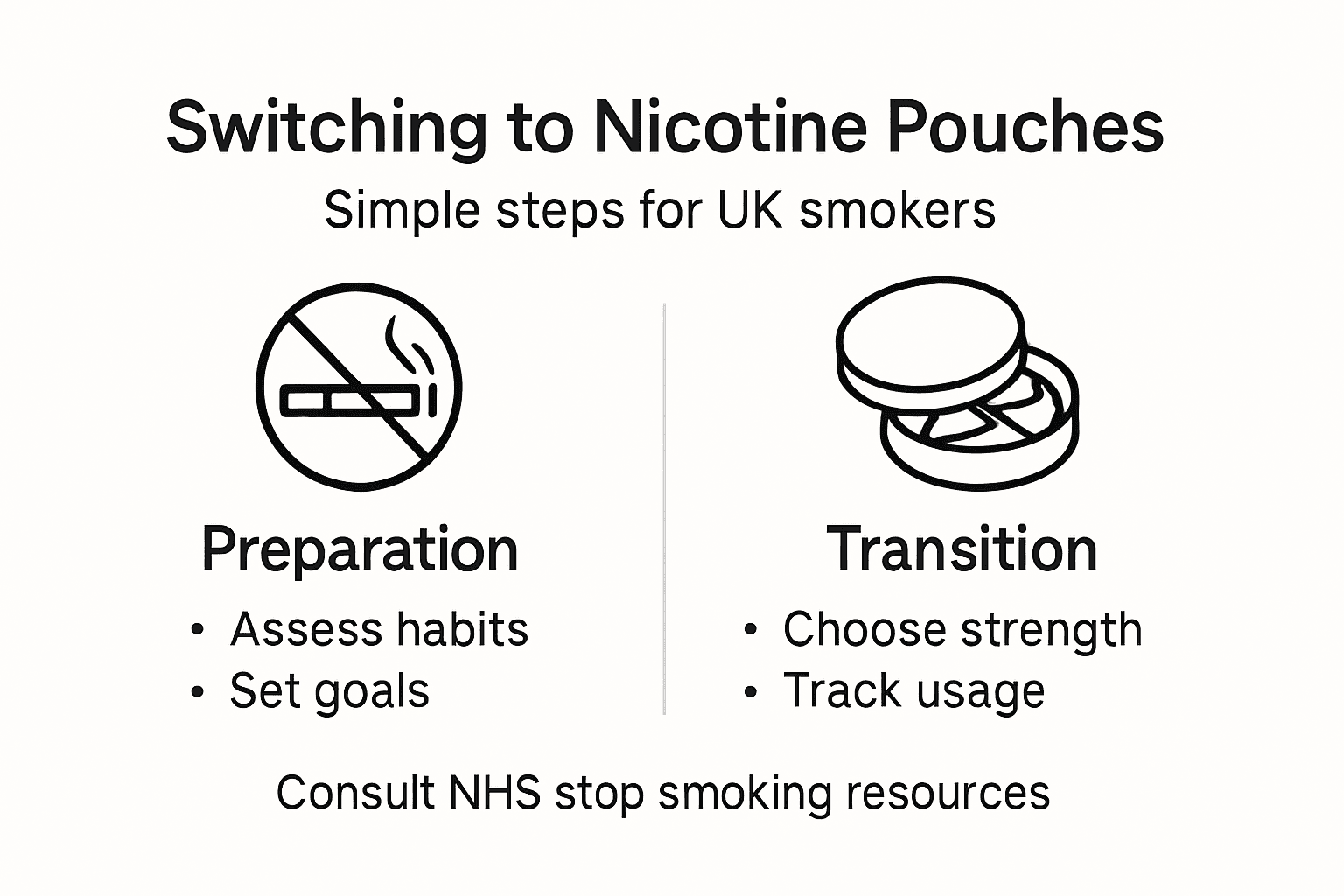
Making the shift from traditional cigarettes to nicotine pouches can feel daunting, especially with so many choices and cravings to manage. For adult smokers across the United Kingdom, finding a discreet and smoke-free alternative is an important step towards reducing health risks and regaining control. This guide breaks down each stage of transition, highlighting how thoughtful planning, the right product, and practical strategies can help you build a healthier routine while keeping cravings at bay.
Table of Contents
- Step 1: Assess Your Readiness To Quit Cigarettes
- Step 2: Select Suitable Nicotine Pouches For Your Needs
- Step 3: Set Up A Daily Pouch Routine And Track Use
- Step 4: Manage Cravings And Monitor Withdrawal Symptoms
- Step 5: Verify A Successful Switch To Smokeless Alternatives
Quick Summary
| Key Point | Explanation |
|---|---|
| 1. Assess your smoking triggers | Identify moments or emotions that make you want to smoke. Recognising these will aid your quitting journey. |
| 2. Choose the right nicotine pouch | Select pouches based on your habits and nicotine levels for a smoother transition from cigarettes. |
| 3. Establish a daily routine | Create a consistent schedule for nicotine pouch use to effectively manage your consumption and reduce cravings. |
| 4. Manage cravings strategically | Develop techniques to handle cravings and withdrawal symptoms, ensuring you stay on track during your transition. |
| 5. Track health improvements | Keep a record of your physical and psychological health indicators post-transition to confirm your progress. |
Step 1: Assess your readiness to quit cigarettes
Quitting smoking is a personal journey that requires genuine commitment and self-awareness. Your first step involves honestly evaluating your motivation and psychological preparedness to make this significant lifestyle change. The NHS stop smoking resources recommend a structured approach to understanding your smoking habits and readiness.
To effectively assess your readiness, consider these critical self-reflection points:
- Understand your smoking triggers: Identify specific situations, emotions, or social contexts that prompt you to smoke
- Evaluate your motivation level: Rate your desire to quit on a scale from 1-10
- Recognise your nicotine dependence: Determine how many cigarettes you consume daily and how quickly after waking you have your first cigarette
- Assess previous quit attempts: Reflect on past experiences and what obstacles prevented you from successfully stopping
Successful smoking cessation requires more than willpower. As the UK government’s smoking reduction campaigns highlight, preparation and support are crucial. Consider consulting healthcare professionals who can provide personalised guidance tailored to your specific needs.
Your readiness is about mental preparation, not perfection. Every smoker’s journey is unique.
Pro tip: Keep a detailed smoking journal for one week to gain deeper insights into your habits and psychological patterns before attempting to quit.
Step 2: Select suitable nicotine pouches for your needs
Choosing the right nicotine pouch requires careful consideration of your individual smoking habits and nicotine tolerance. Toxicological assessments of nicotine pouches highlight that these products vary significantly in nicotine strength and absorption characteristics.
When selecting your ideal nicotine pouch, consider these essential factors:
- Assess your current nicotine intake: Determine the number of cigarettes you currently smoke daily
- Evaluate nicotine strength levels: Start with a strength close to your current cigarette nicotine consumption
- Consider flavour preferences: Choose pouches that appeal to your taste to increase likelihood of successful transition
- Check pouch size and placement comfort: Select pouches that feel comfortable under your lip
Understand that transitioning involves finding the right balance. Nicotine pouches offer a tobacco-free alternative with varying concentrations, allowing you to gradually manage your nicotine intake.

Here is a comparison of nicotine products for smoke-free transitions:
| Product Type | Nicotine Source | Tobacco Content | Typical Consumption Method |
|---|---|---|---|
| Nicotine pouches | Synthetic or purified | None | Placed under the lip |
| Nicotine gum | Synthetic or purified | None | Chewed intermittently |
| Traditional patches | Synthetic or purified | None | Applied to the skin daily |
| Cigarettes | Tobacco leaf | High | Smoked, inhaled |
Selecting the right pouch is a personal journey of finding what works best for your body and lifestyle.
Pro tip: Start with lower nicotine strengths and gradually adjust to find your optimal pouch configuration, allowing your body to adapt comfortably.
Step 3: Set up a daily pouch routine and track use
Establishing a consistent nicotine pouch routine is crucial for successfully transitioning away from smoking. When implementing your new nicotine pouch strategy, creating a structured approach will help you manage your nicotine intake effectively.
Develop a systematic routine with these key guidelines:
- Establish consistent timing: Choose specific times of day for pouch use
- Track daily consumption: Monitor number of pouches used per day
- Record nicotine strength: Note the strength of pouches you’re using
- Create a usage log: Document your progress and observe patterns
Your routine should be flexible yet disciplined. Start by replacing cigarettes with pouches gradually, paying attention to your body’s response and adjusting accordingly. This methodical approach allows you to understand your nicotine requirements and manage your transition smoothly.
Consistency is the key to successfully replacing cigarettes with nicotine pouches.
Pro tip: Use a smartphone app or small notebook to log your daily pouch usage, helping you track progress and identify reduction patterns.
Step 4: Manage cravings and monitor withdrawal symptoms
Navigating nicotine withdrawal requires strategic planning and understanding of your body’s responses. When transitioning to nicotine pouches, managing nicotine withdrawal symptoms becomes crucial for maintaining your smoke-free journey.
Prepare for potential withdrawal challenges by implementing these key strategies:
- Recognise common withdrawal symptoms: Irritability, restlessness, difficulty concentrating
- Anticipate craving triggers: Identify specific situations that prompt cigarette urges
- Develop distraction techniques: Keep hands and mind actively engaged during cravings
- Use nicotine replacement support: Leverage pouches to manage nicotine levels consistently
- Practice stress management: Implement deep breathing or short meditation exercises
Understand that withdrawal symptoms typically peak in the first week and gradually diminish. Your body is adapting to a healthier nicotine consumption method, and temporary discomfort is part of the healing process.
Withdrawal is temporary, but the health benefits of quitting are permanent.
Pro tip: Create a personal ‘craving survival kit’ with water, healthy snacks, and your nicotine pouches to help navigate challenging moments.
Step 5: Verify a successful switch to smokeless alternatives
Confirming your transition from cigarettes to nicotine pouches requires careful assessment of your physical and behavioural changes. Harm reduction strategies emphasise tracking multiple indicators of successful smokeless alternative adoption.
Evaluate your switch using these comprehensive verification methods:
- Track cigarette reduction: Monitor and document daily cigarette consumption
- Assess respiratory improvements: Notice changes in breathing, coughing, and lung capacity
- Monitor nicotine pouch usage: Record frequency and strength of pouch consumption
- Check physical health markers: Note improvements in blood pressure, heart rate, and overall energy
- Evaluate psychological well-being: Observe changes in stress levels and smoking-related anxiety
Successful switching is a gradual process that requires patience and consistent self-monitoring. Your body will adapt and respond differently as you transition to a healthier nicotine consumption method.
Below is a reference table outlining signs of progress when switching to smokeless alternatives:
| Indicator | Positive Change | Recommended Tracking Method |
|---|---|---|
| Respiratory health | Easier breathing, less coughing | Weekly self-assessment |
| Energy levels | Noticeable improvement | Daily journal entry |
| Cigarette cravings | Less frequent, less intense | Craving log or app |
| Blood pressure | Gradual lowering over weeks | Regular home or GP monitoring |
True success lies not just in quitting, but in maintaining a sustainable, healthier lifestyle.
Pro tip: Consult your healthcare provider for a comprehensive health assessment to objectively track your progress and validate your smoke-free journey.
Take the Next Step Towards a Smoke-Free Life with Hitsnus.com
Quitting cigarettes can feel like a daunting challenge but switching to nicotine pouches offers a practical, smokeless alternative to help manage cravings and control nicotine intake. If you are assessing your readiness and looking for the right nicotine pouch options, explore the diverse range of high-quality products at FUMI – HitSnus designed for comfort and flavour. With carefully selected strengths and styles, these pouches support a smoother transition from smoking to a harm-reduced lifestyle.
Don’t wait for nicotine withdrawal symptoms to take control. Start building a consistent pouch routine today with options from XQS – HitSnus and discover bold tastes in our Spicy Nicotine Pouches – Heat-Infused Flavor Hits Hard – HitSnus collection. Visit Hitsnus.com now to find your perfect match and take advantage of support resources. Begin your personalised, discreet quit journey with us and reclaim your health and freedom.
Frequently Asked Questions
How can I assess my readiness to switch from smoking to pouches?
To assess your readiness, reflect on your smoking triggers, motivation to quit, and previous attempts to stop smoking. Start by keeping a smoking journal for one week to identify patterns in your habits and emotional triggers.
What factors should I consider when choosing a nicotine pouch?
Consider your current nicotine intake, the strength of the pouches, flavour preferences, and comfort of pouch placement. Choose a nicotine strength that closely matches your daily cigarette consumption to ensure a smoother transition.
How should I establish a daily routine for using nicotine pouches?
Create a structured daily routine by choosing specific times for pouch use and tracking your daily consumption. Aim to gradually replace cigarettes with pouches, noting any changes in your cravings or nicotine needs.
What strategies can I use to manage cravings while switching?
Anticipate your craving triggers and develop distraction techniques to keep your mind engaged. Practice stress management techniques, such as deep breathing or short meditation, to navigate cravings more effectively.
How can I verify that I’ve successfully transitioned to nicotine pouches?
Monitor key indicators such as reductions in cigarette consumption, improvements in respiratory health, and overall well-being. Keep a log to track these changes, aiming for noticeable progress within a few weeks.
What should I include in my ‘craving survival kit’?
Include items that can help you manage cravings, such as water, healthy snacks, and your nicotine pouches. This kit should be readily available during challenging times to help you stay focused on your transition.