










Understanding nicotine alternatives for adult users in 2026
Many adult nicotine users believe alternatives like pouches or patches are ineffective or unsafe compared to traditional smoking. Recent evidence challenges this misconception, revealing that smokeless nicotine alternatives deliver satisfying nicotine whilst significantly reducing harmful toxin exposure. This guide clarifies what nicotine alternatives are, their health implications, how different delivery methods compare, and practical steps for transitioning safely. Whether you’re a smoker exploring options or a vaper seeking discreet consumption, you’ll gain clear insights to make informed decisions about nicotine alternatives.
Table of Contents
- Key takeaways
- What are nicotine alternatives? An overview
- Health implications and safety of nicotine alternatives
- Comparing nicotine delivery methods: pouches, vaping and patches
- Practical tips for transitioning to nicotine alternatives safely
- Discover high-quality nicotine pouches at HitSnus
- Frequently asked questions about nicotine alternatives
Key Takeaways
| Point | Details |
|---|---|
| Varied options | Nicotine alternatives include pouches, patches, gum, sprays, vaping devices and heated tobacco, offering choices beyond smoking. |
| Safer discreet delivery | These products provide nicotine with markedly reduced exposure to smoke derived toxins while remaining discreet for many adult users. |
| Pros and cons | Understanding the benefits and drawbacks helps individuals select the most suitable nicotine alternative for their lifestyle. |
| Disposal and usage safety | Proper disposal and sensible usage maximise safety and effectiveness of nicotine alternatives. |
What are nicotine alternatives? An overview
Nicotine alternatives are products designed to deliver nicotine without requiring tobacco combustion or smoking. These innovative solutions cater to adult nicotine users seeking satisfaction whilst minimising health risks associated with traditional cigarettes. Understanding what qualifies as a nicotine alternative helps you navigate the growing market of smokeless options.
Nicotine pouches and other smokeless products deliver nicotine without tobacco combustion, making them fundamentally different from cigarettes. These products avoid producing smoke, tar, or carbon monoxide, the primary culprits behind smoking-related health complications. Instead, they use various delivery mechanisms to provide nicotine directly to your bloodstream through oral tissues, skin, or inhaled aerosol.
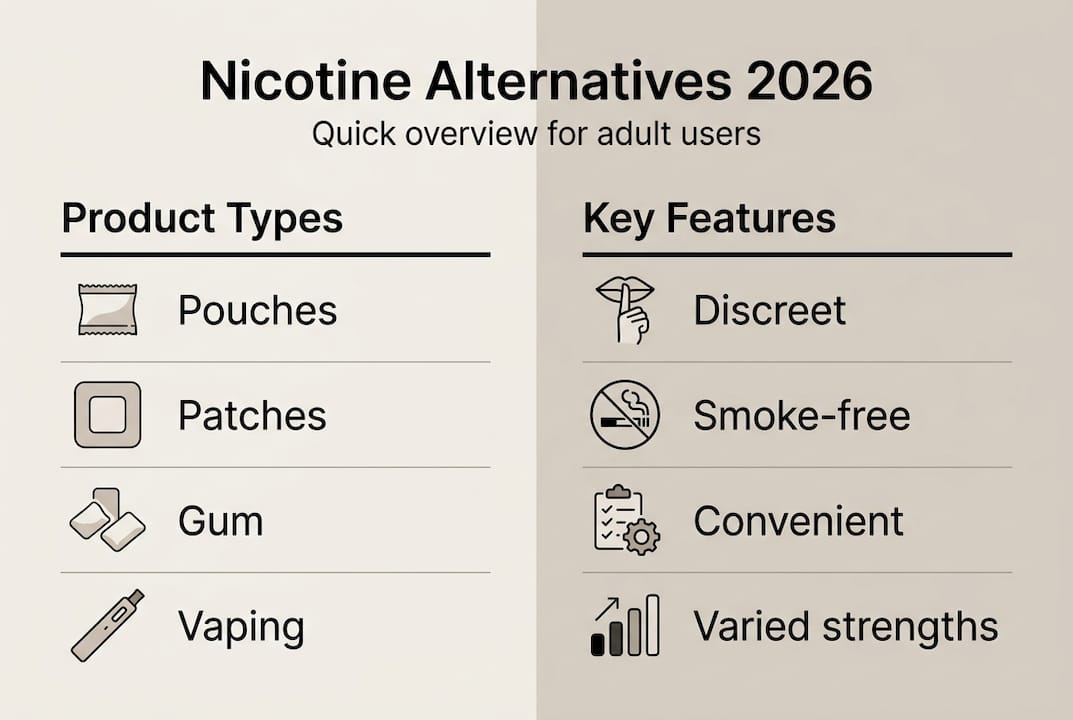
The range of nicotine alternatives available in 2026 includes several distinct categories:
- Nicotine pouches: small, tobacco-free sachets placed between your lip and gum for slow nicotine release
- Nicotine replacement therapy products: patches, gum, lozenges, and sprays originally designed for smoking cessation
- Vaping devices: electronic systems that heat liquid nicotine into inhalable aerosol
- Heated tobacco products: devices that warm tobacco without combustion
These alternatives serve adult users across different situations. Smokers transitioning away from cigarettes often begin with patches or pouches to manage cravings without smoke. Vapers seeking more discreet consumption in public spaces favour smokeless nicotine alternatives like pouches that produce no vapour or odour. Social users appreciate the convenience of products requiring no lighter, charging, or visible consumption ritual.
The purpose behind nicotine alternatives extends beyond simple nicotine delivery. They aim to provide satisfaction comparable to smoking whilst dramatically reducing harm. By eliminating combustion, these products remove hundreds of toxic chemicals present in cigarette smoke. This fundamental difference positions nicotine alternatives as potentially valuable tools for adult users unwilling or unable to quit nicotine entirely but seeking safer consumption methods.
Pro Tip: Start by identifying your primary need, whether discretion, convenience, or harm reduction, then select the alternative type that best matches your lifestyle and usage patterns.
Health implications and safety of nicotine alternatives
The health profile of nicotine alternatives differs substantially from traditional smoking, though understanding both benefits and limitations remains essential for informed decision-making. Whilst nicotine itself carries risks, the delivery method dramatically influences overall health impact.
Nicotine is an addictive substance that affects cardiovascular function and brain chemistry. However, the catastrophic health consequences of smoking stem primarily from inhaling combustion byproducts rather than nicotine alone. Cigarette smoke contains over 7,000 chemicals, including at least 70 known carcinogens. Nicotine alternatives are considerably safer than cigarettes, reducing exposure to harmful toxins by eliminating tobacco combustion entirely.
This fundamental difference translates into measurable health advantages:
- No tar accumulation in lungs, reducing respiratory disease risk
- Elimination of carbon monoxide exposure, improving oxygen delivery
- Absence of carcinogenic combustion byproducts linked to cancer
- Reduced environmental tobacco smoke affecting others
Research comparing nicotine pouches versus cigarettes shows users experience fewer respiratory complications, improved lung function, and better cardiovascular markers. Vapers similarly report enhanced breathing capacity and reduced coughing compared to their smoking years. Patches and gum, long established in medical settings, demonstrate safety profiles suitable even for smoking cessation programmes.
Switching from combustible tobacco to nicotine alternatives represents a significant harm reduction strategy for adult users unable or unwilling to quit nicotine entirely.
Safety considerations extend beyond health effects to practical usage and disposal. Proper disposal reduces fire risks by 80% with nicotine pouches, highlighting how responsible practices enhance overall safety. Used pouches contain residual nicotine and should never be discarded carelessly where children or pets might access them. Following recommended disposal guidelines protects both household members and the environment.
Vaping devices require battery safety awareness, proper charging practices, and appropriate storage away from extreme temperatures. Patches need correct application and rotation of skin sites to prevent irritation. Each alternative comes with specific safety protocols that, when followed, minimise risks and maximise benefits.
Pro Tip: Consult healthcare professionals before switching to nicotine alternatives if you have cardiovascular conditions, are pregnant, or take medications that interact with nicotine.
Comparing nicotine delivery methods: pouches, vaping and patches
Selecting the right nicotine alternative depends on understanding how different delivery methods function, their respective advantages, and which situations favour each option. This comparison clarifies the distinct characteristics of pouches, vaping, and patches to guide your choice.

| Feature | Nicotine pouches | Vaping devices | Nicotine patches |
|---|---|---|---|
| Delivery method | Oral absorption through gum tissue | Inhaled aerosol to lungs | Transdermal through skin |
| Onset speed | Moderate (5-10 minutes) | Fast (seconds to minutes) | Slow (1-2 hours) |
| Duration | 30-60 minutes per pouch | Variable, user-controlled | 16-24 hours continuous |
| Discretion level | Very high, invisible use | Moderate, visible vapour | Very high, invisible under clothing |
| Social acceptability | Excellent, no odour or vapour | Variable, depends on setting | Excellent, completely unnoticeable |
Nicotine pouches provide discreet, smokeless nicotine delivery preferred by users prioritising convenience and invisibility. You place a small pouch between your lip and gum, where nicotine slowly releases and absorbs through oral tissues. This method requires no equipment, produces no vapour or odour, and works in any setting including flights, meetings, or public transport. Pouches come in multiple strengths, allowing precise control over nicotine intake.
Vaping devices heat liquid nicotine into inhalable aerosol, delivering nicotine rapidly through lung absorption. This method most closely mimics the hand-to-mouth action and throat sensation of smoking, making it popular among recent quitters. However, vaping produces visible vapour, requires device charging and maintenance, and faces increasing restrictions in public spaces. Flavour variety and adjustable nicotine concentrations offer customisation but add complexity.
Nicotine patches deliver steady, continuous nicotine through skin absorption over 16 or 24 hours. This method eliminates dosing decisions throughout the day and maintains stable blood nicotine levels, reducing cravings effectively. Patches suit users wanting passive delivery without repeated actions. However, they lack flexibility for situational nicotine boosts and may cause skin irritation with prolonged use.
Key considerations when choosing between delivery systems include:
- Lifestyle requirements: pouches excel for busy professionals needing discretion
- Nicotine preferences: vaping offers quickest satisfaction, patches provide steadiest levels
- Health concerns: pouches and patches avoid lung exposure entirely
- Convenience priorities: pouches require no equipment, patches need no repeated application
- Social contexts: pouches and patches work anywhere, vaping faces restrictions
Pro Tip: Many users combine methods, using patches for baseline nicotine coverage whilst keeping pouches available for breakthrough cravings or social situations requiring absolute discretion.
Practical tips for transitioning to nicotine alternatives safely
Successfully adopting nicotine alternatives requires thoughtful planning, gradual adjustment, and awareness of potential challenges. These practical steps guide you through selecting, using, and optimising your experience with smokeless nicotine products.
-
Assess your current nicotine consumption by tracking cigarettes smoked daily or vaping frequency for one week. This baseline helps you select appropriate alternative strengths without under or overdosing.
-
Choose your initial product based on lifestyle needs rather than nicotine delivery alone. Prioritise discretion if you work in restrictive environments, convenience if you travel frequently, or familiarity if transitioning feels daunting.
-
Start with lower nicotine strengths than you estimate needing, then increase gradually if cravings persist. Minimising side effects improves user experience and safety with nicotine pouches, and beginning conservatively prevents overwhelming your system.
-
Allow two weeks for adjustment before judging effectiveness. Your body needs time adapting to different nicotine delivery speeds and absorption methods compared to smoking or previous habits.
-
Monitor common side effects including mouth irritation, hiccups, nausea, or dizziness. These typically indicate excessive nicotine intake or improper usage technique requiring adjustment.
-
Learn proper disposal practices immediately upon starting. Wrap used pouches in tissue before binning, never flush them, and keep them away from children and pets. Following disposal guidelines protects your household and environment.
Managing side effects becomes easier with experience and technique refinement. If pouches cause gum irritation, try different placement positions or shorter usage durations. Nausea often signals too much nicotine too quickly, resolved by switching to lower strengths. Hiccups typically result from swallowing saliva too frequently, managed by spitting occasionally during use.
Hydration significantly impacts your experience with oral nicotine products. Drinking water before and during pouch use reduces mouth dryness and enhances nicotine absorption. Avoid acidic beverages immediately before use, as they alter mouth pH and potentially increase irritation.
Pro Tip: Keep a usage journal during your first month, noting times, strengths, duration, and any side effects. Patterns emerge quickly, helping you optimise product selection and usage timing for maximum satisfaction with minimal discomfort.
Seeking professional guidance accelerates successful transitions, especially for heavy smokers or users with health conditions. Healthcare providers familiar with smoking cessation can recommend appropriate nicotine strengths, monitor your progress, and adjust strategies based on your response. Many users benefit from combining nicotine alternatives with behavioural support, addressing both physical dependence and habitual aspects of tobacco use.
Discover high-quality nicotine pouches at HitSnus
Transitioning to safer nicotine alternatives becomes straightforward when you access reliable products tailored to your needs. HitSnus specialises in tobacco-free nicotine pouches designed for adult users seeking discreet, convenient nicotine delivery without smoke or vapour.
Our extensive range includes multiple nicotine strengths, from low-strength options perfect for beginners to higher concentrations satisfying experienced users. Every product arrives tobacco-free, eliminating concerns about combustion byproducts whilst delivering consistent nicotine satisfaction. Popular brands like ZYN, Velo, and FUMI offer diverse flavour profiles matching your preferences, whether you favour mint freshness, fruit sweetness, or subtle neutrality.
Fast, reliable delivery across the UK ensures you receive nicotine pouches online quickly and discreetly. Our platform provides detailed product descriptions, strength guidance, and usage tips supporting informed purchasing decisions. Choosing HitSnus means accessing quality alternatives backed by responsive customer service, helping you navigate your nicotine alternative journey with confidence and convenience.
Frequently asked questions about nicotine alternatives
What are the main benefits of nicotine pouches compared to smoking?
Nicotine pouches eliminate tobacco combustion, removing tar, carbon monoxide, and thousands of toxic chemicals present in cigarette smoke. They offer discreet, odourless nicotine delivery suitable for any setting without affecting others through secondhand exposure.
Can nicotine pouches help me quit smoking?
Nicotine pouches can support smoking cessation by managing cravings and withdrawal symptoms whilst eliminating smoke exposure. However, they deliver nicotine and maintain dependence, so complete nicotine cessation requires eventually reducing pouch usage as well.
Are nicotine alternatives legal and regulated in the UK?
Nicotine pouches and most alternatives are legal in the UK for adult purchase and use. Regulations govern nicotine content, labelling, and sales restrictions to minors, ensuring consumer safety whilst permitting adult access to harm reduction products.
How should I dispose of used nicotine pouches safely?
Wrap used pouches in tissue or place them in the disposal compartment provided in pouch containers, then bin them with household waste. Never flush pouches down toilets, as they don’t decompose and can damage plumbing systems.
Can vaping and nicotine pouches be used together?
Many users combine vaping and pouches successfully, using each in appropriate contexts based on discretion needs and nicotine requirements. Monitor total nicotine intake to avoid excessive consumption, adjusting strengths or frequency as needed for comfortable, safe usage.