











Smokeless nicotine alternatives explained: 2026 guide
Many people believe smokeless nicotine options are limited to outdated snus or ineffective lozenges. That misconception keeps countless smokers and vapers from discovering a diverse range of tobacco-free, discreet alternatives that deliver nicotine without smoke or vapour. Modern nicotine pouches and lozenges offer varied strengths, flavours, and absorption profiles tailored to different needs. This guide explains how these products work, how their nicotine delivery compares to cigarettes, what current evidence says about health impacts and quitting potential, and how to choose and use them effectively.
Table of Contents
- Understanding Smokeless Nicotine Alternatives
- Nicotine Delivery And Absorption Compared To Cigarettes
- Health Considerations And Quitting Potential
- Choosing The Right Smokeless Nicotine Option And Usage Tips
- Discover Quality Nicotine Pouches For Your Needs
- Frequently Asked Questions About Smokeless Nicotine Alternatives
Key takeaways
| Point | Details |
|---|---|
| Nicotine delivery differs | Pouches deliver nicotine with lower peak concentrations and slower absorption than cigarettes, reducing intensity. |
| Lozenges release gradually | Lozenges dissolve slowly in the mouth, providing steady nicotine release to manage cravings effectively. |
| Tobacco-free variety | Nicotine pouches come in diverse flavours and strengths, offering personalised, discreet nicotine consumption. |
| Evidence remains limited | Current studies show minimal short-term harm, but long-term effects and quitting efficacy remain uncertain. |
| Top brands available | Popular brands include Zyn, Velo, and Nordic Spirit, widely accessible across the UK. |
Understanding smokeless nicotine alternatives
Smokeless nicotine products provide nicotine without combustion or vapour, making them discreet and convenient. Nicotine pouches are preportioned pouches containing nicotine, sold in various flavours and strengths, similar in use to snus but tobacco-free. Unlike traditional snus, which contains tobacco leaf, modern pouches use pharmaceutical-grade nicotine salts, plant fibres, and flavourings. This distinction matters because it eliminates tobacco-specific nitrosamines and other harmful compounds found in snus.
Nicotine lozenges are small tablets placed in the mouth, releasing nicotine to curb cravings as they dissolve slowly. Lozenges have been licensed as smoking cessation aids in many countries for years, with established safety profiles. They work by allowing nicotine to absorb through the oral mucosa, bypassing the lungs entirely.
Both products offer several advantages over smoking or vaping:
- No smoke or vapour production, allowing use in smoke-free environments
- Discreet consumption without odour or visible exhalation
- Controlled nicotine doses with predictable absorption patterns
- Wide variety of flavours from mint and citrus to coffee and berry
- Multiple nicotine strengths ranging from 1.5 mg to over 8 mg per pouch
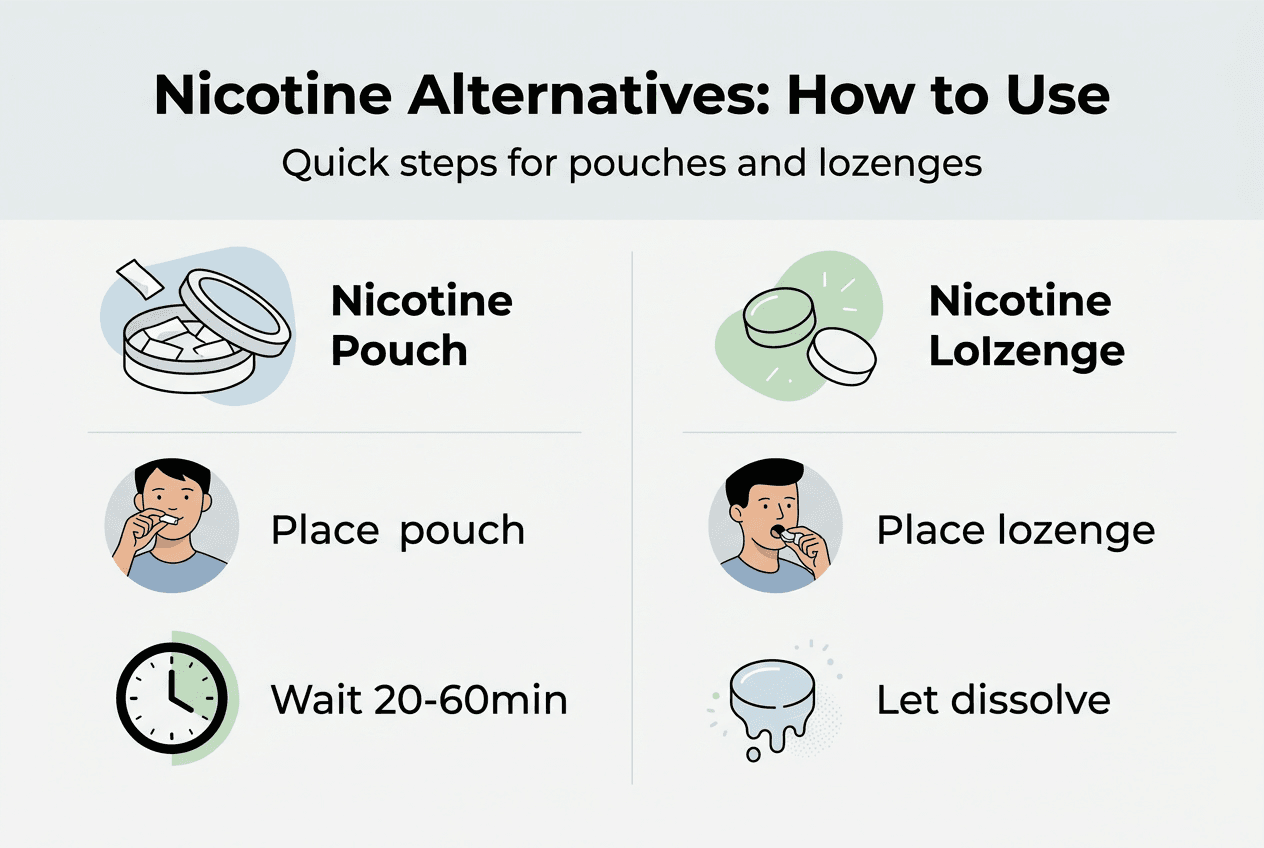
Usage is straightforward. You place a pouch between your upper lip and gum, where it sits comfortably for 20 to 60 minutes. Lozenges rest in the mouth, moved occasionally to different positions as they dissolve over 20 to 30 minutes. Neither requires spitting, unlike traditional snus. The growing popularity of nicotine pouches in the UK reflects their convenience and the increasing demand for tobacco-free alternatives among adult nicotine users.
Nicotine delivery and absorption compared to cigarettes
Understanding how smokeless products deliver nicotine helps you set realistic expectations and choose appropriate strengths. Cigarettes deliver nicotine rapidly through lung absorption, with peak blood nicotine concentrations occurring within 5 to 8 minutes. This quick hit creates the intense satisfaction smokers associate with cigarettes but also drives addiction.
Nicotine pouches work differently. 4 mg pouches deliver approximately 92% of cigarette total nicotine exposure with lower peak nicotine concentrations and slower absorption. Specifically, 4 mg pouches produce peak nicotine levels about 69% of those from cigarettes, and these peaks occur 20 to 65 minutes after placement rather than 5 to 8 minutes. This slower, gentler rise reduces the intense rush but still satisfies cravings effectively.
The table below compares nicotine delivery characteristics:
| Product | Total nicotine exposure | Peak concentration | Time to peak |
|---|---|---|---|
| Cigarette | 100% (reference) | 100% (reference) | 5-8 minutes |
| 4 mg pouch | ~92% | ~69% | 20-65 minutes |
| 2 mg pouch | ~50% | ~40% | 25-70 minutes |
| Nicotine lozenge | ~60-80% | ~50% | 30-60 minutes |
Lower strength pouches deliver proportionally less nicotine, which can be useful for tapering down or for lighter smokers. A 2 mg pouch typically delivers about half the total nicotine of a cigarette with even lower peak concentrations. This makes them suitable for users who smoke fewer than 10 cigarettes daily or who want to gradually reduce nicotine intake.
Nicotine lozenges release nicotine through slow dissolution, providing a steady trickle rather than a surge. This gradual release helps maintain stable nicotine levels, reducing the peaks and troughs that drive repeated smoking. The absorption rate depends on how you use the lozenge. Sucking it like a sweet releases nicotine too quickly and can cause stomach upset, whilst properly parking it in the mouth optimises absorption.

Pro Tip: Match your pouch strength to your smoking habits. Heavy smokers (20+ cigarettes daily) often find 4 mg pouches most satisfying initially, whilst lighter smokers may prefer 2 to 3 mg. You can always adjust after trying a strength for a few days. Comparing nicotine pouch strengths helps you find your ideal starting point.
Health considerations and quitting potential
The health profile of smokeless nicotine products remains an evolving area of research. Limited evidence shows no short-term serious health harms from oral nicotine pouches in smokers, but quitting efficacy is uncertain. Current studies involve relatively small participant numbers and short follow-up periods, typically 12 weeks or less. This means we have reasonable confidence about immediate safety but less certainty about long-term effects or whether pouches genuinely help people quit smoking.
Key health considerations include:
- No combustion products like tar, carbon monoxide, or particulate matter that damage lungs and cardiovascular systems
- Elimination of tobacco-specific nitrosamines found in traditional snus and smokeless tobacco
- Continued nicotine exposure, which affects heart rate and blood pressure acutely but with unclear long-term cardiovascular impact
- Potential for gum irritation or oral tissue changes with prolonged use, though evidence remains limited
- Risk of maintaining or developing nicotine dependence rather than achieving complete cessation
Nicotine lozenges have a more established evidence base as licensed cessation aids. They have been studied extensively and are proven to roughly double quit rates compared to no support. Lozenges work best as part of a structured quit plan with behavioural support.
“Current evidence is uncertain whether nicotine pouches help people stop smoking compared to no support or usual smoking. Studies show no serious short-term harms, but we need more research on long-term health effects and quitting success.”
The uncertainty around quitting potential matters because many users hope smokeless products will help them quit nicotine entirely. Whilst they eliminate smoking harms, they may simply maintain nicotine addiction in a different form. Some users successfully transition from smoking to pouches and then taper down nicotine strength to quit, whilst others continue long-term pouch use. Understanding the benefits of nicotine pouches includes recognising both their harm reduction potential and their limitations as cessation tools.
For smokers unable or unwilling to quit nicotine immediately, reducing smoking with nicotine pouches offers a pragmatic harm reduction strategy. Replacing some or all cigarettes with pouches eliminates exposure to combustion toxins, the primary source of smoking-related disease. This approach acknowledges that complete abstinence may not be achievable for everyone whilst still delivering significant health benefits.
Choosing the right smokeless nicotine option and usage tips
Selecting suitable products requires matching nicotine strength to your current habits and preferences. Nicotine pouches come in strengths from about 1.5 mg up to 8 mg or more, allowing tailored nicotine intake. Start by estimating your daily nicotine consumption. A pack-a-day smoker consumes roughly 20 to 30 mg of nicotine daily, whilst a half-pack smoker takes in 10 to 15 mg.
Follow these steps to choose your starting strength:
- Assess your smoking intensity: heavy smokers (20+ daily) should start with 3.5 to 4 mg pouches, moderate smokers (10 to 20 daily) with 2 to 3 mg, and light smokers (fewer than 10 daily) with 1.5 to 2 mg.
- Consider your vaping habits if transitioning from e-cigarettes: high-nicotine vapers (20 mg/ml or higher) often prefer 4 mg pouches, whilst lower-nicotine vapers may find 2 to 3 mg sufficient.
- Try a variety pack containing different strengths to identify what satisfies cravings without causing nicotine overdose symptoms like nausea, dizziness, or rapid heartbeat.
- Adjust after a few days based on whether cravings persist (increase strength) or you experience uncomfortable nicotine effects (decrease strength).
- Plan a gradual reduction strategy if your goal is complete cessation, stepping down strength every few weeks whilst monitoring cravings and withdrawal symptoms.
Proper usage maximises effectiveness and comfort. For pouches, place one between your upper lip and gum, positioning it off-centre rather than directly in front. You will feel a tingling sensation as nicotine releases, which is normal and subsides after a few minutes. Keep the pouch in place for 20 to 60 minutes, depending on strength and personal preference. Remove and dispose of it when the flavour fades or nicotine sensation stops.
For lozenges, place one in your mouth and allow it to dissolve slowly, moving it from side to side occasionally. Do not chew or swallow the lozenge whole. The dissolving process should take 20 to 30 minutes. Avoid eating or drinking for 15 minutes before and during use, as food and beverages can interfere with nicotine absorption.
Pro Tip: Track your nicotine pouch usage frequency during the first week to establish a baseline. Most users find 8 to 15 pouches daily sufficient to replace smoking, but individual needs vary. If you are using more than 20 pouches daily, consider increasing strength rather than frequency to avoid excessive gum irritation.
Avoid these common mistakes:
- Using pouches or lozenges too quickly in succession, which can cause nicotine overdose symptoms
- Swallowing saliva excessively whilst using pouches, leading to stomach discomfort
- Choosing strength based on desired intensity rather than actual nicotine needs, risking under- or over-dosing
- Neglecting to consult healthcare providers when using nicotine products for cessation, missing valuable support and monitoring
Consulting a healthcare provider is especially important if you have cardiovascular conditions, are pregnant or breastfeeding, or are combining nicotine products with prescription medications. Nicotine affects heart rate and blood pressure, and interactions with certain medications can occur.
Discover quality nicotine pouches for your needs
Now that you understand how smokeless nicotine alternatives work and how to choose them, finding reliable products matters. Hitsnus.com offers an extensive range of tobacco-free nicotine pouches from leading brands including Zyn, Velo, FUMI, and Nordic Spirit. Whether you prefer refreshing mint, fruity berry, or rich coffee flavours, you will find options suited to your taste and nicotine strength requirements.
Fast, discreet shipping across the UK ensures your pouches arrive quickly and privately. Explore nicotine pouches online to browse the full selection, read detailed product descriptions, and compare strengths and flavours. Budget-conscious users can take advantage of clearance sale offerings featuring quality products at reduced prices. Ordering is straightforward, and customer support is available to help you select products matching your needs.
Frequently asked questions about smokeless nicotine alternatives
What are the main differences between nicotine pouches and lozenges?
Nicotine pouches are small fabric pouches containing nicotine salts, plant fibres, and flavourings that you place between your lip and gum for 20 to 60 minutes. Lozenges are dissolvable tablets that release nicotine as they slowly dissolve in your mouth over 20 to 30 minutes. Pouches offer more flavour variety and discreetness, whilst lozenges have a longer-established evidence base as licensed cessation aids.
Are smokeless nicotine products safer than smoking?
Yes, substantially safer because they eliminate combustion and the thousands of toxic chemicals in cigarette smoke, including tar, carbon monoxide, and carcinogens. However, they still deliver nicotine, which is addictive and has cardiovascular effects. Current evidence shows no serious short-term harms, but long-term health impacts remain uncertain due to limited research.
Can I use nicotine pouches to quit smoking?
Evidence is uncertain whether nicotine pouches help people quit smoking compared to no support or usual smoking. They can serve as harm reduction tools by replacing cigarettes and eliminating combustion toxins, but they may maintain nicotine dependence rather than achieving complete cessation. Some users successfully taper down nicotine strength over time to quit entirely, whilst others continue long-term use.
How quickly do nicotine pouches deliver nicotine compared to cigarettes?
Nicotine pouches deliver nicotine much more slowly than cigarettes. Cigarettes produce peak nicotine levels within 5 to 8 minutes, whilst 4 mg pouches take 20 to 65 minutes to reach lower peak concentrations. This slower absorption reduces the intense rush but still satisfies cravings effectively, making pouches feel less intense but more sustained than smoking.
What should I consider when choosing nicotine strength?
Match strength to your current smoking or vaping habits. Heavy smokers (20+ cigarettes daily) typically need 3.5 to 4 mg pouches initially, moderate smokers (10 to 20 daily) suit 2 to 3 mg, and light smokers (fewer than 10 daily) often prefer 1.5 to 2 mg. Start with a moderate strength, monitor cravings and any nicotine overdose symptoms, and adjust up or down after a few days based on your experience.