













How to minimise nicotine pouch side effects safely in 2026
Switching to nicotine pouches can bring unwelcome surprises like gum irritation and elevated heart rate, affecting up to 40% of new users. These side effects stem from nicotine’s direct tissue contact and systemic absorption, but they’re manageable with the right approach. This guide delivers evidence-based strategies to help you enjoy smokeless nicotine while protecting your oral health and cardiovascular wellbeing throughout your transition.
Table of Contents
- Understanding Nicotine Pouch Side Effects
- Preparing To Minimise Side Effects: What You Need To Know
- Step-By-Step Guide To Using Nicotine Pouches Safely
- Managing And Monitoring Side Effects Effectively
- Explore Gentle Nicotine Pouches At Hitsnus
- How To Minimise Nicotine Pouch Side Effects: Frequently Asked Questions
Key takeaways
| Point | Details |
|---|---|
| Reduced carcinogen exposure | Nicotine pouches eliminate tobacco combustion toxins whilst delivering nicotine through oral mucosa. |
| Common side effects | Gum irritation affects up to 40% of users, alongside temporary cardiovascular changes like increased heart rate. |
| Placement rotation critical | Moving pouch position regularly prevents concentrated tissue damage and allows gum recovery between uses. |
| Strength selection matters | Starting with lower nicotine concentrations reduces both oral irritation and systemic side effects significantly. |
| Professional consultation needed | Persistent white lesions, gum recession, or cardiovascular symptoms require immediate healthcare provider assessment. |
Understanding nicotine pouch side effects
Nicotine pouches deliver nicotine without combustion, avoiding many tobacco smoke carcinogens. However, oral nicotine pouches still cause gum irritation and mucosal changes in a substantial user population. Research documents that up to 40% of regular users develop mild, reversible gum tissue alterations at contact sites.
The nicotine absorption elevates heart rate by 10 to 20 beats per minute and temporarily raises blood pressure. These cardiovascular responses result from nicotine’s sympathetic nervous system activation, which occurs regardless of delivery method. The effects typically peak within 10 minutes of placement and gradually subside.
Side effects originate from two distinct mechanisms:
- Direct chemical irritation where the pouch contacts oral tissue, causing localised inflammation and sensitivity
- Systemic nicotine absorption triggering cardiovascular responses, digestive changes, and neurological effects
- Prolonged nicotine release from pouches extends exposure duration compared to cigarettes’ rapid delivery
- Individual tolerance variations affect severity, with new users experiencing stronger reactions
Clinical studies examining oral tissue reveal that pouches create distinct white lesions at placement sites. These lesions typically resolve within weeks of discontinuation, but chronic use in the same location increases pathology risk. Understanding these mechanisms helps you make informed decisions about reducing smoking with nicotine pouches whilst protecting your health.
Pro Tip: Document your side effects in a phone note with timestamps. This record helps identify patterns and demonstrates severity if you need medical consultation later.
Preparing to minimise side effects: what you need to know
Selecting appropriate nicotine strength forms your first defence against side effects. Your tolerance depends on previous tobacco or nicotine product use, with former heavy smokers tolerating higher strengths better than new users. Starting with lower nicotine strengths reduces gum irritation and systemic symptoms whilst you adapt.
Nicotine-free pouches eliminate nicotine-related effects entirely whilst maintaining the oral sensation and behavioural ritual. These products suit users wanting to break nicotine dependence or those experiencing severe cardiovascular responses. They contain flavourings and plant fibres but no active nicotine compound.
Rotation strategy prevents tissue damage:
- Alternate between upper left and right gum placement with each pouch to distribute contact
- Allow minimum 2 hours recovery time before reusing the same spot
- Observe tissue appearance daily for persistent whitening, redness, or recession
- Switch to lower lip placement occasionally to give upper gum complete rest periods
Oral hygiene maintenance supports gum resilience. Brush twice daily with fluoride toothpaste, focusing on gumlines where pouches sit. Rinse mouth with water after removing each pouch to clear residual nicotine and reduce pH changes that weaken enamel.

Consider your low light nicotine pouches guide options carefully before purchasing. Products ranging from 2mg to 6mg per pouch suit most transitioning smokers without overwhelming nicotine delivery. Compare your choices using our nicotine pouch strength comparison to match your specific tolerance level.
Pro Tip: Mark your calendar with pouch placement locations each day. This visual reminder prevents unconscious pattern formation that concentrates damage in one spot.
Step-by-step guide to using nicotine pouches safely
Proper placement technique minimises tissue irritation whilst maximising nicotine absorption. Position the pouch between your upper lip and gum, tucking it comfortably without forcing it deep into the sulcus. Avoid pressing hard or moving the pouch around with your tongue, which increases friction damage.
Follow these safe usage steps:
- Wash your hands thoroughly before handling pouches to prevent introducing bacteria into your mouth.
- Place one pouch in your chosen location, alternating sides from your previous use.
- Leave the pouch stationary for 20 to 30 minutes maximum, as nicotine pouches release nicotine slowly compared to cigarettes.
- Remove and discard the used pouch in a sealed container, never flushing or leaving accessible to children.
- Wait at least 30 minutes before considering another pouch, allowing your body to process absorbed nicotine.
- Rinse your mouth with water to clear residual saliva and nicotine from oral tissues.
Daily limits prevent overdose. Most manufacturers recommend maximum 15 pouches per day for regular strength products. Multiple pouches or excessive use triggers severe symptoms including nausea, dizziness, rapid heartbeat, and potential toxicity requiring emergency care.
| Usage parameter | Recommended limit | Overdose risk |
|---|---|---|
| Pouches per day | 10-15 maximum | >20 pouches |
| Duration per pouch | 20-30 minutes | >60 minutes |
| Pouches simultaneously | 1 only | 2 or more |
| Minimum interval | 30 minutes | <15 minutes |
Nicotine absorption delays mean you won’t feel full effects immediately. Wait for the tingling sensation and mild lightheadedness before deciding you need another pouch. This patience prevents accidentally doubling your nicotine intake whilst the first pouch still releases.
Disposal safety matters critically for households with children or pets. Used pouches contain residual nicotine sufficient to harm small bodies. Store a dedicated lidded container for used pouches and empty it into sealed rubbish bags regularly. Learn more about using nicotine pouches properly to avoid common mistakes.
Pro Tip: Set phone alarms for removal times when starting out. New users often forget pouches in place, exceeding safe duration and increasing side effect severity.
Review comprehensive nicotine pouch safety tips UK for additional guidance specific to British regulations and best practises.
Managing and monitoring side effects effectively
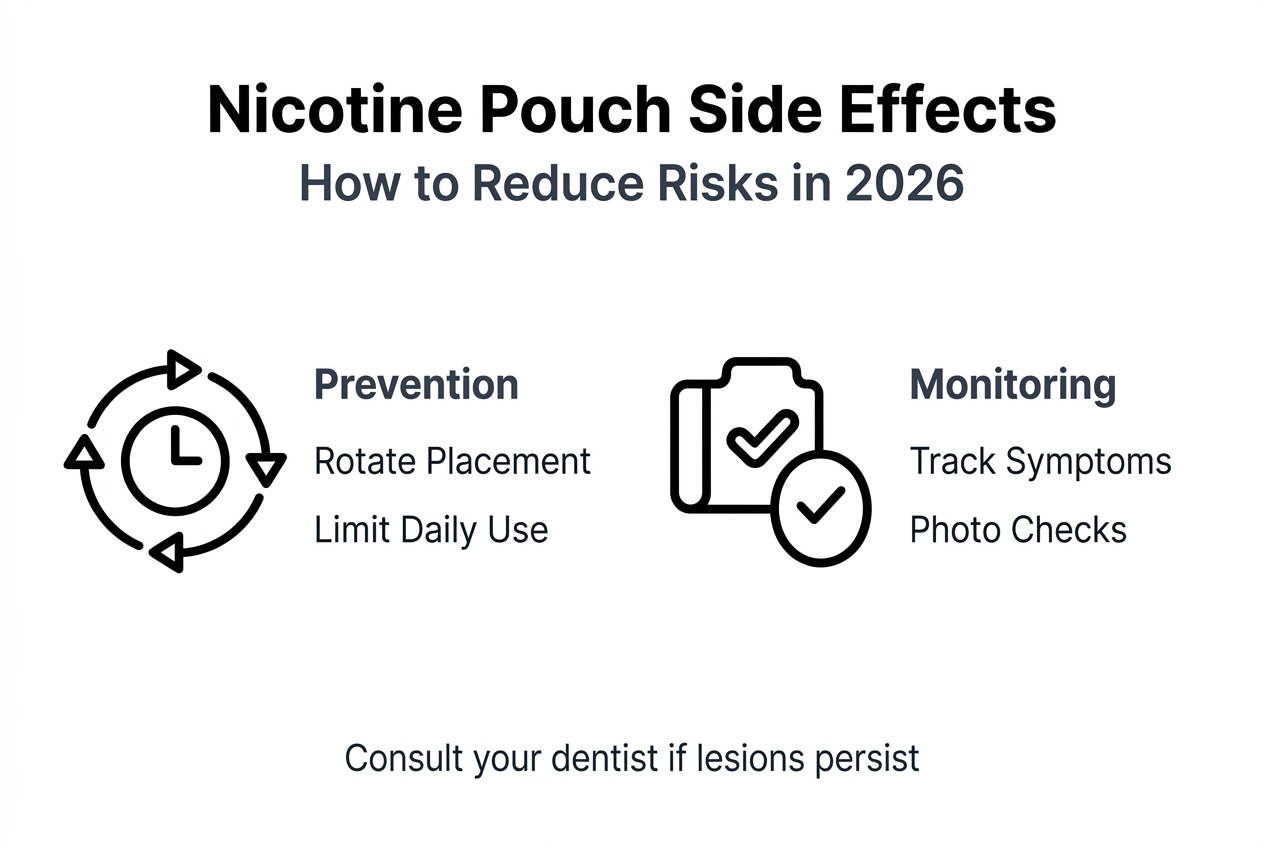
Early recognition prevents minor irritation from progressing to serious pathology. Check your gum tissue daily in good lighting, looking for white patches, persistent redness, or gum line recession. These visible changes indicate concentrated damage requiring immediate placement rotation or product strength reduction.
Common warning signs include:
- Tingling or burning sensation lasting beyond 5 minutes after placement
- White or grey patches that don’t disappear within hours of pouch removal
- Gum tissue pulling away from teeth, exposing root surfaces
- Increased heart rate persisting more than 30 minutes after removal
- Dizziness, nausea, or headaches following normal usage patterns
When irritation appears, rotate to a completely different oral location immediately. If upper gum shows damage, switch to lower lip placement for several days whilst tissue heals. Reducing your daily pouch count by 30 to 50% gives your body recovery time without complete cessation.
Nicotine-free alternatives eliminate systemic effects entirely whilst maintaining the oral sensation habit. These products suit users experiencing cardiovascular symptoms or those wanting to gradually reduce nicotine dependence. You maintain the behavioural ritual without physiological stress.
| Symptom type | Mild response | Moderate response | Severe response |
|---|---|---|---|
| Gum irritation | Rotate placement | Reduce strength, skip 1 day | Stop use, see dentist |
| Heart rate increase | Monitor, continue | Reduce frequency | Discontinue, see GP |
| Nausea/dizziness | Use after meals | Lower strength immediately | Stop all use, seek care |
| White lesions | Move location | Stop for 48 hours | Medical assessment needed |
Gum irritation remains typically mild and reversible with behaviour modification. However, persistent white lesions lasting beyond 2 weeks warrant professional dental evaluation. Clinicians must monitor for suspicious lesions to exclude dysplasia or malignant transformation in chronic users.
Keep a usage diary tracking pouches per day, placement locations, and any symptoms experienced. This data helps identify your personal tolerance limits and provides valuable information if you need medical consultation. Note any changes in intensity or new symptoms appearing.
Consider your overall transition strategy when managing side effects. Many users successfully navigate switching from smoking to pouches by gradually reducing nicotine strength over months. Review your nicotine pouch usage workflow to optimise timing and frequency for your lifestyle.
Pro Tip: Photograph your gum tissue weekly with your phone. These images document changes objectively and prove invaluable if you need to show progression to healthcare providers.
Explore gentle nicotine pouches at HitSnus
Your journey to minimising side effects starts with selecting products designed for smooth experiences. HitSnus stocks an extensive range of tobacco-free nicotine pouches from trusted brands, including options specifically formulated for sensitive users. You’ll find everything from ultra-low 2mg strengths to nicotine-free alternatives that eliminate systemic effects entirely.
Browse our complete selection of tobacco-free nicotine pouches UK delivery options, with fast shipping across Britain. We carefully curate products based on user feedback about comfort and side effect profiles. Check our clearance nicotine pouches section regularly for exceptional deals on premium brands whilst you experiment finding your ideal strength and flavour combination.
How to minimise nicotine pouch side effects: frequently asked questions
What causes gum irritation from nicotine pouches?
Direct chemical contact between nicotine, pH adjusters, and your gum tissue creates localised inflammation. The alkaline environment needed for nicotine absorption temporarily disrupts your mouth’s natural pH balance, whilst prolonged pressure restricts blood flow to contact areas. Rotating placement sites and limiting duration to 30 minutes reduces this mechanical and chemical stress significantly.
How often should I change pouch placement to avoid side effects?
Alternate between left and right sides with every pouch use, allowing minimum 2 hours recovery before reusing the same spot. Switch between upper and lower lip positions daily to distribute contact across different tissue types. This rotation prevents concentrated damage that causes persistent white lesions or gum recession at single sites.
Can nicotine-free pouches fully prevent side effects?
Nicotine-free pouches eliminate cardiovascular effects, nausea, and systemic symptoms entirely. However, they may still cause mild mechanical irritation from pouch pressure and flavouring contact. Most users experience dramatically fewer and less severe side effects compared to nicotine-containing products, making them excellent for sensitive individuals.
What are the signs of nicotine pouch overdose?
Severe nausea, profuse sweating, rapid or irregular heartbeat, extreme dizziness, and confusion indicate nicotine overdose requiring immediate medical attention. Pale or grey skin colour, difficulty breathing, or loss of consciousness represent emergency situations. Using multiple pouches simultaneously or exceeding 20 pouches daily dramatically increases overdose risk. Review nicotine pouch safety tips UK for comprehensive overdose prevention guidance.
When should I see a healthcare professional about oral symptoms?
Consult a dentist if white patches persist beyond 2 weeks after stopping pouch use in that location, or if you notice gum recession exposing tooth roots. See your GP immediately for chest pain, irregular heartbeat lasting over an hour, or persistent dizziness affecting daily activities. Any suspicious lesions with irregular borders, colour changes, or rapid growth require urgent professional assessment to exclude serious pathology.