











Nicotine pouches vs vaping: key differences 2026
Many smokers exploring alternatives assume nicotine pouches and vaping deliver nicotine in similar ways. This misconception can lead to poor product choices that don’t match your health needs or lifestyle. The reality is these two methods differ fundamentally in how nicotine enters your body, how quickly you feel effects, and what health risks they pose. Understanding these distinctions helps you select the option that genuinely supports your goals, whether that’s quitting smoking entirely or reducing harm whilst maintaining nicotine intake. This guide breaks down the science and practical differences so you can make informed decisions.
Table of Contents
- How Nicotine Pouches And Vaping Deliver Nicotine
- Nicotine Delivery Speed And User Experience Comparison
- Health Impacts And Safety Profiles Of Nicotine Pouches Versus Vaping
- Choosing The Right Nicotine Alternative For Your Needs
- Explore Quality Nicotine Pouches At Hitsnus
- Frequently Asked Questions
Key takeaways
| Point | Details |
|---|---|
| Delivery method | Pouches use oral absorption through the lip; vaping delivers nicotine via inhaled aerosol into lungs |
| Speed of effect | Vaping acts in 10-30 seconds like cigarettes; pouches take 1-5 minutes to onset and peak at 20-65 minutes |
| Health profile | Pouches avoid respiratory risks but may irritate gums; vaping can affect airways and lungs |
| Addiction potential | Pouches show lower abuse liability similar to nicotine gum; vaping mimics smoking’s rapid satisfaction |
| User suitability | Choose pouches for lung conditions or discreet use; vaping for immediate craving relief |
How nicotine pouches and vaping deliver nicotine
The fundamental difference between these products lies in their delivery mechanism. Nicotine pouches deliver nicotine via oral mucosal absorption by placing small pouches under the upper lip, with no heating or inhalation required. The nicotine dissolves through saliva and absorbs directly through the soft tissue in your mouth into your bloodstream. This process, called buccal absorption, bypasses your lungs entirely.
Vaping takes a completely different route. You inhale an aerosol created when the device heats e-liquid containing nicotine. This vapour travels into your lungs, where nicotine crosses into your bloodstream through lung tissue. The inhalation method closely mimics traditional smoking, which explains why many smokers find vaping familiar and satisfying initially.
The contents of each product reflect these different delivery systems:
- Nicotine pouches contain plant fibres (usually cellulose or eucalyptus), nicotine salts, flavourings, sweeteners, and pH adjusters to optimise absorption
- E-liquids for vaping contain nicotine (freebase or salt form), propylene glycol, vegetable glycerin, and flavourings
- Neither typically contains actual tobacco leaf, though both derive nicotine from tobacco plants
- The pH level in pouches is carefully controlled to enhance nicotine release and absorption efficiency
These compositional differences matter because they affect how your body processes nicotine and what other substances you’re exposed to. Understanding nicotine delivery systems helps you grasp why user experiences vary so dramatically. The absence of combustion or heating in pouches means you avoid the thermal degradation products that can form when e-liquids are heated, though both methods eliminate the thousands of combustion chemicals found in cigarette smoke.
Your choice between these delivery methods should consider not just nicotine itself but the entire pathway it takes into your body. Oral absorption offers discretion and simplicity. Inhalation provides a sensory experience closer to smoking. Neither involves burning tobacco, which is the primary harm reduction benefit both share.
Nicotine delivery speed and user experience comparison
Timing changes everything when it comes to nicotine satisfaction. Vaping delivers nicotine faster, within 10-30 seconds, comparable to smoking a cigarette. This rapid delivery closely matches what your brain expects if you’re transitioning from smoking, making vaping feel immediately satisfying. The quick nicotine spike provides that familiar rush and can effectively silence urgent cravings.
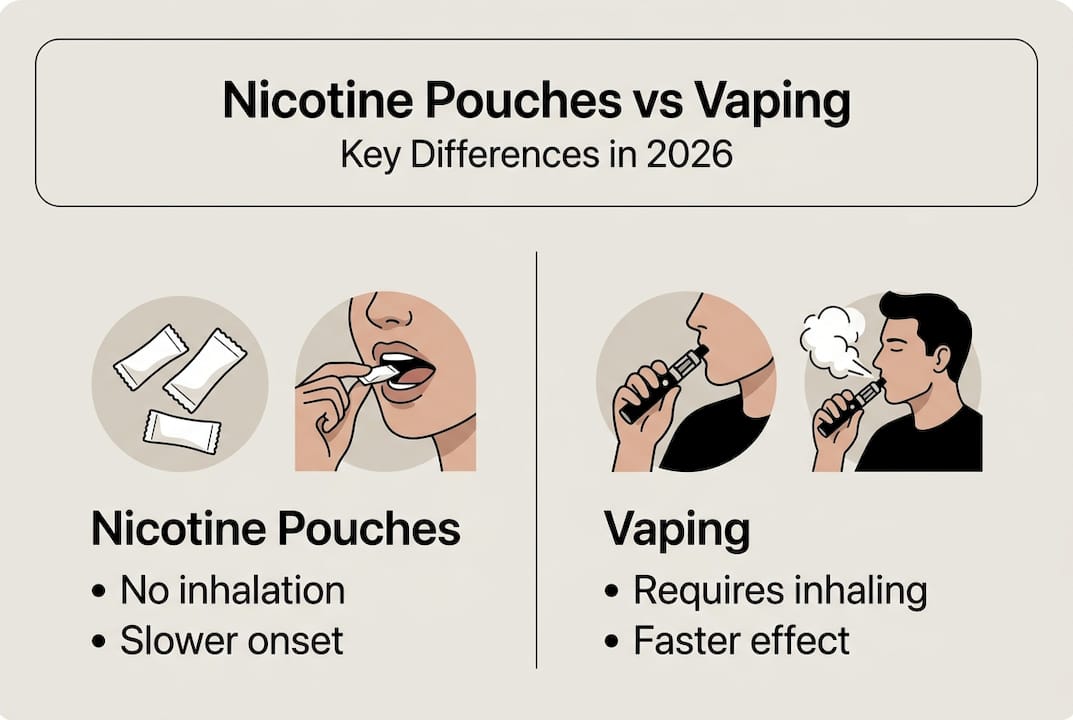
Pouches work on a different timeline. Onset begins in 1-5 minutes, but nicotine levels peak much later, typically between 20-65 minutes after placement. This slower, more gradual rise might seem like a disadvantage, but it actually mimics nicotine replacement therapies like gum or patches. The extended release provides sustained nicotine levels without the sharp peaks and troughs that can reinforce addictive patterns.
Interestingly, total nicotine exposure from common 4mg pouches can match cigarettes, but peak blood levels remain lower than vaping. This means you get adequate nicotine to manage withdrawal, but with less potential for the intense satisfaction that drives repeated use. For someone trying to quit, this gentler profile can be advantageous.
The user experience reflects these pharmacokinetic differences:
| Aspect | Vaping | Nicotine Pouches |
|---|---|---|
| Time to effect | 10-30 seconds | 1-5 minutes |
| Peak nicotine level | 20-30 minutes | 20-65 minutes |
| Sensation | Throat hit, visible vapour | Tingling under lip, subtle |
| Duration | 5-10 minutes active use | 20-60 minutes per pouch |
| Ritual similarity to smoking | High | Low |
Vaping provides that immediate throat hit and visible exhale that many ex-smokers find psychologically rewarding. It recreates the hand-to-mouth action and breathing pattern of smoking. Pouches offer a completely different experience: a mild tingling or burning sensation under your lip, no visible output, and no need to step outside or find a vaping-permitted area.
Pro Tip: If you’re switching from cigarettes, your initial preference often depends on whether you crave the ritual (vaping) or simply need nicotine without the fuss (pouches). Many successful quitters start with vaping for its familiar feel, then transition to pouches to break the inhalation habit entirely.
The slower onset of pouches may actually reduce abuse liability. When nicotine hits your brain quickly, it reinforces the connection between the action and the reward, strengthening addictive behaviour. The delayed, sustained delivery from pouches behaves more like therapeutic nicotine products, potentially making them easier to eventually discontinue. This comparison between nicotine pouches and vaping highlights why delivery speed matters beyond just satisfaction.
Health impacts and safety profiles of nicotine pouches versus vaping
Health considerations should drive your choice between these alternatives. Pouches avoid lung exposure, reducing respiratory risks, whilst vaping may increase airway and lung irritation risks. If you have asthma, chronic obstructive pulmonary disease, or any respiratory condition, keeping nicotine delivery out of your lungs makes pouches the safer option.

Vaping introduces aerosol into your respiratory system. Whilst dramatically less harmful than cigarette smoke, the heated vapour can irritate airways and potentially affect lung function over time. Propylene glycol and vegetable glycerin, when heated, can produce trace amounts of formaldehyde and acetaldehyde under certain conditions. Long-term effects remain under investigation, but current evidence suggests vaping poses significantly lower risk than smoking.
The toxicant profile differs substantially between methods. Both reduce harm compared to smoking, but pouches have lower toxicants, though some low-level carcinogens remain possible. Tobacco-specific nitrosamines, compounds linked to cancer risk, appear in much lower concentrations in pouches than in traditional snus or cigarettes. Vaping eliminates these entirely but introduces different compounds from the heating process.
Potential side effects you might experience:
- Pouches: gum irritation, receding gums with prolonged use, dry mouth, hiccups, nausea if swallowing nicotine-laden saliva
- Vaping: throat irritation, dry mouth, coughing, shortness of breath in some users, possible allergic reactions to flavourings
- Both: nicotine-related effects like increased heart rate, elevated blood pressure, potential impact on cardiovascular health
Neither product is risk-free. Nicotine itself affects your cardiovascular system regardless of delivery method. It’s a stimulant that raises heart rate and blood pressure. For people with heart conditions, any nicotine product requires medical consultation. The key question is which additional risks you’re willing to accept: oral health concerns or respiratory exposure.
Oral health deserves attention with pouches. Placing them against your gums repeatedly can cause irritation, and some users report gum recession over years of heavy use. Maintaining good oral hygiene and rotating placement sites can minimise these effects. Regular dental check-ups become more important.
Vaping’s long-term lung impact remains the biggest unknown. We have decades of data on smoking’s devastating effects, but vaping only emerged in the mid-2000s. Current research suggests it’s substantially safer than smoking, but absolute safety cannot be claimed. Cases of severe lung injury linked to vaping have occurred, though most involved illicit THC products with vitamin E acetate, not commercial nicotine e-liquids.
Pro Tip: Consider your personal health history when choosing. If you’ve never smoked but use nicotine recreationally, pouches avoid introducing any substance into your lungs. If you’re quitting smoking and respiratory relief is a priority, pouches let your lungs heal whilst managing nicotine dependence.
The benefits of nicotine pouches include this respiratory advantage, but remember that “better than smoking” doesn’t mean “harmless.” Both products serve best as harm reduction tools for existing smokers or as cessation aids, not as recreational products for non-users.
Choosing the right nicotine alternative for your needs
Your personal circumstances should guide this decision more than general recommendations. Start by assessing your respiratory health honestly. If you have any lung conditions, chronic cough, or breathing difficulties, pouches are preferred for respiratory conditions due to no inhalation. Avoiding further lung exposure makes obvious sense when your respiratory system is already compromised.
Consider how urgently you need nicotine relief:
- If you experience intense, sudden cravings that demand immediate satisfaction, vaping’s 10-30 second onset might prevent relapse to cigarettes during your quit attempt
- If you can tolerate a few minutes’ delay and prefer steady nicotine levels throughout the day, pouches provide sustained delivery without constant redosing
- If you’re highly dependent and smoke within minutes of waking, vaping’s speed may be necessary initially, with a gradual transition to pouches later
Addiction potential matters for long-term success. Abuse liability is lower with pouches, similar to nicotine replacement therapy, whilst youth appeal remains a concern for both. The slower nicotine delivery makes pouches less reinforcing behaviourally, potentially easier to eventually discontinue. If you’re serious about quitting nicotine entirely someday, pouches may offer a better stepping stone.
Lifestyle factors influence daily usability:
- Discretion: pouches work anywhere without drawing attention; vaping requires appropriate locations and produces visible vapour
- Convenience: pouches need no charging, no refilling, no maintenance; vaping requires device care and e-liquid management
- Social acceptance: pouches are invisible to others; vaping can bother nearby people and faces increasing restrictions
- Cost: initial vaping setup costs more but ongoing e-liquid is cheaper; pouches have lower entry cost but higher per-use expense
Oral sensitivity plays a role too. Some people find the tingling sensation from pouches uncomfortable or even painful, especially with higher-strength products. Others barely notice it. If you have sensitive gums or existing oral health issues, start with lower-strength pouches and monitor for irritation. Conversely, if you have sensitive airways or allergies to propylene glycol or specific flavourings, vaping might trigger unpleasant reactions.
Dual use tempts many people but generally increases total nicotine exposure rather than reducing harm. Using both pouches and vaping defeats the purpose of switching from cigarettes. Choose one method that meets your needs and commit to it fully. Mixing methods often means you’re not getting adequate satisfaction from either, suggesting you need to adjust strength or usage frequency.
Pro Tip: Match your choice to your primary smoking trigger. If you smoked mainly for stress relief and the breathing ritual, vaping provides that calming deep-breath sensation. If you smoked out of habit or boredom and can do without the ritual, pouches offer nicotine without reinforcing the hand-to-mouth pattern.
For those specifically stopping smoking with non-tobacco nicotine pouches, the gradual delivery and lack of smoking-like ritual can help break psychological associations. You’re replacing nicotine dependence without maintaining the behavioural patterns that kept you smoking. This psychological distance from smoking can be powerful for long-term abstinence.
Your quit journey is personal. Some people need the familiar feel of inhalation initially. Others want to break completely from anything resembling smoking. Neither choice is wrong if it keeps you from returning to cigarettes. Assess your health priorities, craving patterns, lifestyle needs, and long-term goals to make the decision that serves you best.
Explore quality nicotine pouches at HitSnus
If you’ve decided nicotine pouches align better with your health goals and lifestyle, finding reliable products matters. HitSnus offers an extensive selection of tobacco-free nicotine pouches with various strengths and flavours to match your preferences. Whether you’re transitioning from smoking or vaping, their range includes options from trusted brands designed for adult nicotine users seeking discreet, smoke-free alternatives.

Their clearance sale provides excellent value on limited-stock items, perfect if you’re experimenting with different strengths or flavours without committing to full-price purchases. Fast UK delivery means you can start your harm-reduction journey quickly. Choosing quality products from established retailers supports both safety and satisfaction as you make this important health decision.
Frequently asked questions
What are the main differences between nicotine pouches and vaping?
Nicotine pouches deliver nicotine through oral absorption under your lip without inhalation, whilst vaping delivers nicotine via inhaled aerosol into your lungs. Pouches work slower but avoid respiratory exposure; vaping acts faster but introduces substances into your airways.
Which is safer, nicotine pouches or vaping?
Both are substantially safer than smoking, but pouches avoid lung exposure entirely, making them preferable for respiratory health. Vaping may irritate airways and lungs, whilst pouches can affect oral health. Your personal health conditions should guide the choice.
Can nicotine pouches help me quit vaping?
Yes, pouches can help you transition away from vaping by providing nicotine without inhalation. The slower delivery and lack of vaping ritual help break the behavioural patterns whilst managing nicotine dependence, similar to how nicotine gum works for quitting smoking.
Do nicotine pouches and vaping have the same nicotine strength?
Strength varies by product, but both can deliver comparable total nicotine. Pouches typically range from 2mg to 20mg per pouch, whilst e-liquids vary from 3mg/ml to 50mg/ml nicotine salt formulations. Peak blood nicotine levels differ due to delivery speed differences.
Are nicotine pouches more addictive than vaping?
No, pouches generally show lower abuse liability due to slower nicotine delivery. Vaping’s rapid onset mimics cigarettes more closely, potentially reinforcing addictive behaviour. Pouches deliver nicotine more like therapeutic products, which may be easier to eventually discontinue.