












Your complete guide to smokeless nicotine: safer, discreet options
- Smokeless nicotine offers a smoke-free, discreet alternative with varying onset times and durations.
- Choosing the right product depends on your smoking habits, triggers, and need for concealment.
- Proper use involves placing the pouch under the lip and monitoring your body’s response for safe, effective switching.
Whether you’re trying to avoid lighting up at work, keeping things discreet around family, or simply wanting to reduce the harm that comes with smoking, the shift to smokeless nicotine can feel overwhelming. The market has exploded with options: pouches, vapes, gums, lozenges, and more. Each one promises something slightly different, and it’s genuinely hard to know where to start. This guide cuts through the noise. We’ll walk you through what smokeless nicotine actually is, how to choose the right product for your lifestyle, how to use it correctly, and what to realistically expect from the experience.
Table of Contents
- Understanding smokeless nicotine and your alternatives
- Preparing to switch: choosing the right smokeless nicotine option
- How to use smokeless nicotine: step-by-step workflow
- Benefits, risks and harm reduction: what to expect from smokeless nicotine
- Troubleshooting, monitoring, and adjusting your smokeless nicotine use
- Our take: what most guides miss about smokeless nicotine
- Next steps: find your ideal smokeless nicotine with HitSnus
- Frequently asked questions
Key Takeaways
| Point | Details |
|---|---|
| Safer than smoking | Switching to smokeless nicotine reduces exposure to harmful chemicals but does not eliminate risk. |
| Choose by habit and need | Pick a product style and strength guided by your current smoking habits and desired discretion. |
| Use mindfully | Start with lower strengths, pay attention to your body’s response, and adjust usage as needed for comfort and satisfaction. |
| Addiction remains | These products remove smoke, not the addictive qualities of nicotine, so monitoring and moderation are key. |
Understanding smokeless nicotine and your alternatives
Smokeless nicotine refers to any product that delivers nicotine without burning tobacco. That covers a surprisingly wide range of formats, and understanding how each one works will save you a lot of trial and error.
Nicotine pouches sit discreetly under your upper lip. They contain nicotine, plant-based filler, flavourings, and pH adjusters. No tobacco leaf, no smoke, no vapour. Vaping devices heat a nicotine-infused liquid to produce an aerosol you inhale. Nicotine gum and lozenges release nicotine through the lining of your mouth as you chew or let them dissolve. Each format uses a different nicotine delivery system to get nicotine into your bloodstream.
One of the most important things to understand is the difference in how quickly each product works. Smoking delivers nicotine to the brain in roughly six to ten minutes. Vaping is similarly fast. Pouches and gum are slower, with absorption peaking anywhere between 22 and 65 minutes. However, nicotine delivery from pouches is sustained and can match or even exceed cigarette plasma levels, meaning the urge reduction is real, just not as immediate. That distinction matters enormously if you’re used to the rapid hit of a cigarette.
For a direct comparison of the two most popular modern alternatives, nicotine pouches vs vaping breaks down the key differences clearly. If you’re entirely new to the category, what are nicotine pouches is a solid starting point.
Key benefits of smokeless nicotine at a glance:
- No smoke or vapour produced
- Pouches require no device, battery, or charging
- Highly discreet in social and professional settings
- Reduced smell on breath, clothes, and hands
- Wide range of strengths and flavours available
| Format | Onset time | Duration | Device needed | Typical strength |
|---|---|---|---|---|
| Nicotine pouch | 22 to 65 min | 30 to 60 min | No | 2 to 20 mg |
| Vaping device | 6 to 10 min | 20 to 40 min | Yes | Variable |
| Nicotine gum | 15 to 30 min | 20 to 30 min | No | 2 to 4 mg |
| Cigarette | 6 to 10 min | 20 to 40 min | No | Variable |
Choosing the right format starts with knowing what you actually need from your nicotine product. Once that’s clear, the rest becomes much simpler.
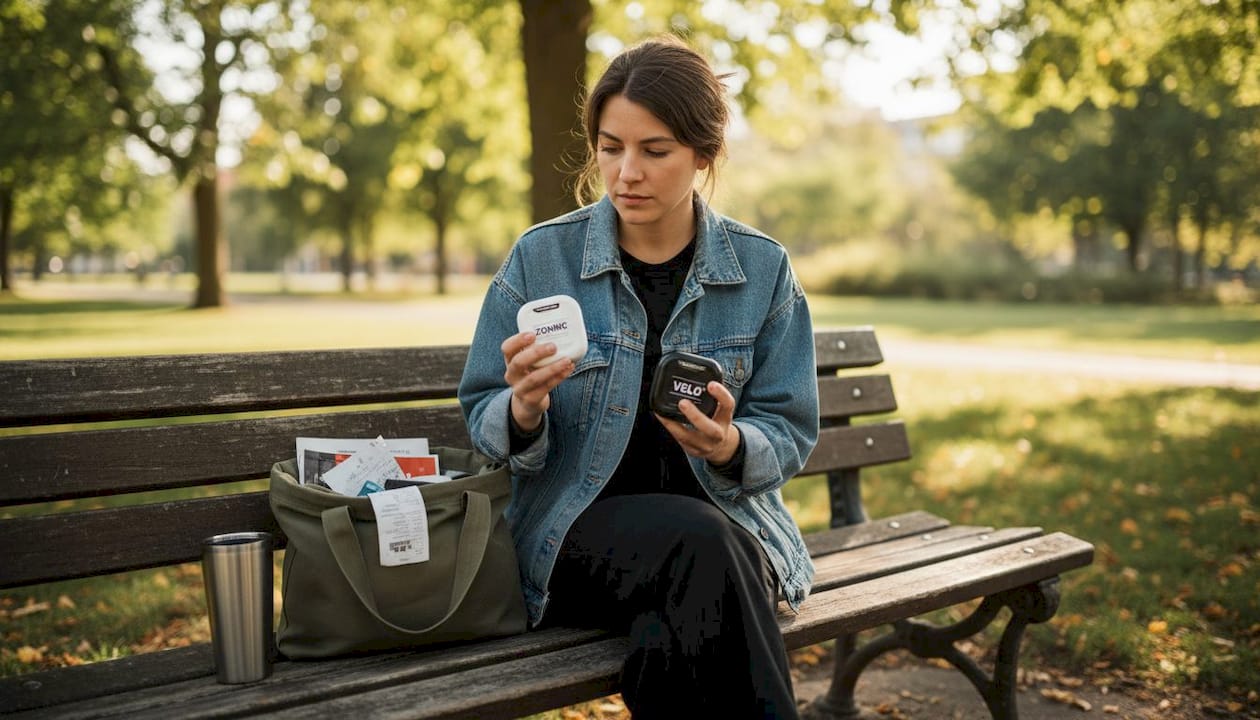
Preparing to switch: choosing the right smokeless nicotine option
Before you buy anything, spend five minutes on a quick self-assessment. Your answers will narrow the field considerably.
Self-assessment questions to ask yourself:
- Do I smoke heavily throughout the day, or only occasionally?
- Are there specific triggers that drive my cravings (stress, meals, commuting)?
- Do I need something completely invisible at work or around children?
- Am I trying to quit entirely, reduce my intake, or simply switch formats?
- Do I miss the ritual of smoking, or just the nicotine itself?
If discretion is your primary concern, pouches win outright. There’s no device, no vapour, and no smell. If you miss the hand-to-mouth ritual strongly, a vaping device may ease the transition better. If you’re looking at nicotine pouches vs gum, pouches generally offer stronger nicotine delivery and longer-lasting relief.
Nicotine strength is where most first-timers go wrong. Heavy, long-term smokers often need a higher starting strength, somewhere between 8 and 12 mg per pouch, to adequately manage cravings. Light or infrequent smokers, on the other hand, risk genuine discomfort at those levels. The benefits of nicotine pouches are most accessible when you start at the right strength for your body.
The evidence for switching is compelling. Swedish snus and pouch users show some of the highest documented quit rates in the world, with figures between 71 and 76% among regular users. That’s not a small effect.
Pro Tip: Start with a lower-strength pouch than you think you need. You can always move up if cravings persist, but starting too strong leads to nausea and puts many people off entirely.
Once you have chosen the format that suits your lifestyle, the next step is learning exactly how to use it.
How to use smokeless nicotine: step-by-step workflow
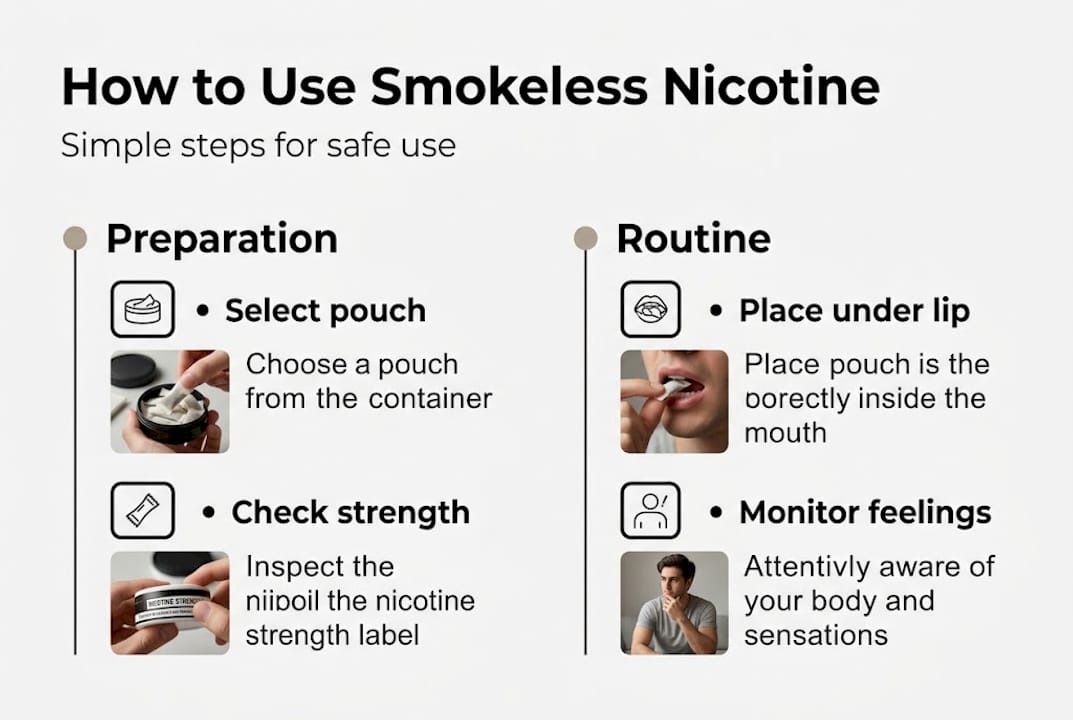
Using a nicotine pouch correctly makes a real difference to your experience. Here’s a straightforward walkthrough for beginners.
- Open the tin and remove a single pouch. Most tins contain 20 pouches.
- Place the pouch under your upper lip, tucking it snugly between your lip and gum. You should feel a slight tingling within a few minutes as nicotine begins to absorb.
- Set a timer for 30 minutes. Most pouches are designed for 30 to 60 minutes of use. Leaving one in longer doesn’t significantly increase nicotine absorption but can cause gum irritation.
- Avoid chewing or sucking the pouch. It’s not gum. Let it sit and do its work.
- Remove and dispose of it properly. Many tins have a small compartment under the lid for used pouches. Never spit or litter them.
Pacing your use throughout the day is important. A common approach is to use one pouch per craving episode rather than on a fixed schedule, at least initially. As you settle in, you can develop a routine that matches your typical craving pattern. The pouch usage guide and pouch usage frequency resources offer more detail on building a sustainable routine.
First-timer issues are common and mostly avoidable. Mouth soreness usually eases after a few days as your gum tissue adjusts. Strength mismatch, using too strong a pouch, is the most frequent cause of unpleasant early experiences. Light smokers face a real risk of nausea or vomiting from pouches above 9 mg, and the slower onset means people sometimes use more than they need before the first pouch has fully kicked in.
Pro Tip: If you feel dizzy or nauseous, remove the pouch immediately. Drink water, rest, and next time try a lower strength. It’s not a failure, it’s just calibration.
| Product | Onset | Peak effect | Duration |
|---|---|---|---|
| Nicotine pouch | 10 to 20 min | 22 to 65 min | 30 to 60 min |
| Vaping device | 2 to 6 min | 6 to 10 min | 20 to 40 min |
| Cigarette | 2 to 6 min | 6 to 10 min | 20 to 40 min |
After knowing how to use smokeless nicotine, it’s vital to understand real-life safety, expected benefits, and possible drawbacks.
Benefits, risks and harm reduction: what to expect from smokeless nicotine
Smokeless nicotine is not risk-free. But the risk profile is genuinely different from smoking, and for most adult smokers, the shift represents a meaningful improvement.
Key benefits of switching:
- No combustion means no smoke inhalation and no lung damage from tar
- Dramatically reduced exposure to carcinogens and toxic chemicals
- No passive smoke risk to people around you
- Less social stigma in most settings
- Greater discretion in workplaces, public spaces, and family environments
Nicotine pouches contain far fewer toxicants than cigarettes or traditional snus, with negligible levels of tobacco-specific nitrosamines and other harmful compounds. Switching can reduce exposure to harmful biomarkers by between 42 and 96%, which is a substantial reduction by any measure.
The risks are real too. Nicotine addiction persists regardless of the delivery format. Prolonged pouch use can cause gum irritation and, in some cases, early-stage gingivitis. It’s worth maintaining good oral hygiene and rotating the placement of your pouch to give gum tissue a rest.
Regulatory bodies and clinical researchers are careful to describe these products as reduced risk compared to cigarettes, not as safe. That distinction is important and honest.
The FDA authorised more than 20 ZYN pouch products as lower-risk alternatives for adults, while youth use trends remain a concern. These products are strictly for adult nicotine users. Non-smokers and young people should not use them. For a broader look at common misconceptions, nicotine pouch myths is worth reading before forming firm conclusions.
Troubleshooting, monitoring, and adjusting your smokeless nicotine use
Your body will tell you a lot if you pay attention. Monitoring your response in the first few weeks is the smartest thing you can do.
Signs of overuse include persistent headaches, nausea, increased heart rate, and difficulty sleeping. Signs of underuse are straightforward: cravings that aren’t being managed, irritability, and difficulty concentrating. Gum redness or soreness that doesn’t settle after a few days suggests you need to rotate pouch placement or reduce session length.
Keeping a simple log is genuinely useful. Note the strength you used, when you used it, whether cravings were satisfied, and any physical reactions. After a week, patterns become obvious and adjustments become easy. Cessation and hybrid use research shows that quitting smokeless nicotine abruptly can cause short-term increases in blood pressure and weight, so gradual reduction tends to work better than going cold turkey.
Adjustment ideas to consider:
- Space out pouch use by 30 minutes longer each week
- Drop one strength level every two to three weeks
- Combine a lower-strength pouch with a vaping device to maintain ritual while reducing nicotine
- Use portable nicotine pouches for on-the-go moments and reserve vaping for home use
Pro Tip: Set a realistic goal at the start of each month and check in with yourself weekly. Adjusting your approach based on what’s actually happening is far more effective than following a rigid plan that doesn’t fit your life.
Pitfalls to avoid include escalating to higher strengths out of habit rather than genuine need, neglecting oral hygiene, and mixing multiple nicotine products without tracking your total intake. It adds up faster than you’d expect.
Our take: what most guides miss about smokeless nicotine
Most articles on smokeless nicotine spend a lot of time celebrating how much safer pouches are compared to cigarettes. That’s true, and it matters. But what they often skip past is the fact that nicotine dependence doesn’t disappear just because the delivery format changes.
Switching from cigarettes to pouches is a genuine step forward for public health. Empirical data supports harm reduction through significant cuts in toxicant exposure, and the nicotine delivery methods available today are genuinely impressive. But the grip of addiction remains. Many people who switch to pouches find they use them more frequently than they ever smoked, simply because the barrier to use is so low.
Discretion is a double-edged quality. It makes pouches ideal for workplaces and family settings, but it also means use can quietly escalate without the social cues that once acted as natural brakes. There’s also the question of ritual. Smoking is as much a behaviour as a chemical dependency, and pouches don’t fully replicate the hand-to-mouth action. That gap is worth acknowledging honestly rather than pretending it doesn’t exist.
The bottom line is this: smokeless nicotine is a better choice for adult smokers who are going to use nicotine regardless. But better is not the same as without consequence.
Next steps: find your ideal smokeless nicotine with HitSnus
If this guide has helped you get clear on what you’re looking for, the next step is finding products that actually match your needs. HitSnus stocks a wide range of nicotine pouches from leading brands including ZYN, Velo, and FUMI, covering every strength level and flavour profile you might want to explore.
Whether you’re a first-timer looking for a gentle entry point or an experienced user wanting to try something new, the selection is broad and the product information is clear. For more on why users are making the switch, the nicotine pouch benefits guide is a helpful companion read. Start with what fits your lifestyle and adjust from there.
Frequently asked questions
How long does it take for smokeless nicotine pouches to work?
Absorption peaks between 22 and 65 minutes, which is slower than smoking or vaping, but the effects tend to last longer and the nicotine levels can match those from a cigarette.
Are smokeless nicotine products safer than smoking cigarettes?
They carry far fewer toxicants and produce no smoke, which significantly reduces lung harm, though addiction and certain oral health risks remain.
Can nicotine pouches really help you quit smoking?
Large population studies, particularly from Sweden, show quit rates of 71 to 76% among regular users, though pouches are not officially approved as a smoking cessation treatment.
What should I do if I feel unwell using a nicotine pouch?
Remove the pouch straight away, drink water, and wait for symptoms to pass. Light smokers are particularly vulnerable to nausea from high-strength pouches, so switching to a lower strength is the sensible next step.