












What is on-the-go nicotine? A practical 2026 guide
TL;DR:
- On-the-go nicotine products like pouches are portable, discreet, and deliver nicotine quickly without combustion or vapour. They pose health risks such as oral tissue damage, cardiovascular effects, and dependency, similar to smoking but without smoke-related harms. Choosing lower-strength options and using them carefully can help manage risks while recognizing these products are not approved cessation tools.
If you’ve ever spotted someone subtly tuck something under their lip on a train or in a meeting, you’ve likely witnessed what is on-the-go nicotine in action. These portable nicotine products have grown from niche curiosity to a mainstream category, with nicotine pouches now stocked everywhere from petrol stations to online retailers. But most people using or considering them have only a surface-level understanding of what these products actually do, how they deliver nicotine, and what the real trade-offs are. This guide covers all of it, without glossing over the bits that matter.
Table of Contents
- Key takeaways
- Products that count as on-the-go nicotine
- How nicotine actually enters your system
- Health risks you should not overlook
- Practical guidance for choosing and using them well
- Pouches versus cigarettes and cessation aids
- My honest take on on-the-go nicotine
- Explore Hitsnus’s tobacco-free nicotine pouches
- FAQ
Key takeaways
| Point | Details |
|---|---|
| On-the-go nicotine defined | Portable, non-combustible products like nicotine pouches deliver nicotine discreetly without smoke or vapour. |
| Absorption is rapid | Nicotine enters the bloodstream via oral mucosa within minutes, creating faster dependence cycles than patches or gum. |
| Strength varies widely | Products range from 3mg to over 47mg per pouch, so new users must choose carefully to avoid excessive intake. |
| Health risks remain real | Oral irritation, gum damage, and cardiovascular effects are documented risks even without combustion. |
| Not a cessation tool | No on-the-go nicotine product carries FDA or MHRA approval as a quitting aid. |
Products that count as on-the-go nicotine
On-the-go nicotine refers primarily to portable, non-combustible products designed for discreet use without a flame, smoke, or vapour cloud. The defining characteristic is convenience combined with discretion. You use them anywhere, with no disruption to those around you.
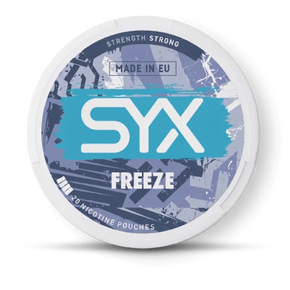
Nicotine pouches are currently the most prominent product in this category. They are small, teabag-style pouches containing nicotine powder, plant-based cellulose filler, and flavourings. You place one between your upper lip and gum, where it sits for anywhere between 15 and 60 minutes. There is no spitting required, no visible product, and no smell that clings to clothing. Pouches are sold in tins of 15 to 20, with nicotine strengths starting around 3mg and reaching as high as 47.5mg depending on the market.
The broader category of mobile nicotine options also includes:
- Vaping pods and disposable devices. Portable and convenient, but they produce visible vapour and require battery power, making them less discreet than pouches.
- Nicotine toothpicks and lozenges. Genuinely discreet but with shorter duration and lower dose flexibility.
- Oral nicotine strips. Thin films that dissolve on the tongue, similar in concept to pouches but with different absorption profiles.
- Chewing tobacco and traditional snus. Smokeless but not tobacco-free, and considerably less socially acceptable in most settings today.
What sets nicotine pouches apart from most of these convenient nicotine solutions is the combination: tobacco-free formulation, no visible use, no hardware, and a range of strengths wide enough to suit both occasional users and those with a heavy nicotine habit.
How nicotine actually enters your system
This is where on-the-go nicotine products differ most significantly from what many users expect. Unlike a cigarette, where nicotine enters through the lungs and reaches the brain in roughly 10 seconds, pouches deliver nicotine through the oral mucosa, the thin tissue lining your mouth. The process is fast, but not quite that fast. Effects typically begin within two to five minutes and peak shortly after.
The critical point is how this absorption pattern compares to traditional nicotine replacement therapies. A nicotine patch releases a slow, steady stream of nicotine over 16 or 24 hours. A nicotine gum releases nicotine gradually over 30 minutes if used correctly. Nicotine pouches, on the other hand, deliver a rapid burst of nicotine that then declines as the pouch is spent. That burst triggers a dopamine release and, once it fades, the beginning of a craving cycle.
“The rapid onset of nicotine from pouches can create stronger addiction cycles than the steady-release formulations designed for cessation. Short half-life means withdrawal begins quickly, driving users back to another pouch sooner than they may intend.” Source: Herald-Dispatch
The implications for dependence are meaningful. The short nicotine half-life creates a cycle where users need to reach for another pouch two to four hours after the last one to stave off withdrawal. Many users don’t notice this pattern forming until they’re firmly in it.
Pro Tip: If you’re new to nicotine pouches, starting with the lowest available strength (typically 2mg to 4mg) significantly reduces the risk of rapidly escalating your nicotine tolerance.
Understanding the nicotine delivery differences between pouches and approved cessation products is not a minor detail. It shapes how you use them responsibly.
Health risks you should not overlook
The single most common misconception about portable nicotine products is that removing combustion removes most of the risk. It removes combustion-related harms, which are significant, but it does not make these products risk-free.

On the oral health side, chronic pouch use can cause mouth irritation, gum sensitivity, and damage to the oral tissue lining. Concentrated nicotine held against the same patch of gum repeatedly creates localised adverse effects that many users attribute to other causes or simply dismiss as minor. Detailed guidance on pouch-related oral effects is worth reading before you commit to regular use.
On the cardiovascular side, nicotine stimulates the sympathetic nervous system regardless of how it is delivered. Blood pressure and heart rate rise with each dose, whether from a cigarette or a mint-flavoured pouch. For users with existing cardiovascular conditions, this is a genuine concern.
Key health considerations to keep in mind:
- No combustion-related carcinogens, but nicotine itself contributes to cardiovascular strain.
- Oral tissue damage from repeated placement in the same spot over months of use.
- Dependency risk that mirrors smoking due to rapid delivery and short half-life.
- No MHRA or FDA approval as a reduced-risk product or cessation aid. Market authorisation for specific brands does not equal a health endorsement.
The honest framing here is harm reduction, not harm elimination. For a current smoker, switching to nicotine pouches likely reduces certain risks considerably. For a non-smoker or former smoker, starting with pouches introduces risks that simply weren’t there before.
Practical guidance for choosing and using them well
Selecting the right product and using it thoughtfully is where most of the practical risk management happens with convenient nicotine solutions.
- Start with the lowest available strength. New users frequently overestimate how much nicotine they need. Some pouches reach 47.5mg per unit, which presents a real risk of accidental overdose in inexperienced users. Symptoms include nausea, dizziness, and rapid heartbeat.
- Track how many you use per day. The discreet nature of pouches makes it easy to lose count. Cumulative intake across a full day can be surprisingly high, particularly with stronger brands.
- Rotate placement sites in your mouth. Placing every pouch in exactly the same spot accelerates gum irritation. Moving the position reduces localised tissue stress.
- Read the brand-specific strength labelling carefully. Naming conventions vary significantly. One brand’s “strong” may be another’s “medium.” A proper nicotine strength guide helps you cut through the inconsistency.
- Set a daily limit before you start. Without a ceiling, the short half-life and rapid craving return will push usage upward over time. Decide how many you’ll use before you open the first tin.
Pro Tip: If you are using pouches to reduce smoking rather than replace it entirely, combining them with professional cessation support significantly improves your odds of success compared to either approach alone.
Pouches versus cigarettes and cessation aids
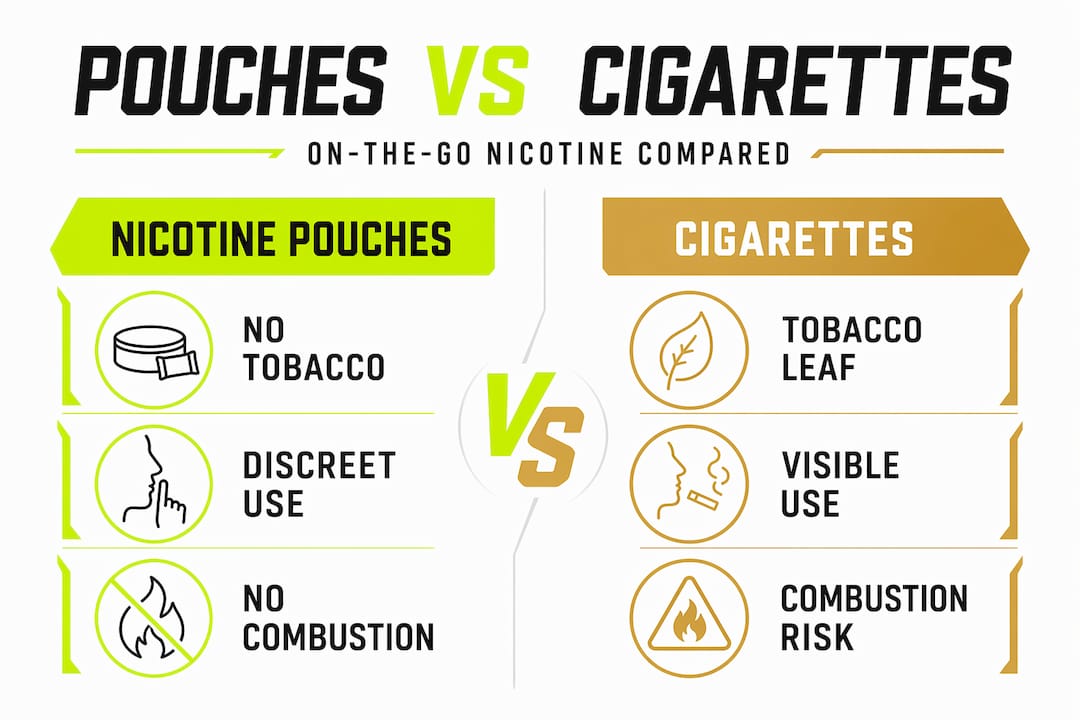
A direct comparison is often the clearest way to understand where on-the-go nicotine devices and products actually sit.
| Product | Nicotine delivery | Form | Combustion risk | Regulatory status |
|---|---|---|---|---|
| Cigarette | Very fast (seconds) | Combustible smoke | High | Restricted sale |
| Nicotine patch | Slow (hours) | Transdermal | None | MHRA-approved cessation |
| Nicotine gum | Moderate (20-30 mins) | Oral | None | MHRA-approved cessation |
| Vaping pod | Fast (seconds) | Inhaled vapour | None (but heated) | Regulated, not approved for cessation |
| Nicotine pouch | Fast (2-5 mins) | Oral/mucosal | None | Regulated, not approved for cessation |
The table makes clear why nicotine pouches appeal to people who want the speed and satisfaction of smoking without the smoke. They sit closer to cigarettes in delivery speed than patches or gum, which is precisely why they are more effective for cravings in the moment, and also why dependence develops more readily. No on-the-go nicotine product has been approved as a quitting aid, which means the decision to use them involves weighing personal risk rather than following a clinical recommendation.
My honest take on on-the-go nicotine
I’ve spent years talking with adult nicotine users about their choices, and the pattern I see most often with pouches is this: people adopt them because they seem cleaner than smoking, and then they’re surprised when they realise they’re as dependent as they ever were. That’s not a flaw in the product. It’s a flaw in the framing.
Marketing of nicotine pouches has been remarkably effective at repositioning nicotine as a lifestyle choice rather than a dependency. Pastel tins, fresh flavours, and “tobacco-free” badges all communicate a kind of wellness-adjacent identity that cigarettes could never claim. But the nicotine inside those tins creates the same neurochemical loops as any other delivery method. Calling it clean doesn’t change that.
My view is not that pouches are bad. For smokers looking to move away from combustion, they can be a genuinely useful tool, and I’d point them toward guidance on reducing smoking with pouches as a starting point. But I think adults deserve to make that choice with a full picture, not the curated version the packaging provides. Know what you’re taking, know how fast it works, and decide with your eyes open.
— Fabio
Explore Hitsnus’s tobacco-free nicotine pouches
If you’ve read this far and you’re ready to try portable nicotine products for yourself, Hitsnus makes it straightforward. The Hitsnus range of nicotine pouches covers the full spectrum of strengths, from light options for new users to high-strength formats for those transitioning from cigarettes, with flavours ranging from cool mint to citrus and berry. Every product is tobacco-free, discreet, and delivered quickly to UK addresses. The site includes detailed product descriptions so you can compare strengths and flavours before buying. For those watching their budget, the clearance nicotine pouch selection offers genuine value on popular brands without compromising on quality.
FAQ
What is on-the-go nicotine exactly?
On-the-go nicotine refers to portable, non-combustible products like nicotine pouches that deliver nicotine discreetly via the oral mucosa, without smoke, vapour, or tobacco leaf.
Are nicotine pouches addictive?
Yes. Nicotine pouches deliver nicotine rapidly, creating dependence cycles similar to smoking due to short nicotine half-life and fast onset.
Can I use nicotine pouches to quit smoking?
No on-the-go nicotine product is currently approved by the MHRA or FDA as a cessation aid. They may support harm reduction but should be combined with professional cessation support for best results.
How strong are nicotine pouches?
Strengths vary from approximately 3mg to 47.5mg per pouch depending on the brand and market. New users should always begin with the lowest available strength to avoid unintended excessive dosing.
Do nicotine pouches cause oral health problems?
Chronic use can cause mouth irritation, gum sensitivity, and oral tissue damage, particularly when pouches are repeatedly placed in the same location in the mouth.