












How to switch to nicotine pouches: step-by-step 2026
- Nicotine pouches are discreet, smoke-free, and lower in toxicants compared to cigarettes.
- Start with a pouch strength matching your smoking habits and follow a gradual switching plan.
- Proper use, patience, and behavioral adjustment are key to successful long-term transition.
Quitting cigarettes is hard. Most smokers have tried patches, gum, or willpower alone, and found that none of them quite scratch the itch. Nicotine pouches are different. They deliver nicotine discreetly, without smoke, ash, or the social stigma of lighting up. They fit under your upper lip, leave no smell on your clothes, and work in places where smoking is banned. This guide walks you through everything: what pouches actually are, how to pick the right strength, how to make the switch step by step, and how to handle the bumps along the way.
Table of Contents
- Understanding nicotine pouches and harm reduction
- Choosing your first nicotine pouches
- Step-by-step: how to switch from smoking to nicotine pouches
- How to use nicotine pouches safely and comfortably
- Overcoming challenges and fine-tuning your switch
- Our perspective: the real-world truth about switching to nicotine pouches
- Ready to make the switch? Explore safe options and expert support
- Frequently asked questions
Key Takeaways
| Point | Details |
|---|---|
| Match strength to habit | Select pouch strength based on how many cigarettes you used to smoke daily. |
| Step-by-step is best | Follow a clear switching plan to reduce relapse and increase comfort. |
| Proper use matters | Placing pouches correctly and starting slow reduces risks and side effects. |
| Tackle cravings smartly | Address behaviour triggers and adjust your routine to maintain long-term success. |
| Harm reduction, not zero risk | Nicotine pouches are much less harmful than smoking but are not completely free from risks. |
Understanding nicotine pouches and harm reduction
Nicotine pouches are small, white sachets that sit between your lip and gum. They contain nicotine, flavourings, and plant-based fillers, but crucially, no tobacco leaf, no combustion, and no smoke. That distinction matters enormously for your health and for the people around you.
The nicotine pouch benefits over smoking are well documented. There is no ash, no odour clinging to your hair or jacket, no spitting, and no second-hand smoke. You can use them on a train, in an office, or at a family dinner without anyone noticing. That level of discretion is something patches and gum simply cannot match.
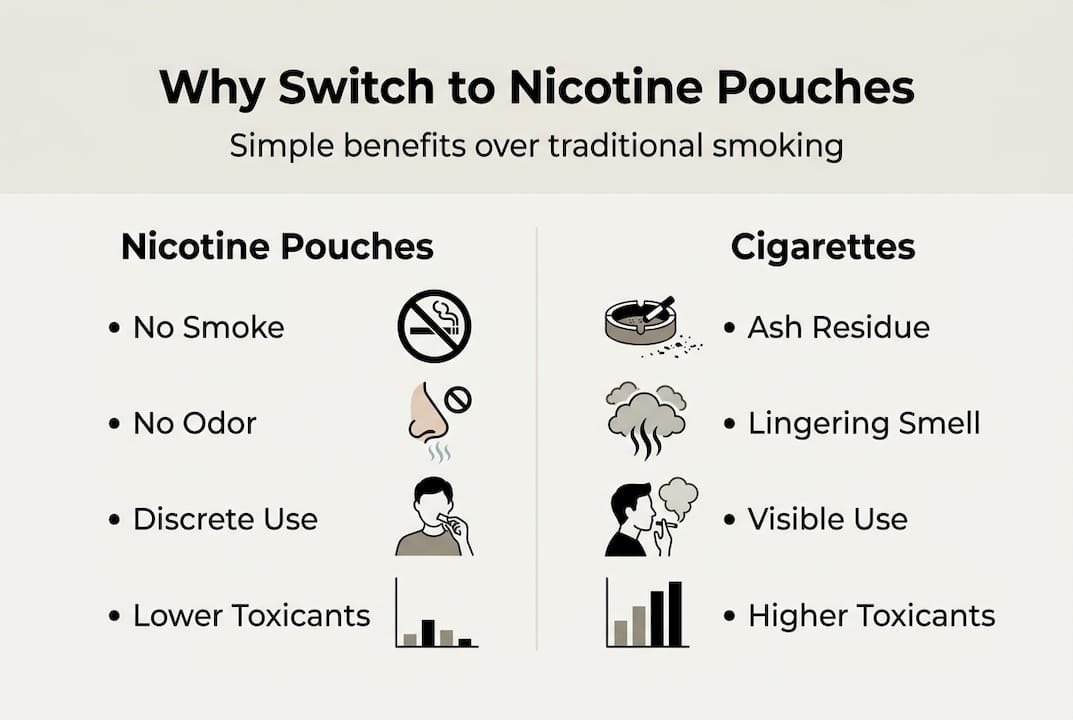
The evidence from Sweden is striking. Nicotine pouches are lower in toxicants and outperform gum and vapes for quit rates, though they are not risk-free. Separately, the FDA has authorised six nicotine pouch products following a rigorous review, recognising their harm reduction potential compared to cigarettes.
| Feature | Cigarettes | Vaping | Nicotine pouches |
|---|---|---|---|
| Tobacco leaf | Yes | No | No |
| Smoke or vapour | Yes | Yes | No |
| Odour | Strong | Moderate | None |
| Discreet use | No | Limited | Yes |
| Spitting required | No | No | No |
That said, harm reduction is not the same as risk-free. Pouches still deliver nicotine, which is addictive. Some users experience mild gum irritation or dry mouth, particularly when starting out. Going in with realistic expectations makes the transition far smoother.
“Nicotine pouches represent a meaningful step down in harm compared to combustible tobacco, but users should approach them as a tool for transition, not a permanent lifestyle upgrade.”
Choosing your first nicotine pouches
With a clear understanding of why pouches are effective, the next step is choosing the right one for your needs. The single biggest mistake new users make is picking a strength that is too high. Nicotine nausea is real, and it puts people off before they give pouches a fair chance.
Matching pouch strength to your current smoking habit is straightforward. As a general guide, start with established brands like ZYN, VELO, or ON! and match the milligrams to how many cigarettes you smoke per day.
| Cigarettes per day | Recommended pouch strength |
|---|---|
| 1 to 5 | 2 to 4mg |
| 6 to 10 | 4 to 6mg |
| 10 to 20 | 6 to 9mg |
| 20 or more | 9mg and above |
The FDA-authorised pouches come in a range of strengths, so finding a regulated, quality product at your level is entirely achievable. You can also compare pouch strengths in detail to find your ideal match.
Beyond strength, consider format and flavour. Slim pouches sit more comfortably for most beginners. Dry pouches release nicotine more slowly, which suits lighter smokers. Moist pouches hit faster, which can help heavy smokers manage cravings. Mint and citrus flavours are the most popular starting points, though fruit and berry options work well if you prefer something sweeter.
- ZYN: Clean, consistent, widely available in multiple strengths
- VELO: Slim format, great for first-timers, strong flavour range
- ON!: Mini size, very discreet, good for social situations
Pro Tip: If you are unsure where to start, the beginner’s pouch guide walks you through every option in plain language.
Step-by-step: how to switch from smoking to nicotine pouches
Once you have picked your starting pouch, here is exactly how to put it into practice and monitor your progress.
- Assess your habits. Write down when and why you smoke. Morning coffee, after meals, stress moments. These are your triggers, and they are what you will replace with a pouch.
- Set a switch date. Pick a day within the next two weeks. Having a clear target makes the process feel manageable rather than open-ended.
- Clear out tobacco. Remove cigarettes, lighters, and ashtrays from your home and car. Reducing temptation in your environment is one of the most effective behavioural tools available.
- Replace one cigarette at a time. Start with the cigarettes you find easiest to skip, such as the one after lunch or the mid-afternoon break. Use a pouch instead and note how you feel.
- Track your progress. Use a simple notes app or a notebook. Record how many cigarettes you replaced, how cravings felt, and whether the pouch strength felt right.
The step-by-step switching guide covers both gradual reduction and cold turkey approaches. Gradual works better for most people because it lets your body and mind adjust at the same pace. Cold turkey is faster but harder to sustain.

Sweden’s experience is instructive here. Female smoking rates fell by 49% as pouch use rose, a real-world signal that the method works at scale. The UK switching guide adapts these findings for British smokers specifically.
Pro Tip: Tell a friend, partner, or colleague that you are switching. Social accountability is one of the strongest predictors of long-term success in any behaviour change.
How to use nicotine pouches safely and comfortably
Switching methods are only half the battle. Getting the physical experience right from your very first pouch makes a significant difference to whether you stick with it.
Placement is simple. Wash your hands, then place the pouch under your upper lip, to one side. You will feel a mild tingling as the nicotine begins to release. That sensation fades within a few minutes and is completely normal. Follow the proper usage guidance to get the most from each pouch.
“Do not chew the pouch. If you feel discomfort or irritation, move it to a slightly different position rather than removing it immediately.”
Keep the pouch in for between 30 and 60 minutes. Most users find 45 minutes is the sweet spot. After that, the nicotine release slows significantly. Dispose of used pouches in the small compartment built into the lid of most cans, or wrap them in tissue.
Research published in Human Psychopharmacology highlights the importance of monitoring for irritation, dry mouth, and signs of overuse. The nicotine pouch safety guide and usage workflow are both worth bookmarking.
- Limit yourself to one pouch at a time
- Rotate placement to avoid irritation in one spot
- Stay hydrated throughout the day
- Do not exceed the recommended daily number of pouches
- Avoid use immediately before bed
Overcoming challenges and fine-tuning your switch
Even after getting started, you may face challenges. Let’s help you solve them and make the switch stick.
The most common issue is not physical at all. It is behavioural. Smoking is a ritual. The hand-to-mouth action, the pause, the break from a task. Pouches satisfy the nicotine craving but not the ritual, and that gap can feel surprisingly large. Behavioural cravings persist even when nicotine levels are well managed, so do not be surprised if you still reach for a cigarette out of habit.
Practical fixes for common challenges:
- Dry mouth: Drink more water and rotate pouch placement more frequently
- Gum irritation: Take a break from pouches for a few hours and use a lower-strength option next time
- Still craving cigarettes: Try a slightly higher strength pouch, but only if your current level feels genuinely insufficient
- Feeling dizzy or nauseous: Your strength is too high. Drop down one level immediately
Women and lighter smokers are particularly sensitive to overuse, so starting conservatively and adjusting upward is far safer than the reverse. The mild vs strong pouch comparison is a useful reference when you are ready to fine-tune.
Pro Tip: Once you have been smoke-free for four to six weeks, start stepping down your pouch strength by one level. This gradual reduction keeps withdrawal symptoms minimal and gives you a clear path toward using pouches safely long-term or quitting nicotine entirely.
Our perspective: the real-world truth about switching to nicotine pouches
Most switching guides make it sound simple. Pick a pouch, pop it in, done. The reality is messier, and that is worth saying plainly.
Switching is a process, not an event. Some people replace all their cigarettes within a week. Others take two months to get there. Both outcomes are valid. What matters is the direction of travel, not the speed.
The thing most guides overlook is that your relationship with smoking is not purely chemical. It is woven into your daily routine, your social life, and your identity as a smoker. Pouches address the nicotine side brilliantly, but you will need to consciously rebuild the behavioural side yourself.
Research in Internal and Emergency Medicine makes clear that pouches help many people but are not a universal solution, and they carry their own addiction risk. We believe in being honest about that. Pouches are a powerful tool, not a magic fix. The benefits of pouches are real, but so is the need for patience and self-awareness throughout the process.
Ready to make the switch? Explore safe options and expert support
You now have everything you need to start your switch with confidence. The next step is finding the right products.
At Hitsnus, we stock a carefully curated range of nicotine pouches from the most trusted brands, including ZYN, VELO, FUMI, and more, across every strength level from beginner to experienced user. Whether you are just starting out or looking to step down your strength, our range has you covered. Pair your purchase with our detailed switching guide for a fully supported transition. We want your switch to stick, and we have built our product selection and blog resources specifically to help adult smokers like you get there.
Frequently asked questions
How long does it take to adjust to nicotine pouches after quitting cigarettes?
Most users adapt within one to two weeks, though behavioural cravings persist independently of nicotine, meaning the mental side can take longer than the physical adjustment.
What strength nicotine pouch should I use if I smoke 10 cigarettes a day?
A pouch between 6 and 9mg is generally the right starting point for moderate smokers. The strength guidelines recommend adjusting up or down based on how you feel after the first few days.
Are nicotine pouches really safer than smoking or vaping?
Yes, pouches contain fewer harmful chemicals than cigarettes or vape liquid. The FDA harm reduction review confirms lower levels of harmful and potentially harmful constituents, though pouches are not completely risk-free.
What should I do if I feel sick or dizzy after using a pouch?
Remove the pouch immediately and wait until the feeling passes. Overuse or high strength is the most common cause, so try a lower milligram option next time.
Can I use nicotine pouches to quit nicotine entirely?
Yes. The step-down approach involves gradually reducing pouch strength and frequency over time, making it a practical route to quitting nicotine altogether.