













How to quit smoking with nicotine pouches: 2026 guide
Quitting smoking ranks among life’s toughest challenges, largely because nicotine addiction keeps pulling you back to cigarettes. Nicotine pouches offer a discreet, smokeless alternative that delivers nicotine without the harmful tar and smoke of traditional tobacco. This guide walks you through a practical, step-by-step approach to using nicotine pouches effectively as part of your quit plan, combining product knowledge with behavioural strategies to help you break free from cigarettes for good.
Table of Contents
- Key takeaways
- Understanding nicotine pouches and their role in quitting smoking
- Preparing to quit: what you need to know before switching to nicotine pouches
- Step-by-step guide to quitting smoking with nicotine pouches
- Troubleshooting common issues and what to expect during your quit journey
- Explore our nicotine pouches for your quit journey
- Frequently asked questions
Key Takeaways
| Point | Details |
|---|---|
| Limited cessation evidence | Current evidence shows nicotine pouches do not reliably increase quit rates compared with placebo and should be used as part of a comprehensive quit plan. |
| Slower nicotine delivery | Pouches deliver nicotine more slowly than cigarettes, which can help manage withdrawal while providing less of the immediate reward that sustains smoking. |
| Need behavioural support | They work best when used with behavioural support and medical advice as part of a personalised quitting plan. |
| Common mild side effects | Mouth or gum irritation, hiccups or nausea, throat discomfort, headaches and increased salivation are usually temporary as you adjust. |
| Start with mid strength | If you smoke 10 to 20 cigarettes daily, begin with a mid range nicotine strength such as 6 to 9 mg and adjust based on cravings. |
Understanding nicotine pouches and their role in quitting smoking
Nicotine pouches are small, tobacco-free sachets containing nicotine, plant fibres, flavourings, and sweeteners. You place them between your gum and lip, where nicotine absorbs through the oral mucosa into your bloodstream. Unlike cigarettes, they produce no smoke, ash, or odour, making them a discreet choice for public spaces.
Compared to cigarettes, pouches deliver nicotine slower, with peak blood levels reached in 30 to 60 minutes rather than minutes. Research shows their abuse liability resembles NRT gum more than cigarettes, meaning they satisfy cravings without the immediate rush that reinforces smoking behaviour. This gradual delivery can help manage withdrawal symptoms whilst reducing the psychological reward cycle that keeps smokers hooked.
Current evidence on effectiveness remains mixed. A systematic review found no strong increase in quit rates from nicotine pouches compared to placebo, though some users reported reduced smoking frequency. The pouches work best as part of a comprehensive quit plan that includes behavioural support rather than as a standalone solution. Think of them as a tool in your toolkit, not a magic cure.
Common mild side effects include:
- Mouth or gum irritation
- Hiccups or nausea
- Throat discomfort
- Headaches
- Increased salivation
These symptoms typically diminish as your body adjusts or when you switch to a lower nicotine strength. Serious adverse events are rare in clinical studies, but long-term safety data remains limited.
Advantages of nicotine pouches:
- Completely smokeless and tobacco-free
- Discreet use in smoke-free environments
- No secondhand smoke exposure
- Wide range of flavours and strengths
- Portable and easy to use
Limitations to consider:
- Not FDA-approved as nicotine replacement therapy
- Variable nicotine content across brands
- Unknown long-term health effects
- May perpetuate nicotine dependence
- Less clinical evidence than traditional NRT
Pro Tip: Start with a mid-range nicotine strength (6 to 9 mg) if you smoke 10 to 20 cigarettes daily. Heavy smokers may need stronger pouches initially, whilst lighter smokers can begin with lower doses. Track your cravings for the first week to assess whether you need to adjust strength. For detailed guidance on how to reduce smoking with nicotine pouches naturally, consider combining product use with trigger management strategies.
Preparing to quit: what you need to know before switching to nicotine pouches
Successful quitting starts well before you place your first pouch. Preparation significantly improves your chances of staying smoke-free long term, so invest time in planning your approach.

Consult your GP or a smoking cessation specialist before starting, especially if you have cardiovascular conditions, high blood pressure, diabetes, or oral health issues. Nicotine affects heart rate and blood pressure, and your doctor can assess whether pouches suit your medical profile. They can also prescribe proven NRT options or medications like varenicline if appropriate. Combining behavioural support with a personalised plan and medical consultation is recommended for successful quitting.
Selecting the right nicotine strength matters enormously. Pouches vary widely in nicotine concentration, from 3 mg to over 20 mg per pouch. Too low, and you’ll battle intense cravings that drive you back to cigarettes. Too high, and you’ll experience unpleasant side effects like nausea and dizziness. Match your initial strength to your cigarette consumption: light smokers (fewer than 10 per day) can start with 3 to 6 mg, moderate smokers (10 to 20 per day) with 6 to 9 mg, and heavy smokers (more than 20 per day) with 9 to 12 mg or higher.
Set achievable goals with clear timelines. Decide whether you want to quit completely within a specific timeframe or gradually reduce smoking first. A realistic initial goal might be cutting cigarette consumption by 50% within two weeks, then eliminating them entirely by week four. Write down your target date and share it with supportive friends or family for accountability.
Essential preparation steps:
- Schedule a GP appointment to discuss your quit plan
- Choose your initial pouch strength based on smoking habits
- Set a quit date or reduction timeline
- Identify your smoking triggers (stress, coffee, alcohol, social situations)
- Gather behavioural support resources like NHS Stop Smoking services or apps
- Stock up on pouches so you’re never caught without them
- Prepare strategies for managing withdrawal symptoms
Pro Tip: Keep a smoking diary for three days before quitting. Note every cigarette, what triggered it, and how strong the urge was. This reveals your high-risk situations and helps you plan specific pouch usage strategies. For instance, if you always smoke with morning coffee, plan to use a pouch during that ritual instead. Understanding how to minimise nicotine pouch side effects safely through proper dosing and timing will make your transition smoother.
Step-by-step guide to quitting smoking with nicotine pouches
Follow this structured approach to transition from cigarettes to nicotine pouches, then gradually reduce nicotine dependence altogether.
Step 1: Begin substitution and track progress. On your quit date, replace every cigarette urge with a nicotine pouch. Keep a log noting each time you use a pouch instead of smoking, and count any cigarettes you do smoke. This creates awareness and shows progress. Most users find the first three days hardest as their body adjusts to the different nicotine delivery pattern.
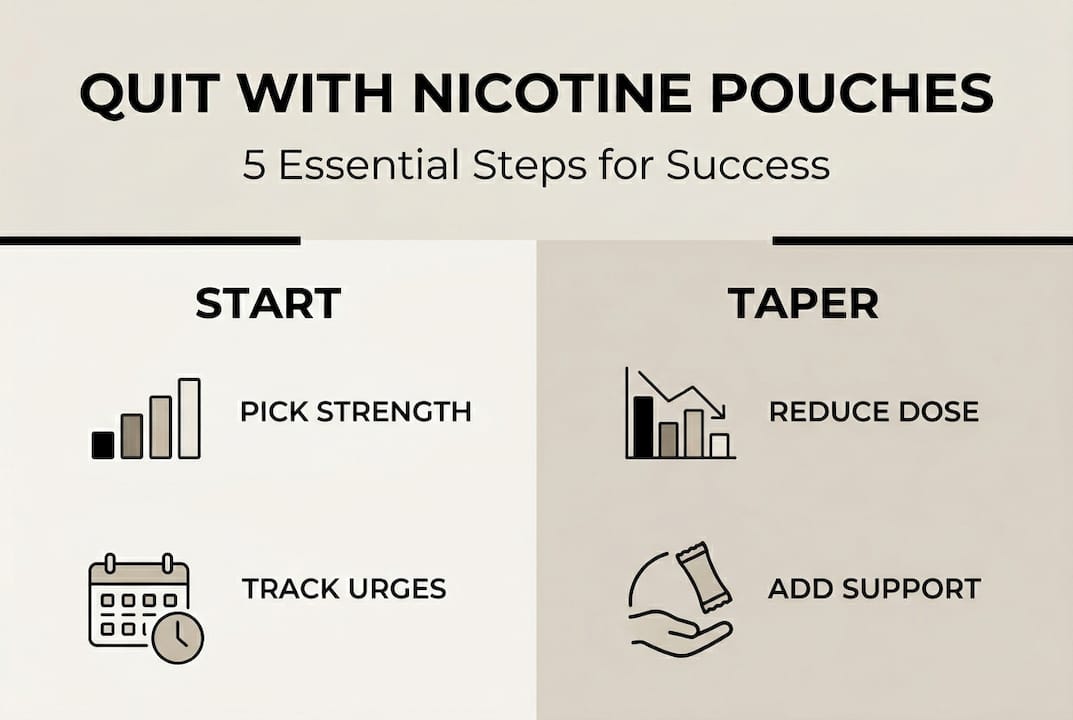
Step 2: Use appropriate strength to manage cravings. Don’t underdose. If cravings remain overwhelming after 15 minutes with a pouch in place, you may need a higher strength. High-strength pouches reduce urges similarly to traditional snus, helping prevent relapse during the critical early weeks. Use pouches proactively before cravings peak, not just reactively when you’re desperate for a cigarette.
Step 3: Combine pouches with behavioural support. Nicotine replacement addresses the physical addiction, but smoking is also a learned behaviour tied to routines, emotions, and social contexts. Behavioural and medical support alongside pouches improve quitting outcomes significantly. Join a support group, use a quit-smoking app, or work with a counsellor to develop coping strategies for triggers. Change your routines: take a different route to work, drink tea instead of coffee if coffee triggers cravings, or go for a walk during your usual smoking breaks.
Step 4: Gradually taper nicotine strength and frequency. After two to four weeks smoke-free, begin reducing nicotine intake. Drop to a lower-strength pouch or extend the time between pouches. Taper slowly to avoid triggering relapse. A typical schedule might reduce strength by 3 mg every two to three weeks, or decrease daily pouch count by two to three pouches per week. Listen to your body and slow down if withdrawal symptoms intensify.
Step 5: Monitor and manage withdrawal symptoms. Expect irritability, difficulty concentrating, increased appetite, and sleep disturbances during the first two weeks. These are normal nicotine withdrawal effects, not pouch side effects. Stay hydrated, exercise regularly, and get adequate sleep to ease symptoms. If you experience persistent mouth irritation from pouches, try a different flavour or brand, ensure you’re rotating placement sites, and limit pouch duration to 30 minutes.
| Nicotine replacement option | Pros | Cons | Best for |
|---|---|---|---|
| Nicotine pouches | Discreet, no smoke, fast-acting, variety of strengths | Not FDA-approved, variable dosing, long-term safety unknown | Smokers wanting discreet, smokeless option with flexible dosing |
| Nicotine patches | Steady nicotine level, once-daily application, proven efficacy | Skin irritation, less flexible dosing, slower craving relief | Smokers preferring set-and-forget approach with consistent levels |
| Nicotine gum | Flexible dosing, oral fixation satisfied, proven efficacy | Jaw discomfort, frequent dosing needed, less discreet | Smokers who need hand-to-mouth action and flexible dosing |
Pro Tip: Pair each pouch with a specific replacement behaviour. When you’d normally smoke after a meal, use a pouch whilst taking a short walk. When stress triggers cravings, use a pouch whilst practising deep breathing for two minutes. This builds new neural pathways that don’t involve smoking. Explore nicotine pouches vs patches and gum to understand why some smokers find pouches more effective for their lifestyle and preferences.
Troubleshooting common issues and what to expect during your quit journey
Even with careful planning, challenges arise during quitting. Knowing how to handle them prevents relapse and keeps you moving towards your smoke-free goal.
Mild side effects such as mouth irritation and nausea are common but not serious, often dose-related. To minimise irritation, rotate pouch placement between upper and lower gum, avoid keeping pouches in for longer than 45 minutes, and choose milder flavours if mint or citrus flavours cause discomfort. If nausea occurs, you’re likely using too strong a dose or swallowing excess saliva. Try a lower strength, spit out saliva initially, and avoid using pouches on an empty stomach.
Managing cravings requires both nicotine replacement and behavioural tactics. When intense urges strike despite using a pouch, deploy the “four Ds”: Delay for five minutes (cravings peak and pass), Distract yourself with an activity, Drink water slowly, and take Deep breaths. Most cravings last only three to five minutes. Identify your highest-risk relapse triggers and create specific plans. If alcohol weakens your resolve, avoid drinking situations for the first month. If certain friends smoke, explain your quit attempt and ask them not to smoke around you or offer cigarettes.
Common challenges and solutions:
- Challenge: Intense cravings in the first week. Solution: Use pouches proactively every one to two hours rather than waiting for cravings.
- Challenge: Weight gain from increased appetite. Solution: Keep healthy snacks available, drink plenty of water, and increase physical activity.
- Challenge: Difficulty concentrating. Solution: Break tasks into smaller chunks, take frequent short breaks, and ensure adequate nicotine replacement.
- Challenge: Sleep disruption. Solution: Avoid pouches within two hours of bedtime, establish a calming evening routine, and consider melatonin supplements.
- Challenge: Social pressure or smoking friends. Solution: Practise assertive refusal phrases, avoid high-risk social situations initially, and seek out non-smoking friends.
Set realistic expectations about the quitting process. It’s rarely linear. Most people need several attempts before achieving long-term success, and temporary slips don’t mean failure. If you smoke a cigarette, don’t view it as permission to resume smoking. Analyse what triggered the slip, adjust your strategy, and continue with pouches immediately. One cigarette is a mistake; a pack is a choice to give up.
“Quitting smoking is a journey, not a destination. Every day without cigarettes is a victory, even if you’re still using nicotine pouches. Focus on eliminating smoke first, then gradually reduce nicotine dependence. Celebrate each milestone, learn from setbacks, and remember that your smoke-free life gets easier with each passing week.”
Long-term health effects remain unknown, so the ultimate goal should be tapering off nicotine completely after quitting smoking. Plan to reduce pouch use over three to six months, eventually reaching zero nicotine dependence. Schedule regular check-ups with your GP to monitor cardiovascular health and discuss any concerns. Whilst pouches are almost certainly less harmful than smoking, they’re not risk-free, and nicotine itself has cardiovascular effects.
Pro Tip: Join an online quit-smoking community or forum where you can share experiences, get encouragement during tough moments, and learn from others’ strategies. Social support dramatically increases long-term success rates. Consider pairing your quit attempt with another positive lifestyle change, like starting an exercise programme, which provides additional health benefits and helps manage stress and weight concerns. Understanding whether nicotine pouches are safer than cigarettes can reinforce your motivation by highlighting the health improvements you’re achieving.
Explore our nicotine pouches for your quit journey
Ready to take the next step towards a smoke-free life? We offer a comprehensive selection of tobacco-free nicotine pouches in various strengths and flavours to match your needs and preferences. Whether you’re just starting your quit journey or fine-tuning your nicotine replacement strategy, you’ll find quality products from trusted brands.
Our nicotine pouches arrive quickly with fast UK delivery, so you’re never left without the support you need during those critical early weeks. We stock everything from beginner-friendly lower strengths to high-strength options for heavy smokers. Plus, check our clearance sale for excellent value on premium pouches, helping you stock up affordably as you work towards your smoke-free goal. Browse our range today and find the pouches that fit your personalised quit plan.
Frequently asked questions
Is it safe to use nicotine pouches to quit smoking?
Nicotine pouches have mild short-term side effects like mouth irritation and nausea, but no serious harms have been reported in clinical studies. However, long-term safety data remains limited since pouches are relatively new products. They’re almost certainly less harmful than continuing to smoke, but the ideal outcome is eventually tapering off nicotine completely. Always consult your GP before starting, especially if you have cardiovascular conditions or other health concerns.
How do nicotine pouches compare to other nicotine replacement therapies?
Pouches deliver nicotine slower than cigarettes and e-cigarettes, with a delivery profile similar to nicotine gum. They offer more discreet use than gum or lozenges and don’t require the daily routine of patches. The abuse liability of pouches resembles traditional NRT products rather than cigarettes, meaning they’re less likely to create the intense reward cycle that reinforces addiction. However, unlike patches and gum, pouches aren’t FDA-approved as cessation aids, so clinical evidence supporting their effectiveness remains more limited.
Can I use nicotine pouches without quitting smoking completely at first?
Yes, many people successfully use pouches to reduce cigarette consumption before quitting entirely. This harm reduction approach can make the transition less overwhelming and build confidence in your ability to manage without cigarettes. Start by replacing cigarettes in specific situations, like at work or whilst driving, where pouches are more convenient. Track your progress and gradually increase the situations where you use pouches instead of smoking. However, combining pouches with ongoing smoking isn’t a long-term solution. Set a target date for complete cessation, ideally within four to eight weeks of starting pouches.
What should I do if I experience side effects from nicotine pouches?
Mild irritation or nausea often improves with dose adjustment, rotating pouch placement, or switching flavours. If symptoms persist beyond two weeks or worsen, consult your doctor to rule out allergic reactions or other issues. Try using a lower nicotine strength, limiting pouch duration to 30 minutes, and avoiding use on an empty stomach. Stay well hydrated and consider taking breaks between pouches rather than using them continuously. If you develop severe symptoms like chest pain, irregular heartbeat, or significant oral lesions, stop using pouches immediately and seek medical attention.