










Alternative nicotine forms guide for adult users 2026
TL;DR:
- Smoke-free nicotine products significantly reduce toxicant exposure compared to cigarettes, offering adult users discreet and effective alternatives. These include nicotine pouches, vapes, heated tobacco devices, and traditional NRTs, each with distinct risks, benefits, and suitability depending on user goals and lifestyle. Selecting the right product involves matching harm reduction strategies with individual preferences while avoiding dual use to maximize health benefits.
Alternative nicotine forms are smokeless products designed to deliver nicotine without the combustion toxicants found in cigarettes, giving adult users effective and discreet options for consumption. The industry term for this category is “smoke-free nicotine products” (SFPs), and this alternative nicotine forms guide covers every major type available in 2026. Products range from nicotine pouches like ZYN and Velo to electronic nicotine delivery systems (ENDS) such as vapes, heated tobacco devices like IQOS, and traditional nicotine replacement therapies (NRTs). Smoke-free products reduce toxicant exposure by up to 96% compared to cigarettes, which is the single most important number you need to understand before choosing between them.
What are the main types of alternative nicotine products?
The smokeless nicotine alternatives overview breaks down into four distinct categories, each with a different mechanism, user experience, and risk profile.

Nicotine pouches are small, tobacco-free sachets placed between the gum and upper lip. Nicotine absorbs through the oral mucosa, producing no vapour, no smoke, and no odour. Brands like ZYN, Velo, and FUMI offer pouches in a range of strengths and flavours, making them one of the most discreet non-smoking nicotine options available today.
Electronic cigarettes and vapes are battery-powered devices that heat a nicotine-containing liquid into an aerosol. They replicate the hand-to-mouth ritual of smoking more closely than any other alternative, which is part of why e-cigarettes outperform NRT in helping people stop smoking for at least six months. ENDS products vary considerably in design and nicotine delivery, so selecting the right device matters.
Heated tobacco products (HTPs) such as IQOS heat real tobacco sticks to around 350°C rather than burning them. This produces a tobacco-flavoured aerosol with significantly fewer combustion byproducts than a cigarette. HTPs sit between vapes and cigarettes in terms of user experience and are popular among smokers who want the tobacco taste without the smoke.
Nicotine replacement therapies include:
- Patches: deliver a steady, low-level nicotine dose through the skin over 16 or 24 hours
- Gum and lozenges: fast-acting oral forms that address sudden cravings within minutes
- Inhalers and nasal sprays: prescription-grade options that mimic the hand-to-mouth or inhalation behaviour of smoking
- Mouth sprays: over-the-counter options for rapid nicotine delivery
NRTs are the most clinically studied products in this category and carry the longest regulatory track record. They are designed primarily for cessation rather than long-term use, which distinguishes them from pouches and vapes.
How do alternative nicotine forms compare in safety and health risks?
The core evidence on harm reduction is clear. Specific toxicants drop by 89 to 96% in smoke-free products compared to combustible cigarettes, including carcinogenic N-nitrosonornicotine (NNN) and polycyclic aromatic hydrocarbons (PAHs). This does not mean these products are harmless. It means the primary source of cigarette-related disease, which is combustion, is removed or dramatically reduced.
“Tobacco cigarettes remain the most harmful nicotine product; harms relate primarily to toxicants produced by combustion, not to nicotine itself.” — The potential of smoke-free products to reduce harm
Nicotine pouches carry their own risks. Pouches may cause gum recession and oral lesions, and nicotine doses vary widely across brands, sometimes exceeding the nicotine content of a cigarette. The tobacco-free label does not mean risk-free. A common misconception is that FDA marketing authorisation signals safety; the FDA evaluates relative harm for current smokers, not absolute safety for all users.
| Product | Toxicant exposure vs cigarettes | Oral health risk | Addiction potential |
|---|---|---|---|
| Nicotine pouches | Very low (tobacco-free) | Moderate (gum irritation possible) | Moderate to high |
| E-cigarettes/vapes | Low to moderate | Low | Moderate to high |
| Heated tobacco (IQOS) | Low (89–96% fewer toxicants) | Low | Moderate to high |
| NRT patches/gum | Minimal | Very low | Low |
| Cigarettes | Baseline (highest) | High | Very high |
All nicotine products carry addiction risk. The distinction between harm reduction and safety is one every adult user should understand before switching. For a deeper look at how these products differ in practice, the smokeless nicotine options compared guide on Hitsnus covers risk and usage side by side.
Pro Tip: If you are currently smoking and considering a switch, the goal is to replace combustion entirely rather than use alternatives alongside cigarettes. Dual use, meaning smoking and vaping simultaneously, reduces harm far less than a full switch.
What are the benefits and limitations of different alternative nicotine forms?
Understanding the practical trade-offs helps you match a product to your lifestyle rather than choosing based on marketing alone.
-
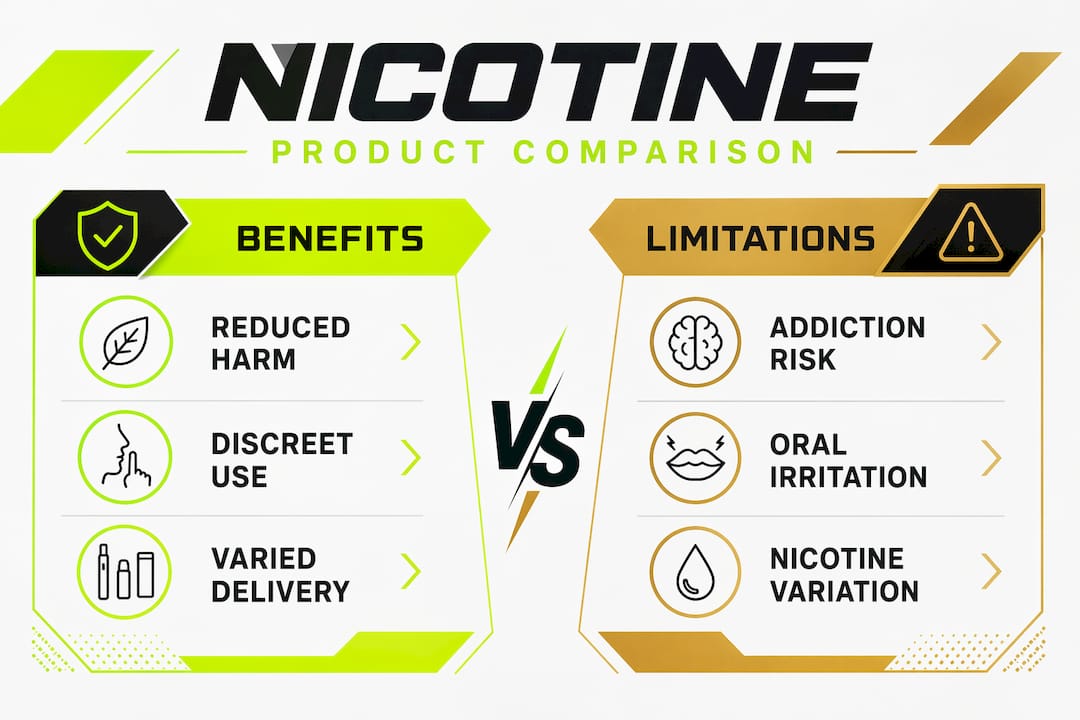
Nicotine pouches offer the highest level of discretion. You can use them in offices, on public transport, and in situations where smoking or vaping is prohibited. There is no device to charge, no liquid to refill, and no smell to manage. The limitation is that oral placement can cause localised irritation with heavy use, and the lack of standardised nicotine concentration controls in many regions means you need to read product labels carefully.
-
Vaping gives you the closest approximation to the smoking ritual, including the inhalation sensation and visible exhale. This makes it particularly effective for smokers who struggle with the behavioural side of quitting. The drawback is device dependency: batteries die, coils need replacing, and carrying equipment adds friction. ENDS products also require eventual discontinuation. Clinicians advise tapering ENDS use after successful cessation to avoid long-term dependency.
-
Heated tobacco products appeal to smokers who want the taste and ritual of tobacco without the smoke. They are more expensive per use than pouches and require a dedicated device, but they deliver a familiar experience that pure nicotine products cannot replicate.
-
NRT combination therapy is the clinical gold standard for cessation. Combining a patch with a fast-acting form such as gum or a lozenge achieves quit rates approaching prescription medications like varenicline. The patch handles baseline cravings; the gum or lozenge handles sudden urges. The limitation is that NRTs are designed for short-term use and do not suit users who want a long-term smokeless alternative rather than a cessation tool.
-
Cost varies significantly. NRT patches and gum are available as generic store-brand products using the same active ingredients as name brands at a lower price. Pouches and vapes sit in the mid-range, while heated tobacco devices carry a higher upfront hardware cost.
Pro Tip: Start with the lowest nicotine strength that controls your cravings rather than matching your previous cigarette intake. Many users overestimate the strength they need, which increases dependency rather than reducing it.
How to choose and use alternative nicotine products effectively
Choosing the right product starts with an honest assessment of your smoking pattern and what you are trying to achieve.
- If you smoke for the ritual, vaping or heated tobacco will feel more natural than a patch or pouch. The hand-to-mouth action and inhalation sensation are preserved.
- If you need discretion, nicotine pouches are the clear choice. No device, no vapour, no smell. ZYN and Velo are widely available in the UK and offer consistent nicotine delivery.
- If your goal is full cessation, NRT combination therapy backed by behavioural support has the strongest clinical evidence base.
- If you want to reduce harm without quitting nicotine entirely, pouches or low-strength vapes used consistently instead of cigarettes represent a realistic harm-reduction approach.
When switching from cigarettes to any alternative, avoid dual use. Using cigarettes alongside an alternative product significantly reduces the toxicant benefit. Set a switch date, use your chosen product exclusively from that point, and monitor your intake over the first two weeks.
Consult a GP or pharmacist before starting if you have cardiovascular conditions, are pregnant, or are under 18. Nicotine affects heart rate and blood pressure regardless of the delivery method. Regulatory status also matters: in the UK, nicotine pouches are legal for adults but not subject to the same Medicines and Healthcare products Regulatory Agency (MHRA) oversight as NRTs, so product quality varies by brand.
For guidance on nicotine delivery systems and how each method compares in practice, Hitsnus has a detailed breakdown worth reading before you commit to a product.
How do nicotine pouches compare with vaping and traditional NRTs?
This is the comparison most adult users need when narrowing down their options.
| Feature | Nicotine pouches | Vaping (ENDS) | NRT (patch/gum) |
|---|---|---|---|
| Delivery method | Oral mucosa absorption | Lung inhalation | Transdermal or oral |
| Speed of effect | 5 to 15 minutes | 1 to 3 minutes | 20 to 60 minutes (patch) |
| Discretion | Very high | Moderate | High (patch), moderate (gum) |
| Device required | No | Yes | No |
| Tobacco content | None | None | None |
| Regulatory status (UK) | Legal, adult use | Legal, adult use | MHRA-licensed medicine |
| Typical cost per day | £1 to £3 | £1 to £4 | £1 to £3 |
| Best suited for | Discreet, on-the-go use | Ritual replacement, cessation | Structured cessation programmes |
Pouches absorb more slowly than vaping but faster than a patch, placing them in a practical middle ground for users who need discretion without waiting an hour for relief. Vaping delivers nicotine fastest and most closely mirrors the smoking experience, which explains its strong performance in cessation studies involving 6,819 participants. NRTs remain the safest option in terms of regulatory oversight and oral health impact, but they do not suit users who want a long-term smokeless alternative rather than a short-term cessation aid.
Key takeaways
Smoke-free nicotine products reduce toxicant exposure by up to 96% compared to cigarettes, making them a pragmatic harm-reduction choice for adult smokers, provided users understand the ongoing addiction risk and choose products matched to their lifestyle and goals.
| Point | Details |
|---|---|
| Toxicant reduction is significant | Smoke-free products cut specific harmful constituents by 89 to 96% versus cigarettes. |
| Product type should match lifestyle | Pouches suit discretion; vapes suit ritual replacement; NRTs suit structured cessation. |
| Tobacco-free does not mean risk-free | Nicotine pouches carry oral health risks and addiction potential regardless of tobacco absence. |
| Combination NRT is clinically strongest | Pairing a patch with gum or a lozenge achieves quit rates close to prescription medication. |
| Dual use undermines harm reduction | Using alternatives alongside cigarettes significantly reduces the toxicant benefit of switching. |
Why I think the conversation around smokeless nicotine is still getting it wrong
Most public health messaging treats all nicotine products as equally dangerous, which pushes smokers towards the most harmful option by default. That framing is not supported by the evidence. A realistic harm-reduction approach accepts that for many smokers, using a less harmful nicotine product is preferable to continuing with combustible cigarettes. The toxicant data is not ambiguous on this point.
What I find more interesting is how the market has matured. Products like ZYN and Velo have moved pouches from a niche Scandinavian habit into mainstream UK retail. The quality and consistency of these products in 2026 is genuinely better than it was five years ago. That matters because variable nicotine content was one of the legitimate criticisms of early pouches.
My caution is this: the convenience of pouches and vapes makes it easy to increase your nicotine intake without noticing. A smoker who switches to a pouch and uses it more frequently than they smoked has not reduced their dependency. They have changed the delivery method. Monitoring your daily intake and setting a reduction plan matters as much as the product you choose. The advantages of smokeless nicotine are real, but they require intentional use to deliver on their promise.
— Fabio
Explore tobacco-free nicotine pouches at Hitsnus
If you are ready to move away from cigarettes and want a discreet, tobacco-free option, Hitsnus stocks a wide range of nicotine pouches from leading brands including ZYN, Velo, and FUMI, with fast delivery across the UK.
Whether you are new to pouches or switching from another smokeless product, the Hitsnus catalogue covers multiple strengths and flavours to suit different nicotine needs. Every product is tobacco-free, produces no smoke or vapour, and can be used discreetly in any setting. Browse the full range and find your match at Hitsnus nicotine pouches UK, where informed adult users can explore their options with confidence.
FAQ
What are alternative nicotine forms?
Alternative nicotine forms are smoke-free products that deliver nicotine without combustion, including nicotine pouches, e-cigarettes, heated tobacco devices, and NRTs such as patches and gum.
Are nicotine pouches safer than cigarettes?
Nicotine pouches are tobacco-free and expose users to far fewer toxicants than cigarettes, but they are not risk-free. They carry addiction potential and may cause oral health issues including gum recession with regular use.
Can vaping help me quit smoking?
E-cigarettes help more people quit for at least six months than traditional NRT, according to a 2025 Cochrane review of over 9,000 participants. Clinicians recommend tapering vape use after successful cessation to avoid long-term dependency.
What is the most discreet nicotine alternative?
Nicotine pouches are the most discreet option available. They produce no vapour, no smoke, and no odour, and require no device, making them suitable for use in workplaces and public spaces.
Is combination NRT more effective than a single product?
Yes. Combining a patch with gum or a lozenge delivers steady baseline nicotine alongside fast-acting relief for cravings, achieving quit rates close to prescription medications like varenicline.