











Nicotine pouch wrappers: purpose, materials & benefits
TL;DR:
- Pouch wrappers influence nicotine release, comfort, safety, and environmental impact.
- Made from nonwoven fibers like viscose, PET, or PLA, their design affects user experience.
- Proper wrapper choice can reduce irritation, enhance discreetness, and support sustainability.
Most people tear open a tin of nicotine pouches, pop one under their lip, and give zero thought to the small white sachet they’re actually using. That wrapper, though, is doing far more work than you might expect. It controls how quickly nicotine reaches you, how comfortable the pouch feels against your gum, and even how responsibly the product can be disposed of. Understanding what goes into a pouch wrapper helps you make smarter choices, whether you’re new to nicotine pouches or a seasoned user looking to optimise your experience.
Table of Contents
- What is a pouch wrapper and why does it matter?
- Materials used in pouch wrappers: what goes into the membrane?
- How pouch wrappers work: the science behind their function
- What sets different pouch wrappers apart? Brand variations and user experience
- Why your choice of wrapper matters more than you think
- Find the right pouch wrapper for you
- Frequently asked questions
Key Takeaways
| Point | Details |
|---|---|
| Wrapper definition | A pouch wrapper is the outer membrane holding nicotine and flavour, not just packaging. |
| Material matters | Most wrappers use food-grade nonwoven fibres for safety, comfort, and function. |
| Brand differences | Brands vary in wrapper material and design, affecting comfort, leakage, and nicotine release. |
| Eco options | Biodegradable wrappers like viscose or PLA exist for environmentally conscious users. |
What is a pouch wrapper and why does it matter?
At first glance, the wrapper looks like a tiny tea bag. But calling it “just packaging” misses the point entirely. The pouch wrapper is the outer sachet or membrane that contains the nicotine, fillers, flavours, and other ingredients inside every pouch. It is not a passive container. It is an engineered membrane designed to interact with your saliva, your gum tissue, and the active ingredients inside.
Most pouches measure between 2 and 4 cm depending on the brand and format, slim or regular. Inside that small sachet sits a carefully measured blend of nicotine salt, plant-based fillers, pH adjusters, and flavouring agents. The wrapper holds all of that together while simultaneously allowing the right things to pass through it.
Why does this matter for you? Because the wrapper directly influences:
- Comfort: How soft or rough the pouch feels against your gum
- Nicotine release: How quickly and consistently nicotine is delivered
- Flavour experience: Whether the taste comes through cleanly or feels muted
- Safety: Whether the material is genuinely safe for prolonged oral contact
- Leakage: Whether powder stays inside where it belongs
Researchers who study oral nicotine products consistently highlight two priorities for wrapper design: safety and breathability. As one industry analysis puts it:
“Wrappers prioritise oral safety, breathability for optimal nicotine absorption via buccal mucosa, and user comfort — soft, no irritation.”
That breathability is not accidental. It is the result of deliberate material engineering, which brings us to what the wrapper is actually made from. Understanding nicotine pouch safety starts with understanding what touches your gum for up to an hour at a time.
Materials used in pouch wrappers: what goes into the membrane?
Peel back the science and you will find that most pouch wrappers are made from a nonwoven fabric, not paper and not plastic. Wrapper material is typically food-grade nonwoven fabric, often viscose or rayon fibres making up more than 60% of the composition, with synthetic fibres like PET or PP accounting for less than 10% and providing structural strength.

The nonwoven structure is key. Unlike woven textiles, nonwoven fabrics are bonded through heat, pressure, or chemical processes, creating a porous but stable membrane. Saliva can pass through. Nicotine and flavour can exit. But the fine powder inside stays put.
Here is a breakdown of common wrapper materials:
| Material | Properties | Pros | Cons |
|---|---|---|---|
| Viscose/rayon | Soft, breathable, biodegradable | Comfortable, eco-friendly | Less structural strength |
| PET/PP synthetic | High tensile strength | Durable, heat-sealable | Not biodegradable |
| PLA (polylactic acid) | Plant-based, compostable | Sustainable option | Higher cost |
| Cellulose | Natural, breathable | Food-safe, soft | Can degrade faster |
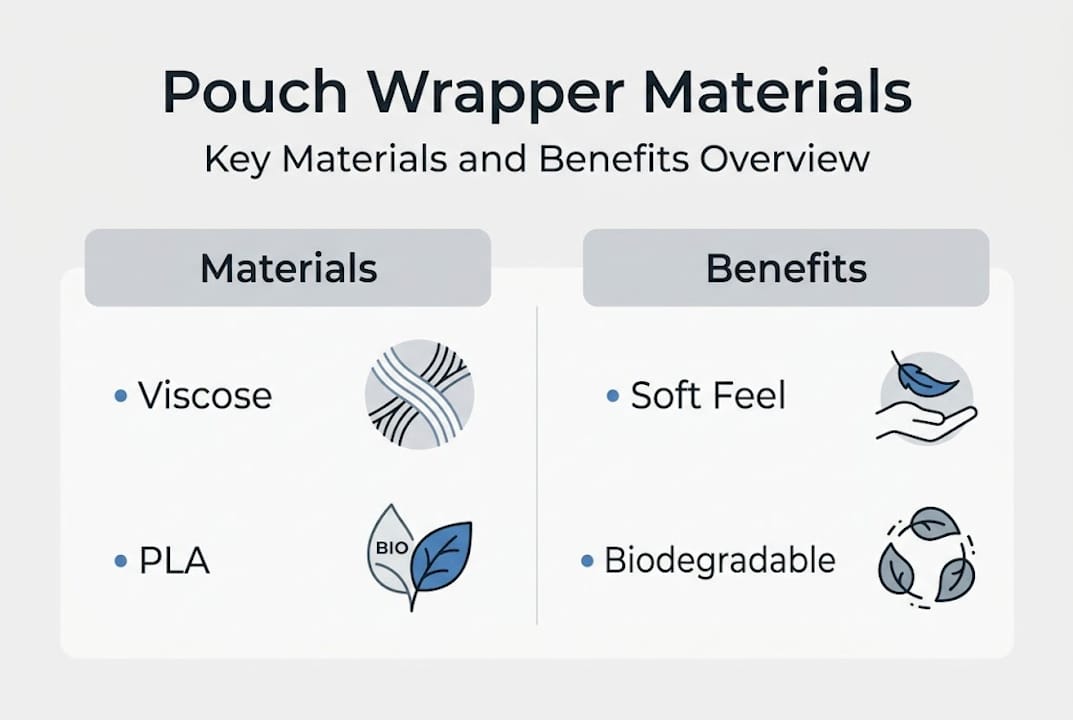
Biodegradable variants using viscose and PLA are increasingly available, addressing growing consumer interest in sustainability. If you care about the environmental impact of pouch wrappers, checking the material composition before buying is worth doing.
Key material properties that affect your experience:
- Fibre diameter: Finer fibres mean a softer feel against gum tissue
- Porosity: Controls how fast saliva enters and nicotine exits
- Basis weight: Heavier fabric can feel bulkier under the lip
- Bonding method: Affects durability and whether the pouch holds its shape
Pro Tip: Pouches made with finer fibres in the 1 to 3 micron range feel noticeably softer than those using traditional paper fibres, which can measure 20 to 50 microns. If you experience gum sensitivity, fibre diameter is worth paying attention to.
All materials used in legitimate nicotine pouches must meet food-grade standards. This means they are tested for oral safety and are non-toxic when in contact with saliva and gum tissue for extended periods.
How pouch wrappers work: the science behind their function
Now that you know what the wrapper is made from, let’s look at what it actually does when you place a pouch under your lip. The process is more elegant than most people realise.
The wrapper functions as a semi-permeable membrane, allowing saliva to enter for nicotine and flavour release while preventing powder leakage, and it is heat-sealable for efficient manufacturing. That semi-permeability is not uniform across the whole wrapper. Manufacturers engineer specific porosity levels to control exactly how fast the exchange happens.
Here is the sequence of what happens once you place a pouch:
- Saliva begins to moisten the outer wrapper surface
- Moisture penetrates the porous nonwoven membrane
- Nicotine and flavour compounds dissolve inside the pouch
- These compounds migrate outward through the membrane
- Absorption occurs through the buccal mucosa (the lining of your mouth)
- The powder filling remains contained inside the wrapper throughout
The heat-sealed edges are equally important. They prevent any leakage at the seams, which is where cheaper pouches often fail. A poorly sealed edge means powder in your mouth, which is uncomfortable and undermines the whole experience.
Nonwoven fabric outperforms traditional paper and plastic in wet strength, sealability, and reduction of production issues, and the pH of the wrapper material also plays a role in affecting nicotine release rates. This is why premium brands invest heavily in wrapper engineering rather than treating it as an afterthought.
Pro Tip: If you have sensitive gums, look for pouches that specifically advertise a slim or soft wrapper format. These are designed with finer fibres and lower basis weight, meaning less bulk and less friction against delicate gum tissue. Compare how nicotine pouches vs patches and gum deliver nicotine and you will see why wrapper design is central to the pouch experience.
What sets different pouch wrappers apart? Brand variations and user experience
Not all pouches are created equal, and the wrapper is one of the biggest reasons why. There is no universal industry standard for pouch wrapper construction. Each brand develops its own material blend, fibre specification, and sealing method, which is why the same nicotine strength can feel completely different across brands.
Brands like ZYN, On!, and Velo use nonwoven wrappers designed for a discreet, comfortable fit under the lip. But the specifics vary considerably.
Key differences you will notice between brands:
- Wrapper thickness: Slim pouches from some brands feel almost invisible; others have a more noticeable presence
- Surface texture: Some wrappers feel slightly textured; others are smooth and almost silky
- Moisture absorption: Faster-absorbing wrappers deliver quicker nicotine onset
- Seam visibility: High-quality seals are tight and flat; lower-quality seams can feel rough
- Dissolution rate: How quickly the wrapper softens over time varies significantly
Empirical testing shows no universal standard exists, with variations across brands leading to measurable differences in dissolution, viscosity, and comfort, and ZYN pouches scoring higher on solubility in controlled tests. That higher solubility means the wrapper softens and conforms to your gum faster, which many users find more comfortable for longer sessions.
This is worth knowing when you are comparing products. A pouch that feels harsh or causes irritation might simply have a wrapper that does not suit your anatomy, not a problem with the nicotine itself. Checking nicotine pouch myths around irritation and discomfort often leads back to wrapper quality rather than the nicotine content. Similarly, understanding whether nicotine pouches are safer than cigarettes involves looking at the whole product, wrapper included.
Why your choice of wrapper matters more than you think
The nicotine pouch industry spends enormous energy marketing flavours and strengths. Wrapper technology rarely gets a mention on the tin. That is a missed opportunity for consumers, because the wrapper is arguably the single component that most directly affects your moment-to-moment experience.
A well-designed wrapper reduces gum irritation, which matters enormously for daily users. It controls discreetness, keeping the pouch invisible under the lip. It determines whether you get a smooth, consistent nicotine release or an uneven burst. These are not minor differences. Over weeks of regular use, they add up considerably.
Sustainability is the other angle that deserves more attention. As wrapper sustainability in nicotine pouches becomes a growing concern, biodegradable wrapper options are moving from niche to mainstream. Choosing a brand that uses PLA or viscose-based wrappers is a meaningful choice, not just a marketing claim.
As one materials specialist put it: “The wrapper is the unsung technology that decides if a pouch is truly worth using.” We think that is exactly right. Next time you are choosing between brands, look past the flavour and strength. Ask what the wrapper is made from and how it is constructed. That small detail will tell you more about the quality of the product than almost anything else.
Find the right pouch wrapper for you
Now that you know what makes a great pouch wrapper, discovering the right product is straightforward. At Hitsnus.com, you can browse and compare products from leading brands, each with different wrapper constructions, comfort levels, and sustainability profiles.
Whether you prefer the softer feel of a slim ZYN pouch or want to explore eco-friendlier options, the nicotine pouches UK range at Hitsnus.com gives you the selection to find your ideal fit. If you are watching your budget, the nicotine pouch clearance sale features genuine deals on popular lines without compromising on quality. Shop by brand, strength, or flavour and use what you have learnt about wrappers to make a genuinely informed choice.
Frequently asked questions
Are pouch wrappers safe for oral use?
Yes, pouch wrappers are food-grade and non-toxic, specifically designed to be safe for prolonged contact with the mouth and gum tissue.
Can nicotine pouch wrappers be biodegradable?
Some wrappers use biodegradable fibres like viscose or PLA, making them a more environmentally responsible option compared to synthetic alternatives.
Do all brands use the same wrapper material?
No. There is no universal standard across the industry, meaning wrapper composition, comfort, and nicotine release rates vary noticeably from brand to brand.
Why do some pouch wrappers feel softer or more comfortable than others?
Wrappers made with finer fibres of 1 to 3 microns are significantly softer than those using traditional paper fibres, which can be 20 to 50 microns in diameter, making them far less likely to cause irritation.