












How to transition to smokeless nicotine safely and effectively
TL;DR:
- Many adults are exploring smokeless nicotine products like pouches to replace smoking and vaping. While lower in toxins than cigarettes, these products still carry addiction and oral health risks, and are not officially approved for cessation. Successful transition requires preparation, gradual replacement, and ongoing self-monitoring to ensure long-term health and reduced dependence.
You’ve probably stood outside in the rain for a cigarette you didn’t even enjoy, or felt the familiar awkwardness of stepping away from a meeting to vape. The pull of nicotine is real, and so is the desire for something cleaner, quicker, and far less conspicuous. Switching to smokeless nicotine, particularly nicotine pouches, is something a growing number of adults are exploring. But the transition takes more than simply buying a tin and hoping for the best. This guide walks you through what to know, how to prepare, the actual steps to switch, and how to check whether it’s genuinely working for you.
Table of Contents
- Understanding smokeless nicotine: What you need to know first
- Preparing for your transition: What to have and plan
- Step-by-step: How to switch to smokeless nicotine successfully
- Verifying your progress and avoiding common pitfalls
- Why guidance and moderation matter more than novelty
- Next steps: Find your ideal smokeless nicotine pouch
- Frequently asked questions
Key Takeaways
| Point | Details |
|---|---|
| Know your risks | Smokeless nicotine can lower certain health risks but is not risk-free or FDA-approved as a cessation aid. |
| Plan your transition | Preparation, the right products, and professional support make switching more successful and sustainable. |
| Avoid dual use | Using both cigarettes and pouches together lowers your chances of quitting nicotine entirely. |
| Monitor your health | Watch for signs of oral issues and consult professionals if you notice side effects. |
| Seek expert guidance | Counselling or evidence-based support offers the best results for reducing or quitting nicotine. |
Understanding smokeless nicotine: What you need to know first
Smokeless nicotine refers to products that deliver nicotine without combustion or inhalation. That covers nicotine pouches, lozenges, nicotine gum, and oral strips. Each works differently, but the concept is the same: nicotine enters your bloodstream through the lining of your mouth rather than your lungs.
Nicotine pouches sit between your upper lip and gum for anywhere from five to thirty minutes. They contain no tobacco leaf at all. Brands like ZYN, Velo, and FUMI offer a wide range of strengths and flavours, making them easy to personalise. Understanding the nicotine delivery systems explained behind each product type helps you pick what actually suits your pattern of use, rather than guessing.
Compare smokeless products at a glance:
| Product type | Delivery method | Tobacco content | Key risks |
|---|---|---|---|
| Nicotine pouches | Oral, under lip | None | Oral irritation, addiction |
| Nicotine gum | Chewed, oral absorption | None | Jaw issues, hiccups |
| Nicotine lozenge | Dissolved in mouth | None | Nausea, dependence |
| Traditional cigarettes | Inhaled combustion smoke | Yes | Cancer, lung disease, heart disease |
| Vaping/e-cigarettes | Inhaled vapour | None (usually) | Lung irritation, unknown long-term risks |
Key differences worth understanding:
- No combustion means no carbon monoxide, tar, or the thousands of chemicals produced when tobacco burns
- No inhalation removes the direct lung damage associated with both smoking and vaping
- Oral absorption is slower than inhalation, so the nicotine hit feels different and takes slightly longer
That said, the risk picture is not zero. Pouches carry lower risk than cigarettes due to fewer toxins, but nicotine itself remains addictive and oral health risks including gum recession and irritation are well documented. Regulation matters here too. Unlike nicotine patches and gum, no nicotine pouch brand currently carries formal approval for smoking cessation. That distinction shapes how you should use them. Review the full comparison of nicotine pouches vs patches and gum if you’re weighing up which route to take. It’s also worth understanding the broader picture of nicotine addiction risks before committing to any new product.
“Nicotine pouches are not a safe product, but they are likely less harmful than cigarettes. The key concern is that they maintain nicotine dependence and introduce new oral health risks.” — American Cancer Society
Preparing for your transition: What to have and plan
Walking into a switch unprepared is the fastest route to falling back on cigarettes or vaping within days. Preparation isn’t just about buying the right product. It’s about understanding your own habits well enough to work around them.
Start here by building your essentials list:
| Category | What you need | Why it matters |
|---|---|---|
| Product supply | A range of pouch strengths and flavours | Craving intensity changes; variety helps |
| Support | Friend, app, or professional counsellor | Accountability significantly improves outcomes |
| Information | Usage guides, brand instructions | Avoid misuse and get full benefit |
| Safety setup | Childproof storage, correct disposal | Pouches are toxic if swallowed by children |
| Oral care | Regular brushing, dental check-ups | Monitor gum health from the outset |
Set realistic expectations from the start. Nicotine withdrawal produces irritability, poor concentration, and restlessness regardless of which product you switch to. These symptoms are temporary, usually peaking in the first three days and settling within two weeks. The benefits of nicotine pouches in terms of convenience and discretion are genuine, but they don’t cancel out the adjustment period your body will go through.

Research published on PubMed is honest about the evidence gap: no strong data suggests pouches outperform established nicotine replacement therapies, and dual use (using pouches alongside continued smoking) tends to correlate with lower rates of full cessation. The evidence specifically points to better outcomes when behavioural support or counselling is combined with any product.
Use the beginner checklist for nicotine pouches to make sure you haven’t missed anything practical before you begin.
Pro Tip: Keep a simple daily log of when you feel the strongest cravings, what triggered them, and what you were doing at the time. After five days you’ll have a clear pattern that lets you prepare specific strategies for your highest-risk moments, like post-meal cravings or work stress.
Step-by-step: How to switch to smokeless nicotine successfully
This is where theory becomes practice. The following steps are designed to move you from your current product to smokeless nicotine without the shock of an abrupt change.
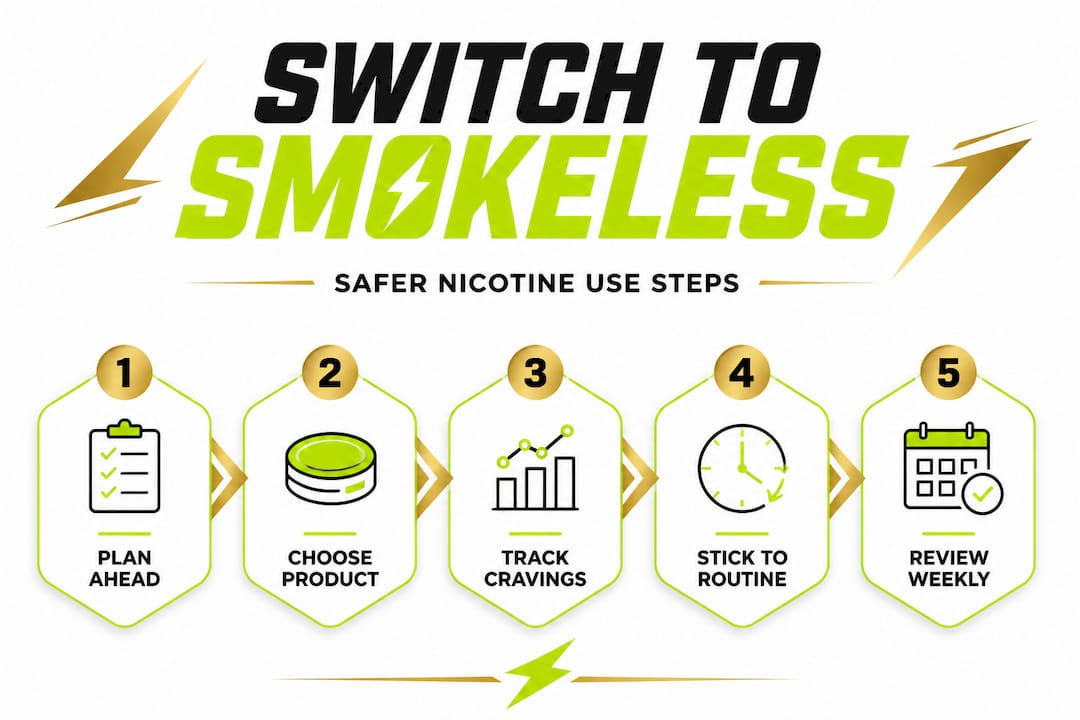
- Choose the right starting strength. If you smoke a pack a day, start with a medium to high strength pouch (6mg to 8mg). Light smokers or vapers often do well at 3mg to 4mg. Starting too low almost always leads to early relapse.
- Replace one session per day. On day one, swap just a single cigarette or vaping session with a pouch. The afternoon slump or post-lunch cigarette works well as a starting point because the craving is strong and predictable.
- Add substitutions gradually. Each day or every two days, replace one additional session. This gradual approach keeps withdrawal manageable and builds confidence.
- Experiment with flavours and formats. Mint, citrus, and berry variants help make the experience genuinely enjoyable rather than medicinal. Finding a flavour you like increases the likelihood you’ll stick with it.
- Avoid dual use wherever possible. Using pouches alongside continued smoking might feel like harm reduction, but dual users are less likely to quit all tobacco, with only 10% achieving full cessation compared to 24% in other groups. Every cigarette you continue adds a competing habit loop.
- Set a full switch date. Target a specific date, ideally within two to four weeks of starting, when you commit to pouches only. Having a deadline creates structure.
- Keep a progress log. Note cravings on a scale of one to ten each day. If scores aren’t decreasing by week two, reconsider your pouch strength or seek professional support.
The step-by-step transition guide expands on each of these points with practical examples. For more depth on correct technique and daily practice, the safe, discreet use of pouches guide covers placement, timing, and rotation.
One critical fact to keep front of mind throughout this process: no pouches are currently approved by the FDA for smoking cessation. If your primary goal is to stop nicotine altogether, the clinical evidence most strongly supports FDA-approved nicotine replacement therapies like patches or gum, often combined with prescription medication. Pouches can be a practical transitional tool for many people, but they work best when used thoughtfully rather than indefinitely.
Pro Tip: Map out your social calendar for the first two weeks. Pubs, parties, and stressful work events are high-risk environments. Having your pouches on you and a short plan for those moments (step outside for a pouch rather than a cigarette) reduces the chance of a slip.
Verifying your progress and avoiding common pitfalls
Knowing you’re making genuine progress matters. It keeps motivation up and helps you spot problems before they derail the transition entirely.
Signs you’re heading in the right direction:
- Cravings are shorter. Strong urges that used to last ten minutes now pass in two or three.
- Frequency decreases naturally. You’re reaching for a pouch less often without forcing it.
- Cigarette smell becomes unappealing. This sensory shift often surprises people but is a reliable marker of progress.
- Sleep and breathing improve. Many switchers report noticeably better sleep and easier breathing within a fortnight.
Common pitfalls to watch for:
- Continuing to smoke occasionally while using pouches, telling yourself it’s “just one.” Dual use undermines the switch entirely.
- Increasing pouch frequency beyond what you’d normally smoke. This shifts one pattern of overuse to another.
- Ignoring oral health. Nicotine pouches carry oral health risks that deserve attention, including gum irritation and potential recession.
- Rotating placement incorrectly. Always move the pouch to different spots along your gum line to prevent concentrated tissue irritation.
Use this comparison to check whether your patterns post-switch look healthy:
| Pattern | Healthy sign | Unhealthy sign |
|---|---|---|
| Daily pouch use | Decreasing over time | Staying the same or increasing |
| Cigarette use | Zero or near-zero | Continuing alongside pouches |
| Oral health | No irritation, gums firm | Soreness, recession, bleeding |
| Craving intensity | Dropping week on week | Persistent or worsening |
| Sleep quality | Improving | Disrupted, vivid dreams |
Understanding the nicotine health impacts in full, beyond the immediate transition period, helps you make choices with your long-term health in view. The quitting smoking with pouches guide goes deeper into both the process and what to expect along your journey to stopping smoking.
“If you notice persistent sore spots, unusual tissue changes, or gum recession that doesn’t improve, see a dentist immediately. Catching oral irritation early prevents it from becoming a serious issue.”
Seek professional help when: cravings remain overwhelming after three weeks, you cannot stop dual use despite genuine effort, or you notice any physical changes in your mouth that persist beyond a few days.
Why guidance and moderation matter more than novelty
There’s a tension at the heart of the nicotine pouch conversation that’s worth naming plainly. Industry voices, including many retail and harm-reduction advocates, promote pouches as a sensible step down from smoking. Public health organisations frame the picture differently, consistently pointing people towards FDA-approved NRT options or full cessation rather than a switch to unregulated pouch products. The VA patient guide on nicotine pouches is candid about this divide, noting that industry promotion emphasises harm reduction while clinical guidance prioritises proven cessation tools and cautions against addiction continuation.
We think both perspectives contain truth, and ignoring either leads to poor decisions. Yes, switching from cigarettes to pouches very likely reduces your exposure to harmful combustion chemicals. That’s not trivial. But novelty shouldn’t drive health choices, and the fact that pouches are new, discreet, and pleasant-tasting does not make them clinically validated.
The wisest path forward is one built on moderation, honest self-assessment, and support. Use pouches as a practical tool in a deliberate plan, not as a permanent lifestyle swap that quietly maintains your nicotine dependence. Pair the switch with some form of accountability, whether a friend, an app, or a healthcare professional. Monitor your oral health actively. And stay honest with yourself about whether you’re progressing towards lower nicotine use over time, or simply replacing one daily habit with another.
The goal isn’t to find the perfect product. It’s to regain control.
Next steps: Find your ideal smokeless nicotine pouch
If you’ve read this far, you’re already approaching this transition with more thought than most people bring to it. That puts you in a genuinely strong position.
At Hitsnus.com, you’ll find a wide selection of tobacco-free nicotine pouches from trusted brands including ZYN, Velo, and FUMI, all available with detailed product descriptions, strength guides, and flavour profiles to help you choose wisely. If you want a solid starting point, the Velo Peppermint Storm pouches are a popular choice for switchers thanks to their clean mint flavour and consistent nicotine release. Browse at your own pace, compare options, and use the site’s educational resources to ensure your first purchase is an informed one.
Frequently asked questions
Are nicotine pouches safer than smoking cigarettes?
Nicotine pouches expose you to fewer toxins than cigarettes, but they are not risk-free and still carry risks including nicotine addiction and potential oral health issues like gum recession.
Can nicotine pouches help you quit smoking?
Evidence is limited, and current research suggests pouches may not be as effective as FDA-approved nicotine replacement therapies such as patches or gum for achieving full cessation.
Is it safe to use nicotine pouches and smoke at the same time?
Dual use is strongly discouraged because data shows dual users are significantly less likely to quit all tobacco, with full cessation rates dropping to around 10% compared to 24% in non-dual users.
Are nicotine pouches approved for smoking cessation?
No, pouches are not approved by the FDA for quitting smoking, and health professionals generally recommend using clinically validated nicotine replacement therapies for the best cessation outcomes.