













When a nicotine pouch is too strong: signs, risks and what to do
Yes, a nicotine pouch can be too strong for you, even if the tin says “regular strength” and your friend uses it without issue. Tolerance, body weight and how many pouches you use in a session all decide whether 6mg feels pleasant or 20mg puts you on the floor. The fastest warning signs are dizziness, nausea, a cold sweat, and lightheadedness that arrives within minutes of placing the pouch.
If that happens, act straight away:
- Remove the pouch from your mouth immediately.
- Sit or lie down, ideally somewhere you can’t fall and hurt yourself.
- Sip water slowly. Don’t take another pouch or any other nicotine product.
- If symptoms don’t ease within 20 to 30 minutes, or they worsen, get medical help.
Clinical case reports have documented serum nicotine levels of 134 ng/ml and 266 ng/ml in two adolescents who developed acute nicotine poisoning after using pouches, with symptoms including confusion and brief loss of consciousness. That’s not a scare story, it’s a measured outcome from real patients, and it’s the reason strength labels deserve more attention than most users give them.
Table of Contents
- Too strong nicotine pouch: what the numbers actually mean
- Why pouches can hit harder than a cigarette
- Who’s most at risk, and what the warning signs look like
- What to do the moment a pouch feels too strong
- Choosing a strength you can actually live with
- Who’s behind this guidance
- Long-term effects of using excessively strong nicotine pouches
- Why the mg number on the label doesn’t tell the whole story
- How strength labelling differs between brands and markets
- Cutting back gradually without losing the plot
- Try a milder strength through Hitsnus
- Sources
- FAQ
Too strong nicotine pouch: what the numbers actually mean
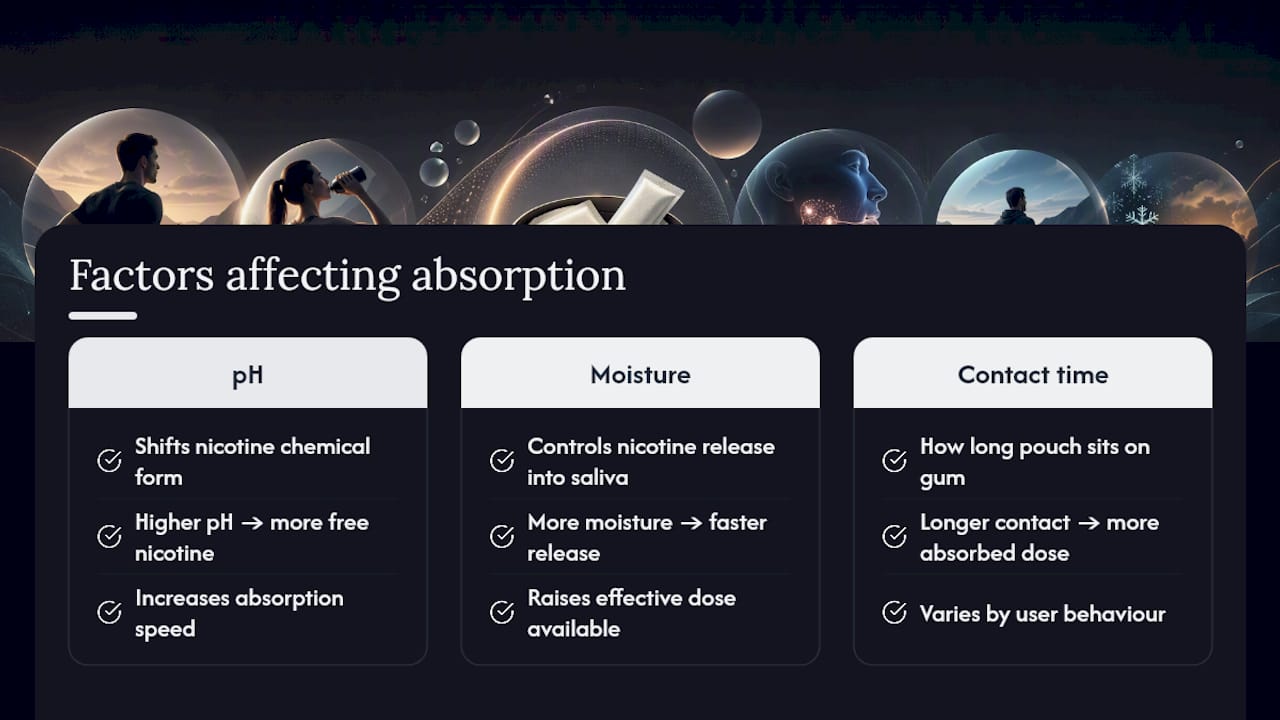
Nicotine pouch strength is usually printed in milligrams per pouch, but that figure tells you less than you’d think. A 20mg pouch from one brand can feel noticeably different from a 20mg pouch made by another, because the amount absorbed depends on the pouch’s pH, moisture content and how long you keep it in.
Retail guidance across the UK market generally sorts pouches into four rough bands:
UK beginner guides consistently recommend starting in the low band and only moving up if the effect feels too mild after a fair trial, not the other way round.
The mg figure on the tin is the total nicotine content of the pouch, not the dose you actually absorb. Absorbed dose depends on how long the pouch sits against your gum, your saliva production, and even room temperature. This is why two people using the “same” strength can report wildly different experiences, and why a number on a label should be treated as a starting point rather than a promise.
For a first pouch ever, low band is the sensible call regardless of your smoking history. Ex-smokers moving from combustible cigarettes often assume they need a strong pouch to match their old habit, but the delivery mechanism is different enough that starting medium and adjusting up is safer than starting strong and discovering it’s too much. Heavy smokers (20+ a day) are the main group who might reasonably trial the strong band from the outset, and even then, one pouch first, not three.
Why pouches can hit harder than a cigarette
Nicotine pouches are buffered, meaning manufacturers raise the product’s pH to push more nicotine into a form your mouth absorbs efficiently through the oral mucosa. Cigarette smoke reaches your lungs and brain in seconds; a pouch works more slowly, but that slower path has a sting in its tail.
Pharmacokinetic research shows pouches can produce a higher peak nicotine concentration (Cmax) and greater total exposure (AUC) than a cigarette, even at doses as low as 4mg, according to PK studies on repeat pouch use. The time to peak (Tmax) is delayed compared with smoking, often by 20 to 30 minutes.
That delay is the trap. If you don’t feel much after five minutes and pop in a second pouch, you’re not topping up a fading effect, you’re stacking a second dose on top of one that hasn’t peaked yet. One documented adult case involved someone consuming 15 extra-strength pouches at 10.9mg each over 12 hours, which led to acute nicotine toxicity requiring treatment, as recorded in the same repeat-use pouch toxicity report.
A few mechanics worth knowing:
- Longer dwell time generally means more nicotine absorbed, up to a point.
- Repeated use within a short window compounds exposure faster than the body clears it.
- Cigarettes give rapid feedback (a fast hit, then it fades); pouches give delayed feedback, which misleads your judgement of “how much is enough.”
The practical takeaway: treat the first 20 to 30 minutes after inserting a pouch as a waiting period, not a warm-up. Judge the effect only once that window has passed.
Who’s most at risk, and what the warning signs look like
Nicotine toxicity doesn’t announce itself with a single dramatic symptom. It usually builds through a recognisable sequence, and catching it early is what keeps a bad experience from becoming a hospital visit.

Early signs include nausea, dizziness, hiccups, excess salivation and a mild headache. These typically show up within 15 minutes to an hour of use, which aligns with the early phase of nicotine toxicity described in clinical guidance on nicotine poisoning.
Serious signs are confusion, fainting or brief loss of consciousness, difficulty breathing, an irregular or racing heartbeat, and repeated vomiting. These can develop 30 minutes to four hours after exposure and warrant urgent medical attention, not a “wait and see” approach.
Certain factors raise your personal risk sharply:
- Low body weight, since the same mg dose represents a larger dose per kilogram.
- Low or no nicotine tolerance, particularly first-time users or people who’ve recently quit and gone back.
- Youth. Adolescents in the case reports referenced above developed serious symptoms at nicotine levels an experienced adult user might tolerate.
- Repeated dosing in a short window, especially “topping up” before the first pouch has peaked.
- Mixing with stimulants or energy drinks, which can amplify heart rate and anxiety symptoms.
- Swallowing a pouch, whether on purpose or by accident, which changes the absorption pathway entirely.
Pro Tip: Keep a simple note on your phone the first week you try a new strength: what time you inserted the pouch, how you felt at 10, 20 and 30 minutes. It sounds excessive, but it’s the fastest way to spot your personal ceiling before you cross it.
What makes this genuinely tricky is variability. Two people at the same bodyweight, using the same 10mg pouch, can have completely different reactions, because nicotine metabolism, oral pH and even how much saliva you produce all shift the numbers.
What to do the moment a pouch feels too strong
Speed matters more than precision here. You don’t need to diagnose yourself, you need to reduce further exposure and get a clear read on whether you need professional help.
- Remove the pouch immediately. Spit it out or rinse your mouth with water to stop further absorption.
- Sit or lie down. Dizziness before a fall is far more dangerous than dizziness on the floor.
- Sip water slowly. Don’t gulp, and don’t take anything else, including more nicotine, caffeine, or alcohol.
- Monitor for 20 to 30 minutes. Mild symptoms (nausea, light dizziness) that ease on their own usually don’t need emergency care.
- Escalate immediately if you see: persistent vomiting, seizures, breathing difficulty, chest pain, or any loss of consciousness.
Call NHS 111 for guidance on moderate symptoms that aren’t improving, or 999 for anything severe. If you’re unsure whether to worry, treat “unsure” as a reason to call, not a reason to wait.
When you speak to a clinician or call handler, give them as much of this as you can:
- The pouch’s labelled strength in mg, if known.
- How many pouches were used and over what time.
- How long ago the first pouch went in.
- Whether anything else was consumed alongside it (alcohol, energy drinks, other nicotine products).
Clinical notes on paediatric poisoning cases confirm that this history, timing and dose, often guides treatment more effectively than a single blood test, since symptom onset and peak vary by individual tolerance. For guidance specifically on accidental swallowing, Hitsnus has a dedicated walkthrough on what to do if you’ve swallowed a pouch.
Choosing a strength you can actually live with
The safest approach to nicotine pouch strength is boring, deliberately so: start lower than you think you need, and move up only after a genuine trial at the current level.
A practical trial looks like this: use one pouch of a new strength, in a safe seated setting, and wait the full 20 to 30 minutes before judging the effect. Don’t add a second pouch to “test if it’s strong enough.” If the first one didn’t do much after half an hour, that’s your answer for next time, not a reason to double up now.
Suggested starting points by profile:
- Never used nicotine before: low band, 3–6mg.
- Switching from vaping: low to medium band, depending on your vape’s nicotine strength.
- Ex-smoker, moderate habit: medium band, 8–12mg.
- Heavy smoker (20+ a day): medium to strong band, trialled one pouch at a time.
A few habits reduce risk regardless of strength:
- Park the pouch on your upper lip, not your lower lip or tongue, for steadier absorption.
- Keep it in for 20 to 30 minutes rather than pulling it out early and reinserting a fresh one.
- Wait at least an hour before your next pouch if the first one felt strong.
- Cap your daily count and actually stick to the number, rather than deciding in the moment.
Storage matters just as much as dosing. Keep pouches in their original, resealable tin, not loose in a pocket or transferred to another container. Poison centre data shows children under six account for the majority of accidental nicotine pouch exposures, which is a strong argument for locking tins away rather than leaving them on a coffee table.
Pro Tip: If you’re consistently reaching for a second pouch within 15 minutes of the first, that’s not a sign you need a stronger strength, it’s a sign your current one hasn’t peaked yet. Wait it out before you decide.
For a fuller walkthrough on matching strength to your own history, Hitsnus has a detailed strength guide covering trial routines in more depth.
Who’s behind this guidance
This guide was written by Fabio, drawing on published clinical case reports and public-health poison centre alerts rather than general product marketing. The aim is straightforward: give pouch users, new and experienced, information that matches what emergency clinicians and toxicologists actually document, not what a tin’s packaging implies.
The sources behind the safety claims here include:
- Peer-reviewed case reports on acute nicotine poisoning in adolescent pouch users.
- Pharmacokinetic data from a documented adult toxicity case involving repeat pouch use.
- Public health advisories from America’s Poison Centers on rising pouch-related exposures.
- Clinical symptom and treatment guidance from Cleveland Clinic’s nicotine poisoning overview.
- UK trading-standards reporting on illicit high-strength pouches circulating outside regulated retail.
For further reading on safe usage, Hitsnus maintains a broader safety guide covering storage and adverse reactions.
Long-term effects of using excessively strong nicotine pouches
Repeated use of high-strength pouches doesn’t just raise the risk of an acute reaction, it shapes how quickly you build tolerance and dependence. Nicotine itself is highly addictive regardless of delivery method, and consistently dosing at the strong or ultra-strong end tends to accelerate that dependence compared with starting low and staying there.
Government-backed reviews note that reduced-risk nicotine products, pouches included, are generally far less harmful than combustible tobacco, but that comparison is about relative risk against smoking, not a clean bill of health. Nicotine still affects heart rate and blood pressure, and habitual high-dose use keeps your body in a near-constant state of mild stimulation.
There’s also a practical, less discussed consequence: escalation. Users who start at ultra-strong strengths and use them daily often find their tolerance climbs to a point where even 20mg pouches feel unremarkable, which pushes some towards using more pouches per day rather than a stronger single pouch, since strength options above 20mg+ are limited. That pattern, more pouches rather than stronger ones, tends to increase total daily nicotine intake without the user necessarily noticing the creep.
Gum and oral tissue irritation from prolonged contact with strong, buffered pouches is another commonly reported long-term issue, alongside broken sleep in users who use strong pouches late in the evening. None of this makes strong pouches uniquely dangerous long-term compared with heavy smoking, but it does mean “strong” and “harmless” are not the same claim, and treating strength as a badge of tolerance rather than a genuine need is where most long-term overuse begins.
Why the mg number on the label doesn’t tell the whole story
Two pouches labelled “10mg” from different brands can deliver noticeably different experiences, and that’s not a manufacturing error, it’s a structural inconsistency in how strength gets measured and communicated across the category.
The mg figure typically refers to total nicotine content in the pouch, not the dose your body actually absorbs. Absorption depends on the buffering agent used, the pouch’s moisture level, its size, and how the manufacturer’s pH adjustment interacts with your own saliva chemistry. A drier, more tightly packed pouch releases nicotine differently from a moist, looser one, even at an identical labelled strength.
There’s also no universal, legally mandated testing standard across every market that pouches are sold in, which means “20mg” from one manufacturer isn’t guaranteed to be chemically equivalent to “20mg” from another. Reputable brands publish consistent, tested figures, but the trading-standards concerns raised over illicit pouches sold outside regulated channels show that unregulated products can carry mislabelled or wildly inconsistent strengths.
The practical fix is simple even if the underlying science isn’t: buy from reputable, labelled retailers, treat the mg figure as a rough guide rather than a precise dose, and judge your own reaction during a proper trial rather than trusting the number alone to predict how you’ll feel.
How strength labelling differs between brands and markets
Strength conventions vary more than most users expect, and that variation gets worse once you look across borders rather than within a single retailer’s range.
Within the UK market, most retailers group pouches into the low, medium, strong and ultra-strong bands covered earlier, generally running from roughly 3mg up past 20mg per pouch. Scandinavian brands, where pouch culture originated, sometimes use different reference scales tied to traditional snus strength categories, which don’t map cleanly onto the mg-per-pouch figures common in UK retail. American products have historically pushed higher ceiling strengths than what’s typically available through UK retail channels, partly reflecting different regulatory environments around nicotine concentration limits.
This inconsistency matters practically if you travel or buy from overseas sellers. A pouch marketed as “strong” in one country’s convention might sit closer to what a UK retailer would call “medium,” and vice versa. The safest habit is to ignore marketing labels like “strong” or “extra” entirely and check the actual mg-per-pouch figure printed on the tin, then compare that against the bands set out earlier in this guide rather than against another brand’s subjective naming.
Buying through a single, consistent, UK-facing retailer removes most of this confusion, since the strength figures across that catalogue are at least internally comparable.
Cutting back gradually without losing the plot
If you’ve realised your current strength is higher than you need, dropping down doesn’t have to mean an uncomfortable cold-turkey jump. Gradual strength reduction works the same way tapering works for most nicotine products: small, spaced steps rather than one dramatic cut.
A workable approach is dropping one band at a time, strong to medium, medium to low, rather than jumping straight from ultra-strong to low and expecting comfort. Give each level at least a week or two before deciding whether to step down again, since your body needs time to recalibrate to lower baseline nicotine exposure.
Alongside dropping strength, reducing frequency helps just as much. If you’re using eight pouches a day at 14mg, moving to six pouches a day before also dropping the mg figure spreads the adjustment across two variables instead of forcing it all through one. Some users find alternating a lower-strength pouch with their usual strength through the day achieves a similar gradual effect without a hard switch.
Flavour variety can make the transition easier psychologically, since a new flavour at a lower strength doesn’t feel like a downgrade in the same way an identical flavour at a lower mg does. It’s a small trick, but it’s one that keeps people on the taper rather than abandoning it after a few flat-feeling days.
Try a milder strength through Hitsnus
If any of this has made you suspect your current pouch is stronger than you actually need, the fix is usually simple: drop a band, not the habit entirely. Hitsnus stocks a full spread of strengths across its nicotine pouches collection, so you can move down in mg without switching flavour, brand, or format all at once.
For a first trial, XQS Strawberry Kiwi at 8mg sits comfortably in the low to medium band, a sensible starting point for anyone stepping down from a strong pouch or trying pouches for the first time. Ex-smokers or moderate vapers looking for something with a bit more presence might prefer Clew Watermelon at 10mg, which sits mid-range without pushing into ultra-strong territory.

Run the same one-pouch trial described earlier: insert one, wait the full 20 to 30 minutes, and judge the effect before reaching for a second. This is a harm-reduction choice for adults who already use nicotine, not a safety endorsement for anyone under the legal age or a suggestion that any nicotine pouch is risk-free. Browse the full range and pick a strength that matches where you actually are, not where you think you should be.
This article is general information, not a substitute for advice from a qualified doctor. Consult a qualified healthcare professional about your own circumstances before acting on anything here.
Sources
- Acute nicotine poisoning from nicotine pouch use in adolescents: a case report of two paediatric cases
- Nicotine toxicity from repeat use of nicotine pouches
- America’s Poison Centers - Health Advisory: increase in nicotine pouch-related cases reported to U.S. poison centers
- Nicotine poisoning: what it is, symptoms, causes & treatment
- Nicotine pouch warning from Oxfordshire Trading Standards
FAQ
What happens if you use too many nicotine pouches?
You risk acute nicotine toxicity, with symptoms ranging from nausea and dizziness to, in documented cases, confusion and brief loss of consciousness. One recorded case involved 15 extra-strength pouches over 12 hours, leading to acute toxicity requiring treatment.
How many cigarettes does a 6mg nicotine pouch equal?
There’s no exact one-to-one conversion because pouches and cigarettes deliver nicotine through different absorption routes and timings. A 6mg pouch sits in the low strength band generally suited to light or occasional smokers, but pharmacokinetic differences mean it can produce a different exposure profile than a single cigarette rather than a matching one.
Is 20mg of nicotine too much in a pouch?
For an experienced, tolerant adult user, 20mg sits at the top of the standard strength bands and is generally reserved for heavy former smokers, not beginners. For anyone with low tolerance, low body weight, or limited prior nicotine use, 20mg carries a real risk of the early symptoms described in clinical nicotine poisoning guidance.
Is a nicotine pouch worse than a cigarette?
Government-backed reviews suggest nicotine pouches and similar reduced-risk products are generally far less harmful than combustible cigarettes, largely because pouches avoid the toxins produced by combustion. That doesn’t make pouches harmless, nicotine still carries dependence and acute-toxicity risks at high doses, so “less harmful than smoking” and “safe” are different claims.
How do I know if my nicotine pouch is too strong for me?
Watch for dizziness, nausea, a racing heart or lightheadedness within the first 30 minutes of use, these are the earliest signals your current strength exceeds your tolerance. If they appear consistently at a given mg level, drop down a band and retrial using the single-pouch method described earlier in this guide.