












Switching from tobacco to pouches: 2026 guide
TL;DR:
- Switching from tobacco to nicotine pouches involves replacing combustible and smokeless tobacco with tobacco-free, smokeless nicotine products. A population model predicts full switching could prevent nearly half a million premature deaths in the US by 2100, emphasizing the importance of complete substitution. Proper preparation, gradual reduction, and addressing behavioral habits are key for successful, sustainable transition.
Switching from tobacco to pouches is defined as replacing combustible or smokeless tobacco products with tobacco-free nicotine pouches that deliver nicotine without smoke, ash, or harmful combustion byproducts. A population model predicts that complete switching could prevent an estimated 476,000 premature deaths in the United States by 2100. That figure reflects what full substitution, rather than partial use, actually achieves. Brands like ZYN, Velo, and FUMI have made tobacco-free nicotine pouches accessible, discreet, and available in a wide range of strengths and flavours. This guide covers everything you need to make the transition successfully in 2026.
What does switching from tobacco to pouches actually involve?
Nicotine pouches are tobacco-free, smokeless, and odourless products placed between the gum and upper lip to deliver nicotine. They contain no tobacco leaf, no combustion, and produce no second-hand smoke. That distinction separates them from traditional snus, cigarettes, and chewing tobacco.

The FDA has authorised multiple nicotine pouch products as lower-risk alternatives compared to cigarettes and smokeless tobacco. Lower risk does not mean risk-free. Long-term health effects remain under study, and cautious, informed use is the right approach.
Users tend to perceive pouches as a lifestyle choice rather than medical treatment, which improves long-term adherence compared to clinical nicotine replacement therapies like patches or gum. That psychological framing matters. If the switch feels punishing, it rarely sticks.
How do you prepare before making the switch?
Preparation is what separates a successful transition from a failed one. Before you place your first pouch, you need to match nicotine strength to your current consumption, choose a flavour you will actually enjoy, and have enough stock to avoid gaps.
Choosing the right nicotine strength
The table below maps typical cigarette consumption to a recommended starting pouch strength. These are starting points, not prescriptions. Adjust based on how you feel after the first week.
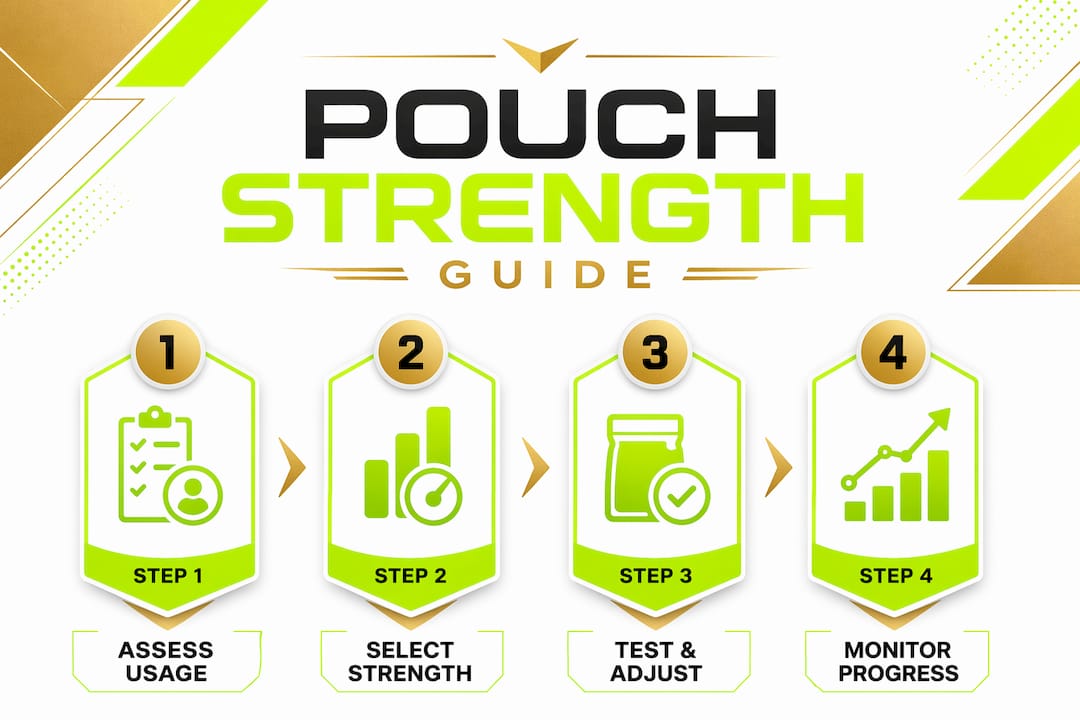
| Daily Cigarettes | Recommended Pouch Strength | Example Products |
|---|---|---|
| Up to 10 | 3–4 mg | ZYN Mini Dry 3 mg, Velo Easy 4 mg |
| 10–20 | 6 mg | ZYN 6 mg, FUMI 6 mg |
| 20–30 | 8–10 mg | ZYN Strong 8 mg, Velo Max 10 mg |
| 30+ | 12–16 mg | ZYN Extra Strong 12 mg, on! PLUS 16 mg |
Starting too low causes cravings that push you back to cigarettes. Starting too high causes nausea and dizziness. Neither outcome helps you.
Flavours, supplies, and behavioural tools
Nicotine pouches come in mint, citrus, berry, coffee, and unflavoured varieties. Mint and citrus tend to be the most popular starting points because the cooling sensation mimics the throat sensation of smoking. Stock at least two weeks of supply before your quit date. Running out on day three is one of the most common reasons people relapse.
Behavioural support apps like Smoke Free or the NHS Quit Smoking app help you track cravings, monitor savings, and identify triggers. These tools address the psychological side of the habit, which is as important as the nicotine substitution itself.
Pro Tip: Order a mixed-strength sampler pack from Hitsnus before committing to one strength. A week of testing costs less than a week of cigarettes and tells you exactly where to start.
How to switch to nicotine pouches step by step
The most effective transition follows a structured plan rather than a cold-turkey approach. Timing pouch use strategically helps manage cravings and improves success rates during the adjustment phase. Here is a practical week-by-week framework.
-
Set a quit date. Choose a date 5–7 days away. Use that time to stock up on pouches, tell someone you trust, and identify your three biggest smoking triggers (morning coffee, stress, social situations).
-
Days 1–3: Replace every cigarette with a pouch. Each time you reach for a cigarette, place a pouch instead. Do not reduce the frequency yet. The goal is substitution, not deprivation.
-
Days 4–7: Manage the ritual gap. Smoking is not only about nicotine. It is about the break, the hand-to-mouth motion, the moment of pause. Replace that ritual with a deliberate action: step outside, hold a pen, drink water. The pouch handles the nicotine; you handle the habit.
-
Week 2: Assess your strength. If you are still experiencing strong cravings, you may need a higher strength pouch. If you feel dizzy or nauseous, drop one level. Adjust without guilt.
-
Weeks 3–4: Reduce pouch frequency. Once cravings are manageable, begin spacing pouches further apart. Move from every 60 minutes to every 90 minutes. This is where behavioural support becomes critical. Addressing ritual habits alongside nicotine dependence produces better outcomes than nicotine substitution alone.
-
Month 2 onwards: Step down strength. Once you are comfortable with frequency, begin reducing pouch strength by one level every 4–6 weeks. This gradual reduction avoids the sharp withdrawal that causes most relapses.
Pro Tip: Use a notes app to log the time of each pouch and your craving level out of ten. Patterns emerge within days, and you can use them to pre-empt cravings before they peak.
How do nicotine pouches compare to other tobacco alternatives?
Understanding where pouches sit relative to other options helps you make a genuinely informed choice. The comparison below covers the five most common nicotine delivery methods.
| Method | Tobacco-Free | Smoke-Free | Discreet | Flavour Variety | Typical Cost (Monthly) |
|---|---|---|---|---|---|
| Nicotine Pouches | Yes | Yes | High | High | £30–£50 |
| Nicotine Gum | Yes | Yes | Medium | Limited | £25–£45 |
| Nicotine Patches | Yes | Yes | High | None | £20–£40 |
| Vaping | Yes | No (vapour) | Medium | High | £30–£60 |
| Cigarettes | No | No | Low | None | £200–£350 |
Patches deliver nicotine steadily but offer no control over craving spikes. Gum works on demand but carries a clinical feel that many users find off-putting. Vaping produces vapour that is visible and odorous, which limits where you can use it. Pouches are the only option that is simultaneously tobacco-free, smoke-free, odourless, and available in a wide flavour range.
Short-term studies show that switching to pouches reduces pre-existing oral lesions caused by snus and smoking, with lower carcinogen exposure than cigarettes. That is a meaningful improvement in oral health markers within weeks of switching. The benefits of nicotine pouches over combustible tobacco are well-documented, though they are not a zero-risk product.
Key nicotine pouch advantages over other tobacco alternatives include:
- No combustion means no carbon monoxide, tar, or the 70+ known carcinogens produced by burning tobacco
- No spit required, unlike traditional chewing tobacco or snus
- Legal to use in most indoor environments where smoking and vaping are banned
- No impact on bystanders, making them socially neutral in a way cigarettes never are
What are the biggest mistakes when switching, and how do you avoid them?
The most common mistake is dual use. Dual use of cigarettes and nicotine pouches does not deliver the full harm reduction benefits and may prolong nicotine addiction. If you are still smoking three cigarettes a day alongside your pouches, you are not switching. You are adding a product.
Other frequent pitfalls include:
- Using too low a strength and then blaming pouches for not working when the real issue is under-dosing
- Ignoring social triggers such as drinking alcohol or taking work breaks with colleagues who smoke
- Skipping the step-down phase and staying on a high-strength pouch indefinitely, which maintains rather than reduces dependence
- Treating a slip as a failure rather than data. One cigarette after two weeks does not erase your progress.
“Combining nicotine pouches with behavioural support improves quitting attempts compared to nicotine replacement alone.”
The psychological and social dimensions of smoking are as powerful as the chemical dependence. Identifying your three highest-risk situations and planning a specific response for each one is more effective than willpower alone. If Friday evenings at the pub are your weak point, have a pouch ready before you arrive, not after the craving hits.
Key takeaways
Switching completely from tobacco to nicotine pouches reduces carcinogen exposure significantly, but success depends on choosing the right strength, avoiding dual use, and addressing the behavioural habits that smoking builds over years.
| Point | Details |
|---|---|
| Complete switching matters | Dual use does not deliver full harm reduction; full substitution is the goal. |
| Match strength to consumption | Use the cigarette-to-pouch strength table to avoid under-dosing or over-dosing. |
| Address the ritual, not just nicotine | Replace smoking habits with deliberate actions alongside pouch use. |
| Step down gradually | Reduce pouch strength every 4–6 weeks to lower dependence over time. |
| Behavioural support improves outcomes | Apps and support tools address psychological triggers that pouches alone cannot. |
Why complete switching is the only version that works
Most people I speak to who have tried pouches and gone back to cigarettes made the same mistake: they used pouches as a supplement rather than a replacement. They kept cigarettes for stressful moments, for social occasions, for the times when a pouch felt like a compromise. That thinking is what keeps people stuck.
The research is unambiguous on this point. Partial switching does not produce meaningful harm reduction. The benefits come from removing combustion entirely, and that only happens when you stop treating cigarettes as a fallback option.
What I find genuinely encouraging about the current product landscape is the quality and variety available. ZYN, Velo, and FUMI have all improved significantly in terms of flavour delivery and pouch comfort. The clinical, medicinal feel that made older nicotine replacement therapies so unappealing simply does not apply here. These are products people actually want to use, and that changes the psychology of switching entirely.
The one thing I would caution against is treating this as a purely physical process. The hand-to-mouth habit, the social ritual of stepping outside, the association between a coffee and a cigarette: these are deeply ingrained patterns. A pouch handles the nicotine. You have to handle the rest, and that takes deliberate effort for the first few weeks.
My honest view is that pouches represent the most practical harm reduction tool available to adult smokers in 2026. They are not perfect, and long-term data is still accumulating. But for someone who has tried patches and gum and found them unsatisfying, pouches offer something those products never did: a genuinely enjoyable experience that makes the switch feel sustainable rather than punishing.
— Fabio
Find your perfect pouch at Hitsnus
Hitsnus stocks a wide range of tobacco-free nicotine pouches with fast UK delivery, covering brands including ZYN, Velo, and FUMI across multiple strengths and flavours. Whether you are starting at 3 mg or stepping up to 12 mg, the range covers every stage of your transition. Browse by strength, flavour, or brand to find the right match for where you are in the process. If you want to understand more about safer alternatives to cigarettes before you buy, Hitsnus has detailed guides to help you decide with confidence.
FAQ
What is the best nicotine pouch strength to start with?
Match your starting strength to your daily cigarette consumption. Smokers of 10–20 cigarettes per day typically start well at 6 mg, while heavier smokers may need 8–10 mg to avoid cravings.
Can you use nicotine pouches and cigarettes at the same time?
Dual use is not recommended. Using both simultaneously does not reduce harm and may prolong nicotine dependence, according to research published in JAMA.
How long does it take to switch from tobacco to pouches fully?
Most people complete the initial substitution phase within 2–4 weeks. Stepping down nicotine strength typically takes a further 2–3 months, depending on starting level and individual response.
Are nicotine pouches safer than cigarettes?
The FDA has authorised nicotine pouches as lower-risk alternatives to cigarettes and smokeless tobacco. They eliminate combustion and its associated carcinogens, though they are not entirely risk-free.
Do nicotine pouches help with oral health after quitting smoking?
Short-term studies show reduced oral lesions and lower carcinogen exposure after switching to pouches from cigarettes or snus, with measurable improvements visible within weeks.