













48–72 hour recovery checklist for sore throat from nicotine pouches
Yes: nicotine pouches commonly cause mild throat irritation for some users, and it usually shows up as scratchiness or a burning feeling rather than anything more serious. If that’s you, cut back or pause pouch use, sip water regularly, and try a lower-strength option. Most people notice improvement within a few days. If soreness lasts beyond 10 to 14 days or comes with swallowing difficulty, see a pharmacist or GP.
Table of Contents
- What causes throat irritation from nicotine pouches
- What symptoms to expect and how long recovery takes
- Fast ways to ease a sore throat from nicotine pouches
- Adjusting your routine to stop it happening again
- When to see a pharmacist, GP or dentist
- What the evidence says about mouth and throat effects from oral nicotine
- Why some people get a sore throat and others don’t
- Does repeated irritation cause lasting damage?
- How pouches compare with smoking, vaping and gum for throat irritation
- Getting the most out of pouches without wrecking your throat
- Lower-irritation pouch options worth trying
- Sources
- FAQ
What causes throat irritation from nicotine pouches
Nicotine pouches sit against the gum, and the throat feels the effects indirectly through several routes at once. The main one is chemistry: pouches are formulated at an alkaline pH to help nicotine cross the oral mucosa faster, and that same alkalinity can dry out and irritate soft tissue, particularly at higher strengths. Chemical analyses of pouch products show nicotine content and pH vary considerably between brands, which is a large part of why one pouch feels harsh and another barely registers.
Flavourings add a second layer. Menthol, cinnamon and citrus oils are common irritants in their own right, and strong mint or spice blends tend to dry the throat lining faster than milder, unflavoured pouches.
Then there’s saliva. Nicotine dissolves into saliva throughout the session, and swallowing it repeatedly carries that irritant straight down the throat, not just across the gum. This is often overlooked. People assume the sensation stays where the pouch sits, but a lot of the soreness reported by users traces back to what they’ve swallowed.
Finally, placement and timing matter. Most nicotine absorption happens in the first 15 to 30 minutes, so leaving a pouch in for an hour or more mostly adds extra pH and flavour exposure without much extra nicotine benefit, and using the same spot in your mouth repeatedly concentrates the irritation instead of spreading it out.
What symptoms to expect and how long recovery takes
Typical symptoms include a scratchy or dry feeling, mild burning at the pouch site, and sometimes a slightly hoarse voice after longer sessions. This differs from an infection: there’s no fever, no swollen glands, and no thick discoloured discharge. If those show up, you’re probably dealing with something other than pouch irritation.
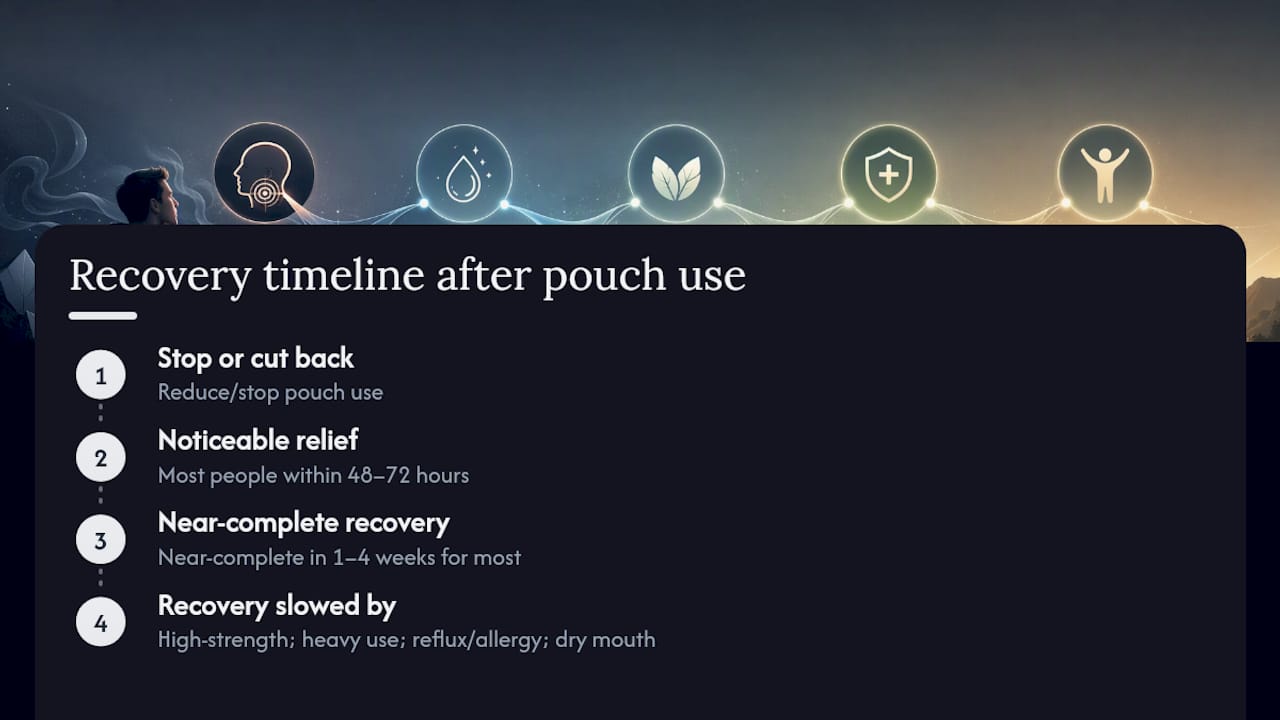
For most people, backing off use brings noticeable relief within 48 to 72 hours, with near-complete recovery inside one to four weeks. Recovery slows if you’re using high-strength pouches heavily, keeping sessions unusually long, or already dealing with acid reflux, allergies or a dry mouth condition that leaves your throat more vulnerable to begin with.
Fast ways to ease a sore throat from nicotine pouches
The first move is hydration. Sip water steadily through the day rather than gulping it occasionally, and go easy on caffeine and alcohol since both dry out the mouth and throat further.
Beyond water, a few classic remedies genuinely help:
- Warm salt water gargles, a few times a day, to reduce swelling and clear irritants from the throat lining
- A spoonful of honey or a warm herbal tea (chamomile and liquorice root are common choices) to coat and soothe
- Throat lozenges that form a protective coating rather than ones packed with menthol, which can add to the irritation you’re trying to fix
You can also adjust how you’re using pouches right now, today, without giving them up. Take the pouch out after 15 to 30 minutes instead of leaving it in for the full session. Drop down a strength tier if you’re on a high-mg product. Switch to an unflavoured or milder pouch while your throat settles. And try to avoid swallowing saliva in the first few minutes, when nicotine concentration in your mouth is at its highest.
Pro Tip: Rotate where you place the pouch each time, upper left one session, lower right the next. Repeatedly hitting the same spot concentrates irritation and slows healing, while spreading exposure around gives each patch of tissue time to recover.
Adjusting your routine to stop it happening again
A sore throat that clears up and comes straight back usually means the underlying habit hasn’t changed. A few adjustments, done consistently, fix that:
- Step down strength gradually. If you’re on a high-mg pouch, move to a mid-strength version for a couple of weeks before dropping further, rather than jumping straight to the lowest option and finding it unsatisfying.
- Cap session length. Since most nicotine uptake happens in the first half hour, there’s little upside to leaving a pouch in for 60 or 90 minutes, only more irritation.
- Rotate placement and flavour. Alternate sides of your mouth and lean towards milder or unflavoured pouches, especially if menthol or cinnamon blends seem to trigger your symptoms.
- If your goal is quitting nicotine altogether, pouches can be one part of a step-down plan, but it’s worth pairing that with proper support. NHS guidance on quitting smoking covers where to get help and how nicotine replacement products fit into a cessation plan.
When to see a pharmacist, GP or dentist
Most pouch-related throat irritation is manageable at home, but a few signs mean it’s time to get it checked. Seek urgent care if you have breathing difficulty, severe pain, trouble swallowing, blood in your saliva, or swelling in your neck. These aren’t typical pouch side effects and need proper assessment.
If soreness sticks around past 10 to 14 days despite cutting back, book a GP or dental appointment, since persistent irritation can also point to reflux, an allergy, or an unrelated oral health issue. For anything short of that, a pharmacist can talk you through safe over-the-counter lozenges, sprays or mouth rinses, and help you judge whether your current product or strength is a sensible fit. The HDAS London user guide on nicotine pouches is a useful reference for safe handling and usage questions if you want more detail before that appointment.
What the evidence says about mouth and throat effects from oral nicotine
Mouth and throat soreness isn’t a fringe complaint. A systematic review published in the British Dental Journal found that orally administered nicotine, including pouches and other nicotine replacement products, is consistently linked to soreness in the mouth and throat, with observational data putting the figure at around 5.4% of users reporting the symptom.
Clinical and observational evidence on oral nicotine products points to mouth and throat soreness as a genuine, measurable side effect, not an isolated or anecdotal complaint. Randomised data show higher odds of this symptom compared with placebo, while real-world observational reporting settles closer to one in twenty users.
Separately, a Frontiers in Oral Health review of nicotine pouches notes that current evidence, while still limited, suggests pouches contain fewer harmful constituents than cigarettes. Short-term clinical studies mostly report mild, reversible oral effects, but researchers are upfront that long-term outcomes from repeated use remain an open question. That gap matters for how you think about daily, long-running use rather than occasional sessions.
Why some people get a sore throat and others don’t
Individual sensitivity explains a lot of the variation in who reacts to pouches and who doesn’t. Two people using the exact same strength and flavour can have completely different experiences, and that’s not about willpower or technique, it’s largely about baseline throat health and personal tolerance.
If you already deal with acid reflux, allergic rhinitis, chronic dry mouth, or a history of throat infections, your mucosa starts from a more vulnerable position. Reflux in particular is worth flagging: stomach acid reaching the throat already causes low-grade inflammation, and adding an alkaline, nicotine-laden pouch on top of that can tip mild discomfort into a more persistent soreness. People with seasonal allergies often notice their pouch tolerance drops during hay fever season too, since the throat lining is already inflamed from a separate cause.
Smokers switching to pouches sometimes report the opposite pattern, less throat irritation than expected, because years of smoke exposure had already desensitised their airway to some degree. That’s not a reason to assume pouches are risk-free for that group, just an example of how prior exposure shapes present-day sensitivity.
If you know you’re prone to dry mouth or reflux, it’s worth starting at a lower strength than you might otherwise choose, and paying closer attention to session length from the outset rather than waiting for a problem to appear.
Does repeated irritation cause lasting damage?
This is the honest, slightly frustrating answer: nobody fully knows yet, and that uncertainty is worth stating plainly rather than glossing over. Short-term studies are reassuring, they show irritation is typically mild and clears up once exposure stops. What’s missing is long-term epidemiological data tracking people who’ve used pouches heavily for years, which the Frontiers in Oral Health researchers flag as a genuine research priority rather than a settled question.
What can be said with more confidence: repeated, unaddressed irritation to the same patch of tissue is generally how minor problems become persistent ones, whether that’s from nicotine pouches, ill-fitting dentures, or any other chronic localised irritant. Chronic low-grade inflammation of oral tissue is associated with a higher risk of ulceration and, in a small subset of cases, more serious changes over the long run, which is exactly why dental and health researchers stress that “tobacco-free” doesn’t mean “risk-free” for pouches specifically.
The practical takeaway isn’t to panic about long-term risk. It’s to treat sore throat symptoms as a signal worth acting on now, rather than something to push through indefinitely. Rotating placement, capping session length and stepping down strength when soreness appears are exactly the habits that prevent short-term irritation from becoming a long-running pattern. You can read more on the balance of oral health benefits and risks with pouches in our guide to nicotine pouches and oral health.
How pouches compare with smoking, vaping and gum for throat irritation
Every nicotine delivery method interacts with your throat differently, and the mechanism behind the irritation changes depending on the route.
Smoking exposes the throat to combustion byproducts, tar and heat directly, which is a fundamentally harsher form of irritation than anything oral pouches produce, and it comes with a far broader list of long-term risks. Vaping delivers heated, often flavoured vapour straight into the airway, and “vaper’s throat”, a dry, scratchy sensation, is a widely reported complaint tied to propylene glycol and flavouring compounds. Nicotine gum causes a different kind of irritation altogether: it’s mechanical as much as chemical, from the repeated chewing action and the alkaline buffering agents used to aid absorption, and it’s frequently blamed for jaw fatigue alongside throat effects.
Pouches sit in a distinct category because there’s no smoke, no vapour and no chewing involved, but the trade-off is sustained, direct contact between nicotine, pH and flavouring compounds and one fixed patch of oral tissue for the length of the session. That’s arguably a gentler irritation route than smoking, but it isn’t a zero-irritation one, and the British Dental Journal review treats pouches and other oral nicotine products in the same bracket when it comes to soreness risk. If you’re weighing pouches against patches or gum specifically, our comparison of nicotine pouches versus patches and gum breaks down where each option tends to suit different users.
Getting the most out of pouches without wrecking your throat
Good pouch habits come down to a handful of principles, and they’re the same ones dental researchers and consumer guides keep returning to independently.
Start at the lowest strength that satisfies your nicotine needs rather than defaulting to the highest one available. Keep sessions to roughly 15 to 30 minutes, since that’s where most of the nicotine absorption happens anyway. Vary placement between sessions instead of returning to the same spot. Favour milder or unflavoured pouches if you’re prone to dryness or sensitivity, and treat strong menthol or cinnamon flavours as an occasional choice rather than a daily default.
It’s also worth paying attention to your own patterns over time rather than treating every session the same way. If you notice irritation creeping in after a run of high-strength or long sessions, that’s useful information, not something to ignore until it becomes a persistent problem. Product education matters here too: knowing the strength, flavour intensity and pH profile of what you’re using lets you make small adjustments before soreness sets in, rather than reacting after the fact. For anyone actively trying to cut down overall nicotine intake rather than just manage side effects, our guide on reducing smoking with nicotine pouches walks through a structured step-down approach. And if nicotine staining on your teeth is part of what’s bothering you alongside throat comfort, SmileFam’s guide to removing nicotine stains is a useful companion resource.
Lower-irritation pouch options worth trying
If your throat has been telling you the current pouch is too strong or too harsh, switching product rather than quitting altogether is often the simplest fix. Hitsnus stocks a genuinely wide spread of strengths and flavour intensities, which makes stepping down a lot easier than hunting across several retailers for the right mg level.
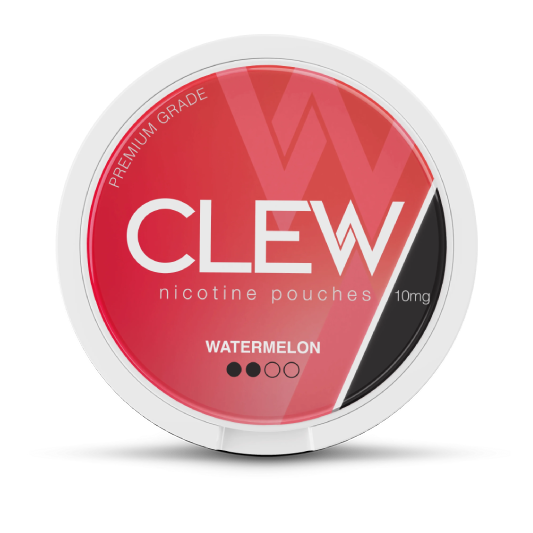
For a gentler mint option, ZYN Cool Mint mini sits at a lower strength that suits anyone easing off a harsher product, while ZYN Spearmint mini and Nordic Spirit Sweetmint offer a milder mid-strength alternative to stronger mint pouches. If flavour intensity itself is the irritant, fruit options like XQS Strawberry Kiwi, Clew Watermelon, SYX Forest Fruits and Killa Pineapple tends to feel gentler on sensitive throats than heavy menthol or cinnamon blends, and the clearance-priced Clew Cool Mint is worth trying if you want to test a milder mint at a lower cost before committing to a full pack.
Browse the full nicotine pouches collection to compare strengths and flavours side by side, and pick a strength based on where your throat is at right now, not where it was before the irritation started.
This article is general information, not a substitute for advice from a qualified doctor. Consult a qualified healthcare professional about your own circumstances before acting on anything here.
Sources
- Nicotine pouches: a review for the dental team | British Dental Journal
- Nicotine pouches, oral cancer and tobacco harm reduction: current evidence and research priorities | Frontiers in Oral Health
- Review of nicotine pouch chemical profiles (PMC)
- Nicotine pouch user guide (HDAS London)
FAQ
Can nicotine pouches cause a sore throat?
Yes. Clinical and observational research links oral nicotine products, pouches included, to mouth and throat soreness, with around 5.4% of users reporting it in observational data. It’s usually mild and improves once you reduce use or switch to a lower strength.
Does a sore throat from nicotine pouches go away?
Yes, for most people it does. Symptoms typically start improving within 48 to 72 hours of cutting back or stopping, with near-complete recovery inside one to four weeks. If it hasn’t improved after 10 to 14 days, get it checked by a GP or dentist.
Is using two nicotine pouches a day bad for you?
Using two pouches a day isn’t automatically harmful, but the real factor is strength and session length rather than pouch count alone. Two high-strength pouches left in for an hour each will irritate your throat far more than two low-strength pouches used for a shorter session, so pay attention to mg content and duration, not just how many you use.
Why is nicotine making my throat hurt?
It’s usually a combination of the pouch’s alkaline pH, its nicotine concentration, and any menthol or cinnamon flavouring drying or chemically irritating your throat lining, plus swallowed nicotine-laden saliva adding a second irritation route. Lowering strength, shortening sessions and choosing milder flavours address all three at once.