













Sleeping with a nicotine pouch: is it safe overnight?
Sleeping with a nicotine pouch in is not something we’d recommend. Nicotine is a stimulant that fragments your sleep, and a pouch left in your mouth while you’re unconscious brings a real choking and ingestion risk. If you wake up and find a pouch still in, take it out straight away and rinse your mouth with water.
Watch for nausea, sweating, a racing heart, or dizziness. These can signal acute nicotine toxicity, and if symptoms are severe or don’t settle quickly, call emergency services or NHS 111.
Two things worth knowing before you fall asleep with one in again:
- Nicotine disrupts sleep architecture by keeping your nervous system alert when it should be winding down.
- A pouch sitting against your gum for eight hours is a physical hazard, not just a chemical one. Relaxed throat muscles during sleep make swallowing or inhaling it far easier than while you’re awake.
Table of Contents
- How nicotine affects sleep quality and structure
- Timing and strength: the four hour rule explained
- What are the physical risks of falling asleep with a pouch in?
- A practical checklist for using pouches without wrecking your sleep
- Where this advice comes from
- Evening-friendly pouches worth trying tonight
- Sources
- FAQ
How nicotine affects sleep quality and structure
Nicotine works on your brain the same way caffeine does, just through a different receptor pathway. It binds to nicotinic acetylcholine receptors and triggers a release of adrenaline and dopamine, which is exactly the chemistry your body doesn’t want active at 2am. This is why people who use nicotine pouches at night often describe lying awake feeling wired despite being exhausted.
The research backs this up with real numbers. People who ingest nicotine can take 5 to 25 minutes longer to fall asleep than non-users, according to a 2019 research review. That delay compounds across a week of nightly use, turning a few lost minutes into a genuine sleep debt.
Smokers and nicotine users are nearly 50% more likely to report trouble sleeping than people who don’t use nicotine at all, a gap that shows up consistently across sleep surveys.
Beyond how long it takes to drift off, nicotine changes what happens once you’re asleep. Polysomnography and actigraphy studies, the two main tools researchers use to measure sleep objectively, one tracking brainwaves and eye movement, the other tracking movement patterns through the night, both point to the same pattern: less time in N3 deep sleep, the stage responsible for physical recovery, and more wake after sleep onset (WASO), the periods where you briefly surface without fully waking.
Nicotine and sleep architecture, at a glance:
| Sleep metric | Effect of night-time nicotine |
|---|---|
| Sleep onset latency | Increased by roughly 5 to 25 minutes |
| Wake after sleep onset (WASO) | Increased by around 6.1 minutes per night |
| N3 (deep) sleep | Reduced |
| REM and dream reports | Sometimes altered, with more vivid or fragmented dreaming reported in transdermal nicotine studies |
That last row matters more than people assume. Trials on transdermal nicotine patches, worn overnight rather than used briefly like a pouch, found increased micro-arousals and changed REM patterns, including more vivid dream recall. It’s a useful data point precisely because it isolates nicotine’s effect from smoking’s other chemicals: the disruption comes from the nicotine itself, not the tar or combustion by-products of cigarettes.
None of this means one evening pouch wrecks your week. But the cumulative pattern, night after night of slightly delayed sleep onset and slightly more fragmented rest, adds up to the “I slept eight hours but feel wrecked” complaint a lot of regular users report.
Timing and strength: the four hour rule explained
Sleep experts generally recommend avoiding nicotine for at least four hours before bed. That window roughly matches how long it takes your body to clear a meaningful share of nicotine from your bloodstream, giving your nervous system time to settle before you try to fall asleep.
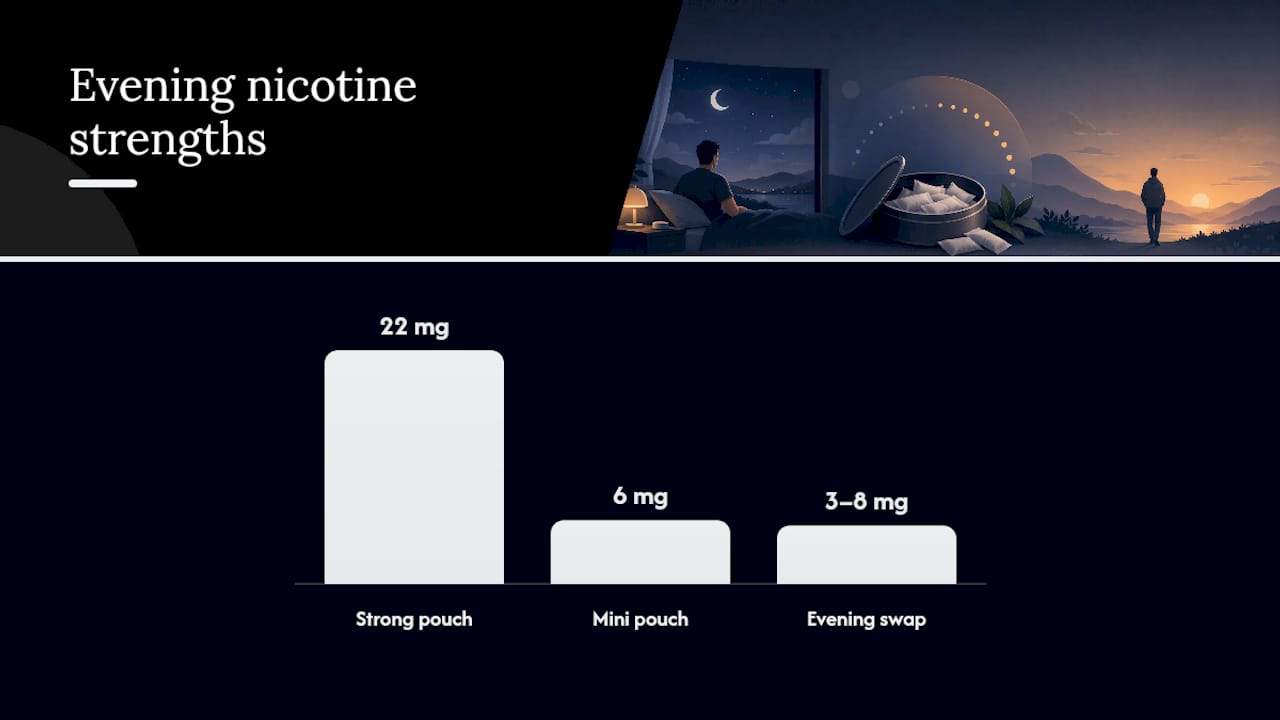
Strength matters just as much as timing. A 22mg pouch held for the usual 20 to 40 minutes delivers far more nicotine into your system than a 6mg mini, and that difference shows up directly in sleep quality. One trial analysis found that higher nicotine doses were linked to more reported sleep disturbance over several weeks of use, not just on the night in question. Stack two or three strong pouches in the hours before bed and you’re not just extending the stimulant effect, you’re increasing its intensity too.
A few practical adjustments make a real difference:
- Set a hard cut-off time. Pick a last-use time roughly four hours before your usual bedtime and stick to it, the same way you’d treat a caffeine curfew.
- Drop strength in the evening. Switch to something in the 3 to 8mg range for your last pouch or two of the day rather than reaching for your usual daytime strength.
- Track your own response for a week. Everyone metabolises nicotine at a slightly different rate, so note how you sleep on nights you use later versus earlier and adjust the cut-off accordingly.
Pro Tip: Keep a one-line sleep note on your phone for a week, bedtime, last pouch time, and how rested you felt. Patterns usually show up within four or five nights.
What are the physical risks of falling asleep with a pouch in?
The pharmacological effects are one problem. The mechanical risk is arguably the more urgent one. Falling asleep with a pouch in your mouth means relying on unconscious muscle control to keep it in place, and throat muscles relax significantly during sleep, which raises the odds of the pouch shifting, being swallowed, or being inhaled into the airway.
Choking and aspiration are the two things to genuinely worry about here. A swallowed pouch can also deliver a concentrated dose of nicotine all at once, a bolus ingestion, which is a different and more serious event than the slow release you get from normal use. The Sleep Foundation notes that this mechanical hazard, rather than the nicotine’s chemistry alone, is the primary acute safety concern with sleeping in a pouch.
Know the warning signs of acute nicotine toxicity so you can act fast if they appear:
- Nausea or vomiting soon after waking
- Cold sweats or clammy skin
- A racing or irregular heartbeat
- Sudden dizziness or light-headedness
- Confusion or unusual drowsiness beyond normal grogginess
If any of these appear after a night with a pouch still in, remove it, rinse your mouth, and seek medical attention if symptoms don’t ease within a short time or feel severe. Store spare and used pouches somewhere well out of reach, ideally in a sealed container away from children, pets, and your own bedside table.
A practical checklist for using pouches without wrecking your sleep
None of this means giving up pouches altogether. It means building a small routine around them, the same way you’d manage a last coffee of the day.
- Pick your cut-off. Four hours before bed is the benchmark. If you go to bed at 11pm, your last pouch goes in by 7pm.
- Downgrade strength after dinner. Save your strongest pouches, anything above 10mg, for the day and keep evening use in the low single digits.
- Take the pouch out before you lie down. Set a phone reminder if you tend to fall asleep with one in out of habit. This single step removes almost all of the mechanical risk discussed above.
- Skip alcohol and late caffeine on the same evening. Both interact with nicotine to further fragment sleep, and the combination is worse than either alone.
- Keep your bedroom cool, dark, and on a consistent schedule. Sleep hygiene basics do more heavy lifting than people expect, and they compound well with an earlier nicotine cut-off.
If your longer-term goal is cutting down or quitting, expect a rocky patch first. Withdrawal can temporarily worsen sleep before things improve, which is normal and usually settles within a couple of weeks as your body adjusts. A gradual taper, dropping strength before dropping frequency, tends to be more sustainable than stopping outright, and a GP or local stop-smoking service can help structure that taper properly.
Pro Tip: If cravings tend to hit at bedtime out of habit rather than genuine need, try a non-nicotine oral sleep strip as a placeholder for the hand-to-mouth routine while you taper down.
Where this advice comes from
This guide was written by Fabio for Hitsnus, drawing on sleep-science research and the practical realities of daily pouch use. Hitsnus specialises in nicotine pouches and exists to help adult users make informed, safer choices, not just sell product.
A few resources worth bookmarking if you want to go deeper:
- Our full breakdown of how nicotine pouches affect sleep, timing, and rest covers the science in more depth than we can fit here.
- The step-by-step usage workflow guide walks through safe, discreet use from first pouch to last.
- Our nicotine pouch safety checklist covers handling and disposal in more detail than the risks section above.
- For getting rid of used pouches properly, see our disposal guide.
Hitsnus also stocks a genuine spread of lower-strength and mild-flavour options built for exactly this kind of evening use, browse the full nicotine pouch collection to see what fits your routine.
Evening-friendly pouches worth trying tonight
If you’re cutting your evening strength rather than cutting nicotine out completely, the pouch you choose after dinner matters. A milder pouch held for the same 20 to 30 minutes delivers a gentler curve, which fits neatly with the four hour cut-off and lower-dose approach covered above.
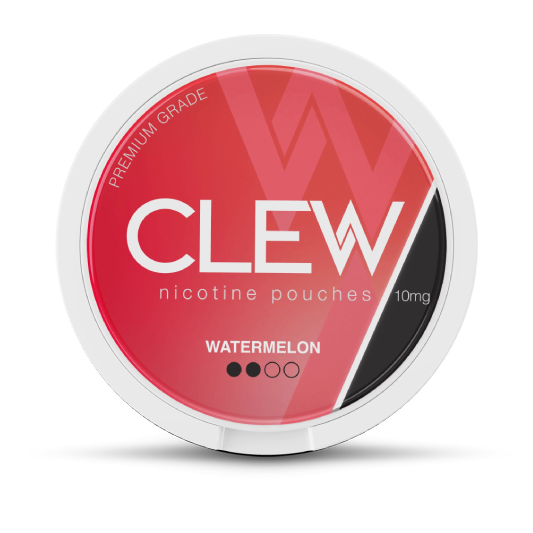
For a genuinely low-strength option, the XQS Strawberry Kiwi (8mg) sits comfortably in the moderate range without tipping into daytime-strength territory. Velo Lime Flame (8mg) offers a similar strength with a sharper citrus profile if fruit flavours suit your evening better than mint. If you prefer something closer to 10mg but still on the lower end of the shelf, Clew Watermelon and the clearance-priced Clew Cool Mint both fit that middle ground.
For the smallest realistic dose, ZYN Spearmint mini (6mg) is one of the mildest formats in the catalogue and a sensible last pouch of the day. Killa Pineapple and Killa Watermelon round out the fruit range for anyone tapering down from stronger flavours without wanting to switch to mint. SYX Forest Fruits is worth mentioning for completeness, but its strength range runs well above what we’d suggest for night-time use, so save it for daytime.
Browse the complete range on the nicotine pouches collection page and filter by strength to build an evening lineup that actually works with your sleep, not against it.
This article is general information, not a substitute for advice from a qualified doctor. Consult a qualified healthcare professional about your own circumstances before acting on anything here.
Sources
- The relationship between nicotine and sleep | Sleep Foundation
- Evening intake of alcohol, caffeine, and nicotine: night-to-night associations with sleep duration and continuity among African Americans in the Jackson Heart Sleep Study
- How long does nicotine keep you awake? | Medical News Today
- The effect of transdermal nicotine patches on sleep and dreams
FAQ
Is it bad to sleep with a nicotine pouch in?
Yes. Beyond the stimulant effect delaying sleep onset, a pouch left in overnight carries a genuine choking and accidental swallowing risk once your throat muscles relax during sleep.
Is it okay to use a nicotine pouch right before bed?
It’s better to stop at least four hours before bedtime, since nicotine close to sleep increases wake after sleep onset and reduces deep sleep, according to sleep-research findings.
Is it safe to fall asleep with a pouch still in my mouth?
No. Remove any pouch before lying down. If you wake and find one still in, take it out immediately, rinse your mouth, and watch for nausea, sweating, or a racing heart.
Is it normal to fall asleep with a pouch in, and does everyone do it?
It’s common, but common doesn’t mean low-risk. Many users fall asleep out of habit rather than intention, which is exactly why setting a firm last-use cut-off earlier in the evening helps.
How long before bed should I stop using nicotine pouches?
Aim for a four-hour window before sleep, and consider switching to a lower-strength pouch, such as a 6 to 8mg option, for your last one or two of the day.