












Pouch Disposal Guide: 50-Year Plastic & Eco-Friendly Tips
Many users mistakenly flush their nicotine pouches down the toilet, believing they will safely dissolve. This common practice actually pollutes water systems, clogs sewage infrastructure, and spreads toxic nicotine residue into ecosystems. Understanding the materials in nicotine pouches, their environmental impacts, and proper disposal methods can drastically reduce pollution and protect water quality. This guide walks you through responsible pouch disposal, emerging eco-friendly alternatives, and actionable steps for minimizing your environmental footprint in 2026.
Table of Contents
- Understanding Nicotine Pouch Materials
- Environmental Impact of Nicotine Pouch Waste
- Common Misconceptions About Pouch Disposal
- Proper Disposal Methods for Nicotine Pouches
- Innovations and Eco-Friendly Alternatives in Pouch Design
- Bridging Understanding to Practice: How to Dispose Responsibly Today
- Explore Sustainable Nicotine Pouches and Support Your Transition
- Frequently Asked Questions About Nicotine Pouch Disposal
Key Takeaways
| Point | Details | |-------|---------|| | Nicotine pouches contain mixed materials | Pouches combine biodegradable plant fibers with non-biodegradable synthetic plastics that persist in the environment. | | Improper disposal causes pollution | Flushing and littering pouches leads to plastic waste and nicotine contamination harming soil and waterways. | | Flushing and composting are harmful | These methods damage sewage systems, introduce toxins to compost, and fail to break down plastic components. | | Best current method is sealed household trash | Sealing pouches before discarding them in regular trash prevents nicotine leakage and minimizes environmental exposure. | | Emerging solutions offer hope | Biodegradable pouches and take-back programs are developing to improve sustainable disposal options. |
Understanding Nicotine Pouch Materials
Knowing what’s inside your nicotine pouch helps you understand why disposal matters so much. Nicotine pouches primarily consist of plant fibers, nicotine, flavorings, and a small plastic pouch material that is not biodegradable. The fill material contains 75 to 85 percent plant-based fibers like cellulose or wood pulp, which can biodegrade naturally. However, the outer pouch film uses synthetic polymers designed for durability and moisture resistance.
This durability creates a disposal problem. Plant fibers inside break down in six to twelve months under ideal composting conditions. The plastic film, by contrast, persists for over fifty years in landfills and natural environments. Because pouches combine biodegradable and non-biodegradable components, you cannot treat them like pure organic waste or standard recyclables.
The synthetic pouch material resists decomposition in soil, water, and typical waste conditions. Even if the plant fibers eventually degrade, the plastic wrapper remains intact, contributing to microplastic pollution. Understanding this nicotine pouch biodegradability complexity is critical for making informed disposal choices.
Pro Tip: Always keep used pouches separate from compostable waste due to their synthetic material content, even if the plant fibers inside could theoretically break down.
Key material facts include:
- Outer pouch films use synthetic polymers engineered for strength and moisture control
- Inner plant fibers account for the majority of pouch weight but biodegrade slowly without proper conditions
- Mixed materials make separation and recycling impractical for most municipal programs
- Nicotine pouch composition varies by brand but consistently includes non-biodegradable elements
Environmental Impact of Nicotine Pouch Waste
When nicotine pouches end up in nature, they cause measurable environmental harm. The plastic components break down into microplastics that infiltrate soil and water systems. These fragments persist indefinitely, accumulating in ecosystems and entering food chains. Meanwhile, residual nicotine leaches from discarded pouches, introducing toxic compounds that disrupt microbial communities essential for healthy soil.
Plastic pollution from nicotine pouch waste can last for decades if littered. The environmental impact of nicotine pouch waste extends beyond visible litter. Nicotine is classified as a pesticide due to its toxicity to insects and aquatic organisms. When pouches decompose in soil or waterways, concentrated nicotine solutions seep out, harming beneficial bacteria and fungi that support plant growth.
Soil contamination from nicotine disrupts nutrient cycling and reduces land fertility over time. In water systems, nicotine affects fish, amphibians, and invertebrates, even at low concentrations. The combined effect of plastic persistence and chemical toxicity creates a dual environmental threat.
Discarded nicotine pouches contribute to long-lasting plastic pollution and introduce chemical contaminants that degrade ecosystem health for decades.
| Material Component | Degradation Timeline | Environmental Persistence |
|---|---|---|
| Plant Fibers | 6 to 12 months | Low in proper composting conditions |
| Synthetic Pouch Film | 50+ years | High, breaks into microplastics |
| Residual Nicotine | Weeks to months | Moderate, toxic to microorganisms and aquatic life |
Improper disposal multiplies these impacts. Littered pouches accumulate in parks, streets, and natural areas, creating visible waste problems while silently poisoning surrounding environments. Understanding these biodegradable packaging challenges highlights why responsible disposal matters urgently.
Common Misconceptions About Pouch Disposal
Several widespread myths lead users to dispose of nicotine pouches in harmful ways. Correcting these misunderstandings protects infrastructure and ecosystems. Here are the most common misconceptions:
-
Myth: Flushing nicotine pouches causes no harm. Fact: Flushing pouches introduces plastic waste and nicotine into sewage systems, where they clog pipes, damage treatment facilities, and contaminate water supplies. Municipal wastewater plants are not designed to filter out small plastic items or nicotine residues effectively.
-
Myth: Nicotine pouches can be recycled through regular programs. Fact: Standard recycling facilities cannot process pouches because they combine multiple materials that are difficult to separate. The small size and mixed composition contaminate recycling streams, making pouches non-recyclable in typical municipal programs.
-
Myth: Composting nicotine pouches at home is environmentally safe. Fact: While plant fibers might eventually degrade, the synthetic pouch wrapper will not break down. More critically, nicotine residue is toxic to the beneficial microorganisms that drive composting. Adding pouches to your compost bin poisons the very bacteria and fungi needed for decomposition.
-
Myth: Pouches are small, so disposal methods do not matter. Fact: Small size does not reduce environmental impact. Billions of pouches are used annually in the U.S., and improper disposal of even a fraction creates substantial pollution. Individual actions accumulate into significant ecosystem damage.
-
Myth: All nicotine pouches are biodegradable. Fact: Most pouches on the market in 2026 still contain synthetic materials that persist for decades. While some manufacturers are developing biodegradable options, they remain limited in availability and not yet the industry standard.
Recognizing these myths helps you avoid disposal practices that harm the environment and public infrastructure. The next section explains what you should do instead.
Proper Disposal Methods for Nicotine Pouches
The safest and most practical disposal method currently available is sealing used pouches and discarding them in household trash. This approach prevents nicotine leakage and keeps synthetic materials contained in managed landfills rather than loose in the environment.
Start by wrapping each used pouch in a small piece of tissue or paper, or place multiple pouches into a small sealed bag. This containment step prevents residual nicotine from leaking during trash handling and transport. Once sealed, dispose of the wrapped pouches in your regular household garbage bin.

Avoid flushing pouches down toilets or sinks. Water systems cannot break down the synthetic materials, and pouches contribute to blockages in plumbing and sewage infrastructure. Similarly, do not attempt to recycle or compost nicotine pouches, as explained earlier. No widespread take-back or specialized recycling programs exist for nicotine pouches in the United States as of 2026.
Pro Tip: Regularly check your local waste management authority’s website for updates on emerging disposal options or pilot programs for nicotine pouch recycling.
Step-by-step safe disposal practices:
- Remove the used pouch from your mouth and allow it to cool if still moist
- Wrap the pouch in tissue, paper, or place it in a small sealable bag
- Dispose of the sealed pouch in your household trash bin
- Never flush pouches or add them to compost or recycling bins
- Monitor local waste program announcements for new disposal solutions
Following these proper nicotine pouch disposal methods minimizes environmental harm while using existing waste infrastructure responsibly. As the industry evolves, better options may become available.
Innovations and Eco-Friendly Alternatives in Pouch Design
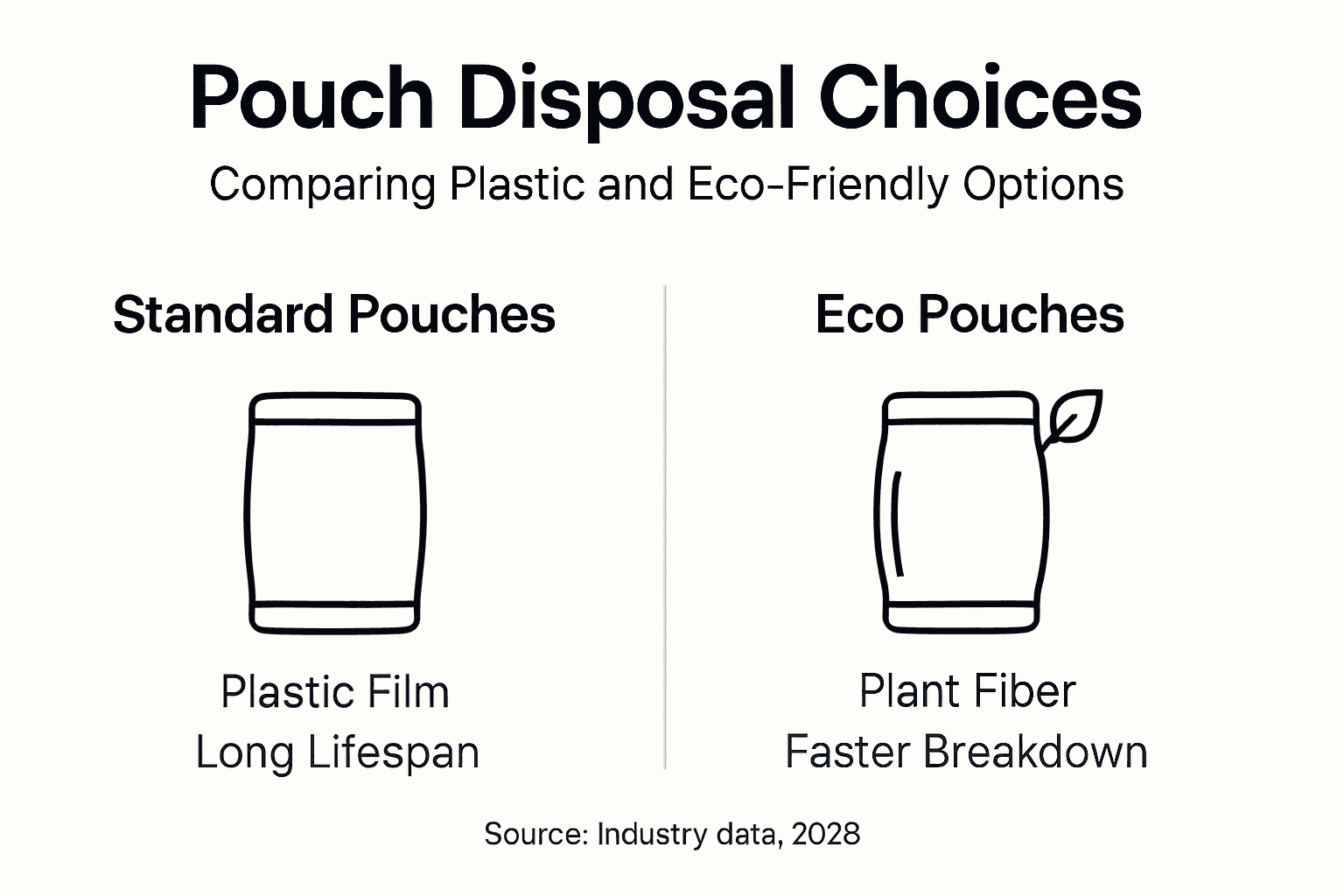
The nicotine pouch industry is responding to environmental concerns by exploring sustainable materials and disposal solutions. Some manufacturers are developing pouches made entirely from biodegradable plant-based fibers, eliminating synthetic plastic films. These innovations aim to create pouches that break down fully in composting or landfill conditions without leaving persistent plastic residues.
However, biodegradable pouches remain limited in market availability in 2026. Manufacturing challenges include maintaining pouch durability, moisture resistance, and flavor integrity while using only compostable materials. Additionally, even biodegradable pouches still contain nicotine, which poses toxicity concerns for composting.
Industry efforts also focus on reducing the amount of synthetic polymer used in pouch films. By thinning plastic layers or substituting bio-based polymers, manufacturers can lower the environmental footprint per pouch. Some brands are experimenting with packaging made from recycled materials or designing pouches with removable plant fiber cores for easier material separation.
Future take-back and recycling programs could provide dedicated disposal pathways. Similar to battery or electronics recycling, specialized facilities might process nicotine pouches by separating materials and safely managing nicotine residues. While no large-scale programs exist yet in the U.S., pilot initiatives and industry collaborations are exploring feasibility.
| Pouch Type | Materials | Biodegradability | Availability | Limitations |
|---|---|---|---|---|
| Traditional Synthetic | Plant fibers plus plastic film | Partial, plastic persists 50+ years | Widely available | High environmental impact from plastic |
| Biodegradable Alternative | Plant-based fibers and compostable films | Full breakdown in 6 to 18 months | Limited in 2026 | Nicotine toxicity still a concern, higher cost |
| Hybrid Reduced Plastic | Plant fibers with thinner plastic layers | Partial, reduced plastic content | Emerging availability | Still contains non-biodegradable components |
Staying informed about nicotine pouch disposal innovations helps you make better choices. Support brands investing in sustainable materials and advocate for expanded recycling programs to drive industry change.
Bridging Understanding to Practice: How to Dispose Responsibly Today
You now understand pouch materials, environmental impacts, and misconceptions. Applying this knowledge in daily life ensures you minimize harm while enjoying nicotine pouches. Here’s how to put responsible disposal into practice immediately.
-
Seal before disposal. Always wrap used pouches in tissue or place them in a small sealed bag to contain nicotine and prevent leaks during trash handling.
-
Discard in household trash. Place sealed pouches in your regular garbage bin. Managed landfills contain waste better than flushing, composting, or littering.
-
Never flush pouches. Flushing damages sewage systems and pollutes waterways. Toilets are not designed for small plastic items or nicotine residues.
-
Avoid composting attempts. Nicotine toxicity harms beneficial compost microbes, and plastic wrappers will not break down in home compost bins.
-
Stay updated on disposal programs. Monitor local waste management websites and pouch manufacturer announcements for new take-back or recycling initiatives as they emerge.
-
Choose sustainable products when available. If biodegradable pouch options become accessible in your area, consider switching to reduce your environmental footprint.
Pro Tip: Combine selecting biodegradable or reduced-plastic pouches with proper sealed disposal for the maximum positive environmental impact you can achieve today.
These steps are simple but powerful. Millions of nicotine pouch users making responsible disposal choices collectively prevent significant pollution. You protect water quality, reduce plastic waste, and support healthier ecosystems with each correctly discarded pouch.
Explore Sustainable Nicotine Pouches and Support Your Transition
As you adopt responsible disposal habits, explore how nicotine pouches fit into your broader transition from smoking to smokeless alternatives. Learning about the benefits of nicotine pouches helps you understand why many adults choose them for discreet, tobacco-free nicotine delivery.

Comparing nicotine pouches versus other alternatives like patches and gum reveals unique advantages in convenience and satisfaction. Different types of nicotine pouches, including regular, slim, and mini formats, offer options tailored to your preferences and lifestyle. By choosing products thoughtfully and disposing of them responsibly, you align your nicotine use with environmental values while supporting your journey away from traditional smoking.
Frequently Asked Questions About Nicotine Pouch Disposal
Are nicotine pouches recyclable in the U.S.?
No, nicotine pouches are not recyclable through standard municipal recycling programs in 2026. They contain mixed materials that recycling facilities cannot separate effectively, and small size makes them contamination risks in recycling streams.
Why should I never flush used nicotine pouches?
Flushing pouches clogs sewage pipes, damages wastewater treatment infrastructure, and releases plastic waste and nicotine into water systems. Municipal plants cannot filter these materials effectively, leading to environmental contamination.
Can I compost nicotine pouches at home safely?
No, composting nicotine pouches is unsafe. Residual nicotine is toxic to beneficial microorganisms essential for composting, and synthetic pouch wrappers will not biodegrade. Both factors harm your compost quality and soil health.
What should I do if there is a local nicotine pouch take-back program?
If your area launches a take-back program, participate by collecting used pouches and returning them according to program guidelines. These initiatives provide specialized processing that safely manages nicotine and separates materials for proper disposal or recycling.
How can I stay updated on eco-friendly nicotine pouch disposal options?
Regularly check your local waste management authority’s website, follow nicotine pouch manufacturers on social media, and subscribe to industry news sources focused on tobacco alternatives. Manufacturers developing biodegradable products typically announce availability through their websites and retailers.