




How to preserve nicotine pouch flavour and quality
TL;DR:
- Nicotine pouch freshness is defined by retained flavor, aroma, moisture, and texture, not just safety.
- Oxidation and evaporation silently degrade quality over time, especially with frequent openings and poor storage.
Most people assume a nicotine pouch is still fresh if it feels soft and moist. That assumption can quietly ruin your experience. Flavour can degrade even when pouches show no visible dryness, because oxidation and volatile flavour loss happen silently, well before any texture change you can feel. This guide breaks down what pouch freshness actually involves, why it matters more than most users realise, and what you can do today to protect the flavour and quality of every pouch in your tin.
Table of Contents
- What pouch freshness really means
- How pouch freshness declines: Oxygen and evaporation explained
- Opened versus unopened: Storage and freshness timeline
- Silent freshness loss: Why visual cues can mislead
- Our take: Why freshness matters more than you think
- Preserve freshness: Where to shop and learn more
- Frequently asked questions
Key Takeaways
| Point | Details |
|---|---|
| Freshness affects flavour | Nicotine pouch freshness mostly means retaining strong flavour and aroma. |
| Moisture loss changes texture | Drying makes pouches harder and can reduce comfort and nicotine delivery. |
| Oxygen exposure speeds decline | Opening containers lets in air, increasing oxidation and evaporation. |
| Storage matters most | Cool, dark, dry conditions help pouches stay fresher and tastier for longer. |
| Not all loss is visible | Flavour can fade through oxidation even when dryness is not obvious to the touch. |
What pouch freshness really means
Freshness is not a single quality you can measure at a glance. For nicotine pouches specifically, “pouch freshness” means retained quality, particularly flavour and aroma intensity alongside proper moisture and texture, rather than any question of safety. That distinction matters enormously for experienced users who rely on consistent satisfaction from every session.
Think of it this way: a pouch that is technically safe to use but has lost 60% of its original flavour intensity is, for all practical purposes, a worse product than it was the day you bought it. You are still getting nicotine, but the experience has been quietly downgraded.
The key freshness indicators to watch for are:
- Flavour intensity: The most immediately noticeable sign. A fresh pouch delivers a strong, clean taste profile. A fading pouch tastes muted or flat.
- Aroma: Open a fresh tin and there is a distinct, pleasant scent. When that aroma is weak or absent, flavour degradation has already started.
- Moisture level: Proper moisture ensures a comfortable mouthfeel and helps release nicotine steadily. Dry pouches feel stiff and uncomfortable under the lip.
- Texture: A well-preserved pouch sits smoothly and softly. A degraded one can feel papery, rigid, or granular.
- Nicotine delivery consistency: Freshness directly influences how evenly nicotine is released. Compromised moisture disrupts this process and leads to an uneven experience.
“Understanding freshness means understanding that your sensory experience is the product, not just the nicotine content. If the flavour is gone, so is half of what you paid for.”
Recognising these signs gives you a much sharper toolkit for judging pouch quality than simply squeezing the tin. If you want to understand more about the benefits of nicotine pouches in general, including why consistent delivery matters for satisfaction, that broader context helps explain why preserving freshness is worth the effort.
How pouch freshness declines: Oxygen and evaporation explained
Understanding what freshness means helps you see why it depends on day-to-day handling and environment. There are two primary mechanisms that degrade nicotine pouch quality: oxidation and evaporation. Both operate constantly and simultaneously, and freshness is driven largely by limiting oxygen exposure and evaporation, with heat, humidity, and light accelerating both processes.

Oxidation happens when oxygen molecules interact with the aromatic compounds responsible for your pouch’s flavour profile. Most nicotine pouch flavours are carried by volatile organic compounds, meaning they are unstable and eager to react with or escape into the surrounding air. Every time you open the tin, you introduce a fresh wave of oxygen that starts chemically altering these compounds. The result is a noticeable dulling of flavour and, often, a slight change in the scent of the pouch itself.
Evaporation is a purely physical process. Water and moisture-retention agents within the pouch material gradually escape into the surrounding air, particularly when temperatures rise or humidity is low. As moisture levels drop, the pouch becomes firmer and less pliable. This affects comfort under the lip significantly, and it also impairs the nicotine release mechanism, since proper hydration is partly what allows nicotine to transfer effectively.
The table below shows how key environmental factors interact with these two processes:
| Environmental factor | Effect on oxidation | Effect on evaporation | Overall freshness impact |
|---|---|---|---|
| High temperature | Accelerates chemical reactions | Speeds moisture loss | Severe and rapid |
| Direct sunlight | Triggers UV-driven oxidation | Warms the pouch, increasing evaporation | Severe |
| Low humidity | Minor direct effect | Dramatically increases moisture loss | High |
| Repeated opening | Constant fresh oxygen exposure | Allows moist air exchange | High, cumulative |
| Cold, dark storage | Slows chemical reactions | Reduces evaporation rate | Strongly protective |
The cumulative effect is important. No single opening ruins a tin. But open it ten times a day for a week in a warm car, and the decline is substantial. Understanding flavour deterioration in nicotine pouches at this level helps you make smarter decisions about where you keep your tin throughout the day.
Pro Tip: After taking a pouch, close the tin immediately rather than leaving it open on your desk or in your pocket with the lid loose. Those extra seconds of air exposure add up across a full day of use and meaningfully accelerate both oxidation and evaporation.
Opened versus unopened: Storage and freshness timeline
Now that you know the basics of deterioration, you can see how storage choices directly influence the timeline. The single most significant event in a pouch tin’s freshness timeline is the moment you first break the seal. Once the sealed container is opened, quality decline speeds up because oxygen exposure begins in earnest.
Here is a direct comparison of opened versus unopened storage timelines:
| Condition | Expected freshness duration | Key risk factors |
|---|---|---|
| Unopened, cool and dark | Up to or beyond best-before date | Very low if stored correctly |
| Unopened, warm or sunny environment | Weeks to months before quality drops noticeably | Heat and UV exposure |
| Opened, cool and dark, minimal openings | Several weeks with good retention | Gradual oxidation and evaporation |
| Opened, warm environment, frequent openings | Days before notable flavour loss | Rapid combined deterioration |
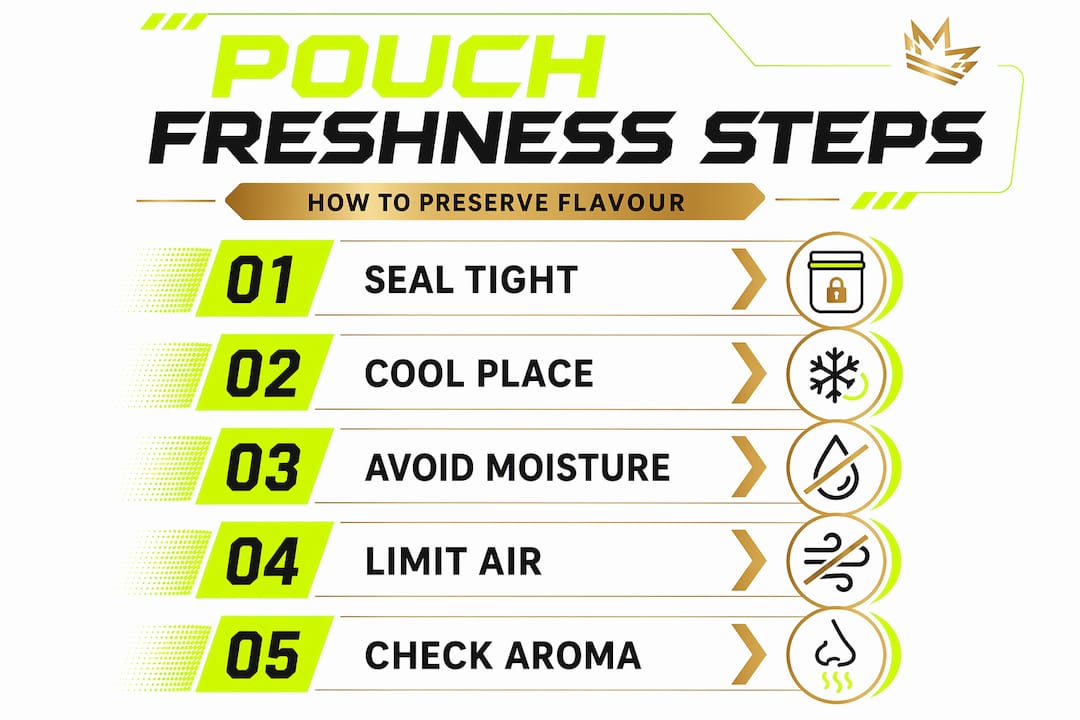
For practical storage, follow these steps in order of priority:
- Keep tins sealed until needed. Do not open a backup tin while a current one is still in use. Stagger your supply.
- Store in a cool, dry location. A bedside drawer, a kitchen cabinet away from the hob, or a cool shelf all work well. Avoid windowsills, car dashboards, and anywhere near heat sources.
- Avoid the fridge unless sealed. Refrigeration can help with unopened tins, but opened tins in the fridge risk moisture condensation when you take them in and out, which can actually accelerate degradation.
- Minimise how often you open the tin. Take out your pouch, close the lid, and put it away. Avoid browsing or leaving the lid off.
- Use pouches within a reasonable timeframe after opening. For best flavour, aim to finish an opened tin within two to three weeks.
- Check the best-before date when buying in bulk. Fresh stock at purchase gives you the longest possible window.
For a deeper look at the specifics of how shelf life and freshness interact, the nicotine pouch expiry and freshness guide covers this thoroughly. If you want actionable day-to-day routines, you will also find practical advice in both the storing nicotine pouches for freshness guide and this resource on nicotine pouch storage tips for longer-term supply management.
Silent freshness loss: Why visual cues can mislead
Once you understand storage timelines, it becomes essential to recognise why surface cues are not always reliable for judging freshness. This is perhaps the most counterintuitive aspect of pouch quality, and it catches even experienced users off guard.
The core issue is this: flavour can degrade even when pouches do not look very dry, because oxidation and volatile flavour compound loss can occur silently. Texture and moisture are not the only freshness signals. This means you can pick up a pouch that feels perfectly soft and moist, place it under your lip, and still be met with a noticeably flat, dull flavour experience.
Watch for these less obvious signs of freshness decline:
- Aroma absence on opening the tin. A fresh tin has a clear, immediate scent that matches its flavour profile. If you open the tin and the smell is faint or hard to identify, volatile flavour compounds have already been lost to oxidation.
- Flavour that fades very quickly. Fresh pouches maintain their flavour for most of the session. Degraded ones taste fine for the first minute and then drop off sharply.
- A slight chemical or stale note. Oxidised flavour compounds sometimes produce a faint off-note that is distinct from the original flavour. It is subtle, but once you know what it is, it becomes easy to recognise.
- Inconsistent nicotine sensation. If the release feels uneven or weaker than usual, moisture disruption may have affected the pouch’s delivery properties even if it still feels reasonably soft.
Pro Tip: Before you even put a pouch in, take a quick sniff of the open tin. If the aroma is strong and true to the flavour description on the label, you are in good shape. A weak or absent aroma is your earliest warning that silent freshness loss is underway.
The environmental impact on pouch freshness is a related factor worth understanding, particularly for users in climates with high seasonal temperature swings or humidity extremes. Environmental conditions you may not be actively thinking about, such as a hot summer commute or a damp bathroom shelf, can drive silent freshness loss more aggressively than most users realise.
Our take: Why freshness matters more than you think
Here is an uncomfortable truth that the mainstream guidance tends to gloss over: most storage advice for nicotine pouches focuses almost entirely on preventing obvious dryness. That is the baseline. What it misses is that the most important part of your experience, the flavour and aroma profile you chose specifically because you enjoy it, degrades through a process that leaves no visible trace until it is well advanced.
We hear from users regularly who describe a pouch as “going off” without being able to explain why. The pouch is not dry. The tin was stored reasonably. But the flavour has noticeably changed. Almost always, the culprit is oxidation, and it started the day the tin was first opened.
What separates a casual user from a genuine enthusiast is noticing this. If you are buying a specific flavour because you love it, a silently degraded version of that flavour is not the same product. It is a diluted imitation. The satisfaction you get from a fresh, well-preserved pouch versus one that has sat open for two weeks in a warm environment is genuinely different, and no amount of rationalising changes the sensory reality.
The broader nicotine pouch trends reflect this shift in user sophistication. The category has grown significantly, and with it, user expectations have evolved. Enthusiasts are now choosing products based on flavour complexity and quality rather than nicotine strength alone. That shift makes freshness preservation not a minor technical consideration but a central part of getting value from what you buy.
Our strong recommendation: treat your tin the way you would treat a good coffee or a quality loose-leaf tea. Keep it sealed, keep it cool, keep it dark, and use it promptly once opened. These are not complicated steps, but they make a genuinely meaningful difference to your daily experience.
Preserve freshness: Where to shop and learn more
You now have a clear picture of what pouch freshness really involves and why protecting it requires more than just avoiding dryness. The next step is making sure the pouches you buy start fresh to begin with, and that you have access to storage guidance you can actually use.
At Hitsnus, we stock a wide range of nicotine pouches from leading brands including ZYN, Velo, and FUMI, with fast dispatch that keeps transit time short and product freshness high. Buying from a retailer with reliable stock rotation matters enormously because a pouch that sits in a slow-moving warehouse for months arrives already compromised. Our range is updated regularly and our delivery is designed to get fresh product to you quickly. Browse our full selection and pair your purchase with the storage guides linked throughout this article to get the most from every tin.
Frequently asked questions
Is pouch dryness the best indicator of freshness?
No. Flavour can degrade silently from oxidation and volatile compound loss even when pouches still feel moist, so aroma and taste are more reliable signals than texture alone.
How long do nicotine pouches last after opening?
Quality decline speeds up after opening because oxygen exposure begins immediately, so using pouches within two to three weeks of first opening the tin will give you the best flavour experience.
What is the best way to store nicotine pouches for freshness?
Freshness is best preserved by storing in a cool, dry, dark place with the lid firmly closed between uses, and by avoiding heat, direct sunlight, and high humidity at all times.
Can nicotine pouches expire if unopened?
Unopened pouches retain their quality for considerably longer than opened ones, but flavour and texture will still gradually fade over time, and older stock may feel less soft and taste less vivid even if technically safe to use.