










Coffee nicotine pouches: the complete flavour guide
Coffee nicotine pouches are tobacco-free, white pouches placed between the lip and gum that deliver nicotine through the mouth lining while releasing a coffee-inspired flavour. If you want to know which to try first: GOAT Cappuccino suits a creamy, milky coffee style; PABLO Mocca is the dark-roast pick for experienced users who want serious strength; and Cuba Cola offers a sweeter, lighter option for daytime use. All three are available through the Hitsnus nicotine pouches collection, alongside full safety and usage guidance.
Pro Tip: Start with the lowest strength you think you need. You can always move up; overshooting on your first pouch is an unpleasant experience.
Table of Contents
- What are coffee nicotine pouches and how do they differ from snus?
- Coffee flavour types: what each style actually tastes like
- How to pick the right strength, size, and flavour intensity
- How to use coffee nicotine pouches safely
- Health, safety, and the UK regulatory context
- Health effects specific to coffee-flavoured pouches
- How coffee pouches compare to drinking coffee or using other nicotine products
- Popular coffee nicotine pouch products worth knowing
- Tips for first-time users
- What users actually say about coffee nicotine pouches
- Hitsnus: coffee-flavour pouches, delivered to your door
- Sources
- FAQ
What are coffee nicotine pouches and how do they differ from snus?
A nicotine pouch is a small, white, teabag-like portion filled with a fibrous, non-tobacco filler, nicotine, sweeteners, and flavourings. According to ASH Scotland, pouches are distinct from snus, which contains actual tobacco leaf and is moist. Pouches are dry, white, and leave no tobacco residue. You place one between your upper lip and gum, leave it there for 20–40 minutes, then dispose of it. Nicotine absorbs through the buccal mucosa, the soft tissue lining the cheek and gum, without any combustion or vapour involved.
A standard can holds 20 pouches. The format is discreet enough to use at a desk, on public transport, or anywhere smoking and vaping are not permitted.
ASH notes that pouches are likely less harmful than smoking, though long-term independent evidence remains limited. They are not a risk-free product. For a fuller comparison of pouches versus snus, the Hitsnus snus vs nicotine pouches guide covers the practical and safety differences in detail.
Pro Tip: If you experience mouth soreness in the first few days, move the pouch slightly along the gum rather than keeping it in one fixed spot.
Coffee flavour types: what each style actually tastes like
The coffee-flavour category splits into a few distinct families, and knowing which one matches your palate saves you from buying a can you will not finish.
- Espresso/dark roast: Bitter, roasted, and dry. Minimal sweetness. Works well if you drink black coffee and want a pouch that does not clash with the cup in your hand.
- Cappuccino/creamy: Milky, smooth, and lightly sweet. The GOAT Cappuccino sits here. Pairs naturally with a flat white or latte, and the creaminess softens any nicotine bite.
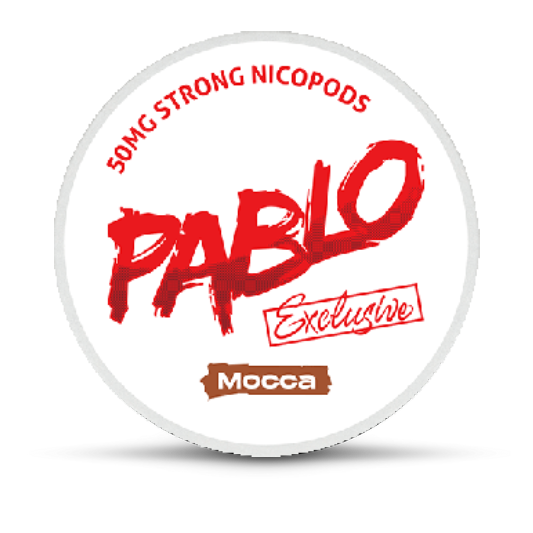
- Mocha/chocolatey: A blend of coffee and cocoa notes. Richer and slightly sweeter than espresso. PABLO Mocca is the obvious example. Better as an after-dinner pouch than a morning one.
- Caramel/dessert: Sweet-forward with a warm, buttery coffee undertone. Suits users who prefer flavoured coffee drinks over straight espresso.
- Hybrid sweet blends: Some products cross coffee with cola, vanilla, or fruit. Cuba Cola is a lighter, sweeter take that sits between coffee and a soft-drink profile.
Rotating between styles prevents palate fatigue. A very sweet pouch used alongside a strong espresso can make both taste worse; match intensity to intensity for the best experience.
How to pick the right strength, size, and flavour intensity
The single biggest mistake new users make is choosing a strength based on what sounds impressive rather than what matches their current nicotine habit.
| User profile | Recommended strength | Example product |
|---|---|---|
| Non-smoker / very light user | 4–6 mg per pouch | Entry-level slim pouches |
| Regular smoker (10–15 cigarettes/day) | 8 mg per pouch | GOAT Cappuccino |
| Heavy smoker or experienced pouch user | 16–20 mg per pouch | Cuba Cola 16 mg |
| Experienced user seeking maximum intensity | Above 20 mg per pouch | PABLO Mocca 50 mg |
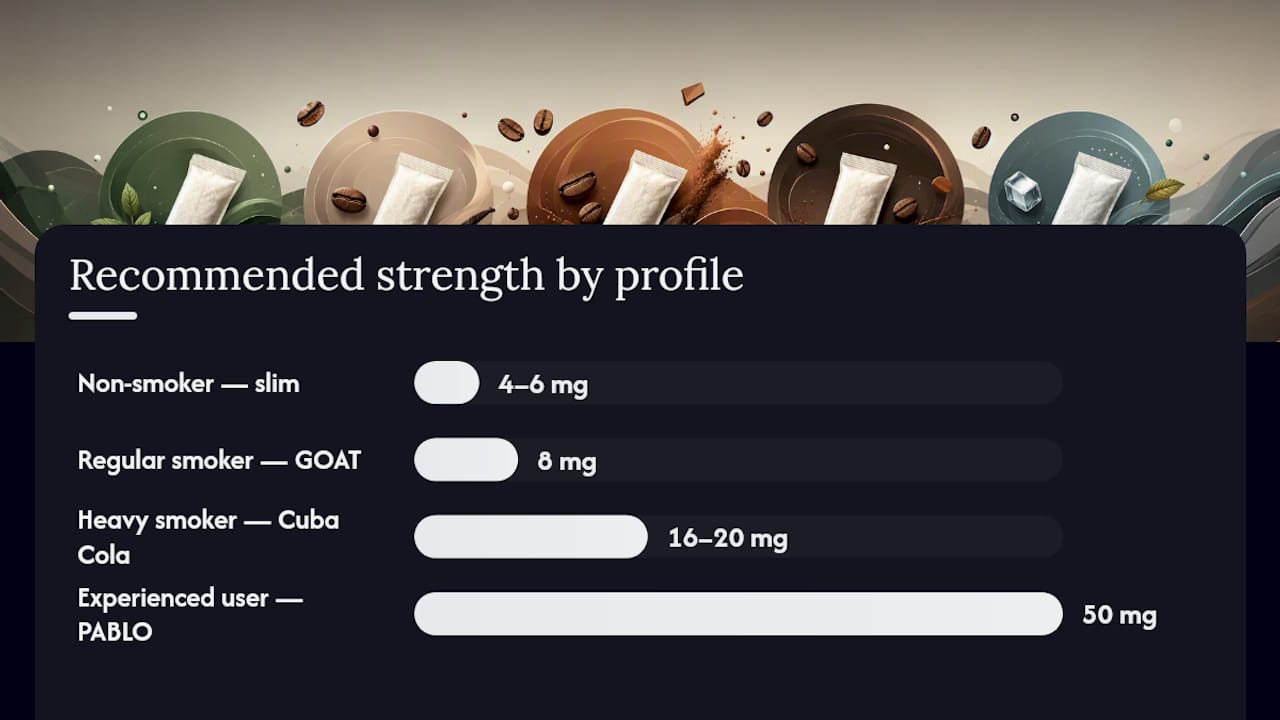
The Committee on Toxicity flagged that some products on the market contain up to approximately 120 mg of nicotine per pouch. PAS 8877:2022 recommends a maximum of 20 mg per pouch. Products above that threshold carry meaningfully higher toxicological risk and are not appropriate for new users under any circumstances.
Beyond strength, consider pouch size. Slim pouches sit more discreetly and suit longer wear. Mini pouches are lower-profile but may release flavour faster. Check the label for mg per pouch rather than mg per can, and note the portion count so you can calculate daily intake.
Pro Tip: Read the label for mg per pouch, not per can. A 20-pouch can at 8 mg is very different from a 20-pouch can at 50 mg, even though both look similar on a shelf.
How to use coffee nicotine pouches safely
- Place the pouch between your upper lip and gum, slightly off-centre. You will feel a mild tingling as nicotine begins to absorb.
- Leave it in place for 20–40 minutes. Most coffee-flavour pouches release their strongest flavour in the first ten minutes, then mellow out.
- Drink your coffee with the pouch in if you prefer. Liquids do not generally dislodge a well-placed pouch, and many users find the coffee-plus-pouch combination is the whole point.
- Stay hydrated. Both caffeine and nicotine are stimulants. The NHS notes that caffeine can contribute to dehydration; combining it with a nicotine pouch can increase feelings of jitteriness for some users. Drink water alongside your coffee.
- Remove and dispose of the pouch responsibly. Most cans have a small compartment in the lid for used pouches. Never leave used pouches where children or pets can reach them.
- Do not swallow the pouch. Accidental ingestion can cause nausea and nicotine toxicity. If a child swallows one, contact NHS 111 immediately.
Nicotine pouches are not suitable for pregnant or breastfeeding people, or for anyone with cardiovascular disease, without medical advice. For guidance on safe usage frequency, the Hitsnus usage guide covers recommended daily limits.
Health, safety, and the UK regulatory context
ASH summarises the current public-health position clearly: pouches are likely less harmful than smoking, but independent long-term evidence is limited and more research is needed. That is not a green light; it is a harm-reduction framing for adults who are already using nicotine.
The COT statement specifically flagged toxicological risk from very high-strength products and endorsed PAS 8877:2022’s recommended ceiling of 20 mg per pouch. Products well above that level exist on the market and should be treated with caution.
On regulation: the Tobacco and Vapes Act introduces an age-of-sale restriction of 18 from 29 October 2026, along with advertising restrictions. Prior to that date, gaps in age-of-sale protection have been a documented concern. BBC News reported on extra-strong pouches sold in packaging that mimics children’s sweets, and Trading Standards has urged swift legislative action to address youth access. Store pouches out of reach of children and dispose of used pouches in sealed bins.
For anyone considering pouches as part of a quit-smoking plan, the NHS quit-smoking service provides personalised, evidence-based support.
Health effects specific to coffee-flavoured pouches
Coffee-flavoured pouches carry the same core risks as any nicotine pouch: nicotine dependence, potential effects on blood pressure and heart rate, and possible mouth irritation at the placement site. The flavouring itself adds a separate consideration. Sweet, dessert-style flavours can encourage longer wear times or more frequent use, which increases total daily nicotine intake. Users who find a flavour particularly enjoyable tend to use more pouches per day than they planned. Track your daily count and set a limit before you open the can.
There is no clinical evidence that coffee flavouring specifically causes additional harm beyond the base product. For a detailed look at oral-health considerations, the Hitsnus oral health guide covers gum irritation and care tips.
How coffee pouches compare to drinking coffee or using other nicotine products
A coffee nicotine pouch does not taste like a cup of coffee. The flavour is a concentrated, often sweeter interpretation, closer to a coffee-flavoured sweet than a freshly brewed espresso. The aroma is subtle and contained; nobody around you will smell it. That is a meaningful difference from smoking, where the smell is the dominant social signal.
Compared to vaping, pouches produce no vapour, no visible output, and no device to charge. The nicotine delivery is slower and steadier than a vape hit, which some users prefer for sustained focus rather than a sharp spike. For a direct comparison, the Hitsnus pouches vs vaping guide breaks down the practical differences.
Popular coffee nicotine pouch products worth knowing
The coffee-flavour segment has grown quickly, and a few products stand out consistently.
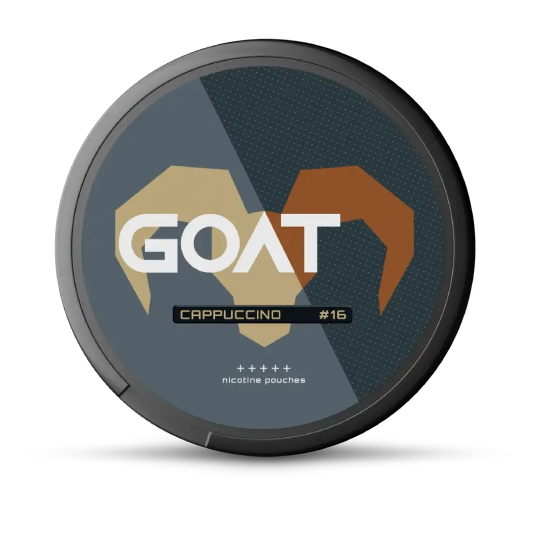
GOAT Cappuccino delivers a creamy, milky coffee profile at a moderate strength. It is the most approachable coffee pouch for users moving from cigarettes, and the flavour holds well for the full 30-minute wear.
PABLO Mocca is not for beginners. At 50 mg per pouch, it sits well above the PAS 8877:2022 recommended ceiling and is intended for experienced users with high tolerance. The mocha flavour is rich and dark, with a pronounced bitterness that mirrors a strong espresso.
Cuba Cola sits at 16 mg and blends a coffee-cola sweetness that works well during the day without being overwhelming. It is the most versatile of the three for pairing with different coffee styles.
Tips for first-time users
Start with one pouch and wait the full 20 minutes before deciding whether you need another. Nicotine from a pouch absorbs more slowly than from a cigarette, so new users often reach for a second pouch too quickly and end up with more nicotine than they intended. Common side effects in the first few sessions include hiccups, nausea, and dizziness; these usually pass within a few minutes and are a signal to remove the pouch and drink water.
Choose a slim or mini format for your first can. The smaller surface area means gentler gum contact and a lower risk of soreness. Avoid very high-strength products until you have a clear sense of your tolerance.
What users actually say about coffee nicotine pouches
The most consistent feedback across user communities is that the flavour experience is shorter than expected. The coffee taste is strongest in the first 10–15 minutes, then fades to a mild background note. Users who want sustained flavour often alternate between two pouches across an hour rather than extending a single one beyond 40 minutes.
Creamy styles like cappuccino consistently score well for palatability. Dark-roast and mocha styles divide opinion: experienced users appreciate the bitterness, while newer users often find them harsh. The sweetness in caramel and hybrid blends gets positive marks for daytime use but is sometimes described as cloying in the evening.
Hitsnus: coffee-flavour pouches, delivered to your door
Hitsnus stocks the full range of coffee-flavour nicotine pouches discussed in this guide, including GOAT Cappuccino, PABLO Mocca, and Cuba Cola, alongside dozens of other strengths and flavour profiles. Every product is sold with clear strength labelling so you can make an informed choice before you buy.
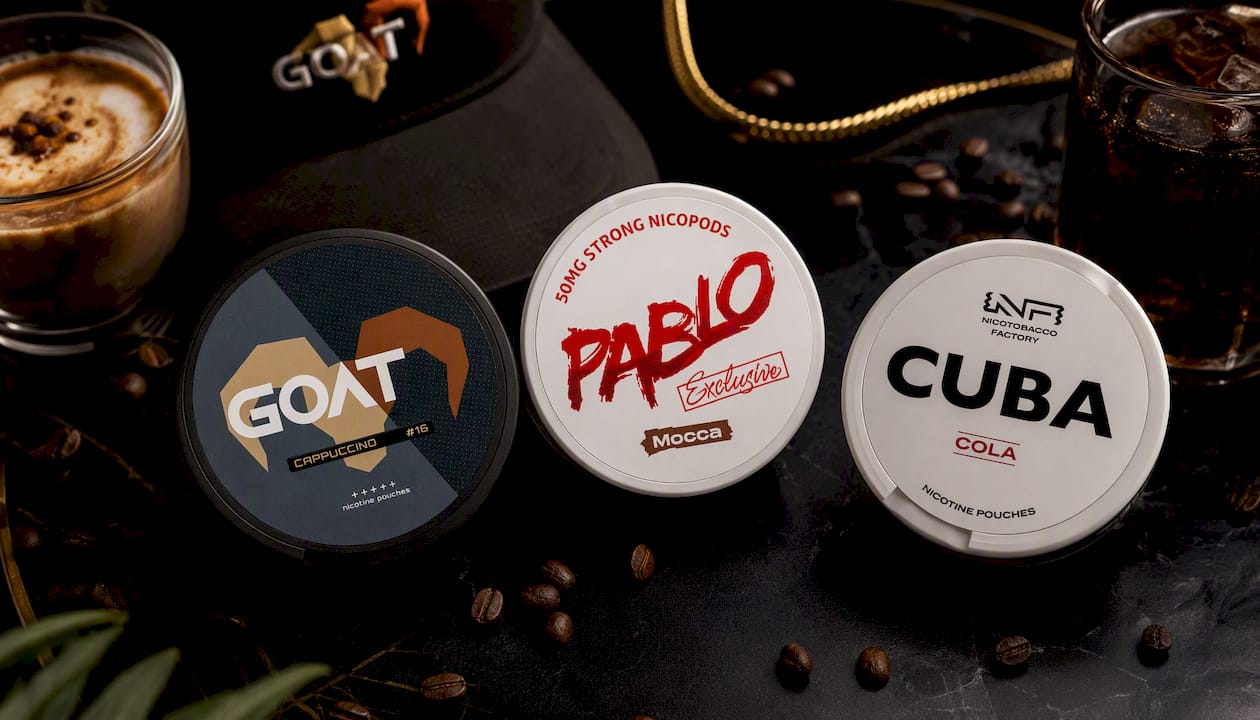
The Hitsnus nicotine pouches collection is the fastest way to browse by strength tier, flavour family, or brand. Orders are fulfilled online with discreet delivery. If you are new to pouches, start with GOAT Cappuccino at a moderate strength; if you are an experienced user after something stronger, PABLO Mocca is there when you are ready for it.
This article is general information, not a substitute for advice from a qualified doctor. Consult a qualified healthcare professional about your own circumstances before acting on anything here.
Sources
- Nicotine pouches - ASH
- Extra-strong nicotine pouches packaged like children’s sweets - BBC News
- Public warned about nicotine pouches sold to children - Trading Standards
FAQ
Can you use a nicotine pouch while drinking coffee?
Yes. Liquids do not generally dislodge a correctly placed pouch, and many users find the combination enhances both experiences. Stay hydrated, as both caffeine and nicotine can contribute to dry mouth.
What nicotine pouches come in a coffee flavour?
Several brands produce coffee-flavour pouches. GOAT Cappuccino, PABLO Mocca, and Cuba Cola are among the most widely available options, covering creamy, dark-roast, and sweet-blend profiles across a range of strengths.
Are nicotine pouches safer than smoking?
ASH describes pouches as likely less harmful than smoking, but notes that long-term independent evidence is limited. They are not risk-free and are intended for adult nicotine users, not as a general wellness product.
Can a dentist tell if you use nicotine pouches?
Prolonged use can cause localised gum irritation or recession at the placement site, which a dentist may notice. There is no staining effect comparable to smoking or chewing tobacco, but regular dental check-ups remain advisable.