




Your guide to choosing pouch strength
TL;DR:
- Choosing the right nicotine pouch strength depends on understanding label differences, personal tolerance, and daily habits. Starting with lower strengths and gradually adjusting helps prevent discomfort and builds awareness of individual needs. Proper habit management, flavor considerations, and routine review are essential for safe, satisfying use over time.
Picking up your first tin of nicotine pouches feels straightforward until you are standing in front of a screen staring at labels that read “6mg,” “strong,” or a row of dots that mean nothing without context. Get the strength wrong and you will either feel nothing or spend the next twenty minutes wondering if the room is spinning. This guide to choosing pouch strength cuts through the confusion by explaining what the labels actually mean, how your body and habits shape what you need, and how to manage your usage so that every session is satisfying rather than uncomfortable.
Table of Contents
- Key takeaways
- Understanding nicotine pouch strength labels
- Matching pouch strength to your tolerance and needs
- Safe usage practices that protect you
- How flavour and format affect perceived strength
- Adjusting your strength plan over time
- What I have learned about getting strength right
- Find your ideal strength at Hitsnus
- FAQ
Key takeaways
| Point | Details |
|---|---|
| Read labels carefully | Mg per pouch is more reliable than mg per gram for comparing strength across brands. |
| Start lower than you think | Beginning one strength below your usual habit prevents accidental overexposure and discomfort. |
| Tolerance changes daily | Hydration, sleep, and stress all shift how strongly you feel a pouch, not just the mg count. |
| Flavour affects intake | Enjoyable flavours encourage longer sessions and more pouches, raising total nicotine consumption. |
| Monitor and adjust gradually | Track how your body responds over days before moving to a higher or lower strength. |
Understanding nicotine pouch strength labels
Before you can make a confident pouch strength selection, you need to understand what you are actually reading on the tin. Strength is expressed in two ways across the market, and mixing them up is one of the most common mistakes new users make.
Mg per pouch vs mg per gram
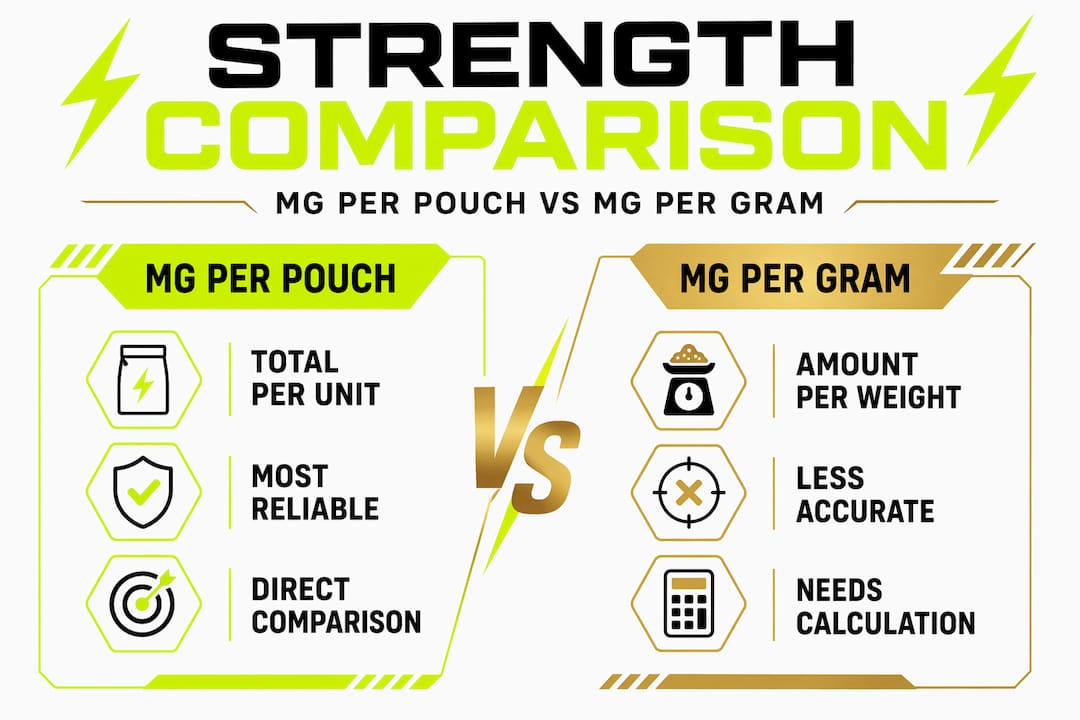
The figure that matters most is mg per pouch, which tells you the total amount of nicotine contained in a single unit. Mg per gram, by contrast, measures concentration relative to the pouch’s weight. Because pouch sizes vary considerably between brands, a high mg/g figure does not always mean high nicotine delivery per use. Mg per pouch is the more reliable comparison when you are shopping across different brands.
Strength categories explained
Most products fall into four broad bands. Low or mild pouches typically sit at 2 to 4 mg per pouch and suit those new to nicotine products or transitioning gently. Regular strength runs from roughly 6 to 8 mg and covers the majority of everyday users. Strong pouches land between 9 and 13 mg and are appropriate for those with established tolerance. Extra strong or max products exceed 14 mg and are intended for experienced adults only. You can explore this breakdown in detail in Hitsnus’s resource on nicotine pouch strengths to see how brands map their own labelling to these categories.

Dot systems and brand-specific notation
Some brands, particularly Scandinavian ones, use dots or bars instead of mg figures. A single dot typically signals mild; four or five dots signals extra strong. The problem is that one brand’s “four dot” product may be 12 mg while another’s is 16 mg. Always cross-reference the dot or word rating with the actual mg per pouch stated on the packaging.
Pro Tip: If a product lists only mg/g, divide that figure by the average pouch weight (usually around 0.7 to 1 gram) to estimate the mg per pouch. This gives you a working comparison before you buy.
Matching pouch strength to your tolerance and needs
Understanding the label is one thing. Knowing which number on that label suits you personally is another matter entirely. Your nicotine tolerance is not a fixed number; it shifts with your history, your physiology, and even what you did last night.
Step 1: Assess your current nicotine history. If you are a heavy smoker of twenty or more cigarettes daily, your tolerance is already substantial, and a low-strength pouch will feel pointless. If you are new to nicotine products altogether, even a “regular” 6 mg pouch may feel intense during the first few sessions.
Step 2: Account for daily physiological variables. Hydration, food intake, stress, and sleep quality all affect how strongly you feel a pouch on any given day. A 9 mg pouch on a tired, under-hydrated afternoon will hit noticeably harder than the same pouch after a full meal and a good night’s rest.
Step 3: Start one level below your instinct. This is the rule that experienced users wish someone had told them earlier. Starting at one strength lower than you think you need and limiting your initial sessions to around twenty minutes gives your body a chance to calibrate without the risk of overexposure.
Step 4: Consider your flavour preferences alongside the mg count. If you gravitate towards mild, sweet flavours, you may find yourself using pouches more frequently or keeping them in longer, which effectively increases your total nicotine intake even at a lower listed strength.
Step 5: Set a daily limit before you open the tin. Deciding in advance how many pouches you will use that day removes the guesswork when cravings push you toward reaching for another one.
Pro Tip: Keep a brief daily note of the strength you used, how long each session lasted, and how you felt afterwards. Two weeks of that data will tell you more about your true tolerance than any general guidance can.
For a side-by-side look at how mild and strong options compare, Hitsnus has a practical breakdown of mild vs strong pouches that is worth reading before you commit to a strength tier.
Safe usage practices that protect you
Choosing the right strength matters far less if your habits undermine the choice. Pouch safety is not complicated, but it does require attention to a few consistent practices.
- Set a session length limit. Most manufacturers suggest keeping a pouch in for no longer than thirty to sixty minutes. Going beyond that rarely increases satisfaction; it mostly increases irritation and unnecessary nicotine exposure.
- Rotate placement. Placing every pouch in the same spot, usually between the upper lip and gum, concentrates the physical pressure and moisture in one area. Rotating between left and right sides reduces gum irritation over time.
- Know the warning signs. Signs of nicotine overexposure include nausea, vomiting, dizziness, unsteadiness, sweating, and a racing heartbeat. If any of these appear, remove the pouch immediately and cease use until symptoms pass completely.
- Do not stack sources. Using a pouch while simultaneously drinking a strong coffee, vaping, or using any other nicotine product compounds your total intake in ways that can push you over your comfortable threshold without warning.
- Store your tins properly. Keeping cans in cool, dry places and sealing the lid tightly after each use preserves freshness and the consistency of nicotine release. A pouch that has dried out may deliver an uneven, uncomfortable experience.
“The most preventable negative experiences with nicotine pouches come not from the product but from the habit. A good strength means nothing if the session never ends.”
For beginners who want a structured starting point, Hitsnus’s beginner safe-use checklist walks through each of these steps with additional context.
How flavour and format affect perceived strength
The mg count on the tin is only part of the story. Two users buying a 9 mg pouch in different flavours from the same brand may have meaningfully different experiences, and the reasons are more practical than they first appear.
Flavour and session behaviour
Flavour directly affects session length and frequency. A citrus or mint pouch that you genuinely enjoy will stay in longer and encourage you to reach for the next one sooner. That behaviour alone can raise your effective daily intake well above what the per-pouch figure suggests. Rotating between flavours you like equally, rather than cycling exclusively through your favourite, reduces this risk without sacrificing enjoyment.
Pouch format: slim, standard, and ultra-thin
| Format | Nicotine release | Best suited for |
|---|---|---|
| Standard | Moderate, steady | Everyday users wanting consistent delivery |
| Slim / mini | Slightly slower, discreet | Office use, new users adjusting to pouches |
| Ultra-thin | Can encourage longer sessions | Experienced users; monitor usage carefully |
Thicker pouches deliver nicotine more slowly, while ultra-thin formats can lead to extended sessions because they feel less intrusive in the mouth. That comfort works against you if it means you forget the pouch is there for ninety minutes instead of thirty.
- Minty or cooling flavours often feel stronger than fruity ones at the same mg level, because the menthol sensation amplifies the physical feeling of nicotine.
- Sweet or dessert profiles can mask the nicotine sensation, making it tempting to use a higher strength to achieve a satisfying effect.
- Unflavoured or tobacco-adjacent options tend to feel more predictable in terms of perceived strength, which makes them useful benchmarks when comparing products.
Adjusting your strength plan over time
Your starting strength should rarely be your permanent one. Bodies adapt, habits shift, and what felt right three months ago may feel underwhelming or, in the other direction, too intense.
- Recognise the tolerance build-up signal. When a pouch that previously felt satisfying starts feeling weak, the most common explanation is tolerance. Tolerance causes the body to require stronger stimulation for the same effect, and many users wrongly assume a product has changed. It has not. Their baseline has shifted.
- Resist the urge to jump levels. Moving from a 6 mg to a 14 mg pouch because a 9 mg feels slightly weaker is a disproportionate response. Step up one level at a time and allow at least a week of consistent use before evaluating the new strength.
- Consider a tolerance reset. Reducing your daily pouch count, shortening sessions, or briefly switching to a lower strength for a week can restore sensitivity. This approach is far more effective than continually chasing a stronger product.
- Watch for signs you should step down. Headaches that appear shortly after placing a pouch, persistent nausea, or disrupted sleep are signals that your current strength may be too high, not a sign to push through.
- Track the full picture. Total nicotine intake is session length multiplied by frequency multiplied by strength. A moderate strength used four times a day in long sessions may deliver more nicotine than a strong pouch used twice. Keep all three variables in mind simultaneously. Hitsnus’s guide on comparing pouch strengths provides a useful framework for adults navigating this process.
What I have learned about getting strength right
I have spoken with a lot of users who arrived at extra strong pouches not because they needed that level of nicotine, but because nobody explained the difference between tolerance creep and genuine preference. They kept stepping up in strength mistaking reduced impact for a product issue, when the honest answer was that their body had adapted to what they were already using.
In my experience, the users who get the most out of pouches long term are not the ones chasing the highest mg count. They are the ones who treat strength as a variable to be managed rather than a badge of experience. Starting low genuinely does work. It is not about being cautious for caution’s sake; it is about giving yourself accurate information about what your body actually needs before you start escalating.
I would also say that flavour rotation is underrated as a strategy. Switching between a mint, a citrus, and something warmer like coffee or bergamot across the week keeps sessions feeling fresh and reduces the kind of flavour fatigue that pushes people toward stronger products out of boredom rather than need. Mindful variety beats relentless escalation every time.
— Fabio
Find your ideal strength at Hitsnus
Whether you are just starting out or refining a routine you have had for years, Hitsnus stocks a full range of tobacco-free nicotine pouches in strengths from gentle 2 mg options to high-potency products for experienced adults. Brands including ZYN, Velo, and FUMI are available across multiple flavours, so you can match both the mg level and the taste profile that suits you. Every order comes with fast UK delivery, and the product pages include clear strength information to make your selection confident rather than guesswork. Browse the full selection of nicotine pouches at Hitsnus and find the strength that genuinely fits your needs.
FAQ
What does pouch strength actually mean?
Pouch strength refers to the amount of nicotine in each pouch, typically measured in mg per pouch. Higher numbers indicate more nicotine delivered per session.
How do I know which strength to start with?
If you are new to nicotine products, begin with a low-strength pouch of 2 to 4 mg. If you are transitioning from cigarettes, a regular 6 mg option is a safer starting point than jumping straight to strong.
Can flavour make a pouch feel stronger than it is?
Yes. Cooling or minty flavours amplify the physical sensation of nicotine, making a pouch feel more intense than the mg count alone would suggest. Sweet flavours can have the opposite masking effect.
What should I do if I feel dizzy or nauseous after using a pouch?
Remove the pouch immediately and stop using nicotine products until the symptoms pass. These are signs of overexposure and indicate the strength or session length was too high for your current tolerance.
How often should I reassess my chosen strength?
Review your strength every four to six weeks, or sooner if your usual pouch starts feeling consistently weak or noticeably too strong. Adjust by one level at a time and track the results before making any further changes.