











What is pouch expiration? A user's guide
TL;DR:
- Pouch expiration signifies a decline in flavor, moisture, and nicotine potency due to chemical degradation, not safety risks.
- Proper storage and awareness of shelf life help maintain pouch quality, with dry pouches lasting longer than moist ones after opening.
Pouch expiration is the process by which nicotine pouches lose flavour, moisture, and nicotine potency over time due to chemical and physical degradation, not a safety threshold. Unopened nicotine pouches carry a shelf life of 12 to 24 months from the manufacture date, printed as a “best before” window rather than a hard safety cutoff. Brands like ZYN, VELO, and FUMI all follow this convention. Understanding what that date actually means, and what happens inside the can when it passes, is the difference between a satisfying experience and a disappointing one.
What is pouch expiration and why does it matter?
Pouch expiration, or pouch shelf life decline, describes the point at which a nicotine pouch no longer delivers its intended experience. The best-before date signals quality loss, not a safety risk. A pouch that looks and smells normal after that date remains safe to use but will likely feel weaker, drier, and less flavourful than when it was fresh.
The distinction matters because many users either discard pouches too early or, more commonly, continue using degraded ones without realising why the experience feels flat. Neither outcome is ideal. Knowing the science behind expiration lets you make informed decisions about what you buy, how you store it, and when to replace it.
Three factors drive the expiration process: nicotine oxidation, pH collapse, and moisture loss. Each one degrades the pouch independently, but together they accelerate the decline significantly. The sections below break down exactly how this works and what you can do about it.
How do nicotine pouches expire chemically?
The chemistry behind pouch degradation is more specific than most users realise. Nicotine does not simply “fade away.” It converts into less potent compounds, primarily Nicotine-N’-oxide, through oxidation. Oxidised nicotine derivatives show lower acute toxicity than fresh nicotine, which means the pouch becomes less effective rather than more dangerous.

The second mechanism is pH collapse. Manufacturers buffer nicotine pouches to an alkaline pH of around 8.8. This alkaline environment keeps nicotine in its freebase form, which is the bioavailable state your body can actually absorb. Over time, pH drops from 8.8 toward 7.0, locking nicotine inside the pouch matrix in a protonated state. The total nicotine content remains unchanged, but your body cannot access it. This is why an expired pouch can test positive for nicotine yet deliver almost no effect.
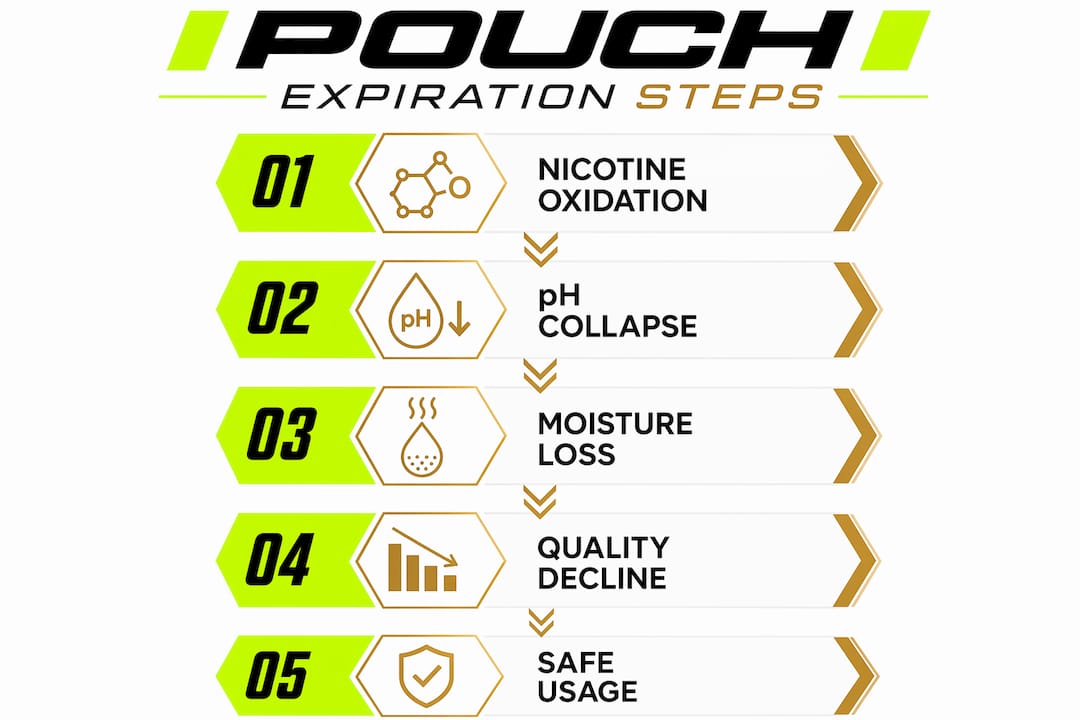
Moisture loss is the third factor. The pouch material dries out, which affects both comfort and the speed of nicotine release. A dry pouch sits uncomfortably against the gum and releases its contents unevenly. Oxygen, heat, and light all accelerate all three of these processes simultaneously.
The practical signs of this degradation are:
- Flavour loss: The taste becomes muted, flat, or slightly stale
- Dryness: The pouch feels brittle or crumbly rather than soft and pliable
- Weaker effect: The nicotine “kick” arrives slowly or not at all
- Altered smell: A faint chemical or musty odour replaces the original scent
“The total nicotine content of an expired pouch may be unchanged, but pH collapse means your body cannot absorb it. You are essentially using a pouch that has locked itself shut.”
Pro Tip: Store your cans away from windowsills and car dashboards. Even brief exposure to direct sunlight raises the internal temperature enough to accelerate oxidation noticeably.
Dry vs moist pouches: which expires faster?
Not all pouches age at the same rate. Different pouch formats have distinct decay profiles, and understanding these differences helps you plan your purchases more sensibly.
| Format | Unopened shelf life | Opened shelf life | Primary decay sign |
|---|---|---|---|
| Dry pouches (e.g., ZYN) | 12+ months | 1 to 2 months | Flavour loss, mild dryness |
| Moist pouches (e.g., VELO) | 6 to 12 months | 2 to 4 weeks | Rapid dryness, flavour drop |
| Liquid burst pouches | 6 to 12 months | Up to 4 weeks | Leaking, burst failure |
Dry pouches like ZYN remain stable for 12 or more months when unopened because the lower moisture content slows oxidation. Once opened, the clock accelerates but you still have a reasonable window of one to two months before quality noticeably drops.
Moist pouches, such as those in the VELO range, degrade faster because water content actively promotes oxidation. An unopened moist pouch can last six to twelve months, but once you break the seal, you should aim to finish the can within two to four weeks. Liquid burst formats are the most sensitive. The liquid-filled centre can begin to leak or fail to burst properly after roughly four weeks of being opened, which ruins the intended experience entirely.
Storage environment plays a significant role across all formats. A dry pouch stored in a hot car will degrade faster than a moist pouch kept in a cool drawer. Temperature and humidity matter as much as the format itself.
Pro Tip: If you buy in bulk, rotate your stock by placing newer cans at the back and using older ones first. This simple habit prevents you from accidentally sitting on pouches past their best.
How to read expiration dates and batch codes
Most nicotine pouch cans print a best-before date directly on the base or lid, formatted as MM/YYYY or DD/MM/YYYY. This date sits 12 to 24 months from the manufacture date and tells you when the product is expected to be at its best, not when it becomes unsafe.
Some brands, however, use batch codes rather than printed dates. Decoding these requires a few steps:
- Locate the batch code, usually a string of letters and numbers on the base of the can
- Identify the production date embedded in the code. Many brands use the format YYDDD, where YY is the year and DDD is the day of the year (for example, 24183 means the 183rd day of 2024)
- Subtract 12 to 14 months from the production date to estimate when the pouch will reach its freshness limit
- If the estimated date has passed or is within a month, treat the pouch as near-expired and use it promptly
A common misconception is what might be called “phantom expiration,” the belief that a pouch becomes dangerous the day after its best-before date. This is false. The date marks a quality threshold, not a contamination event. A pouch one week past its best-before date from a well-stored can will be nearly indistinguishable from a fresh one.
Experts advise choosing brands with explicit date labelling because there is no standardised federal requirement for how nicotine pouch expiration must be communicated. Clear labelling removes the guesswork entirely and is a mark of a trustworthy product.
What are the signs your pouches have expired?
Recognising a degraded pouch by its physical and sensory properties is more reliable than relying solely on printed dates. Signs of degradation include flavour loss, dryness, and reduced potency caused by oxidation byproducts. Here is what to look and feel for:
- Texture: A fresh pouch is soft and slightly yielding. An expired one feels dry, stiff, or crumbly when you press it between your fingers.
- Smell: Open the can and take a slow breath. Fresh pouches carry a clean, distinct scent matching their flavour profile. A stale or faintly chemical smell signals degradation.
- Flavour intensity: Place the pouch under your lip. If the flavour arrives weakly or disappears within a few minutes rather than lasting the full session, the pouch has degraded.
- Nicotine effect: A noticeably reduced or absent nicotine effect, despite using your usual strength, points to pH collapse and oxidation.
- Discolouration: Yellowing or browning of the pouch material, particularly in white dry formats, indicates oxidation has progressed significantly.
The key distinction is that expired pouches remain safe. Expired pouches carry low toxicity because the oxidised nicotine derivative Nicotine-N’-oxide is less harmful than fresh nicotine. The product simply loses its satisfaction value. If you notice an unusual or sharp chemical smell combined with visible mould or liquid contamination, that is a different matter entirely and the pouch should be discarded. You can read more about safe pouch usage to understand where the real risk thresholds lie.
How to store pouches to extend freshness
Proper storage is the single most effective way to push a pouch toward the longer end of its shelf life window. Cool, dry storage away from heat and light significantly slows oxidation and moisture loss across all formats.
Follow these steps to get the most from every can:
- Keep unopened cans in a cool, dry place. A kitchen cupboard away from the oven or a desk drawer away from direct sunlight works well. Aim for a consistent temperature below 20°C.
- Seal the lid tightly after every use. Oxygen is the primary driver of nicotine oxidation. Every second the can sits open, degradation accelerates.
- Refrigerate moist pouches for long-term storage. Refrigeration slows oxidation and is particularly beneficial for moist formats stored over several months. Bring the can back to room temperature before opening to prevent condensation forming inside.
- Consider vacuum sealing for bulk purchases. Removing oxygen from the storage environment dramatically extends freshness, particularly for dry pouches bought in quantity.
- Avoid freezing. Rapid temperature changes cause condensation inside the can, which introduces moisture and accelerates the very degradation you are trying to prevent.
- Do not store pouches in a car. Dashboard temperatures can exceed 60°C in summer, which collapses pH buffering agents within days rather than months.
Pro Tip: If you refrigerate pouches, place them in a sealed zip-lock bag first. This prevents the can from absorbing fridge odours, which can transfer to the pouch material and alter the flavour.
For a deeper breakdown of storage methods, Hitsnus has a dedicated guide on preserving pouch flavour and quality that covers additional techniques for different formats and climates.
Key takeaways
Pouch expiration is a quality decline driven by nicotine oxidation, pH collapse, and moisture loss, not a safety event, and proper storage can extend freshness by months.
| Point | Details |
|---|---|
| Expiration means quality loss | Best-before dates mark peak freshness, not a safety cutoff. Expired pouches remain safe to use. |
| pH collapse reduces effect | A drop from pH 8.8 to 7.0 locks nicotine inside the pouch, reducing absorption despite unchanged nicotine content. |
| Format affects shelf life | Dry pouches last 12+ months unopened; moist pouches degrade faster and should be used within 2 to 4 weeks of opening. |
| Sensory signs are reliable | Dryness, flavour loss, and a weak nicotine effect are more accurate freshness indicators than the printed date alone. |
| Storage extends freshness | Cool, dry, sealed storage away from heat and light is the most effective way to preserve pouch quality. |
Why I trust my nose more than the date stamp
I have been working with nicotine pouches long enough to know that the printed date is a starting point, not the final word. I have opened cans well within their best-before window that smelled flat and delivered almost nothing, and I have used pouches a month past their date that were perfectly satisfying because they had been stored correctly.
The mistake most users make is overstocking. Buying ten cans because there is a discount feels sensible until you realise you are working through pouches that have been sitting in a warm flat for six months. The savings evaporate the moment the experience degrades. My honest advice is to buy no more than a four to six week supply at a time unless you have proper cool storage.
I also think the industry needs to do better on labelling. Batch codes that require decoding are not acceptable when a simple printed date costs nothing extra. When I choose products for recommendation, clear date labelling is a non-negotiable criterion. It signals that a brand respects its users enough to be transparent about freshness.
Trust your senses. If the pouch smells off, feels dry, or delivers nothing after two minutes, it is past its best regardless of what the can says. Your experience is the most accurate expiration test available.
— Fabio
Fresh pouches, clear dates: shop at Hitsnus
Hitsnus stocks a wide selection of tobacco-free nicotine pouches with clear best-before dates printed on every can, so you always know exactly what you are buying. The range covers dry and moist formats from leading brands, all stored under proper conditions before dispatch. Orders are fulfilled with fast UK delivery, meaning the pouches that arrive at your door are as fresh as possible. If you want to explore how long different pouches last before committing to a bulk order, the Hitsnus blog has format-specific guides to help you plan your purchase sensibly.
FAQ
What does pouch expiration actually mean?
Pouch expiration refers to the decline in flavour, moisture, and nicotine potency over time due to oxidation and pH collapse. It is a quality threshold, not a safety warning.
Can you use expired nicotine pouches safely?
Yes. Expired pouches carry low toxicity and remain safe to use. The oxidised nicotine derivative Nicotine-N’-oxide is less harmful than fresh nicotine, but the product will deliver a noticeably weaker and less satisfying experience.
How long do nicotine pouches last once opened?
Dry pouches like ZYN stay fresh for one to two months after opening. Moist pouches such as VELO should be used within two to four weeks, and liquid burst formats within four weeks, to maintain full flavour and effect.
How do I read a batch code to check freshness?
Locate the batch code on the base of the can and identify the production date, often in YYDDD format. Subtract 12 to 14 months to estimate the best-before window. If that date has passed, use the pouch promptly or check it by smell and texture before use.
What is the best way to store nicotine pouches?
Store unopened cans in a cool, dry place below 20°C, away from direct sunlight. Keep lids tightly sealed after every use. For moist pouches stored long-term, refrigeration slows oxidation, but bring the can to room temperature before opening to avoid condensation.