













What is prolonged pouch use? Risks and safe limits
TL;DR:
- Prolonged nicotine pouch use beyond 60 minutes or back-to-back sessions increases oral tissue damage and dependency risks.
- To preserve oral health, limit each session to 20-45 minutes, rotate placement sites, stay hydrated, and consult your dentist regularly.
Most adults who use nicotine pouches believe they are managing their intake sensibly. The reality of what is prolonged pouch use, and what it actually does to your body over time, tends to come as a surprise. Leaving a pouch in longer than recommended, or using several in quick succession throughout the day, is not a neutral habit. There are real physiological consequences, some of which develop quietly before you notice them. This article gives you the full picture: what counts as prolonged use, what the risks are, and how to practise long-term pouch management that protects your health.
Table of Contents
- Key takeaways
- What is prolonged pouch use and how long is too long?
- Oral health effects of extended pouch use
- Addiction and systemic health risks
- Pouches versus other nicotine alternatives
- Practical tips for safer long-term pouch use
- My take on long-term pouch use
- Explore tobacco-free pouches at Hitsnus
- FAQ
Key takeaways
| Point | Details |
|---|---|
| Optimal pouch duration | Keep each pouch to 20 to 45 minutes; going beyond 60 minutes causes gum irritation without any added nicotine benefit. |
| Oral health risks are localised | Prolonged contact at one gum site causes inflammation, recession, and tissue thickening specific to that area. |
| Addiction develops quickly | Nicotine pouches deliver concentrated doses rapidly, making physical dependence a real risk with regular extended use. |
| Alternatives exist | Medically approved cessation therapies such as patches and gum carry a stronger evidence base for long-term safety. |
| Practical habits matter | Keeping pouches stationary, staying hydrated, and rotating placement sites reduces irritation significantly. |
What is prolonged pouch use and how long is too long?
A nicotine pouch is a small, tobacco-free sachet placed between your gum and upper lip. It releases nicotine through the oral mucosa directly into your bloodstream, without combustion or vapour. Understanding how nicotine pouches work is the starting point for understanding why duration matters so much.
The nicotine absorption peaks within the first 5 to 10 minutes of placing a pouch. After that initial surge, delivery tapers off significantly. This means the bulk of the pharmacological effect you are seeking arrives early. Everything beyond that window yields diminishing returns on nicotine, but continues to expose your gum tissue to chemical irritants, moisture, and mechanical pressure.
Typical usage guidelines suggest the following:
- Mini or slim pouches: 20 to 30 minutes per session
- Regular or large pouches: 30 to 45 minutes per session
- Maximum safe duration: 60 minutes, regardless of format or strength
- Higher strength pouches: Shorter effective sessions because absorption is faster and more intense
Prolonged pouch use means keeping a pouch in place beyond the 60-minute mark, or habitually using pouches back-to-back without adequate rest periods for your gum tissue. Pouch use duration is not just a flavour question. It is a tissue exposure question, and that distinction changes how seriously you should take it.
Higher nicotine strength pouches lead to faster absorption, creating intense but shorter effective sessions. Lower strengths provide a steadier, longer experience. If you are using a high-strength pouch for an hour or more simply because the flavour is still present, you are misreading the signal your body is sending you.
Oral health effects of extended pouch use
This is where the consequences of prolonged use become most concrete. The gum tissue directly beneath the pouch bears the full load of sustained chemical contact. What begins as mild tingling or sensitivity can progress into measurable structural changes.
Prolonged contact causes inflammation, gum recession, and tissue thickening at the specific site of repeated use. Unlike smoking, which affects the entire oral environment, pouch-related oral damage is highly localised. That focused exposure actually concentrates the problem. The same patch of tissue faces repeated assault every single day.

Frequent use in one spot causes localised tenderness and a burning sensation. More concerning is the gradual reduction in blood flow to that tissue, which raises the risk of periodontal disease over time. The changes develop so slowly that many users only notice them during a routine dental appointment.
The effects of prolonged pouch use on the gums include:
- Gum recession: The gum line pulls back from the tooth root, exposing sensitive dentine.
- Tissue hyperplasia: The gum thickens as a response to chronic irritation.
- Localised tenderness: Persistent soreness that feels like a dull ache rather than acute pain.
- Mucosal whitening: A pale or slightly hardened patch of tissue at the contact point.
- Increased periodontal risk: Reduced local blood flow creates conditions for infection.
Pro Tip: Rotate the placement of your pouch across different sites in your mouth, rather than always using the same spot under your upper lip. This distributes tissue exposure and gives each area time to recover.
Dental experts note that while pouches avoid the tar and carcinogen burden of cigarettes, the long-term oral unknowns are still significant enough to warrant caution. The absence of tobacco does not mean the absence of tissue risk.
Addiction and systemic health risks
Oral effects are the most visible consequence of extended pouch use, but they are not the only concern. The systemic picture is equally worth understanding.
Nicotine addiction from pouches develops rapidly. The concentrated and localised nicotine exposure that pouches deliver makes physical dependence a real and measurable outcome of regular use, particularly when sessions run long or pouches are used in continuous succession. Many users who start pouches as a “lighter” nicotine option find themselves locked into daily dependence within weeks.
“Significant uncertainty exists about the long-term health impacts of nicotine pouches. Adults who have never used tobacco or nicotine products should avoid starting, and smokers should consider approved cessation therapies instead.” — MD Anderson Cancer Centre
Beyond addiction, cardiovascular risk is a factor that does not receive enough attention in casual discussions about pouches. Nicotine raises heart rate and blood pressure with each session. For users who keep pouches in for extended periods multiple times a day, the cumulative cardiovascular load adds up.
A 4-week clinical trial found that while pouches reduced cigarette use, they did not reduce overall exposure to tobacco-related toxins for participants. Higher-strength pouches were also associated with higher rates of discontinuation due to adverse effects, including nausea and dizziness, both of which are signs of acute nicotine toxicity. If you experience either during a session, the pouch has been in too long or the strength is too high for your current tolerance.
Nicotine also disrupts brain development in adults under 26. This is a specific and frequently ignored warning. If you are in your early twenties and using pouches daily, the risks extend beyond your gum tissue.
Pouches versus other nicotine alternatives
Understanding where pouches sit in the broader landscape of nicotine products helps you make more grounded decisions about your use.
| Product | Nicotine delivery | Oral tissue risk | Evidence for cessation |
|---|---|---|---|
| Nicotine patch | Slow, transdermal | None | Strong clinical evidence |
| Nicotine gum | Moderate, oral mucosa | Low, if used correctly | Strong clinical evidence |
| Nicotine pouch | Fast, concentrated | Moderate to high with prolonged use | Limited long-term data |
| Vaping | Fast, respiratory | Respiratory and oral exposure | Moderate evidence |
Nicotine patches and gum are medically approved cessation aids with decades of safety data behind them. They are also designed explicitly to help you reduce nicotine dependence over time, not maintain it. Pouches, by contrast, are typically used to sustain a nicotine habit in a smokeless format. That is a meaningful difference in therapeutic intent.
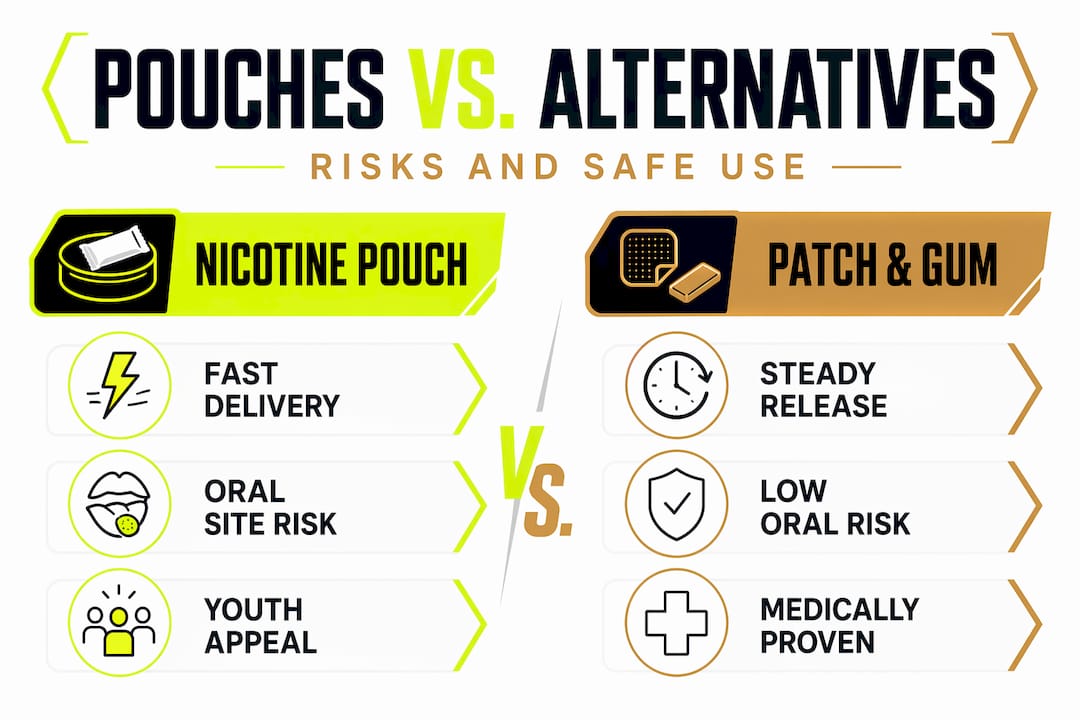
Smokeless alternatives compared shows you exactly how the risk profiles of different products stack up. If your goal is to use pouches as a stepping stone toward reducing overall nicotine intake, that is a legitimate strategy. But it requires treating them as a temporary tool with a clear reduction plan, rather than a permanent fixture in your daily routine.
Practical tips for safer long-term pouch use
If you are going to use nicotine pouches, doing so with genuine care for your oral health and overall wellbeing is entirely possible. These are the habits that make the real difference over time.
- Limit each session to 20 to 45 minutes. Nicotine peaks within 10 minutes; going beyond 45 minutes adds gum exposure with no meaningful nicotine return.
- Keep the pouch stationary. Moving it around your mouth increases irritation and shortens flavour longevity. Place it once, under your upper lip, and leave it there.
- Stay well hydrated during use. Hydration prevents dry mouth, which otherwise worsens burning sensations and irritation at the contact site.
- Rotate placement sites. Never use the same gum spot twice in a row. Give each area at least a full day of rest between sessions.
- Track your daily pouch count. Keeping a loose count, even mentally, helps you recognise escalation before it becomes habitual.
- Schedule regular dental check-ups. Tell your dentist you use pouches. They can identify early signs of tissue change that you would not notice yourself.
Pro Tip: If you notice any whitening, hardening, or persistent soreness at your regular placement site, take a break for several days and consult your dentist before resuming. Early detection of mucosal changes is straightforward to manage. Late detection is not.
Guidance on optimising safe pouch habits is something Hitsnus covers in detail, with specific recommendations on frequency and duration for both new and experienced users.
My take on long-term pouch use
I have spoken with a lot of adult pouch users over the years, and there is a pattern I keep seeing. People treat pouches as categorically safe because they are not cigarettes. That comparison is understandable, but it sets the wrong baseline. The relevant question is not “is this safer than smoking?” but “am I using this in a way that is genuinely sustainable for my health?”
What concerns me most is the stationary use habit. People find a spot they like, usually the upper left or right gum area, and they use it exclusively for months. The tissue changes that result are not dramatic at first. They creep in. By the time you notice the recession or the tenderness, it has already been developing for a while.
In my experience, the users who manage long-term pouch use well are the ones who treat it with the same attention they give their diet or sleep. They set limits and stick to them. They rotate placement. They notice when they are reaching for a pouch out of habit rather than genuine craving.
My advice is straightforward: know your numbers. Know how long each session runs, how many you use each day, and whether those numbers are going up. If they are, that is your signal to take stock and make adjustments before the habit outpaces your ability to course-correct.
— Fabio
Explore tobacco-free pouches at Hitsnus
Whether you are new to pouches or already managing your intake carefully, choosing quality products from a trusted source makes a real difference to your experience.
At Hitsnus, you will find a wide selection of tobacco-free nicotine pouches from leading brands including ZYN, Velo, and FUMI, with fast UK delivery and clear product information on strength and usage. Every listing includes the details you need to make an informed choice. Alongside the shop, Hitsnus publishes practical safety guidance on correct pouch use, from session duration to storage and disposal. If you are making decisions about your nicotine use, start from a well-informed position.
FAQ
What is prolonged pouch use exactly?
Prolonged pouch use means keeping a nicotine pouch in place for longer than 60 minutes, or using pouches back-to-back without allowing gum tissue to rest. Both habits increase oral health risks without delivering meaningful additional nicotine.
How long should a nicotine pouch session last?
Most pouches should be used for 20 to 45 minutes. Nicotine absorption peaks within the first 5 to 10 minutes, so sessions beyond 45 minutes expose your gum tissue to continued irritation with no added benefit.
Can prolonged pouch use damage your gums permanently?
Yes. Repeated extended use at the same gum site can cause gum recession, tissue thickening, and localised reduction in blood flow. These changes develop gradually but can become permanent without corrective dental intervention.
Are nicotine pouches addictive if used long term?
Nicotine pouches release concentrated nicotine doses quickly, making physical dependence a real risk with regular use. Prolonged and frequent use accelerates dependency development, particularly with higher-strength products.
What is the safest way to use nicotine pouches long term?
Limit sessions to 20 to 45 minutes, rotate placement sites, stay hydrated, and track your daily usage. Regular dental check-ups allow early detection of any tissue changes before they become serious problems.