











The role of pouch seals in nicotine pouch quality
TL;DR:
- The effectiveness of nicotine pouch freshness depends heavily on the integrity of its semi-permeable seals, which control oxygen and moisture exchange. Manufacturing standards, proper sealing parameters, and container design play crucial roles in preventing micro-leaks that accelerate flavor degradation and drying. Proper storage habits, including temperature stability and minimal openings, help preserve pouch quality over time.
Most people assume the packaging around a nicotine pouch is just a wrapper. It is far more than that. The role of pouch seals is to manage the internal micro-environment of every pouch, controlling how moisture and oxygen interact with the contents from the moment of manufacture to the moment you place it under your lip. The trouble is that not all seals perform equally. Some fail in ways you cannot see. Understanding what seals actually do, how they are made, and what breaks them will change how you buy, store, and judge your pouches.
Table of Contents
- Key takeaways
- How pouch sealing technology actually works
- Why seal integrity shapes freshness and flavour
- Common causes of pouch seal failure
- Manufacturing standards and testing methods
- Practical tips to preserve your pouches
- My honest take on pouch seals
- Fresh pouches, every time, from Hitsnus
- FAQ
Key takeaways
| Point | Details |
|---|---|
| Seals are semi-permeable, not airtight | Pouch seals slow oxygen and moisture exchange but cannot stop it entirely. |
| Microscopic flaws cause real losses | Micro-leaks invisible to the naked eye accelerate flavour degradation and drying. |
| Manufacturing standards vary by brand | Rigorous testing under ASTM F2029 and ISO 11607 separates reliable products from inconsistent ones. |
| Container design matters equally | Even a perfect pouch seal loses its benefit if the container lid reseals poorly after each opening. |
| Storage habits extend seal benefits | Stable temperature, minimal openings, and sealed containers preserve what good seals work to protect. |
How pouch sealing technology actually works
The foundation of any nicotine pouch is its seal, and the dominant method used in modern production is heat sealing. This process bonds a polyethylene inner layer by applying controlled temperature and pressure for a set dwell time. The result is a fused joint that holds the contents in a controlled environment from the factory floor to your tin.
There are several seal configurations in common use, and each suits a different pouch format:
- Three-side seals are the most straightforward design, with two side welds and one bottom weld leaving a single open end that is sealed last after filling.
- Spout seals incorporate a reinforced opening point, commonly used when the pouch needs a defined tear or dispensing point.
- Gusset seals add folded panels to increase volume, though complex gusset corners create additional sealing challenges at intersections.
- Resealable zippers and tear notches appear on consumer-facing packaging to allow repeated access without destroying the seal structure.
What makes or breaks any of these is the precision of the sealing parameters. Temperature too low produces a cold seal, which bonds weakly and opens under handling stress. Temperature too high causes over-melting, thinning the joint and creating brittleness. Dwell time and pressure must be calibrated to match the specific laminate thickness of each pouch format.
Pro Tip: When you examine a new tin and find pouches with a slightly rough or uneven seam texture, that is often a sign of inconsistent pressure during sealing. It does not always mean failure, but it is worth noting as a quality indicator to watch across a brand over time.
Advances in pouch design and innovation have pushed manufacturers toward tighter tolerances and more sophisticated laminate materials, all aimed at maintaining seal reliability as pouch formats grow more complex.
Why seal integrity shapes freshness and flavour
This is where the pouch seal importance becomes tangible for you as a user. Nicotine pouch cans are not airtight vaults. They function as semi-permeable micro-environments that slow moisture and oxygen exchange rather than block it entirely. The pouch seal inside the tin performs the same function at the individual level. Its job is to delay degradation, not prevent it indefinitely.
Oxygen ingress drives oxidation of nicotine salts and flavour compounds. Moisture loss causes the fibre filling to dry out and the pouch texture to harden. Both processes are gradual but relentless, and a compromised seal accelerates them sharply. Even micro-leaks from contamination or wrinkles cause slow degradation despite intact visual seals, meaning you might open a tin that looks perfectly sealed and still find pouches that taste flat or feel dry.
“Opened pouches experience accelerated flavour loss and moisture reduction within weeks, underscoring how much the seal and container lid work as a combined system.”
This is a point many users miss entirely. The benefits of pouch seals do not stand alone. Every time you open the tin, you introduce fresh oxygen. If the container’s reseal mechanism is poor, that oxygen lingers around every remaining pouch in the tin. A perfect individual pouch seal buys you time, but a leaky container lid erodes that advantage rapidly. Both layers of the system must function well together.
Moisture imbalance is equally damaging in both directions. A seal that allows too much moisture escape leaves pouches dry and crumbly. A seal that traps condensation unevenly creates localised dampness that affects texture and can promote degradation in concentrated patches. You can read more about how these dynamics play out in this guide on preserving nicotine pouch flavour to understand the full picture.
Common causes of pouch seal failure
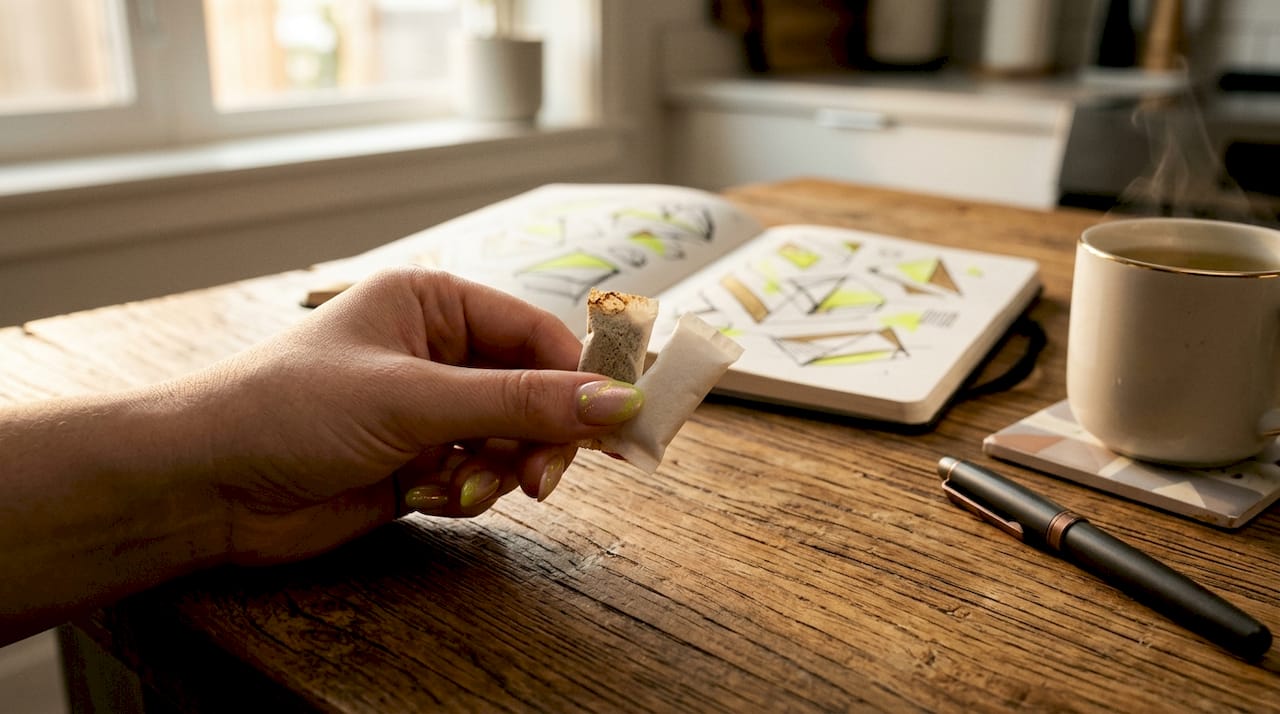
Understanding why seals fail helps you recognise poor quality before it shows up as a disappointing experience. Seal failures are caused by a predictable set of manufacturing and material problems:
- Incorrect sealing parameters. Too low a temperature produces a cold seal with weak bonding. Too high causes over-melting. Both undermine structural integrity under the mechanical stress of transport and daily handling.
- Seal contamination. Flavour oils and moisture that get trapped on the sealing surface during filling form microchannels. These are invisible but allow slow, continuous leakage that degrades freshness from day one.
- Laminate thickness variations. Inconsistencies in the film material mean some sections of the seal bond differently to others, creating weaker spots along the seam.
- Complex pouch geometry. Gussets, multiple layers, and corner folds introduce points where two or more seal lines intersect. These junctions are harder to bond uniformly and are the most common location for micro-failures.
- Wrinkles in the sealing zone. Any fold or gather in the laminate material within the seal area creates a channel for gas and moisture to migrate through.
The most consequential of these is contamination. Flavour oils trapped during filling are a specific and often overlooked cause of micro-leaks and early spoilage. Because the contamination is chemical rather than physical, the seal can look and feel completely normal while its barrier function is already compromised. This explains many cases of “mystery” freshness failures where the packaging appears intact but the product tastes as though it has been open for a month.
Pro Tip: If you consistently find that pouches from one brand dry out faster than another despite similar storage conditions, suspect seal contamination or laminate inconsistency rather than blaming storage. The issue often begins on the production line.
Manufacturing standards and testing methods
The gap between good and poor pouch seal quality often comes down to how seriously a manufacturer takes testing. ASTM F2029 and ISO 11607 define protocols for measuring heat seal strength and integrity in a repeatable, objective way. These standards exist precisely because visual inspection alone cannot catch the defects that matter most.
Here is how the main testing approaches compare:
| Testing method | What it detects | Limitation |
|---|---|---|
| Visual inspection | Gross physical defects, tears, obvious gaps | Misses micro-leaks entirely |
| Peel strength testing | Seal bond force under controlled pull | Does not replicate real-world gas permeation |
| Vacuum/pressure testing | Micro-leaks and channel defects | Requires controlled lab conditions |
| Dye penetration testing | Contamination-driven microchannels | Time-consuming for high-volume production |
| Real-time sensor monitoring | Fill weight, moisture, and sealing temperature per batch | Requires significant production-line investment |
The most meaningful development in recent manufacturing is real-time monitoring. Sensors on the production line track fill weight, moisture content, and sealing temperature for every single batch, catching parameter drift before it produces a defective run. Manufacturers committed to this level of quality control are making a significant investment, and that investment shows up directly in the consistency of the product you receive.
For consumers, the practical takeaway is straightforward:
- Brands that reference specific testing standards in their manufacturing documentation are more likely to produce consistent seals.
- Budget-tier products that do not disclose quality control processes carry a higher risk of micro-seal defects.
- Understanding the production and quality control behind any brand helps you make a better purchasing decision.
Practical tips to preserve your pouches
Good seals set you up for freshness. Your storage habits determine how long that freshness lasts. The shelf life and freshness of nicotine pouches is directly influenced by how you treat them after purchase.
- Store tins at stable room temperature, away from direct sunlight, radiators, and humidity sources like bathrooms or kitchen surfaces near the hob.
- Minimise the number of times you open a tin per session. Every opening is an oxygen exposure event.
- Never transfer pouches to an unsealed container or loose bag, even temporarily. The pouch seal is your last line of defence once the tin is opened.
- If the lid mechanism on your tin feels loose or no longer clicks shut firmly, that tin has outlived its resealing usefulness. Move any remaining pouches to a fresh sealed container.
- Avoid storing tins in trouser pockets for extended periods. Body heat and compression stress the individual pouch seals over time.
Pro Tip: For longer freshness over several weeks, keep an unopened tin in a cool, dark drawer and only open it when your current tin is nearly empty. This limits overall oxygen exposure across your supply.
My honest take on pouch seals
I’ve spent years looking closely at how nicotine pouches are produced and evaluated, and the thing that consistently surprises me is how underestimated pouch seal quality is as a purchasing criterion. Most consumers focus on flavour, strength, and brand reputation. Seal quality almost never comes up. Yet in my experience, it accounts for a substantial share of the disappointing products people chalk up to “just a bad batch.”
What I’ve come to understand is that two products from different brands can be nearly identical in their ingredients and formulation but arrive at your door in meaningfully different condition because one manufacturer invests in real-time sensor monitoring and rigorous seal testing while the other does not. You cannot see this difference on the shelf. You feel it in the first few pouches after opening.
The insight I find most overlooked is that visual checks are essentially useless for identifying the defects that matter. If a seal has failed in a way visible to the naked eye, the pouch is obviously compromised. The failures that actually affect your daily experience are microscopic. Only standardised testing methods separate manufacturers who know they are shipping intact product from those who are simply hoping for the best.
My practical advice is this: if a brand does not discuss manufacturing standards or quality control anywhere in its public-facing materials, that silence tells you something. The brands worth your loyalty are the ones that can tell you how they know their seals are good, not just that they are.
— Fabio
Fresh pouches, every time, from Hitsnus
If you have read this far, you understand that the experience you get from a nicotine pouch depends heavily on what happens before you ever open the tin. At Hitsnus, the brands stocked are selected with packaging quality and freshness preservation in mind. From ZYN to Velo and FUMI, every product available through Hitsnus nicotine pouches is sourced to arrive in the condition it was sealed in, with fast UK delivery to keep your supply turning over and fresh. Hitsnus also publishes practical guides on maximising pouch freshness so you can make the most of every tin from first use to last.
FAQ
What is the role of pouch seals in nicotine pouches?
Pouch seals control oxygen and moisture exchange around the nicotine and flavour contents, slowing degradation and preserving freshness from manufacture to use. They function as semi-permeable barriers rather than airtight closures.
How do pouch seals work at the manufacturing level?
Heat sealing bonds a polyethylene inner layer under controlled temperature, pressure, and dwell time to create a structural joint around the pouch contents. Precise calibration of these parameters determines seal strength and reliability.
What causes pouch seals to fail?
The most common causes are incorrect sealing temperature or pressure, flavour oil contamination on the sealing surface, laminate thickness inconsistencies, and geometric complexity at gusset corners and intersections.
Can I tell if a pouch seal is faulty by looking at it?
Rarely. Most consequential seal defects are microscopic and only detectable through vacuum, pressure, or dye penetration testing. A visually intact seal can still carry micro-leaks that accelerate flavour and moisture loss.
How can I extend the freshness of my nicotine pouches at home?
Store tins at stable room temperature away from heat and humidity, minimise how often you open the tin, and never transfer pouches to unsealed containers. Using a three-month storage approach with unopened tins kept in reserve significantly extends overall freshness.