




The role of hydration in nicotine pouches
TL;DR:
- Most nicotine pouch users focus on flavor and strength, often overlooking hydration’s critical role. Nicotine affects fluid balance, constricts blood vessels, and reduces saliva, making proper hydration essential for comfort and effective use. Adjusting pouch moisture and drinking 2.5 to 3 liters of water daily can improve experiences and oral health significantly.
Most nicotine pouch users think about flavour, strength, and brand. Very few think about water. Yet the role of hydration in nicotine pouches is more significant than most people realise, touching everything from how quickly nicotine reaches your bloodstream to how comfortable your mouth feels an hour in. Nicotine has a measurable effect on fluid balance, saliva production, and oral tissue health. Ignoring that does not make it go away. This guide breaks down exactly what is happening physiologically and what you can do about it today.
Table of Contents
- Key takeaways
- How hydration interacts with nicotine pouch use
- Dry vs moist pouches and hydration effects
- Recognising dehydration and dry mouth in pouch users
- Practical hydration strategies for pouch users
- My honest take on hydration’s underrated role
- Find the right pouch for your hydration needs
- FAQ
Key takeaways
| Point | Details |
|---|---|
| Nicotine disrupts fluid balance | Nicotine suppresses vasopressin and constricts oral blood vessels, increasing your daily hydration requirements. |
| Pouch moisture content varies widely | Dry pouches contain as little as 3.52% moisture; moist pouches reach 37.18%, which affects nicotine release speed. |
| Dehydration mimics withdrawal | Symptoms like headache and fatigue overlap with nicotine withdrawal, making proper hydration useful for managing cravings. |
| Target 2.5 to 3 litres daily | Nicotine pouch users should increase baseline water intake by at least 500ml per day to offset diuretic effects. |
| Pouch selection changes your experience | Choosing between dry and moist pouches based on your oral comfort and hydration habits improves overall enjoyment. |
How hydration interacts with nicotine pouch use
Understanding the physiology here is not overly complicated, but it does require looking at a few things happening at once.
Nicotine tightens blood vessels in your mouth
When nicotine enters your system, it stimulates the sympathetic nervous system. One direct consequence is vasoconstriction, meaning your blood vessels narrow throughout the body, including in the oral mucosa. Because blood flow to the oral mucosa is how moisture reaches the soft tissue in your mouth, reduced flow means reduced moisture delivery. This is not simply about surface evaporation. It is a structural reduction in how your mouth stays lubricated.
At rest, saliva production averages 0.3 to 0.4 mL per minute. Nicotine’s sympathetic stimulation lowers this output, compounding the dryness you feel when using a pouch. Staying well hydrated helps maintain blood volume and tissue perfusion, which moderates this effect.
Nicotine’s diuretic effect is real but modest
Nicotine interferes with vasopressin, the hormone your kidneys use to retain water. This vasopressin disruption is dose-dependent, so moderate pouch use causes a measurable but not extreme increase in fluid loss. The practical upshot is that your baseline hydration needs go up. Experts recommend nicotine pouch users increase daily fluid intake by at least 500ml above their normal baseline, targeting 2.5 to 3 litres total per day.

Staying ahead of this is straightforward once you know it is happening. The problem is most users never connect their afternoon headache or midday fatigue to fluid loss rather than to the nicotine itself.
Pro Tip: If you use pouches throughout the day, keep a 750ml water bottle on your desk and treat finishing it twice as a minimum. It takes the guesswork out of tracking intake.
Dry vs moist pouches and hydration effects
Not all pouches are the same, and the hydration effects on nicotine pouches differ significantly depending on their formulation.
Moisture content shapes everything
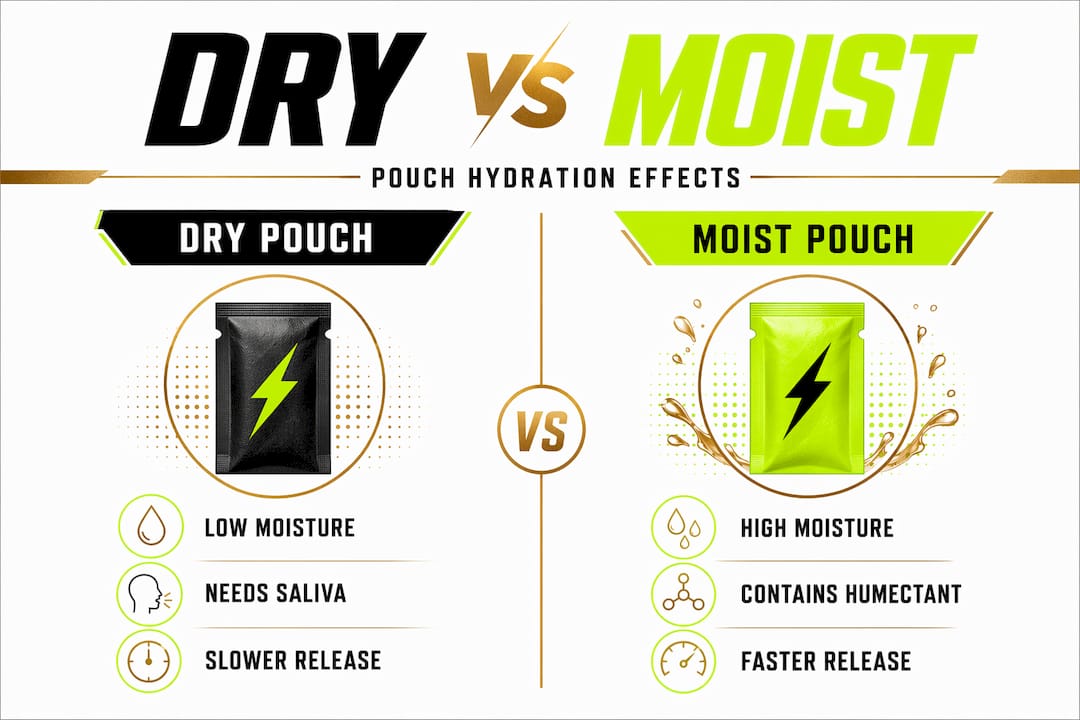
Research into the physical properties of nicotine pouches finds that moisture content varies considerably, from as low as 3.52% in the driest products to as high as 37.18% in the wettest. This is not a minor difference. It directly determines how quickly nicotine releases and how your mouth feels during use.
| Pouch type | Moisture content | Nicotine release | Oral sensation |
|---|---|---|---|
| Dry pouches | 3.52% to 7% | Slower, relies on saliva for activation | Can feel drier; demands more saliva |
| Moist pouches | 25% to 37.18% | Faster, humectants assist release | More comfortable but may cause ‘drip’ |
Dry pouches rely almost entirely on your own saliva to activate the nicotine inside. This means that if you are already mildly dehydrated, your reduced saliva output will slow the release noticeably. You may find yourself holding the pouch longer or feeling like it is less effective. The importance of moisture in nicotine delivery becomes very tangible in this context.
Moist pouches contain humectants, compounds that attract and retain water, which allow quicker nicotine release without depending on your oral moisture levels. However, the excess liquid they produce is sometimes mistaken by users for a sign of dehydration or an unwanted side effect. In reality, this ‘drip’ is a deliberate product characteristic, not a dehydration signal.
You can read more about dry pouch formulations to understand how their lower moisture content affects your experience and what that means for your hydration habits.
Pro Tip: If you tend to use pouches in dry environments, such as air-conditioned offices or aircraft, opt for a moist formulation. Your saliva production is already reduced in those settings, and a dry pouch will compound the discomfort.
Recognising dehydration and dry mouth in pouch users
This is where things get practically important. Many pouch users live with mild chronic dehydration without identifying it as such, because the symptoms are easy to attribute to something else.
Symptoms to watch for
The signs of dehydration in a regular pouch user include:
- Persistent dry mouth or sticky saliva, which goes beyond the normal sensation during pouch use
- Headaches, particularly in the mid to late afternoon
- Fatigue and difficulty concentrating, often mistaken for nicotine withdrawal
- Dark yellow or amber urine, one of the most reliable indicators of inadequate hydration
- Dizziness or light-headedness when standing quickly
The overlap with nicotine withdrawal is particularly worth understanding. Symptoms like headache, fatigue, and poor focus are shared between mild dehydration and early withdrawal. This means that someone reducing their pouch use who feels rough may be experiencing dehydration just as much as withdrawal. Addressing hydration during that period can meaningfully ease discomfort.
Persistent dryness that does not improve with increased fluid intake deserves attention beyond a glass of water. Soreness or redness at the pouch site may indicate local tissue irritation and warrants professional advice. Dry mouth left unmanaged creates a less acidic oral environment, which over time can affect dental enamel and gum tissue. The links between pouch use and oral health are well documented, and hydration sits squarely in that picture.
Practical hydration strategies for pouch users
Knowing you should drink more is easy. Having a structure that makes it automatic is what actually works. Here is a practical approach built specifically around nicotine pouch use.
-
Set a daily target of 2.5 to 3 litres. This accounts for nicotine’s diuretic effect and keeps your oral tissue properly perfused. It is higher than standard advice for a reason.
-
Drink water before placing a pouch. A few sips before use moistens the oral mucosa and gives your saliva glands a head start, which improves both comfort and nicotine release from dry-format products.
-
Sip regularly during use rather than drinking large amounts infrequently. Regular sipping maintains consistent oral moisture far more effectively than infrequent large drinks.
-
Use urine colour as your daily feedback. Light yellow means you are adequately hydrated. Darker than pale straw means drink more before your next pouch session.
-
Consider xylitol gum or saliva substitutes if dryness persists. Saliva stimulants such as xylitol gum are recommended when increased water intake alone does not fully resolve persistent dry mouth.
-
Adjust your pouch choice based on your hydration state. If you know you have had a long day with poor fluid intake, switching to a moist pouch that day reduces the demand on your saliva output.
Understanding how hydration influences nicotine uptake from pouches helps you make smarter choices about timing and product selection, rather than just drinking more water and hoping for the best.
Pro Tip: If you are using nicotine pouches as a smoking alternative, note that low-dose caffeine pouches with around 30 to 50mg of caffeine do not meaningfully add to dehydration risk, unlike high-caffeine drinks. The diuretic concern is nicotine-specific, not a blanket reason to avoid all functional pouches.
My honest take on hydration’s underrated role
I have spent a lot of time reading how people talk about nicotine pouch experiences, and there is a pattern that genuinely frustrates me. Users describe dry mouth, afternoon headaches, and a vague sense that their pouches “aren’t working as well today” as if these are mysterious product variables. In almost every case, the conversation never gets to water intake.
The benefits of hydration while using pouches are not glamorous. There is no new technology involved. It is just physiology. But what I have found is that users who actively manage hydration report noticeably better comfort during use and less pronounced discomfort when they cut down. That second point matters enormously. If dehydration is silently amplifying what people interpret as withdrawal, then solving a hydration problem gets misread as proof that quitting is unbearably difficult.
What I think conventional wisdom in this space gets wrong is treating pouch use as a standalone habit rather than one embedded in a person’s entire physiology. The moisture content in nicotine products gets debated in product reviews, but the user’s own hydration status, which directly affects how those products perform, rarely gets discussed. That gap deserves to close. If you monitor your water intake as actively as you monitor your pouch strength, your experience will be better and your oral health will thank you.
— Fabio
Find the right pouch for your hydration needs
Hitsnus stocks a full range of tobacco-free nicotine pouches across all moisture levels, from ultra-dry formats to generously moist options built around faster nicotine release.
Whether you are managing dry mouth, switching from cigarettes, or simply want a more comfortable daily experience, choosing a product matched to your hydration habits makes a real difference. Browse the full selection at Hitsnus nicotine pouches, where you will find clear information on pouch moisture, strength, and format to help you make an informed choice. You can also compare dry vs moist pouch types directly on the site to narrow down what suits your lifestyle.
FAQ
Does hydration affect nicotine delivery from pouches?
Yes. Dry pouches rely on saliva to activate nicotine release, so poor hydration slows delivery. Moist pouches are less affected but oral dryness still impacts comfort and absorption.
How much water should a nicotine pouch user drink daily?
Experts recommend nicotine pouch users target 2.5 to 3 litres of water per day, roughly 500ml above the standard adult baseline, to offset nicotine’s mild diuretic effect.
Can dehydration make nicotine withdrawal feel worse?
Yes. Headache, fatigue, and difficulty concentrating are shared symptoms of both dehydration and nicotine withdrawal. Staying properly hydrated can meaningfully reduce their combined intensity.
What is the difference in moisture between dry and moist pouches?
Research shows dry pouches can contain as little as 3.52% moisture while moist pouches reach up to 37.18%. This difference shapes nicotine release speed, oral sensation, and how much your own saliva matters.
What should I do if dry mouth persists despite drinking more water?
If increased fluid intake does not resolve dryness, consider xylitol gum or a saliva substitute. Persistent soreness or redness at the pouch placement site warrants professional dental advice.