













Nicotine pouches and gum recession: what you need to know
Yes, nicotine pouches can cause localised gum recession, particularly at the site where you habitually place them. The evidence is not yet conclusive for widespread periodontal disease, but ASH confirms that pouches are not risk-free for oral health and can cause mouth soreness, ulcers, or gum recession in some users. If you have noticed your gum line shifting, a sore that will not heal, or increased tooth sensitivity where you place your pouch, photograph the area now and book a dental appointment.
Key signal: A peer-reviewed update published in the British Dental Journal confirms that oral mucosal changes and localised gingival recession have been observed at pouch placement sites, though long-term effects remain uncertain.
Table of Contents
- What nicotine pouches are and how they sit in your mouth
- Can nicotine pouches cause gum recession? The current evidence
- How nicotine and pouch use may affect gum tissue
- Why recession tends to appear exactly where the pouch sits
- Signs of gum recession and oral problems to watch for
- How quickly might changes appear?
- What to do if you notice gum recession or irritation
- Prevention and safer habits for pouch users
- How nicotine pouches compare with gum, snus, and lozenges for gum risk
- What the current research says and where the gaps are
- Hitsnus: browse pouches by strength and format
- Sources
- FAQ
What nicotine pouches are and how they sit in your mouth
Nicotine pouches are tobacco-free, intra-oral sachets placed between the upper or lower lip and the gum. Nicotine is absorbed directly through the oral mucosa, with no combustion and no tobacco leaf. That is the core appeal for smokers switching away from cigarettes or vapers wanting a discreet option.
In the UK, their popularity has grown sharply since the early 2020s, driven by tighter restrictions on vaping flavours and a broader shift toward smokeless nicotine. Typical users include people transitioning from smoking, existing snus users, and adults who need a discreet option at work.
Key format differences that affect gum exposure:
- Slim/thin portions: Sit close to the gum margin, often under the upper lip; lower bulk but higher contact pressure per unit area.
- Regular/large portions: More moisture release, sometimes more chemical contact with the mucosa.
- Strength range: Products typically run from 4 mg to 20 mg nicotine per pouch; higher-strength pouches often stay in place longer, extending contact time.
Can nicotine pouches cause gum recession? The current evidence
The honest answer is: probably yes, locally, but the science is still catching up. Dental reviews consistently report localised gingival recession at pouch placement sites, and dental professionals note that snus, a closely related portioned product, shows consistent evidence of causing gum damage where the pouch sits. That is a meaningful comparator.
What the evidence does not yet show is a causal link to generalised periodontitis or widespread bone loss from pouches specifically. The distinction matters: localised recession at one or two teeth is a different clinical picture from full-mouth gum disease.
A small case series reported leukoplakia (white mucosal lesions) associated with pouch use; the HRA research summary notes the malignant-transformation risk from such lesions remains unknown. That uncertainty alone is reason to take any persistent white patch seriously.
The practical interpretation: an increased local risk is plausible, particularly with repeated placement and long contact times. Association is not the same as proven causation, but it is enough to warrant monitoring.
How nicotine and pouch use may affect gum tissue
Three mechanisms are most commonly discussed, though all are partly inferred from related products:
-
Vasoconstriction and impaired healing. Nicotine causes blood vessels in the gum tissue to constrict, reducing blood flow and oxygen delivery. Gum tissue that is chronically underperfused heals more slowly after minor trauma and is less able to resist bacterial challenge. This mechanism is well-established in smoking research and is plausibly transferable to any nicotine delivery route, including pouches.
-
Chemical irritation and inflammation. The pH and chemical composition of pouch contents can irritate the oral mucosa directly. Repeated chemical exposure at the same site triggers a low-grade inflammatory response. Over time, chronic inflammation is a recognised driver of tissue breakdown, including the connective tissue that anchors the gum to the tooth root.
-
Mechanical friction and pressure. A pouch held in the same spot for 30–60 minutes exerts sustained pressure against the gingival margin. That friction, repeated daily over weeks and months, can physically displace the delicate epithelial attachment. Clinical commentary comparing pouches to nicotine gum and lozenges highlights that placement consistency is what distinguishes pouches: gum is chewed and moves; a pouch stays put.
These mechanisms combine rather than act in isolation, and individual susceptibility varies considerably based on gum thickness, oral hygiene, and prior gum health.
Why recession tends to appear exactly where the pouch sits
Localised recession beneath the upper lip at the habitual placement site is the most frequently reported pattern in clinical observations. Several factors concentrate the risk at that single point:
- Repeated placement at the same spot means cumulative mechanical and chemical stress with no recovery period.
- Thin labial mucosa under the upper lip offers less protective tissue depth than the thicker gingiva elsewhere.
- Tight positioning against the gingival margin puts direct pressure on the most vulnerable part of the gum attachment.
- Prolonged wear time (some users leave a pouch in for over an hour) extends both chemical exposure and mechanical load.
- Pre-existing gum recession from hard brushing or malocclusion makes the site more susceptible to further damage.
Pro Tip: Rotate your placement site with every pouch, alternating between upper left, upper right, and lower positions. This simple habit distributes mechanical stress and chemical exposure across a wider area, reducing the cumulative load on any single gum margin. A practical guide to correct placement and rotation is worth reading before you settle into a fixed habit.
Signs of gum recession and oral problems to watch for
Catching changes early matters because dental clinicians advise that early-stage recession is often manageable, while advanced recession may require surgical intervention. Watch for:
- Visible gum-line movement: The gum appears to have pulled back from the tooth, exposing more of the tooth surface than before.
- Exposed root surface: A yellowish or darker band at the base of the tooth, below the original gum line.
- Root sensitivity: Sharp pain or discomfort when drinking cold water or breathing in cold air, localised to one or two teeth near your usual pouch site.
- Persistent sores or ulcers: Any sore at the pouch site that has not healed within two weeks needs professional assessment.
- Changes in gum texture or colour: Pale, shiny, or thickened gum tissue at the placement site can signal chronic irritation.
Photograph the area in good light, note which side you typically use, and log any symptoms with approximate dates before your dental appointment. That information helps your dentist chart changes accurately.
How quickly might changes appear?
There is no reliable figure for “how long until recession starts” because the timeline depends on:
- Dose and strength: Higher-nicotine pouches may intensify vasoconstriction and chemical irritation.
- Wear time per session: Longer contact means more cumulative exposure per day.
- Placement habit: Fixed placement accelerates localised stress; rotation slows it.
- Baseline oral health: Existing thin gum tissue or prior recession shortens the time before visible change.
- Oral hygiene: Poor plaque control adds bacterial inflammation on top of mechanical and chemical stress.
A sensible monitoring cadence: check the pouch site in a mirror weekly, photograph any change, and attend a dental check-up at least every six months. If you notice any of the signs listed above, do not wait for your routine appointment.
What to do if you notice gum recession or irritation
Act in a logical sequence rather than waiting to see if it resolves on its own:
- Stop placing pouches at the affected site immediately. Switch to a different position or reduce use while you arrange an assessment.
- Photograph the area in natural light and note your typical pouch brand, strength, and daily wear time.
- Maintain gentle oral hygiene. Use a soft-bristled brush and fluoride toothpaste; avoid aggressive brushing near the affected margin.
- Avoid other irritants at the site: no alcohol-based mouthwash directly on the area, no hard foods that abrade the gum.
- Book a dental examination. Your dentist will chart recession in millimetres, measure pocket depths, assess plaque levels, and inspect for mucosal lesions. If a white patch or ulcer is present and unexplained, they may refer for biopsy.
Management options your dentist may discuss include conservative monitoring with improved oral hygiene, professional cleaning, topical treatments for sensitivity, or, in more advanced cases, a connective tissue graft to cover exposed root surfaces. Surgical grafting is effective but is a last resort; most early cases respond to conservative management and habit change. For context on oral healing after dental procedures, the guide on pouches after tooth extraction covers relevant recovery considerations.
Prevention and safer habits for pouch users
You do not have to stop using pouches entirely to reduce your gum risk, but a few habit changes make a real difference:
- Rotate placement with every single pouch, never returning to the same spot consecutively.
- Limit continuous wear time to 20–30 minutes per pouch rather than the maximum stated on the pack.
- Choose the lowest effective nicotine strength that satisfies your craving; a lower-dose pouch used for a shorter session reduces both chemical and mechanical load.
- Never place a pouch directly over an already inflamed or visibly receded gum margin.
- Brush twice daily with a fluoride toothpaste and a soft brush, and use interdental brushes or floss to keep plaque levels low.
- Attend regular dental check-ups, ideally every six months, and tell your dentist you use pouches.
Pro Tip: Set a phone timer for 20 minutes when you place a pouch. It sounds trivial, but most users significantly underestimate how long a pouch has been in. Shorter sessions, rotated sites, and lower-strength options are the three levers most likely to reduce local gum stress without abandoning nicotine management altogether.
Exploring different formats and strengths is practical harm minimisation. The Hitsnus nicotine pouches collection lists a range of strengths and formats, including options like XQS Strawberry Kiwi (8 mg) and Clew Watermelon (10 mg), which give you flexibility to step down in strength or vary your format.
How nicotine pouches compare with gum, snus, and lozenges for gum risk
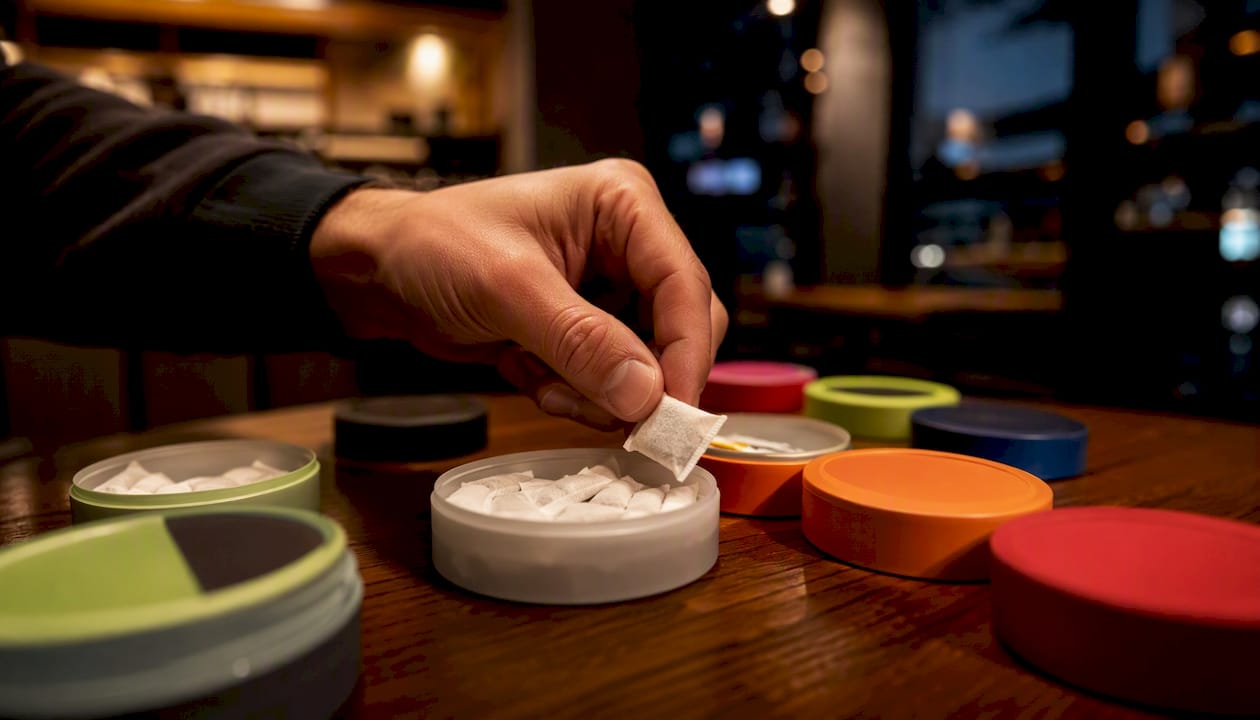
The PAA question “Is nicotine gum bad for gum recession?” comes up regularly. The short answer: nicotine gum carries a lower localised recession risk than pouches because it moves around the mouth during chewing rather than sitting against one gum site. However, gum can cause jaw soreness and mucosal irritation from repeated chewing. Lozenges dissolve and have minimal fixed-site contact. Snus, by contrast, shows consistent evidence of causing localised gum recession and inflammation at the placement site, and it contains tobacco, adding carcinogen exposure that tobacco-free pouches avoid.
Key differences worth knowing before choosing between formats:
- Pouches sit fixed against one gum site; gum and lozenges do not.
- Snus contains tobacco; nicotine pouches are tobacco-free.
- Evidence for snus-related gum damage is stronger and longer-established than for pouches.
- Clinical commentary notes that placement consistency is the distinguishing factor that concentrates local tissue stress in pouches.
For a fuller comparison of pouches versus other nicotine replacement formats, the pouches vs patches and gum article covers oral-health implications in more detail.
| Format | Localised gum risk | Typical placement | Evidence base |
|---|---|---|---|
| Nicotine pouches | Moderate (localised) | Fixed, upper/lower lip | Emerging; case reports and reviews |
| Nicotine gum | Low (not fixed) | Moves during chewing | Established; minor mucosal irritation |
| Snus | Moderate to high (localised) | Fixed, upper lip | Established; consistent recession evidence |
| Nicotine lozenges | Low | Dissolves; no fixed site | Established; minimal gum contact |
What the current research says and where the gaps are
The clearest summary of where the science stands: localised gingival recession and mucosal changes at pouch sites are reported, but long-term periodontal disease risk is not yet established. Newcastle Hospitals and Newcastle University have launched a study collecting participant photographs and user reports to determine whether pouch use is associated with gum and mucosal changes. That study is a direct response to the evidence gap.
UK dental experts stress that pouch-related tissue changes are likely to remain local rather than causing generalised periodontal destruction, though inflammatory bone resorption is hypothesised in some snus research. The practical implication for users: the risk is real enough to monitor carefully, not severe enough to dismiss, and the guidance will sharpen as longitudinal data arrives.
Hitsnus: browse pouches by strength and format
If you are managing your pouch use with gum health in mind, the format and strength you choose genuinely matter. Hitsnus stocks a wide range of tobacco-free nicotine pouches across strengths and flavours, so you can step down in dose, try a slimmer format that reduces gum contact, or simply vary what you use session to session.

Popular starting points for users thinking about lower-dose or format variety: XQS Strawberry Kiwi at 8 mg for a lighter-strength fruity option, Clew Watermelon at 10 mg for a mid-range choice, or Clew Cool Mint on clearance if you want to try a mint format at a lower price. Browse the full nicotine pouches collection at Hitsnus to find the strength and format that fits your routine.
This article provides general information only and is not a substitute for professional dental advice. If you notice any changes to your gums or oral tissue, consult a qualified dentist.
Sources
- Oral nicotine pouches and oral health – an update for the dental team
- Snus linked to gum damage while tooth impact is unclear
- Study aims to gather much-needed information on effects of nicotine pouches on oral health
- Nicotine pouches - ASH
FAQ
Do nicotine pouches cause gum recession?
Nicotine pouches are associated with localised gum recession at the placement site, based on case reports and dental reviews. Causation is not yet fully proven, but the risk is considered plausible enough that dental professionals recommend monitoring and regular check-ups.
How long does it take for nicotine pouches to affect your gums?
Case reports suggest local tissue changes can appear within weeks to months of regular use, though individual timelines vary with pouch strength, wear time, placement habit, and baseline gum health. There is no established universal timeframe.
Is nicotine gum bad for gum recession?
Nicotine gum carries a lower localised recession risk than pouches because it moves during chewing rather than sitting fixed against one gum site. It can cause mucosal soreness, but the fixed-placement stress that drives pouch-related recession is largely absent.
How do you stop gum recession from pouch or snus use?
Stop placing the pouch at the affected site, rotate placement with every session, reduce wear time, and book a dental assessment. Your dentist may recommend conservative monitoring, professional cleaning, or in advanced cases a connective tissue graft to cover exposed root surfaces.
When should you see a dentist about gum changes from pouches?
See a dentist if you notice visible gum-line movement, exposed root surface, persistent sensitivity, or any sore at the pouch site that has not healed within two weeks. Early changes are often manageable; do not wait for a routine appointment if symptoms appear.