













Nicotine pouches while driving: UK legal and safety guide
Yes, you can use nicotine pouches while driving in the UK. There is no specific law banning them in a vehicle. The catch is that if handling a pouch distracts you or causes you to lose control, you can be prosecuted under careless or dangerous driving legislation.
Three things to know before you drive:
- Legal caveat: The Road Traffic Act and Highway Code both apply to any activity that impairs your control or attention. A nicotine pouch is not exempt.
- Cognitive effects: Research suggests nicotine can modestly improve alerting attention and working memory, though much of this reflects withdrawal relief rather than genuine enhancement. Effects vary by individual and dose.
- Top practical rule: Prepare your pouch before you set off. Never fumble with packaging at speed.
Full legal detail is covered under UK law below; the evidence on concentration and cognition follows in the next section.
Table of Contents
- Is it legal to use nicotine pouches while driving in the UK?
- What does research say about nicotine’s effects on driving cognition?
- How to use nicotine pouches safely while driving
- Pouch strengths, cigarette equivalence, and health precautions
- Hitsnus: nicotine pouches chosen for how you actually live
- Sources
- FAQ
Is it legal to use nicotine pouches while driving in the UK?
No statute specifically bans nicotine pouches in a car. The Tobacco and Vapes Act 2026 defines “nicotine product” and sets offences around sale to under-18s, treating vehicles as “premises” for regulatory purposes, but it says nothing about using a pouch at the wheel.
What does apply is the broader framework. RAC guidance states clearly that drivers can be penalised under careless or dangerous driving laws if any activity causes loss of vehicle control or distraction. That includes nicotine pouches. Careless driving carries a fine up to £5,000, penalty points, and in serious cases a driving ban.
The child-in-car rules are worth separating out. Smoking in a vehicle carrying under-18s is a specific offence under UK law, carrying a £50 fixed penalty. Nicotine pouches produce no smoke, so that particular rule does not apply to them. You are still liable for distracted driving if handling one causes an incident, but the child-in-car smoking ban is not triggered.
Breathalysers and roadside drug tests: nicotine is not measured by a standard breathalyser, which tests for alcohol only. Roadside drug-driving screens target controlled substances such as cannabis, cocaine, and prescription opioids. Nicotine is not on that list. That said, enforcement focuses on demonstrable impairment, not the specific substance involved. If an officer believes your driving was impaired, the substance causing it is secondary to the evidence of poor control.
For a fuller breakdown of UK nicotine pouch legislation and what the 2026 Act means for buyers, the Hitsnus blog covers both in detail.
What does research say about nicotine’s effects on driving cognition?
The short answer: nicotine can sharpen certain attention measures, but the picture is messier than it first appears. A peer-reviewed PMC review found nicotine can improve alerting attention, working memory, and fine motor control across a range of studies. The important caveat is that many of those improvements likely reflect withdrawal relief in regular users rather than a net cognitive boost in someone who is not already craving nicotine.
Effects are also inconsistent across tasks. The same review noted heterogeneity: not every attention measure responds the same way, and dose-response relationships are not reliably linear.
Pouch-specific evidence is limited but exists. A pilot study testing 2 mg, 4 mg, and 8 mg oral pouches in abstinent smokers found statistically significant improvement in target detection at 8 mg compared with 0 mg. The authors flagged small sample size and the timing of assessments relative to peak plasma nicotine as limitations. In plain terms: a higher-dose pouch may help an abstinent smoker stay alert on a specific task, but you should not read that as a blanket endorsement for driving.
Key points for drivers:
- Nicotine does not substitute for rest. If you are fatigued, a pouch will not make driving safe.
- New users can experience dizziness or lightheadedness, particularly at higher strengths. That is a real physical risk behind the wheel.
- Tolerance, sensitivity, and your current nicotine state all affect how your body responds. What works for a daily user at 6 mg may hit a new user very differently.
For a research-grounded overview of nicotine pouch safety, the Hitsnus guide covers the evidence without the marketing gloss.
How to use nicotine pouches safely while driving
The distraction risk is almost entirely about the moment of handling, not the pouch sitting under your lip. Motoring guidance from Pete Barden makes the point well: fumbling with a pouch tin, eyes briefly off the road, is where the risk concentrates.
Step-by-step for safer use:
- Prepare before you start. Open the tin, have a pouch ready, and place it before you pull away.
- Place only when stationary. If you need a fresh pouch mid-journey, wait for a red light or a safe stop.
- Avoid handling at complex moments. Motorway merges, roundabouts, and overtaking manoeuvres are not the time.
- Remove or reposition only when parked. Shifting a pouch around while moving is unnecessary and distracting.
What not to do:
- Do not try a new strength for the first time on the road. Test it at home first.
- Do not use pouches to push through serious fatigue. They are not a substitute for stopping and resting.
- Do not leave used pouches loose in the car. They can roll under a pedal or catch your eye at the wrong moment.
Pro Tip: Practise placing a pouch while your car is parked. Do it a few times until the action is automatic. Once it is muscle memory, the momentary distraction on the road drops significantly.
For disposal, keep a small sealed container in the car. Used pouches should go in there, not on the seat or floor. Keep the tin out of reach of children, whether in the car or at home.

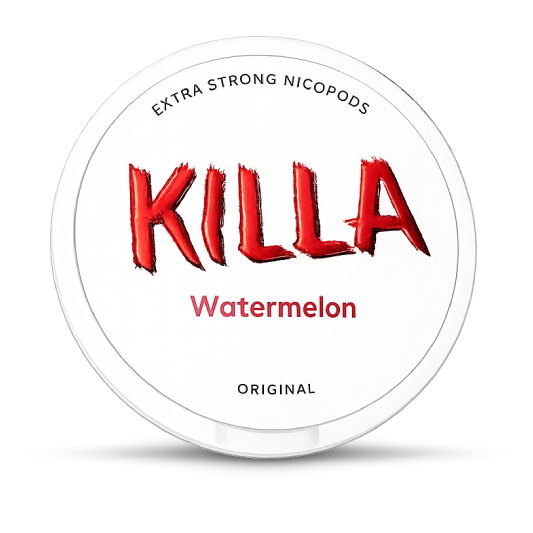
Popular options for driving-friendly use include Killa Watermelon, Dope Blueberry, and Pablo Blue Raspberry, all available through the Hitsnus nicotine pouches collection.

Pouch strengths, cigarette equivalence, and health precautions
Nicotine pouches typically range from around 2 mg to 20 mg per pouch, with some products marketed at even higher strengths. The pilot study above used 2 mg, 4 mg, and 8 mg as its test doses, which reflects the lower-to-mid range of what is commercially available.
Cigarette equivalence is genuinely imprecise. Delivery method, absorption rate, and individual smoking topography all differ between a combustible cigarette and an oral pouch. A rough guide is that a single cigarette delivers roughly 1–2 mg of absorbed nicotine, but comparing that directly to a pouch milligram figure is not straightforward. The Hitsnus guide on nicotine pouch benefits explains the delivery differences in more detail.
| Pouch strength | Approximate category | Notes |
|---|---|---|
| 2–4 mg | Low | Suitable for lighter users or those new to pouches |
| 6–9 mg | Medium | Common daily-use range for regular nicotine users |
| — | Strong | Higher dependence risk; not recommended for new users |
| — | Extra strong | Regulated upper limit under proposals; dizziness risk |
Twenty pouches a day at any strength above low is a significant daily nicotine load. If you are using that volume regularly, speaking to a healthcare professional is worth doing. Dependence can develop, and heavy use is not without cardiovascular risk.
If you feel unwell, unusually dizzy, or lightheaded after a pouch, stop driving safely as soon as possible and seek advice.
This article provides general information only. It is not a substitute for legal or medical advice. For current regulations, consult the relevant primary legislation or a qualified professional.
Hitsnus: nicotine pouches chosen for how you actually live
Driving, commuting, working, or just getting through the day without a cigarette: the situation calls for something discreet, reliable, and available in the strength you actually need.
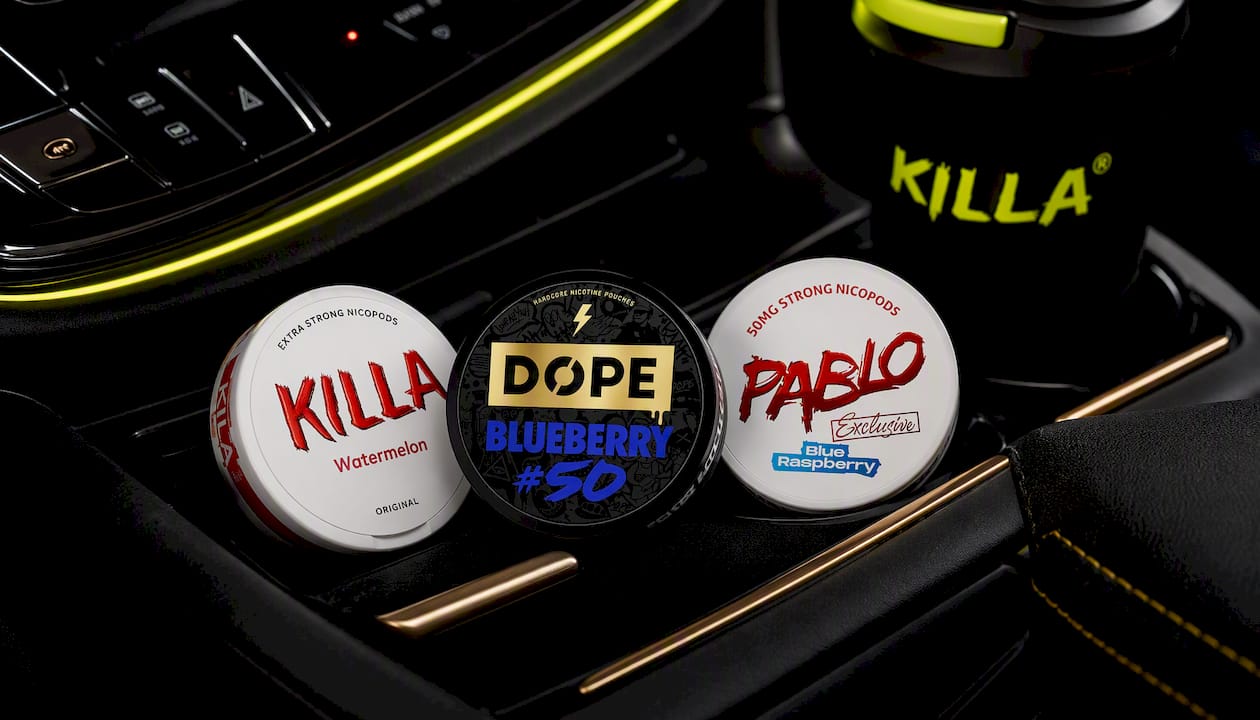
Hitsnus stocks a broad range of nicotine pouches across strengths and flavours, from the lighter end through to stronger options for experienced users. Every product ships directly to you, with clear strength labelling so you know exactly what you are getting before you try it on the road. Whether you are after Killa Watermelon for a fruity everyday option, the clearance-priced Dope Blueberry, or the sharper hit of Pablo Blue Raspberry, the full range is one click away. Browse the collection and order today.
Sources
- Legislation
- Vaping in a car - is it illegal? | RAC Drive
- Cognitive effects of nicotine: recent progress - PMC
- Pilot Study Investigating Rapid Visual Information Processing Task Assessment of Nicotine Delivery via Oral Nicotine Pouch Products
- Can you use nicotine pouches while driving? - Pete Barden
FAQ
Can you use nicotine pouches while driving in the UK?
Yes. There is no specific law banning nicotine pouches in a vehicle, but you can be charged with careless or dangerous driving if handling one causes distraction or loss of control, as the RAC confirms.
Will a nicotine pouch make you fail a breathalyser or drug test?
No. Breathalysers measure alcohol only, and standard roadside drug screens do not test for nicotine. Nicotine pouches will not trigger either test.
How many cigarettes is one nicotine pouch equivalent to?
There is no precise figure. Absorption rates and delivery differ significantly between combustible cigarettes and oral pouches, making direct milligram comparisons unreliable. A low-strength pouch (2–4 mg) is broadly in the range of a light cigarette, but individual response varies considerably.
Is 20 nicotine pouches a day too many?
Twenty pouches daily represents a high nicotine intake, particularly at medium or strong strengths. If you are using that volume regularly, speaking to a healthcare professional about dependence and cardiovascular risk is advisable.