












Step-by-step nicotine pouch guide: safe, discreet use
- Nicotine pouches offer a cleaner, discreet alternative to cigarettes and vaping for adults.
- Proper preparation, correct strength selection, and safe disposal are key for a safe experience.
- Gradual transition and behavioral awareness enhance success in replacing smoking with pouches.
Switching away from cigarettes or a vape can feel like stepping into the unknown, especially when you want something cleaner, more discreet, and genuinely manageable. Nicotine pouches have become one of the fastest-growing alternatives for adult smokers and vapers who are tired of smoke, smell, and social awkwardness. Yet plenty of people pick up their first tin and immediately wonder: how long do I keep it in, what strength should I choose, and what happens if I get it wrong? This guide walks you through every stage, from preparation to disposal, so your first experience is comfortable, safe, and actually enjoyable.
Table of Contents
- What you need before starting
- How to use nicotine pouches: Step-by-step process
- Staying safe and avoiding common mistakes
- Disposal and sustainability: Finishing the process responsibly
- Switching from smoking or vaping: Key transition tips
- What most guides miss about nicotine pouch success
- Find your ideal nicotine pouch solution
- Frequently asked questions
Key Takeaways
| Point | Details |
|---|---|
| Prepare your essentials | Choose the right pouch type, strength, and maintain clean hands before starting. |
| Follow step-by-step use | Insert under your lip, monitor timing, and never chew or swallow the pouch. |
| Stay safe at every stage | Avoid overuse, stay hydrated, and watch out for side effects or misuse. |
| Dispose responsibly | Always bin used pouches to protect people and the environment. |
| Switching made smoother | Gradual transition from smoking or vaping boosts your success with nicotine pouches. |
What you need before starting
Before you place a single pouch under your lip, a little preparation goes a long way. Think of it like cooking a new recipe: having everything in place before you start makes the whole process smoother and far less likely to go sideways.
Essential supplies to have ready:
- A tin of nicotine pouches in your chosen strength and flavour
- Clean hands or access to a sink
- A small, sealable disposal container (many tins have a built-in compartment on the lid)
- A glass of water, particularly if you are new to pouches
Nicotine pouches are tobacco-free nicotine delivery products, meaning there is no tobacco leaf, no combustion, and no smoke involved. That distinction matters because it shapes how your body responds compared to cigarettes or even snus.
Choosing the right strength and flavour
Strength is measured in milligrams per pouch, typically ranging from 2 mg up to 20 mg or higher for experienced users. If you currently smoke fewer than ten cigarettes a day, a low strength (2 to 4 mg) is a sensible starting point. Heavier smokers or those switching from high-nicotine vapes may feel more comfortable beginning at a medium strength (6 to 8 mg). Flavour is personal, but mint, citrus, and berry are consistently popular with beginners because they feel fresh and mask any initial tingling.
| Strength level | Nicotine per pouch | Best suited for |
|---|---|---|
| Low | 2 to 4 mg | Light smokers, first-timers |
| Medium | 6 to 8 mg | Moderate smokers, vapers |
| Strong | 10 to 14 mg | Heavy smokers |
| Extra strong | 16 mg and above | Experienced pouch users |
Store your pouches in a cool, dry place away from direct sunlight. Most tins carry a shelf life of 12 to 18 months when stored correctly. You can read more about nicotine pouch benefits to understand why so many people are making the switch.
Who should avoid nicotine pouches: Pregnant women, people under 18, and anyone with a diagnosed heart condition or nicotine sensitivity should not use these products. If you are on medication, check with your GP first.
Pro Tip: Buy a small sampler tin of two or three different flavours before committing to a full order. Taste preferences vary enormously, and finding a flavour you genuinely enjoy makes the habit far easier to maintain.
How to use nicotine pouches: Step-by-step process
With all your essentials lined up, let’s move on to the actual process of using a nicotine pouch. The good news is that a straightforward process removes the mess and burning sensations that put many beginners off after their first attempt.
Step-by-step guide:
- Wash your hands thoroughly before handling any pouch.
- Open the tin and remove a single pouch using your thumb and forefinger.
- Lift your upper or lower lip and tuck the pouch snugly between your gum and the inside of your lip.
- Press gently with your lip to hold the pouch in place. You should not need to bite or chew.
- Allow the pouch to settle. A mild tingling or warmth is completely normal and usually fades within a few minutes.
- Leave the pouch in place for 10 to 30 minutes, or until the flavour noticeably fades.
- Remove the pouch and place it in the disposal compartment or a small bin. Never swallow it.
| Stage | What to expect | Action required |
|---|---|---|
| First 2 minutes | Tingling, slight warmth | Relax, adjust position if uncomfortable |
| 5 to 15 minutes | Flavour release, nicotine absorption | Keep in place, breathe normally |
| 20 to 30 minutes | Flavour fading | Remove and dispose |
“Never chew, bite, or suck on a nicotine pouch. The pouch is designed to release nicotine passively through contact with your gum tissue.”
First-timers sometimes feel lightheaded if they choose too high a strength. If that happens, remove the pouch immediately and have a glass of water. Refer to the usage workflow guide for a more detailed breakdown of what to expect at each stage.
Pro Tip: Position the pouch slightly off-centre rather than directly in the middle of your lip. Many users find this reduces tingling and feels more natural during long sessions.
Staying safe and avoiding common mistakes
After you have mastered the basic steps, it is essential to keep safety and common slip-ups in mind. Following safety protocols significantly lowers the risks associated with nicotine pouch use, and most mistakes are easily avoided once you know what to watch for.
Common mistakes to avoid:
- Using more than one pouch at a time, which dramatically increases nicotine intake
- Choosing a strength that is too high for your current tolerance
- Chewing or biting the pouch, which releases nicotine too quickly
- Swallowing saliva excessively or swallowing the pouch itself
- Forgetting to wash hands before and after use
- Ignoring signs of overuse such as nausea, dizziness, or headache
“If you feel nauseous or your heart rate increases noticeably, remove the pouch straight away and rest. These are signs that your body is absorbing more nicotine than it is comfortable with.”
Hydration matters more than most people realise. Nicotine can cause a mild dry-mouth sensation, particularly in the first week of use. Drinking water regularly during and after use helps manage this and keeps your gum tissue healthy.

Start low and move up slowly. There is no benefit to rushing toward a higher strength, and doing so only increases the chance of an unpleasant experience that puts you off entirely. For a full breakdown of nicotine pouch safety tips tailored to UK adults, it is worth bookmarking that resource for ongoing reference.
Pro Tip: Set a gentle phone timer for 20 minutes when you first start out. It removes the guesswork and helps you build a consistent routine without overthinking it.
When to seek help: If you experience chest pain, severe dizziness, or persistent nausea after use, stop immediately and contact a healthcare professional. These symptoms are rare but should never be ignored.
Disposal and sustainability: Finishing the process responsibly
Completing your experience well means handling disposal so your switch remains responsible and sustainable. Proper disposal protects the environment and prevents others, including children and pets, from accidental exposure to used pouches.
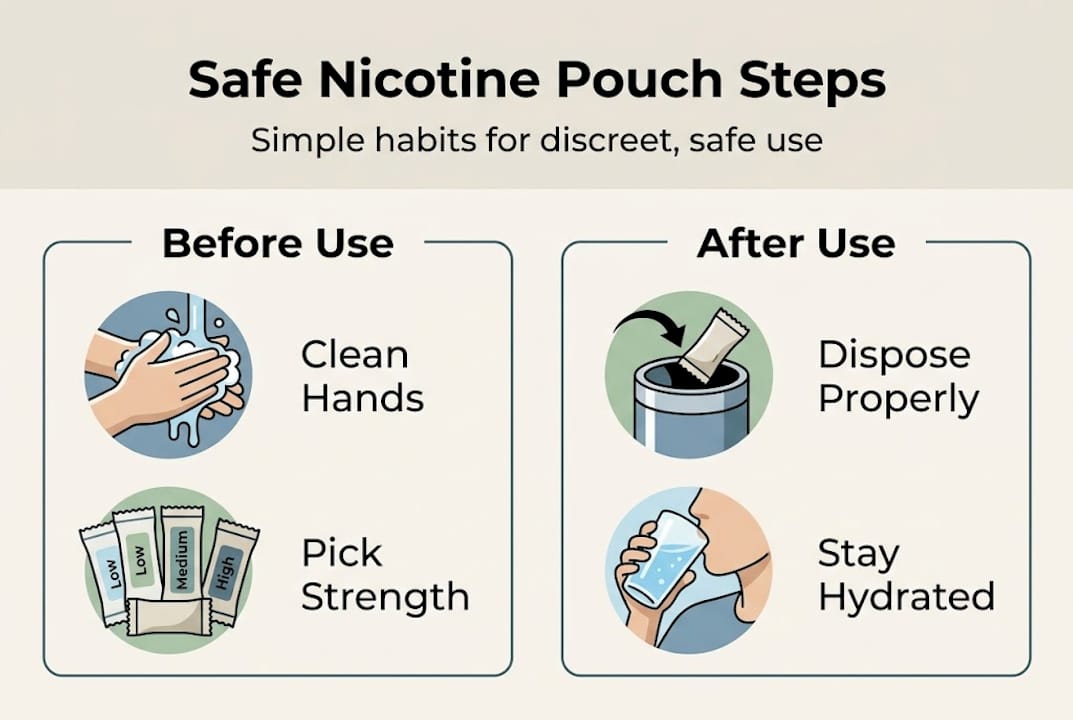
Used pouches still contain residual nicotine. That alone is reason enough to treat them as you would any small piece of chemical waste rather than ordinary litter.
How to dispose of used pouches correctly:
- Remove the pouch cleanly from your mouth using your fingers.
- If your tin has a built-in disposal compartment on the lid, place the used pouch there.
- At home, transfer used pouches into a sealed bag or small lidded bin before placing in your general household waste.
- In public, use a standard litter bin. If no bin is available, wrap the pouch in a tissue and hold onto it until you find one.
- Never flush pouches down a toilet or drain. They do not break down in water and contribute to blockages and water pollution.
- Never drop pouches on the ground. The residual nicotine is harmful to wildlife and soil.
“Treating used pouches with the same care as a small battery or medication wrapper is the right mindset. Small actions add up to a meaningful environmental difference.”
Some brands are beginning to introduce compostable or biodegradable pouch materials, which is a promising development. Choosing brands that invest in eco-friendly nicotine pouch disposal solutions is a small but meaningful way to align your nicotine habit with broader sustainability values.
Building a disposal habit from day one means it becomes automatic. Keep a small tin or sealed pouch in your bag if you are frequently on the move, and you will never be caught without a responsible option.
Switching from smoking or vaping: Key transition tips
If you are specifically transitioning from smoking or vaping, a tailored approach is wise. Gradual switching significantly increases the likelihood of a successful and lasting change, compared to going cold turkey overnight.
Benefits of making the switch:
- No combustion means no smoke, tar, or carbon monoxide
- Dramatically reduced odour on clothes, hair, and breath
- Discreet use in most social and professional settings
- No need for a lighter, ashtray, or charging cable
- Greater control over nicotine intake through measured strengths
Gradual reduction strategy:
| Week | Approach |
|---|---|
| Week 1 | Replace morning cigarette or vape session with a pouch |
| Week 2 | Substitute two to three daily sessions with pouches |
| Week 3 | Use pouches as the primary nicotine source, smoke or vape only when cravings peak |
| Week 4 and beyond | Full transition, pouches only |
Cravings during the first two weeks are normal and expected. They typically peak at around 20 to 30 minutes and then subside. Having a pouch ready at those moments is far more effective than willpower alone. The step-by-step transition guide at HitSnus offers practical scheduling advice for managing those early craving windows.
For vapers, the transition is often smoother because you are already accustomed to a device-free or near-device-free nicotine delivery model. The key difference is that pouches require no maintenance, no charging, and no refilling. Explore switching to nicotine pouches for a deeper look at managing the psychological side of the switch, not just the physical.
What most guides miss about nicotine pouch success
Most step-by-step guides focus entirely on the mechanics: place the pouch, wait, remove. What they rarely address is the psychological and social dimension of building a new nicotine habit.
Consistency is the real challenge. Many people use pouches successfully for a week, then revert to cigarettes during a stressful evening or a social situation where smoking feels more familiar. The pouch is not the problem. The habit loop is. Smoking is deeply tied to specific triggers: a morning coffee, a work break, a drink with friends. Pouches need to be consciously inserted into those same trigger moments to replace the behaviour, not just the nicotine.
Overreliance is another overlooked risk. Some users switch to pouches and then use them far more frequently than they ever smoked, simply because the barrier to use is so low. Discretion is a feature, but it can also become a trap if you are not mindful of your daily intake.
Patience matters enormously. The long-term benefits of switching are real and well-documented, but they take weeks to fully materialise. Give yourself at least a month before judging whether the switch is working for you.
Find your ideal nicotine pouch solution
Ready for smoother, smarter nicotine satisfaction? Whether you are just starting out or refining your routine after a few weeks, having the right products makes all the difference.
At HitSnus, our nicotine pouch shop stocks a wide selection of trusted brands including ZYN, Velo, and FUMI, available in a range of strengths and flavours to suit every preference and experience level. We offer fast delivery across the UK, clear product descriptions, and a customer support team that genuinely understands what beginners need. Whether you want a starter-friendly low-strength mint pouch or a bold, high-strength option for heavier cravings, you will find it here. Browse our full range today and take the next step toward a cleaner, more discreet nicotine experience.
Frequently asked questions
Can you use nicotine pouches safely every day?
Daily correct use minimises risk for adults, provided you follow the directions and avoid overuse. Sticking to recommended session lengths and appropriate strengths keeps daily use well within safe boundaries.
How long should a nicotine pouch stay in your mouth?
Most users keep a pouch in place for 10 to 30 minutes, or until the flavour noticeably fades. Removing it sooner is fine if you feel discomfort.
What is the safest way to dispose of used nicotine pouches?
Place used pouches in a bin or a dedicated disposal compartment, as proper disposal is essential for environmental and personal safety. Never flush them or drop them on the ground.
Can you switch directly from cigarettes to nicotine pouches?
Yes, but a gradual switch increases your chance of successfully leaving cigarettes behind for good. Replacing one session at a time is more sustainable than stopping all at once.
Recommended
- Nicotine Pouch Usage Workflow: Step-by-Step Guide – HitSnus
- Essential nicotine pouch usage tips for discreet satisfaction – HitSnus
- Switching from Smoking to Pouches: Step-by-Step Guide – HitSnus
- Why nicotine pouches are discreet: an in-depth explainer – HitSnus
Once you know which strength suits you, browse low strength nicotine pouches to start gently, or the full nicotine pouch range if you already know what you want.