











Nicotine Strength Explained – Choosing Safely in the UK
Finding the right nicotine strength can feel confusing when moving from cigarettes to pouches. For British smokers wanting a smoother switch, understanding how strength affects cravings and satisfaction is essential. Knowledge of nicotine concentration, clear labelling, and how your smoking history shapes needs helps you choose a pouch that truly fits. This guide breaks down strength differences, common mistakes, and how to match your nicotine intake—so you avoid the frustration of guessing and finally meet your goals.
Table of Contents
- What Nicotine Strength Actually Means
- Why Labelling Matters
- Common Strength Ranges in the UK
- Popular Nicotine Strength Categories Compared
- How Strength Affects Your Nicotine Experience
- Choosing the Right Strength for Your Needs
- Common Myths and Mistakes to Avoid
Key Takeaways
| Point | Details |
|---|---|
| Understanding Nicotine Strength | Nicotine strength indicates the concentration of nicotine in a product, affecting how quickly and intensely users feel its effects. |
| Importance of Clear Labelling | Inconsistent labelling across products can lead to confusion; understanding labelling helps consumers select appropriate strengths. |
| Choose Strength Based on Smoking History | Users should select nicotine strength based on their previous smoking habits to effectively manage cravings and dependence. |
| Effect of Strength on Usage Behaviour | Higher strengths provide faster cravings relief, but can also increase addiction potential if not used mindfully. |
What Nicotine Strength Actually Means
Nicotine strength refers to the concentration of nicotine in a pouch, measured in milligrams (mg). This tells you how much nicotine you’ll absorb when using the product—nothing more, nothing less.
Think of it like caffeine in coffee. A small espresso delivers more caffeine per sip than a large americano, even though the cup is smaller. Nicotine strength works the same way. The strength level determines how quickly your body receives nicotine and how intensely you’ll feel the effects.
Nicotine itself is the addictive substance, but here’s what matters: nicotine strength influences addiction potential and how well a product relieves cravings. Understanding this distinction helps you make informed choices about which strength suits your needs.
Why Labelling Matters
Nicotine strength labels vary widely across UK products, appearing as mg/ml, percentages, or sometimes both. This inconsistency can confuse consumers about actual potency.
A product labelled “15 mg” tells you one thing, but a “1.5%” label on a different pouch might deliver similar or entirely different amounts—it depends on pouch size and absorption rates. Without clear labelling, you won’t know the actual dose you’re receiving.
- Clear labelling helps you compare products accurately
- Consistent measurements let you track your nicotine intake
- Proper labelling reduces accidental overdosing or under-dosing
- Understanding strength prevents switching to unsuitable alternatives
Common Strength Ranges in the UK
UK nicotine pouches typically fall into these categories:
- Mild (3–6 mg) – Light buzz, suits occasional users or those cutting back
- Regular (6–12 mg) – Moderate relief, common for ex-smokers transitioning
- Strong (12–20 mg) – Intense satisfaction, targets heavy smokers
- Extra strong (20+ mg) – Maximum delivery, for those with significant dependence
Your previous smoking habit determines where you’ll fit best. A 20-cigarette-a-day smoker needs different strength than someone who smoked five cigarettes daily.
Here’s a comparison of nicotine strength categories and their typical user profiles:
| Strength Category | Typical Users | Smoking History | Intended Outcome |
|---|---|---|---|
| Mild (3–6 mg) | Occasional users | Up to 5 cigarettes daily | Light, manageable cravings |
| Regular (6–12 mg) | Ex-smokers transitioning | 5–15 cigarettes daily | Steady relief, easier transition |
| Strong (12–20 mg) | Heavy smokers | 15–25 cigarettes daily | Intense satisfaction, withdraw management |
| Extra Strong (20+ mg) | Highly dependent users | More than 25 cigarettes daily | Maximum craving control |
Choosing the right strength isn’t about the biggest number—it’s about matching your nicotine needs to avoid both cravings and uncomfortable over-saturation.
Pro tip: Start with a strength matching your previous smoking level, then adjust after a week if cravings persist or side effects feel too strong.
Popular Nicotine Strength Categories Compared
Nicotine pouches come in distinct strength tiers, each designed for different user needs and preferences. Understanding where you fit helps you avoid trial-and-error frustration.
The categories aren’t arbitrary. Usage patterns differ by age, device type, and smoking status, meaning your background determines which strength category suits you best.
Breakdown of Strength Categories
Light (0–6 mg) works for social users who want occasional nicotine without heavy dependence. Think someone who smoked three cigarettes at weekends.

Medium (6–12 mg) targets ex-smokers transitioning from regular smoking habits. This middle ground relieves cravings without overwhelming new pouch users.
Strong (12–20 mg) serves former pack-a-day smokers needing significant relief. The intensity matches what heavy smokers experienced with cigarettes.
Extra Strong (20+ mg) addresses severe nicotine dependence. Users often choose this after trying lower strengths unsuccessfully.
- Light – Social users, occasional need
- Medium – Ex-smokers, regular transition
- Strong – Heavy smokers, intense cravings
- Extra Strong – Maximum dependence, strongest satisfaction
Real Usage Trends in the UK
Recent data shows a sharp rise in vapers using high-strength nicotine, particularly among younger adults and disposable device users. This shift reflects changing preferences and product accessibility.
Younger users gravitate towards higher strengths, while ex-smokers typically stabilise at medium-to-strong levels. Disposable device popularity has driven demand for extra-strong options.
Your demographic matters. Age, previous smoking intensity, and device preference all influence which category feels right.
Strength popularity shifts over time—what works today might differ from what worked five years ago, so choose based on your needs, not trends.
Pro tip: If you’re unsure about your category, start one level lower than you think you need, then move up after three days if cravings persist.
How Strength Affects Your Nicotine Experience
Nicotine strength directly shapes how your body responds to pouches. The difference between mild and extra-strong isn’t just numbers—it changes everything about your experience.
Speed and Intensity of Effects
Higher strengths deliver nicotine faster, better satisfying cravings and easing withdrawal symptoms. You’ll feel the effects within minutes rather than waiting longer.
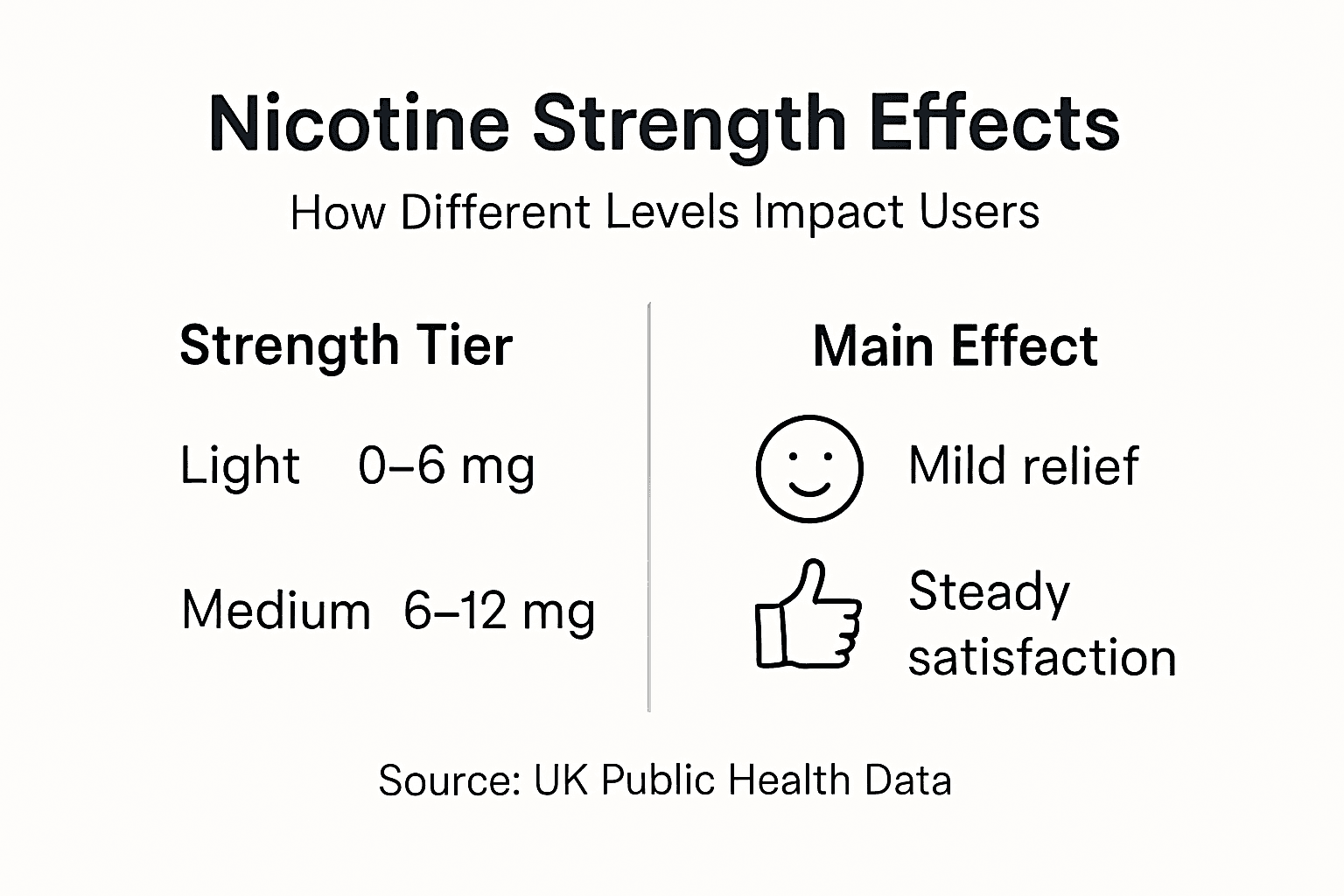
Lower strengths provide gentler, slower absorption. This suits users who want to avoid sudden rushes or those gradually reducing their nicotine dependence.
The speed matters more than you might think. Fast satisfaction prevents you reaching for cigarettes when cravings hit hardest.
Craving Relief and Withdrawal Management
Strong pouches work better for heavy smokers. Your body recognises intense nicotine delivery as adequate relief, stopping the cycle of repeated use.
Medium strengths suit moderate smokers. You get steady satisfaction without overwhelming your system or building higher tolerance.
Light strengths work for occasional users. They provide enough nicotine to enjoy the experience without heavy dependence building up.
Withdrawal symptoms—irritability, anxiety, difficulty concentrating—ease faster with appropriate strength. Choose too low, and you’ll still feel these symptoms intensely.
- Strong – Fastest relief, heavy smoker needs
- Medium – Balanced satisfaction, regular smoker transition
- Light – Gentle effects, occasional or reducing use
Addiction Potential and Your Behaviour
You unconsciously adjust how you use pouches based on strength. Lower strength means using more frequently. Higher strength means fewer pouches needed.
Higher strengths quickly relieve cravings, making them more effective for quitting smoking. However, this same effectiveness can increase addiction if you’re not intentional about reducing over time.
The key is matching strength to your actual needs, then gradually stepping down as withdrawal symptoms fade.
Your strength choice determines not just how you feel right now, but how dependent you become and how easily you can reduce later.
Pro tip: Keep a one-week log of how many pouches you use at your chosen strength—if you’re constantly reaching for more, your strength might be too low.
Choosing the Right Strength for Your Needs
Picking the correct strength means matching the pouch to your actual smoking history, not guessing. Get this right, and you’ll stop craving cigarettes. Get it wrong, and you’ll be frustrated within days.
Assess Your Smoking Background
Selecting appropriate nicotine strength depends on smoking habits, dependence level, and quitting goals. Heavy smokers need higher strengths. Light smokers need lower strengths.
Start by counting your typical daily cigarettes. This number becomes your baseline for choosing strength.
- 0–5 cigarettes daily – Light (3–6 mg)
- 5–15 cigarettes daily – Medium (6–12 mg)
- 15–25 cigarettes daily – Strong (12–20 mg)
- 25+ cigarettes daily – Extra Strong (20+ mg)
This isn’t exact science, but it gives you a realistic starting point rather than random guessing.
Factor in Your Dependence Level
Some smokers experience intense cravings despite low cigarette numbers. Others feel fine with higher amounts. Individual dependence varies significantly.
If you’re someone who wakes up desperate for a cigarette, you likely need stronger pouches. If you can wait until mid-morning comfortably, lower strength works.
Honesty matters here. Overestimating your dependence won’t help—you’ll just feel uncomfortable. Underestimating means constant cravings.
Consider Your Goals
Are you quitting smoking completely or simply reducing? Your answer changes your approach.
For complete cessation: Use a strength matching your smoking habit for at least 3–4 weeks. Then gradually step down to lower strengths as withdrawal fades.
For reduction: Start slightly lower than your baseline. Lower strength encourages gradual reduction without shocking your system.
Users choose strength based on experience, device type, and dependency level. Don’t compare yourself to friends—your needs are individual.
Test and Adjust
You won’t get it perfect immediately. Use your chosen strength for one full week before deciding.
If cravings persist after three days, you’re likely too low. If you feel lightheaded or uncomfortable, you’re probably too high.
One week gives your body enough time to adjust and show you whether the strength works.
The best strength is the one you’ll actually use consistently—not the highest number or strongest option, but the one that stops cravings without excess.
Pro tip: Write down your cigarette count and how you feel each day for the first week—this data helps you decide if you need to adjust strength before committing to a full switch.
Common Myths and Mistakes to Avoid
Wrong beliefs about nicotine strength can derail your transition from cigarettes. These myths persist because people confuse nicotine with tobacco smoke, or simply haven’t had reliable information.
Myth: Nicotine Itself Causes Smoking-Related Health Harms
This is the biggest misconception. A common myth is that nicotine itself causes severe health harms of smoking, but most harm comes from toxic tobacco smoke chemicals.
Nicotine is addictive, yes. But it doesn’t cause cancer, heart disease, or lung damage. The 4,000+ chemicals in cigarette smoke do.
This distinction matters because it means nicotine pouches carry far fewer health risks than smoking, even at high strengths.
Myth: Higher Strength Always Means More Danger
Not true. Strength determines how much nicotine you receive, not how harmful it is. A 20 mg pouch isn’t inherently more dangerous than a 6 mg pouch—it just delivers more nicotine.
The real danger comes from choosing the wrong strength and either missing your cravings or becoming overly dependent.
Choosing appropriate strength based on your needs is safer than picking randomly.
Common Mistake: Misreading Strength Labels
Misinterpretation of nicotine strength labelling can cause users to select inappropriate products, impacting quit attempts or causing unintended exposure.
UK pouches use different labelling systems. One brand shows “15 mg,” another shows “1.5%”. Without understanding what these mean, you can’t compare fairly.
Always check the milligram amount per pouch, not just percentages. Pouch size varies, making percentage comparisons meaningless.
Use this quick reference to interpret nicotine strength labelling:
| Labelling Format | What It Means | Common Confusion | Best Approach |
|---|---|---|---|
| mg per pouch | Actual nicotine dose | May vary by pouch size | Compare mg per pouch directly |
| Percentage (%) | Nicotine concentration | Does not denote total dose | Check product weight for real dose |
| mg/ml | Solution strength, less relevant for pouches | Misapplied to solid products | Prefer mg per pouch for accuracy |
- Never assume all 15 mg pouches are identical
- Always verify pouch weight and nicotine amount
- Compare total nicotine per pouch, not just strength percentage
- Check labelling twice before your first use
Mistake: Jumping to Extra-Strong Too Quickly
Many people assume “if some works, more works better.” This backfires. Starting extra-strong when medium suits your needs causes discomfort, nausea, and headaches.
Your body needs time to adjust. Begin at your estimated strength, then adjust after one week if needed.
Mistake: Not Accounting for Individual Variation
Mistakes such as choosing too high or too low nicotine strength can lead to unsuccessful cessation or excess intake. Two people with identical smoking histories need different strengths.
Metabolism, stress levels, and psychological dependence all matter. Your best friend’s strength won’t necessarily work for you.
The strongest pouch isn’t always the best choice—the right choice is the strength that actually stops your cravings and keeps you off cigarettes.
Pro tip: Before switching to a new strength permanently, buy a single pouch to test for three days—this costs less than a full pack and prevents wasted money on unsuitable strengths.
Find Your Perfect Nicotine Strength with Confidence
Choosing the right nicotine strength is crucial for managing cravings and making your transition from smoking smooth and comfortable. If you are seeking reliable, clearly labelled options tailored to your unique smoking history and dependence level, look no further. Hitsnus offers a wide range of nicotine pouches that help you match your needs precisely—from light to stronger dosages—eliminating guesswork and frustration.
Explore our collection of Regular Nicotine Strength pouches and discover dependable options that deliver consistent support without overwhelming your system. Browse the full selection of Nicotine Pouches Online – Tobacco-Free, Fast Shipping at Hitsnus.com and take control of your nicotine journey. Act now to experience discreet, smokeless satisfaction designed to keep cravings at bay and support your goals today.
Frequently Asked Questions
What does nicotine strength mean in nicotine pouches?
Nicotine strength refers to the concentration of nicotine in a pouch, indicated in milligrams (mg). It determines how much nicotine you will absorb when using the product, influencing addiction potential and craving relief.
How do I choose the right nicotine strength for my needs?
To choose the right nicotine strength, assess your smoking history. For example, if you smoked 0-5 cigarettes daily, consider a mild strength (3-6 mg). Higher usage typically requires stronger strengths, such as extra strong (20+ mg) for heavy smokers.
Are all nicotine strength labels the same?
No, nicotine strength labels can vary widely. Some products may list strength in mg/ml, percentages, or both, leading to confusion. Always check the actual mg per pouch to accurately compare products.
How does nicotine strength affect cravings and withdrawal symptoms?
Higher nicotine strengths deliver nicotine faster, providing quicker relief from cravings and withdrawal symptoms. Lower strengths offer gentler absorption, which may be suitable for users looking to gradually reduce dependence.