











Nicotine Strength Comparison – Choosing Safely in the UK
Finding the ideal nicotine strength can be confusing when every product claims to suit your needs. For those transitioning from smoking in the United Kingdom, understanding what strength means and separating fact from myth is essential. Nicotine itself poses little relative health risk, but addiction and withdrawal can complicate your journey. This guide helps clarify how strengths work, dispel misconceptions, and compares options so you can confidently select a pouch that matches your previous smoking intensity.
Table of Contents
- Nicotine Strength Defined And Common Myths
- Types And Categories Of Nicotine Strengths
- How Strength Is Measured In Pouches
- Comparing Popular Brands: ZYN, VELO, FUMI
- Risks And Mistakes In Choosing Strength
Key Takeaways
| Point | Details |
|---|---|
| Nicotine Strength Matters | Understanding nicotine strength in pouches is crucial for managing intake and transitioning from smoking effectively. |
| Common Myths Debunked | Many misconceptions about nicotine, such as it causing cancer or being equally harmful as cigarettes, can hinder informed choices. |
| Choose Based on Smoking History | Your chosen nicotine strength should align with your previous smoking habits to minimise withdrawal symptoms and ensure a successful transition. |
| Avoid Common Selection Mistakes | Selecting a strength based on fears rather than your actual needs can lead to discomfort or relapse; always match the pouch strength to your smoking intensity. |
Nicotine strength defined and common myths
Nicotine strength refers to the amount of nicotine measured in milligrams (mg) per pouch or per millilitre of liquid. This measurement tells you exactly how much nicotine you’ll consume with each use, making it straightforward to compare products and control your intake.
Understanding what nicotine actually does matters far more than the myths surrounding it. Nicotine itself poses little relative health risk, though it is highly addictive and causes short-term effects like increased heart rate and blood pressure. The confusion arises because people often conflate nicotine with tobacco smoke’s thousands of toxic chemicals.
Common misconceptions about nicotine
Here are the myths that persistently circulate amongst UK consumers:
- “Nicotine causes cancer” – False. The carcinogenic substances are in tobacco smoke, not nicotine itself.
- “Higher strength means more danger” – Partly false. Strength determines addiction intensity, not toxicity level.
- “You’ll become addicted instantly” – Overstated. Addiction develops through repeated use and brain chemistry changes triggered by dopamine release.
- “Nicotine pouches are as harmful as cigarettes” – False. Pouches lack the combustion byproducts that make smoking lethal.
These myths often keep people from considering nicotine pouches as a potential smoking alternative, despite the evidence.
Why strength matters for your situation
Choosing the right strength depends on your smoking history and personal tolerance. Someone transitioning from a 20-cigarette daily habit needs different strength than a casual social smoker.
Nicotine replacement therapies like patches and gum help manage cravings and reduce withdrawal symptoms, particularly at higher strengths. Nicotine pouches work similarly—higher strengths can ease your transition away from cigarettes more effectively.
The key distinction: strength itself isn’t dangerous. Addiction potential is higher with stronger products, but that’s different from toxicity.
Your nicotine strength should match your previous smoking intensity, not your fear of the chemical.
Pro tip: Start by calculating your previous daily nicotine intake from smoking, then match that with pouch strength to minimise withdrawal symptoms whilst making the switch.
To help you relate nicotine pouch strength to your past smoking habits, see the typical recommendations below:
| Past Cigarette Use | Suggested Pouch Category | Initial Pouch Strength |
|---|---|---|
| Over 20 daily | Extra Strong | 20–43 mg |
| 10–20 daily | Strong | 10–20 mg |
| 1–10 daily | Regular | 6–8 mg |
| Social/occasional | Light | 2–4 mg |
Types and categories of nicotine strengths
Nicotine strength in pouches typically ranges from 2 mg to 43 mg per pouch, depending on the product type and intended user. Understanding these categories helps you find what matches your needs without guesswork.
The UK market categorises nicotine strengths based on concentration levels and product delivery methods. Nicotine strengths vary by product type and user demographics, with some formats delivering significantly more nicotine than others.
Standard strength categories
Most UK retailers organise nicotine pouches into these practical categories:
- Light (2–4 mg) – Ideal for beginners or those who prefer minimal nicotine. Suits occasional users transitioning from light smoking.
- Regular (6–8 mg) – The middle ground. Works for moderate smokers or as a maintenance strength after initial transition.
- Strong (10–20 mg) – For established smokers or those with higher tolerance. Provides substantial nicotine delivery.
- Extra Strong (30–43 mg) – Reserved for experienced users with significant nicotine dependence. Comparable to heavy smoking.
This categorisation makes comparing products across brands straightforward when you’re shopping online or in-store.
Why category matters more than precise numbers
You don’t need to memorise exact milligram amounts. What matters is knowing your category and how it relates to your smoking history. Someone smoking 20 cigarettes daily needs extra strong, whilst a social smoker requires only light or regular.
Disposable products and younger users tend to use higher nicotine concentrations, but that shouldn’t influence your personal choice. Your consumption pattern, not trends, determines your ideal strength.
Product format also affects delivery. Pouches release nicotine slowly through your gum tissue over 30–60 minutes, whereas some alternatives deliver faster.
Choose your category based on your previous smoking intensity, not on what others use or what’s trendy.
Pro tip: If you’re unsure which category suits you, start one level lighter than you think necessary—you can always upgrade if withdrawal symptoms become uncomfortable.
How strength is measured in pouches
Nicotine strength in pouches is measured in milligrams (mg) and represents the total nicotine content per individual pouch. This straightforward measurement lets you compare products accurately across different brands and formats.
Every pouch contains a specific amount of nicotine absorbed into the pouch material itself. Product labelling must display accurate nicotine strength, so you can trust what’s written on the packet. Manufacturers measure this precisely during production to ensure consistency.
The measurement system explained
Understanding how measurements work prevents confusion when shopping:
- Milligrams per pouch – The standard measurement tells you exactly how much nicotine one pouch contains. A 6 mg pouch releases approximately 6 mg of nicotine into your body.
- Pouch weight varies – Heavier pouches typically contain more nicotine than lighter ones, though this depends on nicotine concentration within the material.
- No variations in labelling – UK retailers must list strength consistently, so you won’t encounter ambiguous descriptions.
This consistency makes calculation simple. If you use one pouch daily, a 10 mg strength delivers roughly 10 mg of nicotine per day.
How nicotine enters your body
Nicotine strength doesn’t just mean quantity—it affects how fast and how much nicotine your body absorbs. Pouches release nicotine gradually through oral tissue over 30–60 minutes, depending on formulation and individual factors like saliva production and gum sensitivity.
Bioavailability (the amount your body actually absorbs) varies based on product formulation. Some brands optimise absorption better than others, meaning two 10 mg pouches from different manufacturers might feel slightly different in effect, though the measured strength is identical.
The number on the packet represents total nicotine content, not necessarily how much your body absorbs.
Pro tip: When comparing products, check both the milligram strength and pouch weight—heavier pouches at the same strength may feel more satisfying due to extended contact with your gums.
Comparing popular brands: ZYN, VELO, FUMI
Three dominant brands dominate the UK nicotine pouch market: ZYN, VELO, and FUMI. Each offers distinct strength ranges, flavour profiles, and pouch designs, so understanding their differences helps you select what suits your needs and preferences.
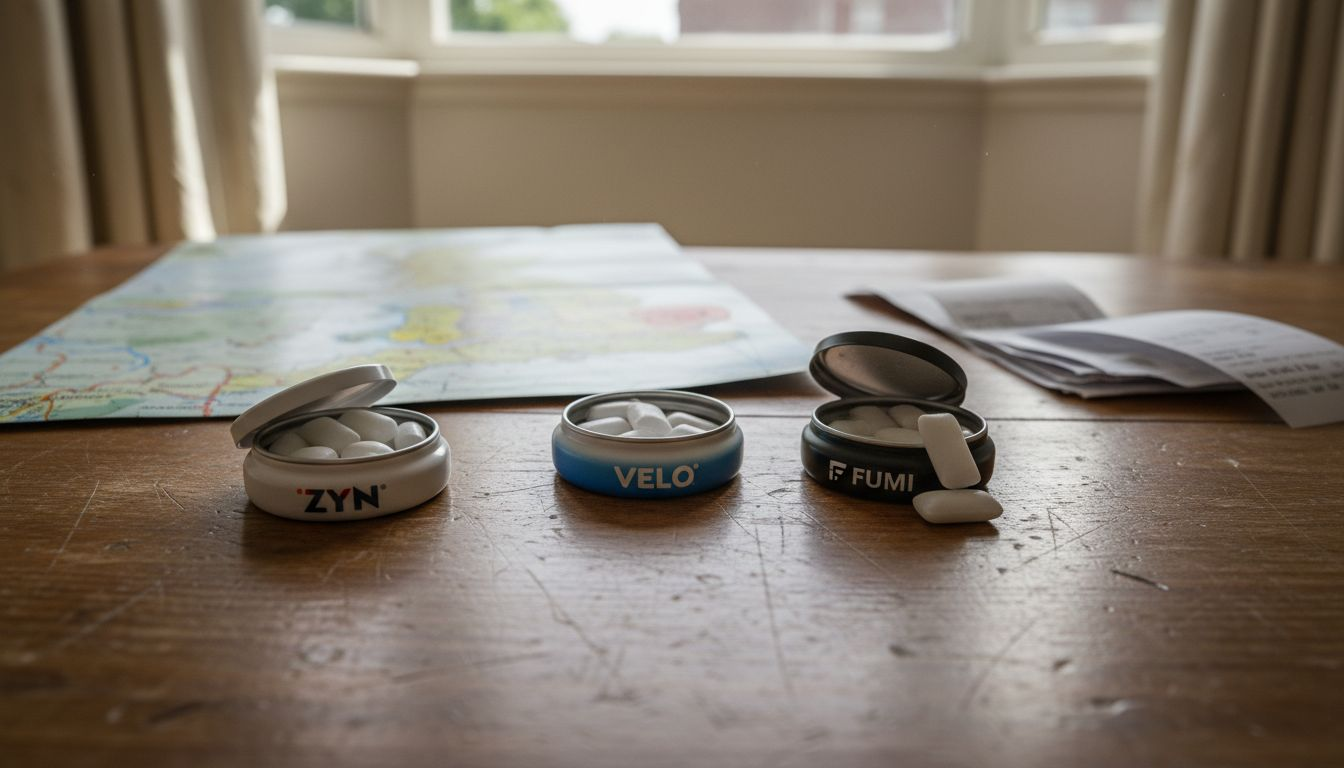
These brands aren’t interchangeable—they differ significantly in strength options, nicotine delivery feel, and user experience. Comparing ZYN and VELO reveals important differences in strength, flavour variety, and product design, making it worth exploring what each offers before committing to one brand.
ZYN strength and characteristics
ZYN stands out for offering consistent, predictable strength levels across its range:
- Strength options: 3 mg, 6 mg, and 15 mg per pouch—a straightforward three-tier system.
- Pouch design: Compact, slim pouches that sit discreetly under your lip.
- Nicotine release: Moderate speed, typically noticeable within 5–10 minutes.
- Flavour range: Tobacco, mint, and fruit varieties available.
ZYN appeals to users wanting simplicity and reliability. The narrow strength range means fewer choices but easier decision-making.
VELO’s diverse offerings
VELO provides more strength options and pouch format varieties:
- Strength range: 2 mg, 4 mg, 8 mg, 12 mg, and 20 mg—more granular choices.
- Pouch formats: Standard pouches and slim versions available.
- Nicotine sensation: Varies by product line; some deliver faster release than others.
- Flavour selection: Extensive range including mint, cinnamon, berry, and coffee options.
VELO suits users wanting customisation and flavour experimentation. The wider strength range allows precise matching to your needs.
FUMI’s approach
FUMI operates as a newer entrant focusing on quality and consistency:
- Strength availability: Typically 6 mg, 9 mg, and 15 mg options.
- Pouch sensation: Fuller pouch feel with noticeable saliva stimulation.
- Flavour focus: Premium flavour development with fewer but distinctive options.
- Market position: Growing brand emphasising quality over quantity.
FUMI attracts users prioritising sensation and flavour quality over maximum choice.
Side-by-side comparison
| Feature | ZYN | VELO | FUMI |
|---|---|---|---|
| Lightest strength | 3 mg | 2 mg | 6 mg |
| Strongest strength | 15 mg | 20 mg | 15 mg |
| Pouch weight | Slim | Variable | Standard |
| Flavours | Moderate | Extensive | Selective |
| Price range | Mid | Mid–High | Mid–Premium |
Your choice between brands depends on strength precision, flavour preference, and how much customisation matters to you.
Pro tip: If transitioning from smoking, start with VELO’s 2 mg or 4 mg option for maximum control, then adjust upwards based on how you feel after a week.
Risks and mistakes in choosing strength
Choosing the wrong nicotine strength carries real consequences. Too high, and you risk unpleasant overdose symptoms. Too low, and withdrawal discomfort drives you back to cigarettes. Understanding common mistakes prevents these pitfalls.
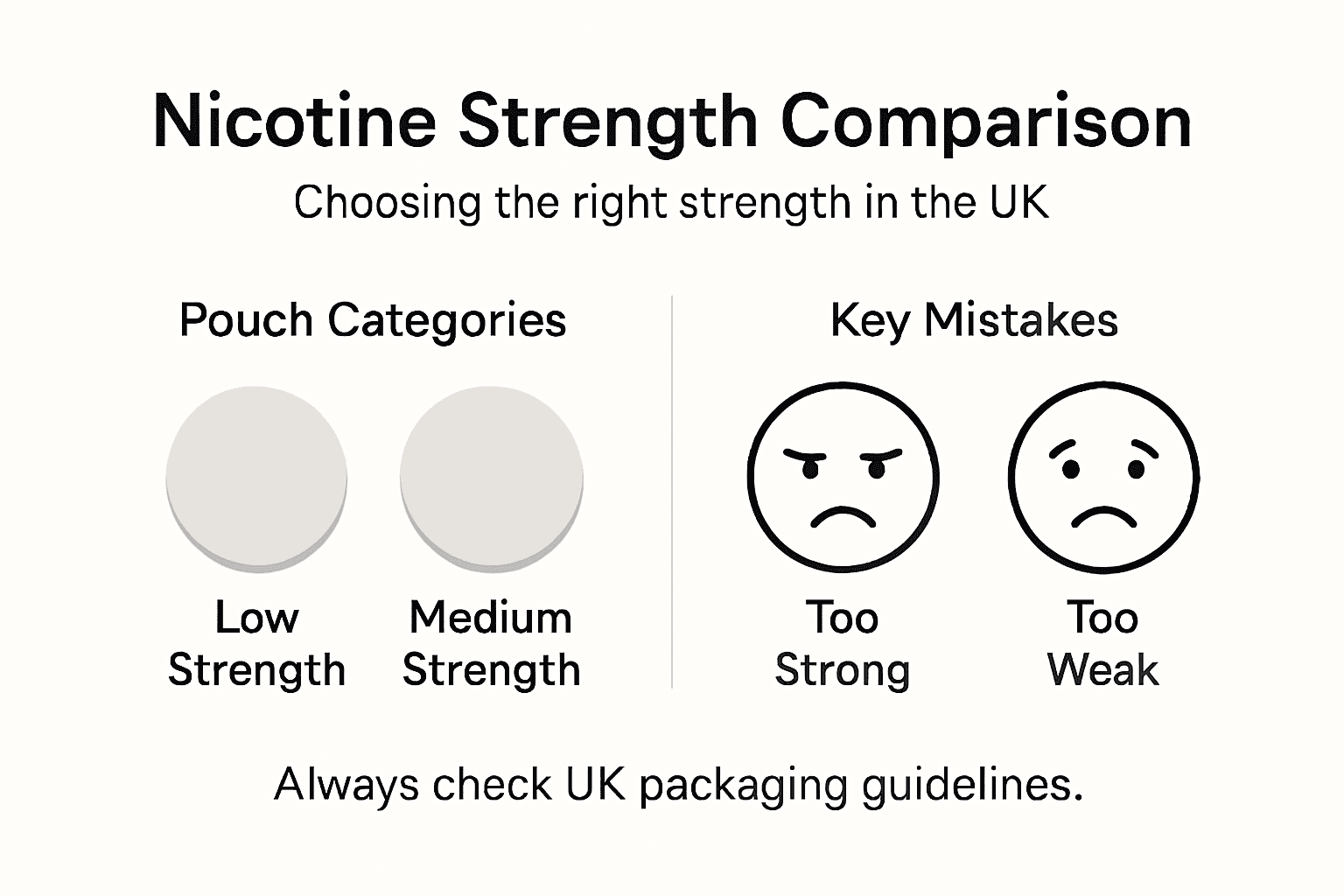
The biggest risk stems from underestimating your actual nicotine needs. Many people transitioning from smoking select strengths based on fear rather than facts, landing on products too weak to satisfy cravings. This leads to frustration and failed quit attempts.
Common mistakes to avoid
These errors derail strength selection most frequently:
- Ignoring your smoking history – Choosing based on what sounds “safe” instead of your actual daily cigarette consumption.
- Assuming lower is always better – Starting too weak leaves you unsatisfied, prompting stronger purchases later anyway.
- Confusing strength with danger – Selecting light strength to “avoid addiction” when you actually need regular strength to succeed.
- Using others’ experiences as your guide – Someone else’s ideal strength rarely matches yours due to individual tolerance differences.
- Not accounting for pouch frequency – If you use multiple pouches daily, starting at the highest strength becomes problematic quickly.
Overconsumption risks
Unintentional overconsumption poses specific risks, particularly for new users. Nicotine overdose symptoms include nausea, dizziness, headache, rapid heartbeat, and in severe cases, vomiting and weakness. These symptoms feel alarming but aren’t life-threatening at typical pouch strengths.
New users sometimes use multiple pouches simultaneously, dramatically exceeding intended intake. Others underestimate how long nicotine persists in your system, leading to stacking doses without realising it.
Accuracy and labelling matter
Product labelling accuracy directly impacts your safety. Accurate labelling prevents misuse and strength selection errors. When buying from reputable retailers like HitSnus, you can trust stated strength. Counterfeit or unlabelled products pose genuine risks through inconsistent nicotine content.
Always purchase from established retailers displaying clear labelling and batch information.
Selecting wrong strength usually causes discomfort, not danger, but it undermines your entire transition strategy.
Pro tip: Start at regular strength matching your smoking history, use just one pouch at a time, and wait a full week before increasing—your body needs time to adjust to the new delivery method.
Here’s a quick reference on what happens if you choose a pouch that is either too strong or too weak:
| Choice Outcome | Short-term Effects | Long-term Impact |
|---|---|---|
| Too Strong | Nausea, dizziness, headache | Aversion, failed quit attempts |
| Too Weak | Persistent cravings | Smoking relapse risk |
| Correct Strength | Managed cravings, satisfaction | Higher success switching from cigarettes |
Find Your Perfect Nicotine Strength with Confidence at Hitsnus
Choosing the right nicotine strength is crucial to a smooth and successful transition from smoking to nicotine pouches. We understand that matching your previous nicotine intake can be confusing and overwhelming, especially with varying product strengths like Light, Regular, Strong, and Extra Strong. At Hitsnus.com, we simplify this journey by offering a wide selection of trusted brands such as ZYN, VELO, and FUMI, each clearly labelled with precise nicotine milligram content to help you avoid common pitfalls like withdrawal discomfort or overconsumption.
Take control of your quitting experience today by exploring our detailed product descriptions and strength categories designed to meet your personal needs. Whether you want a gentle start or need something stronger to manage cravings, Hitsnus provides the information and choices to help you succeed without confusion. Start browsing now at Hitsnus online shop and discover how easy it is to find the ideal nicotine pouch strength that suits your lifestyle.
Frequently Asked Questions
What is nicotine strength and how is it measured?
Nicotine strength is the amount of nicotine in milligrams (mg) per pouch or millilitre of liquid. It indicates how much nicotine you’ll consume with each use and helps you compare different products.
How do I choose the right nicotine strength for my needs?
Selecting the right strength depends on your smoking history and nicotine tolerance. Higher strengths may be suitable for heavy smokers, while lighter options are better for occasional users. Start by calculating your previous nicotine intake and match it with pouch strength to ease withdrawal symptoms.
Are nicotine pouches safer than cigarettes?
Yes, nicotine pouches are generally considered safer than cigarettes because they do not contain harmful combustion byproducts found in tobacco smoke. While nicotine itself is addictive, it is not carcinogenic like the other chemicals in cigarette smoke.
What should I do if I experience cravings after switching to nicotine pouches?
If you experience cravings after switching, it may indicate that you’re using a pouch strength that is too low for your previous smoking habit. Consider trying a higher strength to better manage your cravings while adapting to the new product.