











Nicotine Pouch Market in 2026: 79% UK Growth & User Insights
The UK nicotine pouch market is experiencing unprecedented expansion. Sales in convenience stores surged by 79% in twelve months leading into 2026, signaling a major shift in how adults consume nicotine. This guide unpacks market dynamics, regulatory changes, product innovations, and health considerations to help you navigate the evolving landscape of tobacco-free nicotine delivery.
Table of Contents
- Introduction To The Nicotine Pouch Market In 2026
- Market Size, Growth, And Consumer Adoption In The UK
- Regulatory Environment In The UK For Nicotine Pouches
- Product Innovations And Consumer Preferences
- Health, Safety, And Common Misconceptions
- Key Market Players And Distribution Channels
- Practical Guidance For Consumers And Retailers In 2026
- Explore Top Nicotine Pouch Options At Hitsnus
- Frequently Asked Questions
Key Takeaways
| Point | Details |
|---|---|
| Market Momentum | UK convenience store sales jumped 79% year-over-year, with the market value exceeding £200 million in 2025. |
| Regulatory Framework | Proposed 20mg nicotine cap per pouch and age verification enforcement shape product availability. |
| Product Diversity | Innovation spans nicotine strengths from 3mg to 20mg, clean flavors like mint and citrus, and synthetic nicotine formulations. |
| Health Profile | Lower toxicant exposure than smoking, but nicotine dependence risk persists for all users. |
| Distribution Leaders | Swedish Match, Altria, and British American Tobacco control 60% of the global market through convenience and online channels. |
Introduction to the Nicotine Pouch Market in 2026
Nicotine pouches are small, tobacco-free sachets containing nicotine salts, plant fiber, and flavorings. Users place them between the gum and upper lip for discreet nicotine absorption without smoke, vapor, or spitting. Unlike traditional snus, which contains tobacco leaf, pouches deliver only nicotine. They differ from vaping by eliminating aerosol inhalation entirely.
The UK has embraced these products as harm reduction tools for adult smokers seeking alternatives. No combustion means no tar or carbon monoxide exposure. The absence of odor and visible vapor makes them suitable for smoke-free environments. This convenience drives adoption among commuters, office workers, and anyone prioritizing discretion.
Key advantages include:
- Complete smoke and vapor elimination
- No lingering smell on clothes or breath
- Wide range of nicotine strengths from mild to extra strong
- Flavor variety spanning mint, fruit, coffee, and unflavored options
- Portable format requiring no accessories or charging
The category has evolved rapidly since its 2016 introduction in Scandinavia. Market data on nicotine pouches shows consistent double-digit growth across Europe and North America. Understanding product fundamentals helps you evaluate whether pouches suit your nicotine consumption preferences and lifestyle requirements.
Market Size, Growth, and Consumer Adoption in the UK
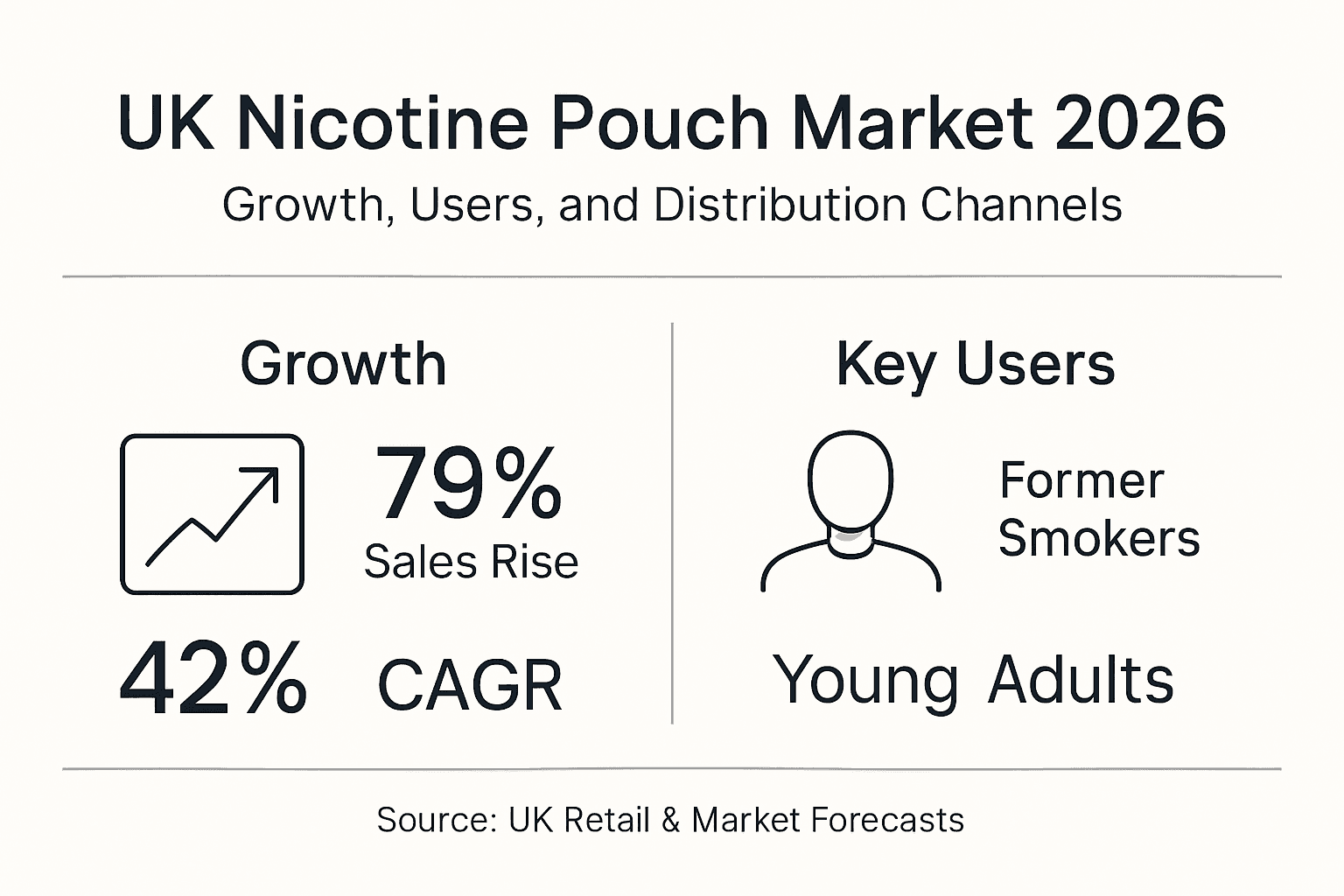
The UK nicotine pouch sector demonstrates explosive growth trajectory. Sales grew 79% in convenience stores during the twelve months preceding 2026, representing the fastest expansion in the nicotine category. Market value climbed from £185 million in 2024 to over £200 million in 2025, with projections indicating continued acceleration.
Long-term forecasts paint an even more dramatic picture. Analysts predict a 42% compound annual growth rate through 2033, positioning nicotine pouches as the dominant growth engine in tobacco alternatives. This momentum reflects fundamental shifts in consumer behavior and product accessibility.
| Metric | 2024 | 2025 | 2033 Projection |
|---|---|---|---|
| Market Value | £185 million | £200+ million | £2.1 billion |
| YoY Growth | 65% | 79% | 42% CAGR |
| Distribution Points | 18,000 | 25,000+ | 45,000+ |
Consumer demographics reveal broad adoption patterns. Former smokers comprise the largest segment, using pouches for complete cigarette replacement. Vapers increasingly add pouches for situations where vaping is impractical. A growing poly-user category alternates between vaping and pouches based on context. Even never-smokers represent a small but expanding segment attracted by social nicotine use without inhalation.
The popularity of nicotine pouches in UK stems from multiple factors. Workplace smoking restrictions make discreet alternatives essential. Public health campaigns highlighting smoking harms drive quit attempts. Product improvements in flavor and nicotine delivery enhance satisfaction. Retail expansion places pouches alongside traditional tobacco in thousands of convenience locations.
Convenience stores dominate distribution, accounting for roughly 70% of volume. Online platforms capture 25% through specialized retailers and direct-to-consumer channels. The remaining 5% flows through vape shops and tobacco specialists. This multi-channel presence ensures product availability matches consumer shopping habits.
Regulatory Environment in the UK for Nicotine Pouches
UK nicotine pouch regulation exists in a state of evolution. Current law treats pouches as consumer products rather than tobacco or medicinal items, creating a lighter regulatory touch than cigarettes or nicotine replacement therapy. The proposed Tobacco and Vapes Bill aims to standardize oversight and address youth access concerns.
The most significant pending change involves nicotine content limits. Regulators have proposed a 20mg maximum per pouch, aligning with EU standards for vaping liquids. This would eliminate ultra-strong formats currently available in some markets. Manufacturers are reformulating products to comply while maintaining efficacy for heavy users.
Key regulatory elements include:
- Age restriction enforcement at point of sale and online checkout
- Product registration requirements for market entry
- Labeling standards covering nicotine content and health warnings
- Prohibition of marketing to minors through packaging or advertising
- Distinction between tobacco-derived and synthetic nicotine in oversight
Age verification represents the strictest enforced rule. All sales require proof of 18+ age, with substantial penalties for violations. Online retailers implement digital verification systems. Physical stores train staff on ID checking protocols. Mystery shopper programs test compliance rates.
Synthetic nicotine products occupy a unique regulatory space. Because they contain no tobacco leaf derivatives, some jurisdictions initially classified them outside tobacco regulation. UK authorities have closed this loophole, applying equivalent standards regardless of nicotine source. This prevents manufacturers from circumventing rules through chemical substitution.
Pro Tip: Always purchase from licensed retailers displaying age verification systems. Grey market products may exceed nicotine limits or lack quality controls, increasing health risks and legal exposure.
Regulatory uncertainty affects long-term market planning. Some analysts predict tighter restrictions mirroring tobacco control policies. Others expect a harm reduction framework encouraging switching from combustibles. The actual path will depend on emerging health data and political priorities through 2026 and beyond.
Product Innovations and Consumer Preferences
Product development in 2026 focuses on user experience refinement and regulatory compliance. Manufacturers invest heavily in flavor innovation, nicotine delivery optimization, and pouch design improvements. These advances directly respond to consumer feedback and competitive pressures.

Flavor profiles have matured considerably. Early products emphasized candy-like sweetness, raising youth appeal concerns. Current offerings skew toward adult palates with clean mint, natural citrus, coffee, and subtle fruit notes. Mint and menthol variants command roughly 40% market share in the UK. Citrus and berry follow at 25% combined. Unflavored options serve users prioritizing pure nicotine delivery.
| Strength Category | Nicotine Content | Target User | UK Market Share |
|---|---|---|---|
| Low | 3-6mg | New users, light smokers | 25% |
| Medium | 8-11mg | Average smokers | 45% |
| Strong | 14-17mg | Heavy smokers | 20% |
| Extra Strong | 20mg | Very heavy smokers | 10% |
Nicotine strength segmentation allows precise matching to individual tolerance. Light users start at 3mg to avoid overdose symptoms. Former pack-a-day smokers typically require 11-14mg for satisfaction. Popular nicotine pouch brands UK now offer four to six strength tiers within single flavor lines.
Synthetic nicotine adoption accelerates as manufacturers seek regulatory flexibility and supply chain control. Laboratory-produced nicotine offers consistent purity and eliminates agricultural variables. Some users report smoother throat sensation compared to tobacco-extracted versions. Cost parity has eliminated the price premium that initially limited synthetic adoption.
Pouch format innovations enhance discretion and comfort:
- Mini pouches measuring 0.5 grams fit imperceptibly under the lip
- Slim designs reduce visibility and saliva production
- Controlled-release technology extends nicotine delivery to 60 minutes
- Moisture-optimized formats prevent dryness or excessive wetness
- Plant-based materials improve biodegradability
Pro Tip: Start with medium strength in your preferred flavor category. You can adjust up or down based on satisfaction and side effects. Switching strengths is easier than changing flavors if you dislike your initial choice.
Manufacturers also experiment with functional ingredients. Some add caffeine for energy enhancement. Others incorporate vitamins or botanicals, though evidence for added benefits remains limited. These combination products target users seeking more than nicotine delivery alone.
Health, Safety, and Common Misconceptions
Nicotine pouches occupy a middle ground in the harm reduction spectrum. They eliminate combustion products that cause most smoking-related disease. However, they deliver an addictive substance with cardiovascular and metabolic effects. Understanding this balanced risk profile prevents both unwarranted fear and false security.
Research shows pouches expose users to substantially fewer toxic compounds than cigarettes. No tar, carbon monoxide, or combustion carcinogens enter the body. Oral tissue irritation occurs in some users but typically resolves with product adjustment. Long-term cancer risk appears minimal based on current evidence, though decades of data collection are needed for certainty.
Nicotine dependence remains the primary concern. Pouches deliver nicotine as effectively as cigarettes, maintaining addiction in former smokers who switch. New users risk developing dependence without prior tobacco use. Cardiovascular effects include elevated heart rate and blood pressure during use. People with heart conditions should consult physicians before starting pouches.
Common misconceptions require correction:
- Myth: Nicotine pouches are completely safe. Reality: Lower risk than smoking does not equal zero risk.
- Myth: Pouches help you quit nicotine entirely. Reality: Most users maintain long-term consumption rather than tapering to zero.
- Myth: Synthetic nicotine is safer than tobacco-derived. Reality: Nicotine effects are identical regardless of source.
- Myth: You can use pouches anywhere without restrictions. Reality: Some venues prohibit all nicotine products.
Public health experts emphasize the toxicant comparison favors pouches over combustibles while cautioning against recreational adoption by non-users. The ideal use case involves complete cigarette replacement by established smokers unable to quit through other methods.
“Nicotine pouches represent a valuable harm reduction tool for smokers who have tried and failed with approved cessation methods. They should not be marketed to or adopted by nicotine-naive individuals, particularly young adults whose brains remain vulnerable to addiction.”
Pregnant women should avoid all nicotine products due to fetal development risks. Adolescents face heightened addiction vulnerability and potential cognitive impacts. Adults with no nicotine history gain no health benefit from starting pouches and assume unnecessary dependence risk.
Side effects typically remain mild. New users may experience hiccups, nausea, or dizziness from excessive nicotine. Gum irritation affects some people initially. Proper strength selection and gradual adaptation minimize these issues. Persistent problems warrant medical consultation and possible product discontinuation.
Key Market Players and Distribution Channels
Three multinational corporations dominate global nicotine pouch production. Swedish Match pioneered the category with its ZYN brand, now commanding the largest market share worldwide. Altria entered through its Helix acquisition, bringing substantial distribution muscle. British American Tobacco competes via its Velo line, leveraging existing retail relationships. Together, these companies control approximately 60% of the worldwide market.
UK-specific dynamics show similar concentration. ZYN and Velo lead in brand recognition and retail presence. Nordic Spirit, Lyft, and VELO round out the top five. Dozens of smaller brands compete on price, unique flavors, or regional distribution. This fragmentation creates opportunities for niche players but makes brand building challenging.
Distribution channels reflect consumer shopping patterns:
- Convenience stores: 70% of volume, emphasizing impulse purchases and immediate availability
- Online retailers: 25% of volume, offering wider selection and discreet delivery
- Vape shops: 3% of volume, targeting existing alternative nicotine users
- Tobacco specialists: 2% of volume, serving traditional tobacco consumers
Convenience stores provide the critical mass needed for mainstream adoption. Placement near checkout counters and alongside cigarettes ensures visibility. Staff training on age verification and product questions supports responsible sales. Major chains stock 10-15 SKUs covering popular brands and strengths.
Online platforms like HitSnus.com excel at selection depth. Digital storefronts can offer 100+ products without physical shelf constraints. Detailed product descriptions help users compare options. Subscription services provide automatic reordering at discounted prices. Age verification systems and discreet packaging address legal and privacy concerns.
The UK nicotine pouch brands and market players landscape continues consolidating. Large tobacco companies acquire promising startups to accelerate innovation and market entry. Independent brands survive by targeting underserved segments like ultra-premium products or specific flavor niches.
Counterfeit products pose growing risks as market value increases. Fake pouches may contain incorrect nicotine levels, contaminants, or banned ingredients. Purchasing from licensed retailers with verifiable supply chains protects consumers from these dangers. Check for proper labeling, batch numbers, and manufacturer contact information.
Practical Guidance for Consumers and Retailers in 2026
Selecting appropriate nicotine pouches requires matching product specifications to individual needs. This systematic approach maximizes satisfaction while minimizing side effects and costs.
Step 1: Assess Your Nicotine Tolerance
Former smokers should consider daily cigarette consumption. Light smokers under 10 cigarettes daily typically need 6-8mg pouches. Pack-a-day smokers usually require 11-14mg. Heavier users may need 17-20mg initially. New nicotine users should start at 3mg to gauge response.
Step 2: Choose Flavor Categories
Mint provides clean, refreshing taste most users find acceptable. Fruit flavors appeal to those preferring sweetness. Coffee and tobacco variants suit traditional palates. Sample packs let you test multiple options before committing to bulk purchases. Flavor fatigue affects some users, making variety packs valuable for rotation.
Step 3: Verify Legal Compliance
Confirm the retailer operates legally with proper age verification. Check nicotine content stays within the 20mg limit. Ensure packaging includes required health warnings and ingredient lists. Online orders should arrive in plain packaging to protect privacy.
Step 4: Optimize Usage Patterns
Place pouches between gum and upper lip for 20-30 minutes. Avoid chewing or swallowing. Dispose of used pouches properly in trash, never toilets. Start with one pouch to assess strength before using multiple daily. Most users consume 5-10 pouches per day.
Step 5: Monitor Your Response
Watch for side effects like nausea, hiccups, or mouth irritation. Reduce strength or frequency if problems persist. Track whether pouches satisfy cravings adequately. Adjust strength up if you still want cigarettes or vapes. Gradual adaptation over two weeks allows accurate evaluation.
Pro Tip: Buy small quantities initially rather than bulk ordering. Product preferences often shift after extended use as your palate adapts and you discover new favorites. Many users eventually settle on two to three go-to products they rotate.
Retailers must implement robust age verification across all sales channels. Train staff to check ID for anyone appearing under 25. Online systems should require document upload and verification before order processing. Mystery shopper testing identifies compliance gaps before regulatory inspections.
Stock selection should balance breadth and depth. Carry top-selling brands in multiple strengths and flavors. Include budget options and premium products. Refresh inventory based on sales velocity to avoid stale stock. Partner with licensed distributors who guarantee product authenticity.
Explore Top Nicotine Pouch Options at HitSnus
Understanding the nicotine pouch landscape empowers better decisions, but applying that knowledge requires access to quality products. HitSnus.com specializes in UK-compliant nicotine pouches from leading manufacturers, offering the selection and reliability discussed throughout this guide.
Our catalog spans strength ranges from beginner-friendly 3mg options to satisfying 20mg formats for experienced users. You will find detailed specifications on nicotine content, flavor profiles, and usage recommendations for every product. Compare nicotine pouches versus vaping to determine which alternative suits your lifestyle. Explore different pouch formats to find your ideal size and nicotine delivery speed. All purchases include discreet packaging and fast UK delivery from verified stock.
Frequently Asked Questions
Are nicotine pouches legal for purchase in the UK in 2026?
Yes, nicotine pouches remain legal for adults aged 18 and over. Regulations continue evolving, particularly around nicotine strength limits and marketing restrictions. The proposed 20mg per pouch cap will likely take effect during 2026. Always verify retailer compliance with current age verification and product standards.
How do nicotine pouches compare in safety to cigarettes and vaping?
Pouches eliminate combustion toxicants that cause most smoking-related diseases, making them substantially less harmful than cigarettes. They avoid the lung exposure associated with vaping while delivering comparable nicotine satisfaction. Addiction risk persists across all nicotine products. Pouches work best for existing smokers seeking harm reduction, not nicotine-naive individuals.
What flavors are most popular among UK nicotine pouch users?
Mint and menthol dominate with approximately 40% combined market share. Citrus and berry flavors follow at 25%. Coffee, unflavored, and tobacco variants serve niche preferences. UK trends favor cleaner, adult-oriented profiles over sweet confectionery tastes. Flavor preference often shifts with experience as palates adapt.
Can non-smokers start using nicotine pouches safely?
Non-smokers should avoid initiating nicotine use due to dependence risks without offsetting benefits. Pouches deliver addictive nicotine as effectively as cigarettes. Young adults face heightened vulnerability to addiction. The products are designed for existing smokers and nicotine users seeking less harmful delivery methods, not recreational adoption by nicotine-naive individuals.