










Nicotine pouch calories: what you actually get per pouch
Nicotine pouches contain effectively zero calories. Most brands available in the UK report effectively zero calories per pouch, with many listing no measurable energy across macronutrient categories. For the vast majority of adults tracking their diet, nicotine pouch calories are not worth counting.
A few quick facts before going further:
- Per-pouch calorie content: negligible for mainstream UK brands
- Main reason: plant fibre base and non-nutritive sweeteners carry no usable energy
- Nicotine itself is not a macronutrient and provides no calories
- Source types confirming this: public health factsheets, manufacturer nutrition notes, and laboratory characterisation studies
This article is for adults only. If you are managing a health condition, pregnancy, or a clinician-supervised diet, consult your healthcare provider before using nicotine pouches.
Table of Contents
- What ingredients in a nicotine pouch could add calories?
- Per-pouch nutrition facts for popular UK brands
- How pouch calories compare to everyday foods and drinks
- Do nicotine pouch calories matter for weight or health?
- What “less than 1 kcal” actually means on a UK label
- Practical tips for calorie-conscious pouch users
- Hitsnus: browse UK nicotine pouches with full product details
- Sources
- FAQ
What ingredients in a nicotine pouch could add calories?
A nicotine pouch is a small, tobacco-free sachet filled with a fibrous white powder. According to the ASH Scotland nicotine pouch factsheet, the core composition is plant fibre, pharmaceutical-grade nicotine, flavourings, sweeteners, pH modifiers, and humectants. No tobacco leaf. No sugar in any standard formulation.
Which of those ingredients could theoretically carry calories?
- Plant fibre (wheat or bamboo cellulose): Not metabolised for energy. Passes through the body without contributing to caloric intake.
- Nicotine: A pharmacologically active compound, not a macronutrient. It provides no energy in the way carbohydrates, fats, or proteins do.
- Non-nutritive sweeteners (acesulfame K, sucralose, xylitol in small amounts): Either zero-calorie or present in quantities too small to register on a nutrition panel.
- Humectants (glycerol/glycerin): Glycerol does carry roughly 4 kcal per gram, but the quantities used in a single pouch are trace-level, keeping the per-pouch total below any meaningful threshold.
- Flavourings and pH modifiers: Present in milligram quantities; no material caloric contribution.
Key point: Nicotine itself is not an energy-providing macronutrient. A lab characterisation study published by Imperial Brands Science confirmed that UK-market pouches use pharmaceutical-grade, high-purity nicotine with plant-fibre bases. The same study detected only trace levels of other chemicals in some samples, none of which alter the caloric picture.
For a full breakdown of what goes into a pouch, the nicotine pouch ingredients guide on Hitsnus covers each component in plain language.
Per-pouch nutrition facts for popular UK brands
The table below covers brands stocked at Hitsnus. Where a brand states “less than 1 kcal,” that phrase reflects a standard labelling convention: the measured value is above absolute zero but rounds down below the 1 kcal reporting threshold. Practically, it means the same thing as zero for dietary purposes.
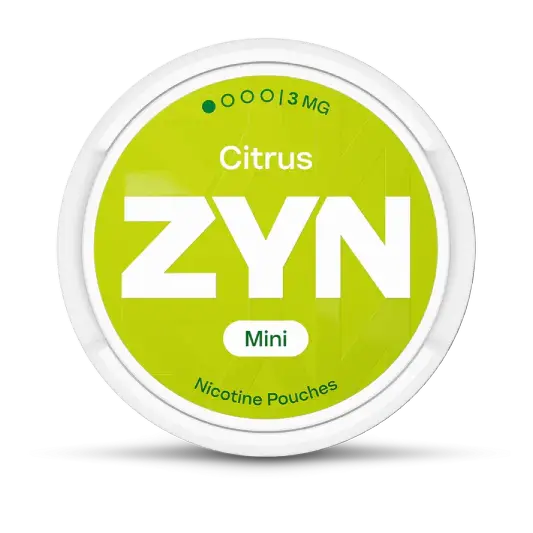
Nutrition-style listings for Velo confirm zero energy and zero macronutrients per pouch across tested flavours. ZYN’s own product pages state “less than 1 kcal,” consistent with the labelling convention described above.
How pouch calories compare to everyday foods and drinks
Put the numbers next to anything you actually eat and the comparison is stark.
- One nicotine pouch: effectively 0 kcal
- One piece of sugar-free chewing gum: approximately 3–6 kcal
- One square of dark chocolate: roughly 50–60 kcal
- A small handful of almonds: around 160–180 kcal
Even at heavy use, the calorie maths barely moves. Twenty pouches in a day contribute only a trivial amount of calories, far below levels relevant for most dietary tracking. That is less than a single stick of regular chewing gum.
A few edge cases where calories could become marginally relevant:
- Pouches formulated with glycerol at higher concentrations than standard (check the ingredient list)
- Non-standard lines that include any form of nutritive sweetener (rare, but worth verifying on the label)
- Extreme micro-dieting protocols where even 2–3 kcal per day is tracked precisely
For almost everyone, none of these apply. The nicotine pouch ingredients UK guide explains how to read a label if you want to verify your specific product.
Do nicotine pouch calories matter for weight or health?
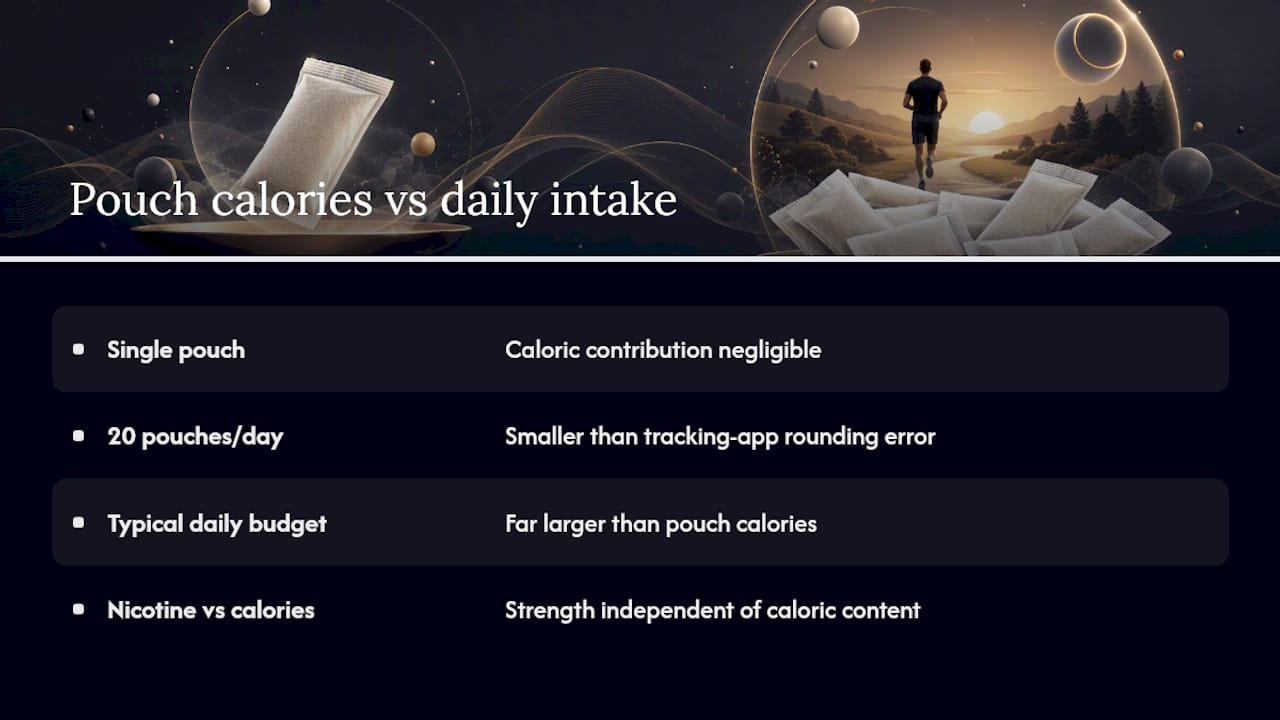
No, not for the vast majority of adults. The caloric contribution of a standard nicotine pouch is negligible relative to any realistic daily energy budget. Even at 20 pouches a day, the cumulative caloric exposure from the pouches themselves is smaller than the rounding error on most food-tracking apps.
There are narrow exceptions. If you are following an extremely strict clinical diet where every single kilocalorie is monitored, it is worth checking whether your specific pouch brand uses glycerol or any nutritive sweetener, since those ingredients carry trace calories. Unusual formulations exist, though they are not the norm in the UK market.
Nicotine strength, which ranges from around 3 mg to 16 mg per pouch in lab-characterised UK samples, is entirely independent of caloric content. A stronger pouch is not a more caloric one.
Medical disclaimer: If you are pregnant, breastfeeding, managing a cardiovascular condition, or following a clinician-supervised dietary plan, speak to your healthcare provider before using nicotine pouches. This article provides general nutritional information only.
Pro Tip: If you are tracking calories for a clinical reason, screenshot the product page or save the packaging before your appointment. Your GP or dietitian can review the ingredient list directly rather than relying on your memory of what was in the pouch.
What “less than 1 kcal” actually means on a UK label
UK and EU nutrition labelling rules allow manufacturers to report values below certain thresholds as zero or as “less than” a stated amount. For energy, a product registering below 1 kcal per serving can legitimately state “less than 1 kcal” rather than a precise decimal figure.
Why do pouches land in that territory?
- Plant fibre is not metabolised for energy. Cellulose passes through the digestive system without being broken down into glucose.
- Non-nutritive sweeteners contribute no usable energy at the quantities present in a single pouch.
- Humectants like glycerol are present in trace amounts that fall below the labelling threshold even though glycerol itself carries calories per gram.
- Pouches are not ingested. They sit between the gum and lip; the pouch itself is discarded. Only a fraction of any ingredient is absorbed, and even that fraction is negligible for energy purposes.
The Imperial Brands Science characterisation study confirms the plant-fibre and pharmaceutical-nicotine base used across UK-market products. The ASH Scotland factsheet similarly notes that pouches contain fibre, sweeteners, and flavourings, none of which contribute meaningful energy.
The practical upshot: “less than 1 kcal” and “0 kcal” are functionally identical for dietary tracking.
Practical tips for calorie-conscious pouch users
If you are dieting, fasting, or simply want to be thorough, here is a short checklist:
- Check the ingredient list for glycerol. It is the one ingredient that carries any calories at all, even in trace amounts. Most standard UK pouches list it; the quantity is small, but worth noting if you are being precise.
- Prefer formulations with acesulfame K or sucralose over any product listing a nutritive sweetener such as sorbitol in larger quantities.
- For intermittent fasting focused on calories, nicotine pouches are effectively calorie-free and do not break a calorie-focused fast. Religious fasting is a different matter: manufacturer guidance is clear that pouches break a Ramadan fast, so follow your own religious rules accordingly.
- Save product pages or packaging if you need to show your clinician exactly what you are using.
If you want to go deeper on what is inside a specific product, the role of ingredients in nicotine pouches article covers UK-specific formulations in detail. For oral health considerations related to sweeteners and flavourings, removing nicotine stains from teeth is a useful companion read.
Hitsnus: browse UK nicotine pouches with full product details
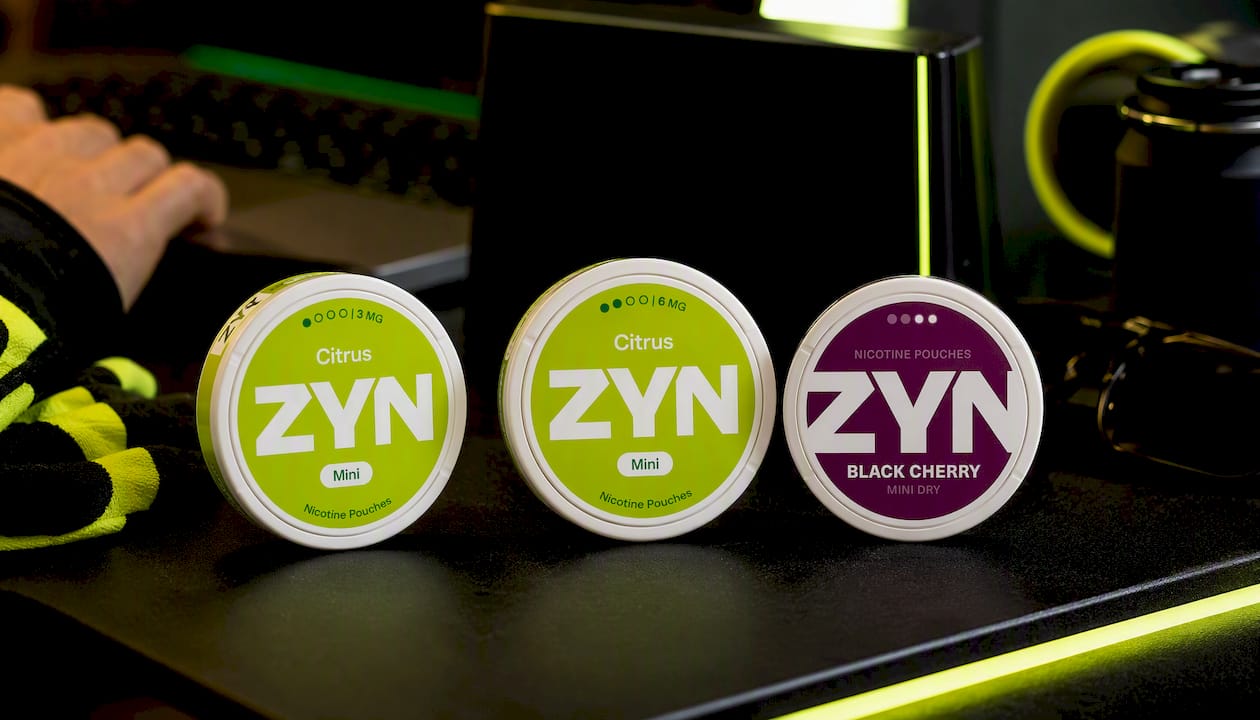
Hitsnus stocks a wide range of tobacco-free nicotine pouches for adult users across the UK, including ZYN, Velo, and FUMI in multiple strengths and flavours. Every product listing includes the nicotine strength, flavour profile, and pouch count, so you can make an informed choice without guesswork. If you are calorie-conscious, the ingredient information on each page gives you exactly what you need to verify before buying.
Browse the full nicotine pouches collection at Hitsnus to find your preferred brand and strength, with straightforward UK delivery.
This article is general information, not a substitute for advice from a qualified doctor. Consult a qualified healthcare professional about your own circumstances before acting on anything here.
Sources
- Nicotine pouches and snus factsheet – ASH Scotland
- Chemical characterisation of oral nicotine pouches and comparison to combustible cigarettes – Imperial Brands Science
- Velo Nicotine Pouches Nutrition Facts – Swenico
- Do nicotine pouches break a fast? – ZONE UK blog
FAQ
Do nicotine pouches have any calories?
Most nicotine pouches contain less than 1 kcal per pouch, with many brands reporting exactly zero. The plant-fibre base and non-nutritive sweeteners used in standard UK formulations contribute no usable energy.
Will I gain weight if I quit ZYN?
Quitting nicotine can affect appetite regulation, but that is a physiological response to nicotine withdrawal, not a consequence of the calories in ZYN pouches themselves, which are negligible. Any weight changes after stopping are unrelated to pouch calorie content.
How many cigarettes is one ZYN pouch equivalent to?
Nicotine strength varies by product: ZYN Citrus Mini 3mg delivers 3 mg of nicotine and ZYN Citrus Mini 6mg delivers 6 mg. A typical cigarette delivers roughly 1–2 mg of absorbed nicotine, though direct comparisons are difficult because absorption rates differ between inhalation and oral use.
Do nicotine pouches break intermittent fasting?
For calorie-focused time-restricted eating, nicotine pouches are effectively calorie-free and do not break the fast. For religious fasting such as Ramadan, manufacturer guidance is clear that pouches do break the fast, so follow your own religious observance rules.