










Coeliac Safety: Verify Nicotine Pouches Meet 20 ppm Gluten Standard
Most nicotine pouches are gluten-free by ingredient list, since nicotine, plant fibres, flavourings and sweeteners rarely contain wheat, barley or rye. But “usually gluten-free” is not the same as “certified gluten-free”: nicotine pouches are regulated as tobacco-related products, not food, so manufacturers aren’t required to test for gluten at the 20 parts per million benchmark. If you have coeliac disease, verify before you rely on a pouch, using the checks below.
Table of Contents
- What’s actually in a nicotine pouch, and where gluten could hide
- How risky is cross-contamination, and what does gluten-free certification actually mean?
- How do you check a pouch is actually safe to use?
- What should coeliac patients and highly sensitive users actually do?
- How does Hitsnus handle ingredient questions from customers?
- Which products should cautious buyers look at first?
- Sources
- FAQ
What’s actually in a nicotine pouch, and where gluten could hide
A typical pouch is built from five ingredient categories: nicotine itself, a plant-fibre filler (usually cellulose or a similar carrier), flavourings, sweeteners and a small amount of water and pH adjusters to control release. Manufacturer science pages, including PMI’s own product breakdown, describe this formulation as fairly consistent across brands, and none of those core categories are inherently wheat, barley or rye-based.
That simplicity is reassuring, but it’s not the full picture. The risk sits in vague labelling, not the headline ingredients.
Ingredient analyses of major brands consistently flag the same handful of ambiguous terms that can technically conceal a gluten source:
- “Natural flavours” or “flavourings”: these can be built on carriers or extracts derived from grains, and the label rarely says which grain.
- Maltodextrin: usually made from corn in the UK and US, but occasionally from wheat, depending on the manufacturer’s supplier.
- Modified starch: a catch-all term that doesn’t disclose its plant source on most consumer packaging.
- Generic “aroma” compounds: common on European-market products, again without naming the carrier.
A detailed ingredient analysis from Vaping360 looked at popular brands including ZYN, Rogue, VELO and ON! and found that most ingredient lists lack anything explicitly gluten-containing. The catch is that “lacks anything explicit” and “confirmed gluten-free” are two different claims, and the gap between them is exactly where ambiguous terms like maltodextrin sit.
There’s one factor working in your favour that food products don’t have: oral nicotine pouches aren’t swallowed. You place a pouch between your gum and lip, absorb the nicotine through the mucous membrane, and discard it after use. That route cuts down on ingestion exposure compared with eating something containing gluten. It does not, however, eliminate the risk from trace contamination during manufacturing, and for people with coeliac disease even small amounts absorbed orally over repeated use can matter. Our guide to nicotine pouches and oral health covers how oral exposure works in more depth if you want to understand the mechanism before deciding how cautious to be.
How risky is cross-contamination, and what does gluten-free certification actually mean?
Cross-contamination is the real variable here, not the recipe. Nicotine pouch manufacturers often use the same production lines, flavour suppliers and ingredient carriers across multiple product lines, and sometimes across product categories entirely. A flavouring supplier that also produces wheat-based extracts for the food industry can introduce trace gluten into a “gluten-free” formulation without ever listing wheat on the pouch’s own ingredient panel.
The number that matters here is 20. Certifiers commonly use 20 parts per million of gluten as the threshold below which a product can carry a “gluten-free” claim, the same benchmark used across most gluten-free food certification schemes. A product that passes third-party testing under this threshold gives you a genuine assurance. A product that simply doesn’t list gluten ingredients gives you an assumption, not a guarantee.
Regulatory context explains why that gap exists. In the UK, nicotine pouches fall under tobacco-related product regulations rather than food law, which sets rules on permitted additives, labelling and composition but doesn’t mandate allergen testing the way food regulations do. Trace ingredients are permitted where they’re “technically unavoidable” during manufacturing, a standard built for tobacco products, not coeliac safety.
What this means in practice:
- No legal requirement exists for a nicotine pouch brand to test for gluten.
- Any gluten-free claim or testing a brand does provide is voluntary, not mandated.
- Voluntary transparency from a manufacturer is worth taking seriously precisely because it isn’t required.
That last point is worth sitting with. A brand that publishes a clear statement about its supply chain or gluten testing is choosing to go beyond what regulation demands. That’s a meaningfully different signal than silence on the topic.
How do you check a pouch is actually safe to use?
Before you buy or use a pouch, run through this in order:
- Read the ingredient panel first, not the marketing copy. Look for an explicit “gluten-free” claim on the packaging itself, not just in advertising. If the panel only lists broad categories like “natural flavours” with no elaboration, treat that as an open question rather than a green light.
- Check the allergen statement, if one exists. Some brands voluntarily include an allergen line even though it isn’t required for tobacco-related products. Its presence, or its total absence, tells you how seriously that manufacturer treats allergen disclosure generally.
- Contact the manufacturer directly with three specific questions: which facility manufactures the product, whether it undergoes gluten testing and to what threshold, and whether their flavour suppliers provide written statements confirming grain-free sourcing. A vague or evasive answer to any of these three is itself useful information.
Our internal breakdown of nicotine pouch ingredients for UK users walks through label terminology in more detail, and a comparable label-reading approach in a different product category is covered well in this piece on gluten-free coffee labelling, which shows how the same ambiguous-term problem plays out in an entirely different industry.
Pro Tip: If a manufacturer can’t answer a direct question about their flavour supplier’s grain sourcing within a reasonable timeframe, that’s a signal worth acting on. Move to a product with a documented gluten-free claim instead of assuming the silence means “safe.”
If you’re still unsure after checking the label and contacting the manufacturer, the lowest-risk path is choosing unflavoured or minimally processed pouches. Fewer added ingredients means fewer suppliers in the chain, and fewer suppliers means fewer opportunities for a flavour carrier to introduce trace gluten.
What should coeliac patients and highly sensitive users actually do?
Risk tolerance for gluten exposure varies enormously between individuals, and that variation matters more here than in most food decisions. Some people with coeliac disease react to genuinely trace amounts, well below what would bother someone with a milder sensitivity. Because oral nicotine pouches still involve mucous membrane absorption and repeated daily use, even a small amount of contamination per pouch can accumulate into a meaningful exposure over weeks of regular use.
A few things follow from that:
- Self-testing is not reliable. You can’t accurately gauge gluten exposure from how you feel after using a product, since reactions in coeliac disease are often delayed, subtle or entirely silent even as intestinal damage continues.
- Talk to a gastroenterologist or dietitian if you’re uncertain, particularly if you’ve had unexplained symptoms since starting a new pouch brand. Clinical guidance is far more reliable than forum anecdotes about which brand “seems fine.”
- Consider alternatives if a product can’t demonstrate certification. Nicotine patches and clearly labelled nicotine gums, especially pharmaceutical-grade products with published allergen statements, generally carry more transparent sourcing information than flavoured oral pouches.
- Stick with one verified product rather than switching brands often. Every new brand is a new supply chain to vet, and repeated switching multiplies your exposure risk rather than reducing it.
None of this means nicotine pouches are inherently unsafe for coeliac patients. It means the burden of verification sits with you, not with a regulatory requirement, and that’s worth building into your routine the same way you’d check a food label before buying it for the first time.
How does Hitsnus handle ingredient questions from customers?
There are specialist online retailers of nicotine pouches that stock a wide range of brands and flavours alongside straightforward product information for customers who want to make an informed choice. Some experts write on ingredient and safety topics focusing on giving customers the practical detail manufacturers sometimes bury in fine print.
We recommend the same verification steps outlined above for any pouch you’re considering, whether you buy it from us or elsewhere: read the full ingredient panel, look for an explicit gluten-free statement, and contact the manufacturer if a term on the label is unclear.
A few ways to dig deeper before you order:
- Browse the full nicotine pouches collection to compare ingredient panels across brands side by side.
- Read our ingredients breakdown for UK users for more detail on what typically appears on a pouch label.
- Check our nicotine safety guidance if you want a wider view of safe usage practices.
- Get in touch with our customer support team directly if a specific product’s ingredient list raises a question we haven’t already answered on the product page.
Which products should cautious buyers look at first?
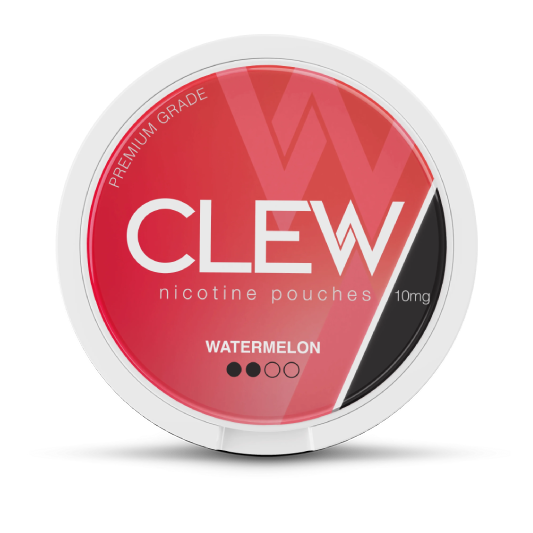
If you’d rather start from a shorter, more considered shortlist than scroll the entire catalogue, three products stand out for their straightforward flavour profiles and clear listings. Clew Watermelon keeps its ingredient list simple, which is exactly the kind of minimally complicated formulation that lowers cross-contamination risk compared with heavily blended flavour combinations. The same product is also available at a reduced price as Clew Watermelon (Clearance), worth checking if you want to try the formulation before committing to a full-price order.
GOAT Frosted is another option worth a look if you prefer a cooler, less complex flavour profile over anything built from a long list of blended aromatics.
None of this replaces your own due diligence. Before ordering any of these, or anything else from the nicotine pouches hub, read the product’s own ingredient panel on its page and get in touch with our team if a term isn’t clear. We’d rather answer a question upfront than have you guess.
Sources
The regulatory and ingredient claims in this article draw on the following sources, worth reading directly if you want to verify anything for yourself:
If you want to verify a specific product’s certification status, gluten-free certifying bodies publish their own registries of tested and approved products, and checking directly with them is more reliable than relying on marketing claims alone.
This article is general information, not a substitute for advice from a qualified doctor. Consult a qualified healthcare professional about your own circumstances before acting on anything here.
FAQ
Which nicotine pouches are gluten-free?
Most mainstream brands, including ZYN, Rogue, VELO and ON!, don’t list explicit gluten-containing ingredients, though none of them are routinely certified gluten-free at the 20 ppm benchmark. Check each product’s own label and contact the manufacturer if you need certainty.
Is ZYN safe for people with coeliac disease?
ZYN’s published ingredient list doesn’t include wheat, barley or rye, but it isn’t a certified gluten-free product, so highly sensitive users should contact the manufacturer directly about cross-contamination controls before relying on it.
Are VELO pouches gluten-free?
VELO’s ingredient panel doesn’t list gluten-containing ingredients either, but like most nicotine pouches, it isn’t independently certified gluten-free, so the same manufacturer-contact approach applies before you rely on it.
Can dentists tell if you use nicotine pouches?
Dentists can often spot signs of regular pouch use, including gum irritation, lesions at the placement site, or receding gum tissue in that specific spot, though this is unrelated to gluten content and depends on frequency and technique of use.