











Do nicotine pouches cause dehydration or just a dry mouth?
Nicotine pouches are very unlikely to cause clinical dehydration in a normally hydrated adult, but they do reliably cause dry mouth and can modestly raise how much fluid you need in a day. That is the honest, evidence-based answer, and it is worth separating from the scarier claims doing the rounds online.
The mouth-drying sensation is real and well documented. A 2025 narrative review of nicotine pouch side effects lists dry mouth, irritation and soreness among the most common immediate responses to pouch use. But that is a local effect on the oral mucosa, not proof that your whole body is losing water it can’t replace. As Fabio, who researches nicotine product safety for Hitsnus, puts it: the confusion between “my mouth feels dry” and “I am dehydrated” is where most of the anxiety around this topic comes from.
Context changes the picture considerably. The answer shifts from “unlikely” towards “genuinely more risky” in these situations:
- Exercising or working in hot weather
- Drinking alcohol alongside pouch use
- Heavy caffeine intake on top of nicotine
- Using very high-strength pouches for extended sessions
- Vomiting or illness that already depletes fluids
Table of Contents
- How nicotine and pouch ingredients affect your body’s fluid balance
- Dry mouth or dehydration: how do you tell the difference?
- Does pouch moisture and strength change how drying it feels?
- Which situations actually raise your dehydration risk?
- Can you drink water with a pouch in, and how much extra should you drink?
- When should you seek medical help for dehydration or overdose symptoms?
- Why trust this guide on nicotine pouches and hydration?
- Lower-dryness pouch options worth trying
- Sources
- FAQ
How nicotine and pouch ingredients affect your body’s fluid balance
Three separate mechanisms explain why a nicotine pouch leaves your mouth feeling like sandpaper, and none of them is straightforward “dehydration” in the medical sense.
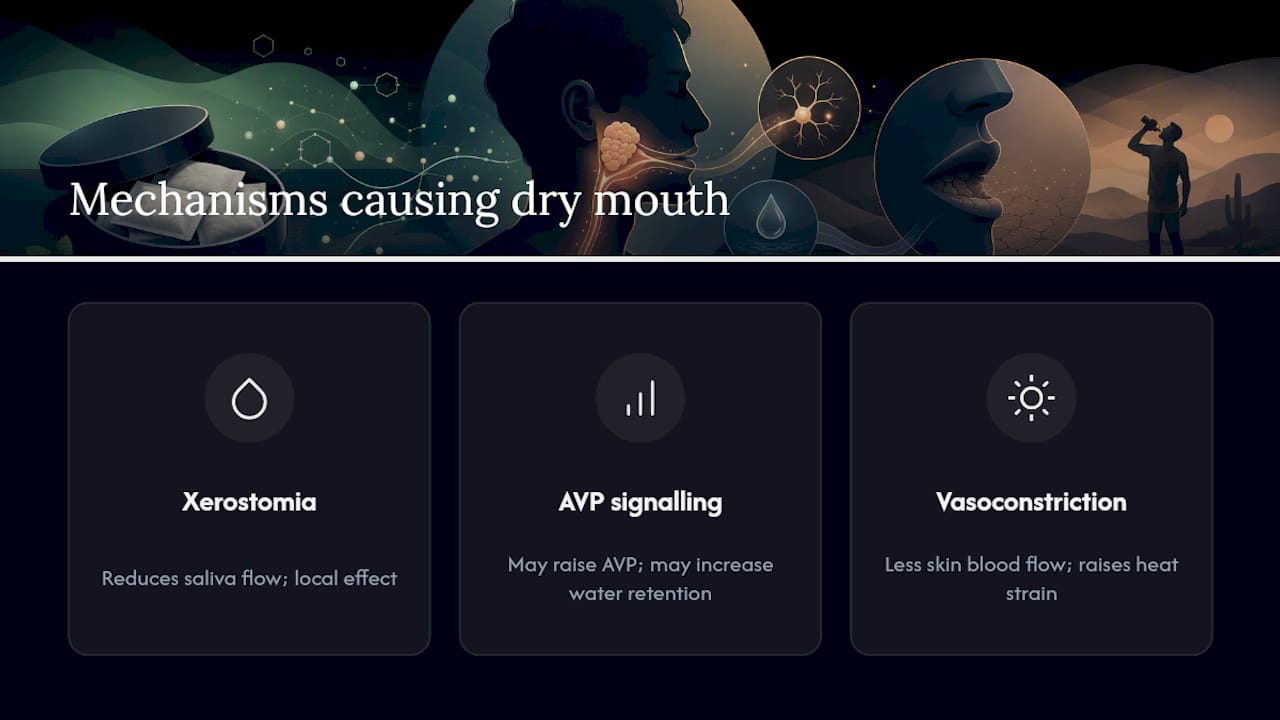
1. Xerostomia, the technical term for dry mouth. Nicotine constricts blood vessels in the oral tissue and reduces saliva flow, and flavourings or pH-adjusting agents in the pouch can add to that drying sensation on top of the nicotine itself. This is a local, mechanical effect on your salivary glands rather than a sign your blood volume has dropped.
2. Hormonal signalling that may (or may not) matter much. Older research on smoking found that nicotine can trigger release of arginine vasopressin (AVP), the hormone that tells your kidneys to hold onto water. Curiously, this hormone increase is associated with water retention, not water loss, and it comes from a historic study on nicotine and AVP using cigarette-level nicotine exposure. Whether a nicotine pouch delivers enough systemic nicotine to meaningfully shift this hormone in a healthy adult remains unclear, and the evidence doesn’t support treating pouches as a reliable diuretic.
3. Vasoconstriction and heat strain. This is the mechanism worth actually worrying about. A thermal-strain study from 2024/2025 found that nicotine use reduced skin blood flow and raised core temperature during exercise in 30°C conditions. Less blood flow to the skin means your body dissipates heat less efficiently, which pushes you towards heat strain faster and can amplify genuine dehydration risk when you’re already sweating heavily.
There’s also a fourth pathway that’s more speculative but worth flagging. Research on vaping has found that certain enzymes (proteases) in the airways of smokers and vapers can activate a channel called ENaC, which pulls moisture out of the surface lining of the airway. A 2024 study on vaping-induced proteolysis demonstrated this effect directly in airway tissue and showed it could be blocked with protease inhibitors. Oral mucosa isn’t airway tissue, and pouches aren’t vapour, so this evidence doesn’t transfer cleanly. But it does suggest a plausible surface-level mechanism for why the inside of your mouth might genuinely lose moisture beyond simple saliva suppression.
Dry mouth or dehydration: how do you tell the difference?
Your mouth can feel like the Sahara while the rest of you is perfectly fine. Learning to distinguish the two saves you either ignoring a real problem or panicking over a harmless one.
Local, mouth-only symptoms typically include:
- Sticky or thick-feeling saliva
- A metallic or altered taste
- Mild soreness where the pouch sits against your gum
- A persistent urge to drink small amounts, which resolves once you do
Systemic symptoms, the ones that suggest actual fluid loss from your whole body, look different:
- Dizziness or light-headedness, especially on standing
- Dark yellow or amber urine, or noticeably reduced urine output
- A racing or irregular heartbeat
- Confusion, unusual fatigue or fainting
A few quick checks help you sort one from the other. Look at your urine colour: pale straw is fine, dark amber is not. Stand up from sitting and see if you feel steady. Check whether the dry, unpleasant feeling actually goes away after a normal glass of water, because true local dryness usually resolves within minutes.
Pro Tip: If a glass of water fixes the dryness within five to ten minutes, it was almost certainly local. If you still feel thirsty, dizzy or off an hour later, that’s your cue to keep drinking steadily and pay attention to how you feel over the next hour.
Does pouch moisture and strength change how drying it feels?
Not every nicotine pouch feels the same in your mouth, and the difference comes down to two design choices manufacturers make: how much moisture the pouch itself contains, and how much nicotine it delivers.
Drier pouches, often marketed for their slim, discreet feel, tend to draw more moisture from your saliva to activate, which can leave your mouth feeling parched faster than a moister format would. Hitsnus has covered this trade-off in more detail in its guide to dry nicotine pouches, which is worth reading if you’ve noticed some pouches feel harsher than others.
Nicotine strength and pH also play a role. Higher pH pouches release more “free” nicotine, meaning it absorbs faster and often feels more intense against the gum, which can translate into more noticeable dryness and mild irritation. A 2025 review in Frontiers in Public Health also flagged that nicotine content and pH vary considerably between brands, which is one reason the same strength label can feel quite different from one product to another.
If dry mouth bothers you specifically, two practical adjustments help:
- Try a moister pouch format rather than an ultra-dry slim one
- Step down in nicotine strength if the sensation feels more like irritation than habit satisfaction
Hitsnus breaks down exactly how moisture content interacts with sensation in its piece on hydration and nicotine pouches, which covers the product side of this in more depth than we can here.
Which situations actually raise your dehydration risk?
Heat and exercise are the two factors with genuine clinical evidence behind them. The thermal-strain research already mentioned found nicotine users ran hotter and had reduced skin blood flow under exercise heat stress, a combination that pushes you towards heat exhaustion faster than nicotine-free exertion would.
Several everyday habits stack on top of that baseline risk:
- Alcohol is a well-known diuretic in its own right, and combining it with nicotine’s vasoconstriction adds two dehydrating pressures rather than one.
- Caffeine in large quantities has a mild diuretic effect too, and a coffee-and-pouch combo before a workout is a worse idea than either alone.
- Illness involving vomiting or diarrhoea already depletes your fluid reserves, so this is the wrong moment to rely on pouches for a nicotine hit without compensating with extra water.
- Long, continuous pouch sessions without a break can compound local dryness into a genuinely uncomfortable, and slightly riskier, few hours.
The behavioural fix is simple: skip high-strength pouches immediately before exercise, drink more when it’s hot, and take breaks between pouches rather than running one after another all afternoon.
Can you drink water with a pouch in, and how much extra should you drink?
Yes, you can drink normally with a pouch in place. There’s no mechanical reason to remove it first, though small, frequent sips tend to be more comfortable than large gulps if the pouch has caused any gum irritation.
On quantity, most healthy adults using pouches regularly don’t need a dramatically different fluid intake, but a sensible adjustment is an extra 250 to 500 ml glass of water on days when you’re using pouches heavily, exercising, or in hot weather. That is a modest top-up, not a prescription, and it should sit on top of your normal daily fluid intake rather than replace it.
A few small habits reduce the drying sensation without much effort:
- Chew sugar-free gum between pouches to stimulate saliva flow
- Choose a moister pouch format if dryness is your main complaint
- Avoid very acidic drinks (fruit juices, fizzy drinks) right before placing a pouch, since acidity can sharpen the irritation
- Rinse your mouth with plain water after removing a pouch if soreness lingers
Pro Tip: Keep a water bottle within reach whenever you’re using pouches through a work shift or a long drive. The habit of sipping regularly does more for comfort than any single large glass of water after the fact.
Non-product causes of dry mouth are worth ruling out too. If dryness persists even on days you’re not using pouches, other common causes of oral dryness such as medication side effects or breathing through your mouth at night might be the actual culprit.
When should you seek medical help for dehydration or overdose symptoms?
Clinical dehydration from pouches alone is unlikely if you’re a normally hydrated adult using a moderate-strength product sensibly. That said, certain symptoms mean you stop self-managing and get help.
Treat these as emergency signs, whether they stem from nicotine overdose or severe fluid loss:
- Severe or repeated vomiting
- Fainting or near-fainting
- A rapid, irregular, or pounding heartbeat
- Seizures or muscle tremors
- Confusion, extreme drowsiness, or difficulty staying conscious
If you or someone else shows any of these, call 999 or contact NHS 111 for urgent guidance rather than waiting to see if it passes. Combining several risk factors, heat, alcohol, a very high dose, on top of pouch use is exactly when a normally low-risk product becomes a genuine problem, so treat that combination as your cue to act rather than wait.
For milder but persistent issues, mouth soreness, ulcers, or lesions that don’t heal within a couple of weeks, a dentist or GP visit is the right move rather than an emergency call.
Why trust this guide on nicotine pouches and hydration?
This article was researched and written by Fabio for Hitsnus, drawing on peer-reviewed studies rather than forum anecdotes or marketing claims.
The evidence base behind this guide includes:
- Peer-reviewed studies indexed on PubMed and PMC covering nicotine pouch side effects, thermal strain, and mucosal biology
- A British Dental Journal review on the oral health effects of nicotine pouches
- Hitsnus’s own explanatory content on oral health and nicotine pouches and the broader nicotine pouches hub
None of this replaces a conversation with your GP or dentist if you have a specific health concern.
Lower-dryness pouch options worth trying
If mouth dryness is your main complaint, moving to a moister pouch format or a slightly lower nicotine strength is a sensible first step, since both reduce the intensity of the local drying sensation without asking you to give up pouches altogether.
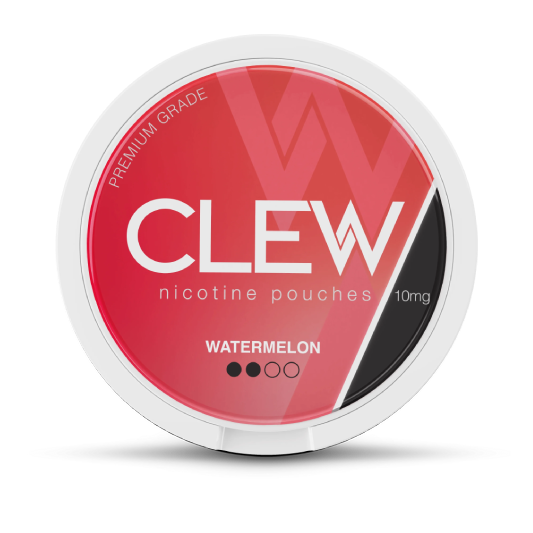
Among Hitsnus’s range, a few options suit users who find drier, high-strength pouches uncomfortable. XQS Strawberry Kiwi sits at a moderate 8mg strength with a fruitier, moister feel than many slim dry formats. Clew Watermelon offers a similarly gentler moisture profile at 10mg, while Killa Pineapple and SYX Wild Cherry give flavour variety at more moderate strengths for anyone stepping down from stronger products. Clearance options like Clew Cool Mint and Clew Menthol are worth checking if you want to try a moister format before committing to a full-size order, and Nordic Spirit Sweetmint and SYX Forest Fruits round out the range for users who prefer a milder oral sensation over an intense one.
These are practical suggestions based on product design, not medical advice, and individual reactions vary. Browse the full nicotine pouches collection at Hitsnus to compare moisture levels and strengths side by side, or go straight to the XQS Strawberry Kiwi or Clew Watermelon product pages to see full details and place an order.
Sources
- PubMed: 2025 narrative review (nicotine pouch side effects)
- PubMed: study on nicotine and AVP (historic)
- PubMed: thermal-strain study (2024/2025)
- PMC: vaping-induced proteolysis and airway dehydration (2024)
FAQ
Does nicotine worsen dehydration?
Nicotine itself doesn’t directly cause whole-body dehydration in normal use, but it constricts blood vessels and reduces skin blood flow, which worsens heat strain and can raise dehydration risk during exercise or hot weather.
What are the symptoms of a nicotine pouch overdose?
Overdose symptoms include severe or repeated vomiting, fainting, a rapid or irregular heartbeat, and seizures, and any of these needs urgent medical attention via 999 or NHS 111.
Can dentists tell if you use nicotine pouches?
Dentists can often spot signs of nicotine pouch use, including localised gum irritation, mild lesions, or tissue changes where the pouch is regularly placed, though these effects are frequently reversible after switching products or stopping use.
Why do nicotine pouches make me thirsty?
Nicotine reduces saliva production and can tighten blood vessels in the oral tissue, producing a dry, sticky mouth feeling that prompts thirst even though your overall body hydration is usually unaffected.